61
61

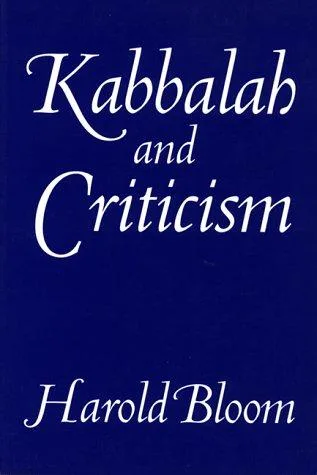
Kabbalah and criticism

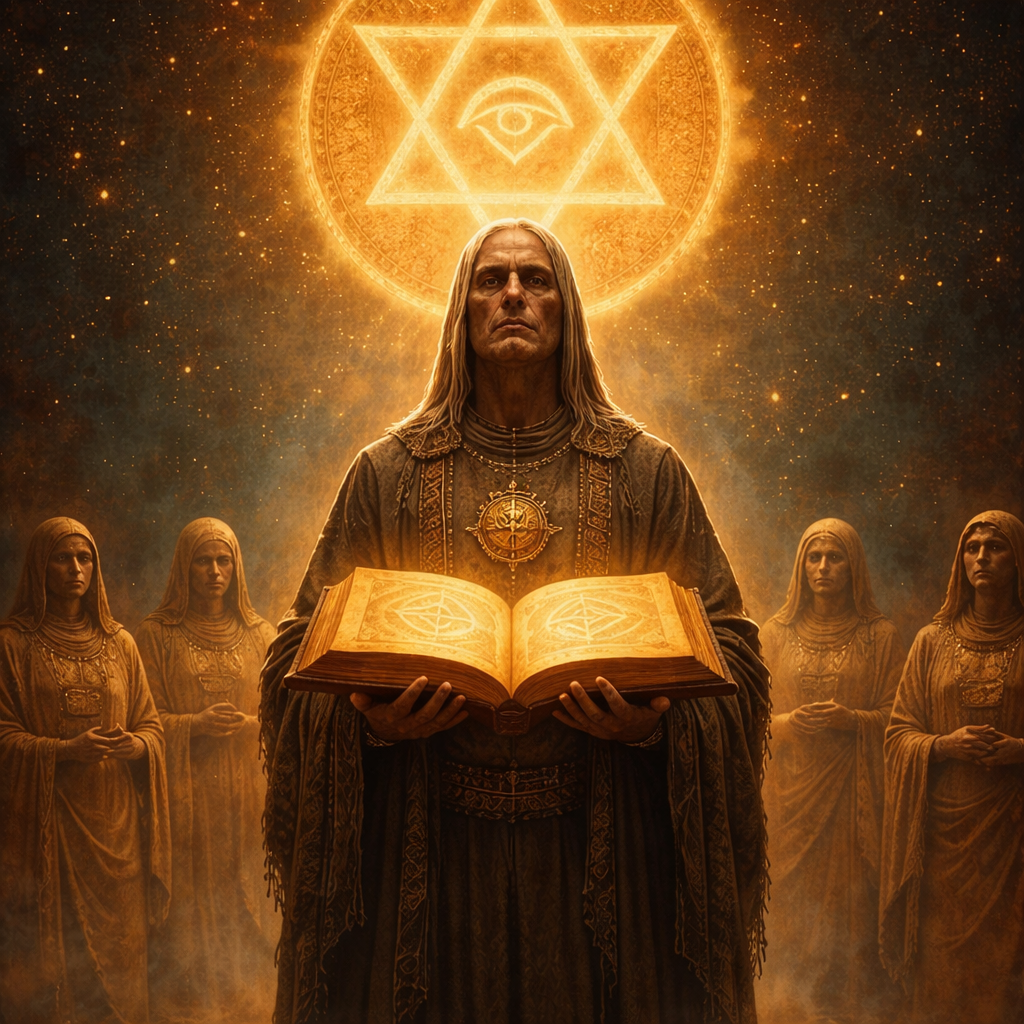

Evander Ashcroft (Alchemy & Hermeticism Editor) — Harold Bloom's 'Kabbalah and Criticism' is an essential key for unlocking the deeper strata of Western thought and esoteric traditions. Bloom’s incisive intellect dissects the complex symbolism of Kabbalah, demonstrating its profound influence on literary creation and critical discourse. He masterfully reveals how the Qabalistic quest for hidden divine emanations mirrors the very act of interpretation. This is not a primer for novices, but a profound engagement for those already acquainted with mystical concepts and literary theory. Its strength lies in Bloom's ability to bridge seemingly disparate fields, offering a unique perspective on the enduring power of the Gnostic impulse within human consciousness.
📝 Description
Harold Bloom's 'Kabbalah and Criticism' unfurls a tapestry woven from the threads of Jewish mysticism and literary theory, inviting the reader into a liminal space where ancient wisdom meets modern interpretation. This profound exploration delves into the esoteric heart of Kabbalah, revealing its intricate symbolic language and the Gnostic yearning for hidden knowledge that lies at its core. Bloom masterfully navigates the labyrinthine pathways of Kabbalistic thought, illuminating the profound philosophical implications embedded within its mystical texts. He posits Kabbalah not merely as a religious or historical phenomenon, but as a potent source of spiritual and psychological insight, a testament to humanity's enduring quest for the divine and the ineffable. The atmosphere is one of intellectual rigor infused with a deep reverence for the arcane. Intended for the discerning reader who seeks to understand the profound connections between spiritual traditions and the very act of critical inquiry, this work offers a unique lens through which to view both the sacred and the secular, promising a transformative encounter with the sublime.
✍️ Author
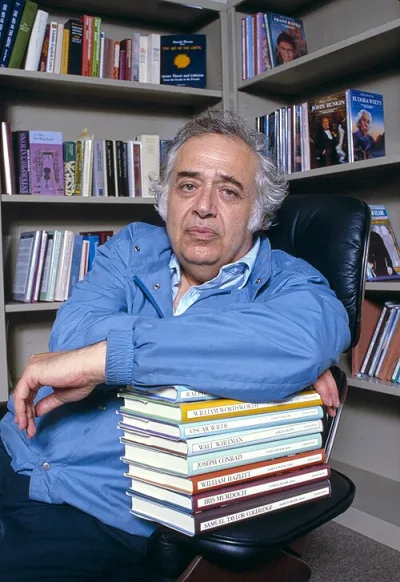
Harold Bloom
Harold Bloom (July 11, 1930 – October 14, 2019) was an American literary critic and the Sterling Professor of humanities at Yale University. In 2017, Bloom was called "probably the most famous literary critic in the English-speaking world".
💡 Why Read This Book?
Embark on a journey into the hidden currents of Western thought. 'Kabbalah and Criticism' offers a unique fusion of mystical insight and literary analysis, perfect for scholars, seekers of esoteric knowledge, and practitioners interested in the symbolic architecture of spiritual traditions. Discover how Kabbalistic concepts illuminate the nature of criticism and the quest for ultimate meaning.
⭐ Reader Reviews
Honest opinions from readers who have explored this book.
❓ Frequently Asked Questions
What is the primary focus of Harold Bloom's 'Kabbalah and Criticism'?
The book primarily explores the intricate relationship between Kabbalistic mysticism and literary criticism, examining how Kabbalistic concepts and symbolism have influenced Western thought and the act of interpretation itself.
Is this book suitable for beginners in Kabbalah?
While accessible, the book assumes a certain familiarity with literary theory and philosophical concepts. It is best suited for those with an existing interest in mysticism or literature who are eager for a sophisticated analysis.
What is the role of symbolism in Bloom's analysis?
Symbolism is central. Bloom investigates how Kabbalistic symbols, such as the Tree of Life and divine emanations, function within literary texts and critical frameworks to convey hidden meanings and spiritual insights.
How does Bloom connect Kabbalah to the act of criticism?
Bloom posits that the Kabbalistic search for divine secrets and hidden knowledge parallels the critic's endeavor to uncover deeper layers of meaning within a text, viewing criticism as a form of spiritual quest.
What makes this book relevant to esoteric studies?
It offers a scholarly yet profound look at a key esoteric tradition, demonstrating its pervasive influence on intellectual history and providing a framework for understanding mystical thought through a critical lens.
🔮 Key Themes & Symbolism
The Gnostic Impulse in Interpretation
Bloom argues that a fundamental 'gnostic impulse'—a yearning for hidden knowledge and divine illumination—underpins both Kabbalistic practice and the act of literary criticism. He traces how this desire to penetrate the veil of the mundane and access deeper truths manifests across different intellectual traditions, positioning Kabbalah as a potent expression of this universal human drive. The intricate symbolism and secretive nature of Kabbalistic texts, for Bloom, are not merely historical artifacts but active participants in the ongoing human quest for understanding the ineffable.
Symbolic Architecture of Kabbalah
This theme delves into the rich and complex symbolic language of Kabbalah, particularly the Tree of Life (Etz Chayim). Bloom elucidates how these archetypal symbols serve as a map of creation, divine emanations, and the human soul's journey. He emphasizes that understanding these symbols is crucial for grasping the esoteric worldview of Kabbalah and its profound impact on Western thought. The book explores how these potent images function not just as representations but as conduits for spiritual experience and philosophical inquiry, offering a framework for comprehending the interconnectedness of all things.
Kabbalah as a Literary and Critical Force
Bloom posits that Kabbalah has exerted a significant, often unrecognized, influence on Western literature and critical theory. He analyzes how Kabbalistic ideas about divine presence, hidden knowledge, and the nature of reality have permeated literary works and shaped the very methods by which we approach and interpret them. This theme highlights Kabbalah not just as a religious doctrine but as a vibrant philosophical and aesthetic system that continues to inform our understanding of human creativity and the profound act of making meaning.
💬 Memorable Quotes
“There is no such thing as a literary critic who is not also a theologian.”
— Bloom suggests that the act of interpretation, especially of profound works, inherently touches upon questions of ultimate meaning and value, akin to theological inquiry.
“The Kabbalah is a form of secret knowledge.”
— This highlights the esoteric nature of Kabbalah, emphasizing its hidden teachings and mystical insights reserved for those who seek deeper understanding beyond the exoteric.
“Criticism is an act of interpretation.”
— A foundational statement underscoring the author's central thesis: that the core of critical practice lies in the complex process of deciphering and understanding meaning.
“The quest for the divine is a central human endeavor.”
— This quote speaks to the universal yearning for spiritual connection and transcendence that Bloom sees reflected in both Kabbalah and the act of critical engagement with texts.
“Symbolism unlocks hidden realities.”
— Emphasizing the power of symbolic language in Kabbalah and literature to reveal deeper truths and esoteric dimensions often obscured from plain view.
🌙 Esoteric Significance
Tradition
Kabbalah and Jewish Mysticism are the primary esoteric traditions explored. Bloom delves into the Sephirot, the Tree of Life, gematria, and the Gnostic yearning for divine reunion, presenting Kabbalah as a sophisticated system for understanding creation, consciousness, and the divine.
Symbolism
Central to the book's esoteric appeal are its explorations of Kabbalistic symbols. The Tree of Life serves as a prime example, acting as a cosmic map and a blueprint for spiritual ascent. Other key symbols include the divine emanations (Sephirot), Hebrew letters, and the concept of Ein Sof (the Infinite), all of which are analyzed for their mystical and psychological resonance.
Modern Relevance
Bloom argues that Kabbalistic thought offers enduring insights into the nature of knowledge, the search for meaning, and the very process of interpretation. Its symbolic language and philosophical depth provide a framework for understanding contemporary anxieties about existence and spirituality, suggesting that ancient mystical wisdom remains profoundly relevant for navigating the modern world.
👥 Who Should Read This Book
This seminal work is essential for literary scholars and critics seeking to understand the deep roots of Western intellectual traditions and the philosophical underpinnings of interpretation. Esoteric seekers and practitioners of Kabbalah will find a sophisticated, albeit challenging, analysis that illuminates the symbolic architecture and Gnostic impulses within the tradition. For the curious general reader, 'Kabbalah and Criticism' offers a gateway into the profound connections between mysticism, literature, and the enduring human quest for hidden knowledge and spiritual insight, provided they approach it with an open and analytical mind.
📜 Historical Context
Published in an era marked by burgeoning interest in Eastern philosophies and alternative spiritualities, Harold Bloom's 'Kabbalah and Criticism' emerged as a significant contribution to the intellectual landscape of the late 20th century. The 1970s and 80s witnessed a critical re-evaluation of traditional literary canons and a growing fascination with esoteric traditions as sources of profound wisdom. Bloom, already a prominent literary critic, brought his formidable analytical skills to bear on the complex and often misunderstood realm of Kabbalah. His work resonated with scholars and spiritual seekers alike, bridging the perceived divide between rigorous academic discourse and the exploration of mystical traditions, positioning Kabbalah not as a relic of the past, but as a vital force influencing Western consciousness and creativity.
📔 Journal Prompts
How does the concept of 'hidden knowledge' in Kabbalah resonate with your own pursuit of understanding?
In what ways can literary criticism be seen as a form of 'theological inquiry'?
Reflect on a personal experience where a symbol unlocked a deeper meaning for you.
Consider a text you've read recently. How might Kabbalistic principles offer a new lens for its interpretation?
What does the 'gnostic impulse' mean to you in your own life and intellectual journey?
🗂️ Glossary
Kabbalah
An esoteric tradition within Judaism that seeks to understand the nature of God and the universe through mystical interpretation of scripture and symbolic practices, often involving concepts like divine emanations and the Tree of Life.
Gnosticism
A diverse set of religious and philosophical movements that emphasize gnosis (knowledge) as the path to salvation, often positing a dualistic worldview and a hidden, transcendent God.
Sephirot
The ten divine emanations or attributes of God in Kabbalistic cosmology, often depicted as a structured tree (Etz Chayim) representing the flow of divine energy from the Infinite to creation.
Etz Chayim
The Tree of Life, a central symbol in Kabbalah representing the divine structure of the universe, the pathways of creation, and the ascent of the soul.
Gnosis
Greek for 'knowledge,' particularly intuitive, spiritual, or esoteric knowledge that leads to salvation or enlightenment, a key concept in Gnostic traditions.