Kabbalah And Criticism (Continuum Impacts)

 62
62

Kabbalah And Criticism (Continuum Impacts)



Isolde Whitaker (Sacred Texts Editor) — Harold Bloom's "Kabbalah And Criticism" is a masterful dissection of a profoundly influential esoteric tradition. Bloom’s characteristic erudition shines as he navigates the intricate symbolism and philosophical underpinnings of Kabbalah, revealing its potent impact on Western thought and spirituality. He skillfully deciphers the cryptic language of mystics, offering invaluable insights into the Sephirotic Tree, divine emanations, and the quest for gnosis. This is not a beginner's guide, but rather a rigorous intellectual journey for those already familiar with or deeply curious about the esoteric dimensions of Jewish mysticism. A vital read for scholars and dedicated practitioners alike.
📝 Description
62
Harold Bloom's 2005 book examines Kabbalah's influence on Western thought and criticism.
Harold Bloom's "Kabbalah And Criticism" analyzes the impact of Jewish mysticism on literary and intellectual history. Bloom, a prominent literary critic, approaches Kabbalah not as a practitioner but as a scholar of its cultural and philosophical resonance. He traces how Kabbalistic concepts and symbolism have entered broader Western discourse, influencing thinkers and artists across centuries. The book looks at the Sephirotic Tree and the significance of Hebrew letters as elements that have captured the imagination beyond their original theological context.
Bloom bridges the gap between dense mystical texts and critical analysis, making complex ideas accessible to a serious readership. The work is aimed at those interested in the intersection of esoteric traditions and critical thought. It explores the challenges of interpreting ancient spiritual systems within contemporary intellectual frameworks, offering a rigorous examination of Kabbalah's enduring presence in Western culture.
This work situates Kabbalah within the broader currents of Western esotericism, a field that examines mystical and occult traditions outside mainstream religious dogma. While Bloom focuses on intellectual and literary reception rather than direct spiritual practice, his analysis acknowledges Kabbalah's role as a significant esoteric system. It has historically offered alternative frameworks for understanding divinity, creation, and the human soul's relationship to the cosmos, influencing various philosophical and mystical movements.
💡 Why Read This Book?
For seekers of hidden wisdom and scholars of comparative mysticism, "Kabbalah And Criticism" offers an unparalleled intellectual journey into the heart of Jewish esoteric thought. Harold Bloom’s incisive analysis illuminates the complex symbolism and philosophical depth of Kabbalah, revealing its enduring influence. Ideal for those who appreciate rigorous scholarship intertwined with a profound respect for mystical traditions, this book is essential for understanding the roots of Western esoteric thought.
⭐ Reader Reviews
Honest opinions from readers who have explored this book.
❓ Frequently Asked Questions
What is Kabbalah?
Kabbalah is a body of mystical teachings and practices within Judaism that seeks to understand the divine nature and the relationship between the infinite Creator and the finite universe, often through symbolic interpretation of scripture.
Who was Harold Bloom?
Harold Bloom was a towering figure in literary criticism, renowned for his insightful analyses of canonical works and his theories on the anxiety of influence, often engaging with religious and philosophical texts.
What is the 'Continuum Impacts' series?
This series features influential and insightful works that have significantly impacted their respective fields of study, offering deep dives into core concepts and historical significance.
Is this book suitable for beginners?
While accessible to the intellectually curious, this book is best suited for readers with some prior exposure to or interest in literary criticism and esoteric traditions, rather than absolute beginners to Kabbalah.
What are the key criticisms discussed?
Bloom examines how Kabbalistic texts have been interpreted, critiqued, and integrated into broader literary and philosophical discourse, exploring the evolution of understanding and the challenges of translation and comprehension.
🔮 Key Themes & Symbolism
The Sephirotic Tree and Divine Emanation
This book studies the profound symbolism of the Sephirotic Tree, the central diagram in Kabbalistic cosmology. It explores how the ten Sephiroth represent divine attributes and emanations, forming a pathway from the unknowable Ein Sof (Infinite) to the manifest world. Bloom illuminates the intricate relationships between these divine energies and their manifestation, offering a critical lens through which to understand the Kabbalistic map of creation and the divine presence within the universe.
The Power of Hebrew Letters and Gematria
Central to Kabbalistic practice is the mystical understanding of the Hebrew alphabet. This work examines how each letter is not merely a phonetic symbol but a vessel of divine energy and meaning. Bloom explores the ancient practice of Gematria, the numerological interpretation of Hebrew words, revealing how these techniques unlock hidden layers of scriptural meaning and provide pathways to divine comprehension and mystical experience.
Criticism as a Gateway to Esoteric Understanding
Harold Bloom's unique contribution lies in his application of literary criticism to the esoteric areas of Kabbalah. He demonstrates how critical analysis, when applied with sensitivity and intellectual rigor, can serve as a vital tool for deciphering complex mystical texts and traditions. This theme explores how scholarly engagement can illuminate the symbolic language, historical context, and enduring philosophical relevance of Kabbalistic thought for contemporary readers and seekers.
💬 Memorable Quotes
Direct passages from the work, attributed to the author.
“The Kabbalah is a literature of the imagination.”
— This suggests that Kabbalistic texts are not merely factual accounts but rather imaginative constructs that tap into deeper, symbolic truths about existence and the divine.
“To read the Kabbalah is to enter a labyrinth of symbols.”
— This highlights the complex and often non-linear nature of Kabbalistic thought, emphasizing that comprehension requires navigating intricate symbolic systems and hidden meanings.
“Influence is the ultimate reality in the field of letters.”
— Bloom posits that the power of words and texts, particularly in mystical traditions, lies in their capacity to influence consciousness and spiritual understanding, echoing his broader critical theories.
“The divine is always a presence and an absence.”
— This captures the paradoxical nature of the divine in mystical thought – simultaneously immanent and transcendent, knowable yet ultimately beyond full human grasp.
“Criticism is a wrestling with the angel of meaning.”
— This evocative phrase frames the act of interpretation as a profound and often challenging spiritual or intellectual struggle to uncover deeper truths within texts.
🌙 Esoteric Significance
Tradition
This work is deeply rooted in the Jewish esoteric tradition of Kabbalah, a complex system of mystical interpretation and contemplation that emerged in medieval Europe. It explores the Kabbalistic understanding of God's emanations (Sephiroth), the divine names, the mystical properties of Hebrew letters, and the pathways for spiritual ascent towards direct experience of the divine.
Symbolism
The book meticulously unpacks the rich and layered symbolism inherent in Kabbalistic texts and concepts. Key symbols include the Tree of Life (Sephirotic Tree), the divine letters (Aleph, Bet, etc.), divine names (like YHVH), and the cosmic structures that represent the divine presence and its relationship with creation, offering a symbolic language for understanding ultimate reality.
Modern Relevance
In an age often characterized by material pursuits and fragmented understanding, "Kabbalah And Criticism" offers a pathway to ancient wisdom that speaks to contemporary spiritual yearnings. Bloom's critical engagement highlights Kabbalah's enduring relevance in exploring consciousness, the nature of reality, and the human quest for meaning, making its esoteric insights accessible and vital for modern seekers and thinkers.
👥 Who Should Read This Book
This book is a profound resource for literary scholars and critics interested in the intersection of religion and literature, as well as students and practitioners of Kabbalah seeking a deeper, critically informed understanding of its texts and philosophies. For the dedicated seeker of esoteric knowledge, "Kabbalah And Criticism" offers a rigorous yet informative exploration of mystical concepts. While not a beginner's introduction, it is important for anyone with a foundational interest in Jewish mysticism and its lasting impact on Western thought and spirituality.
📜 Historical Context
Published in the latter half of the 20th century, "Kabbalah And Criticism" emerges from a period of renewed interest in mysticism and esoteric traditions within Western academia and counter-culture movements. Harold Bloom, a leading figure in post-structuralist literary theory, brought his formidable critical apparatus to bear on a subject often relegated to specialized theological or occult circles. The book reflects a growing scholarly desire to engage with the philosophical and literary dimensions of religious traditions, moving beyond purely historical or dogmatic analyses. Its publication signifies a bridge between rigorous academic discourse and the enduring appeal of ancient wisdom, positioning Kabbalah not just as a religious practice, but as a profound source of symbolic language and philosophical inquiry that has permeated Western thought and art.
📔 Journal Prompts
How does Bloom's critical approach transform your understanding of Kabbalistic symbolism?
What parallels can you draw between the Sephirotic Tree and other cosmological models you are familiar with?
Reflect on the concept of 'divine presence and absence' in your own spiritual or philosophical journey.
Consider the power of language and symbols in shaping your perception of reality.
How might the 'anxiety of influence' apply to the transmission and interpretation of esoteric traditions?
🗂️ Glossary
Ein Sof
A Kabbalistic term meaning 'Without End' or 'Infinite,' referring to the unknowable, transcendent essence of God before any manifestation or creation.
Sephiroth
The ten divine emanations or attributes of God in Kabbalistic cosmology, typically depicted as a diagram known as the Tree of Life, representing the stages of creation and divine revelation.
Gematria
A method of Kabbalistic interpretation that assigns numerical values to Hebrew letters and words, seeking hidden meanings and connections within sacred texts based on these equivalences.
Gnosis
A Greek term referring to spiritual knowledge or insight, often implying direct, intuitive apprehension of divine truths, a central pursuit in many mystical traditions, including Kabbalah.
Tzimtzum
A Kabbalistic concept describing God's 'contraction' or withdrawal to create a void, making space for the existence of the created universe. It signifies the divine act of self-limitation for creation.
This book appears in 1 collection
🔮 Readers Also Liked
Browse all →








More by Harold Bloom
All books →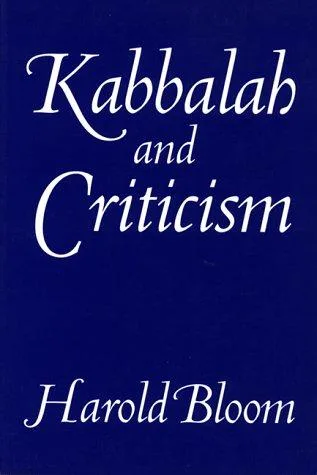





From the “Kabbalah” Collection
View all →





More Free Kabbalah & Jewish Mysticism Books
View all →