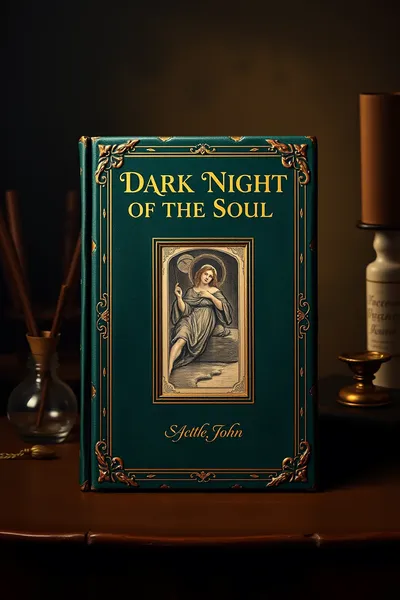
Dark Night Of The Soul

 76
76

Dark Night Of The Soul
St. John of the Cross’s "Dark Night of the Soul" is a starkly honest portrayal of spiritual desolation, far removed from saccharine devotional literature. The poem itself, a concise, powerful evocation of absence, is amplified by the author’s own explanatory prose. His unflinching description of feeling entirely cut off from divine presence, even during prayer, offers a rare validation for those enduring similar trials. The strength lies in its raw authenticity and the detailed, if challenging, theological framework provided for understanding this phenomenon. A limitation, however, is the dense theological language which can be a barrier for modern readers without prior familiarity with scholastic thought. The passage detailing how "faith, hope, and charity" are purified through this "night" is particularly arresting, illustrating the transformative, albeit painful, process.
This work offers a necessary, albeit rigorous, companion for the spiritually arid.
📝 Description
76
Saint John of the Cross wrote 'Dark Night of the Soul' during his imprisonment in the 16th century.
This book contains a poem by Saint John of the Cross, written in the late 16th century, that describes a soul's difficult passage through spiritual emptiness. His prose commentary explains this experience, which he calls the 'dark night.'
The text is for those who have gone through periods of spiritual dryness, doubt their faith, or feel distant from God. It speaks to people who find prayer difficult and religious practices unfulfilling. It also suits those seriously studying Christian mysticism and the psychology of faith.
The work was created during the Counter-Reformation by a Carmelite friar who faced opposition within his order. Saint John of the Cross, alongside Teresa of Ávila, was a major figure in the Carmelite Reform. His writings were often produced under difficult circumstances and later examined.
Saint John of the Cross's 'Dark Night of the Soul' is a significant text within Christian mysticism. It describes a process of spiritual growth through suffering and detachment. This tradition emphasizes direct experience of the divine, often involving a stripping away of worldly comforts and spiritual consolations. The Carmelite Reform, which John of the Cross helped lead, sought a return to a more contemplative and austere form of religious life, aligning with this mystical path.
💡 Why Read This Book?
• Learn the specific Carmelite Reform context that led to St. John of the Cross's 16th-century imprisonment and the subsequent writing of this seminal poem. • Understand the theological concept of the 'dark night' as a process of purification, distinct from mere depression, as described in the poem's commentary. • Gain insight into how faith can be strengthened through periods of perceived spiritual emptiness, a core tenet explored through the "night of the senses" and "night of the spirit."
⭐ Reader Reviews
Honest opinions from readers who have explored this book.
❓ Frequently Asked Questions
When was "Dark Night of the Soul" originally written?
The poem "Dark Night of the Soul" was written by St. John of the Cross in the late 16th century, likely around 1578-1579, during his imprisonment.
Who was St. John of the Cross and why was he imprisoned?
St. John of the Cross was a 16th-century Spanish Carmelite friar and mystic. He was imprisoned by rival factions within his order due to his involvement in the Carmelite Reform, which sought to return the order to stricter contemplative practices.
What is the 'dark night' in the context of the book?
The 'dark night' refers to a spiritual state of profound dryness and desolation, where the soul feels abandoned by God. St. John of the Cross describes it as a necessary purification process to detach from spiritual consolations and foster a purer love for God.
Is "Dark Night of the Soul" a religious text or a psychological one?
It is primarily a theological and mystical work rooted in Christian tradition. However, its exploration of spiritual desolation and the inner life has significant psychological resonance and is studied in comparative spirituality.
What is the relationship between the poem and the commentary?
The book consists of the poem itself, which is a lyrical expression of the soul's journey through spiritual darkness, followed by St. John of the Cross's extensive prose commentary that explains the poem's meaning and the theological significance of each stanza.
Does the book offer practical advice for dealing with spiritual dryness?
Yes, the commentary provides a theological framework and guidance on how to understand and endure periods of spiritual dryness, viewing them as a path to deeper union with God rather than a sign of abandonment.
🔮 Key Themes & Symbolism
Spiritual Purification
The core of "Dark Night of the Soul" is the concept of spiritual purification through suffering. St. John of the Cross posits that the soul must undergo a 'dark night' to shed attachments to sensory and spiritual consolations. This arduous process, detailed in his commentary on the poem, strips away imperfections, preparing the soul for a more direct and unmediated union with God. It's presented not as punishment, but as a necessary, albeit painful, step in spiritual maturation, akin to refining precious metals through fire.
The Nature of God
The work grapples with the incomprehensible nature of God and humanity's often flawed perception of the divine. St. John of the Cross argues that our limited human faculties, including our intellect and will, require a radical detachment to truly apprehend God. The 'dark night' serves to purify these faculties, moving the soul from an understanding based on sensory experience or created things to a direct, albeit dark, apprehension of God in Himself, beyond all images and concepts.
Faith, Hope, and Charity
The text examines how the theological virtues of faith, hope, and charity are transformed and deepened during the 'dark night.' Faith moves from relying on visible signs to a trust in the unseen. Hope transcends earthly desires, focusing on eternal union. Charity is purified from self-interest, becoming a selfless love for God alone. St. John of the Cross illustrates how these virtues, when tested in the crucible of spiritual darkness, emerge stronger and more aligned with divine will.
Mystical Union
Ultimately, "Dark Night of the Soul" is a guide towards mystical union with God. The poem and its commentary trace the soul's progression from initial spiritual dryness to a state of profound communion. This union is not an ecstatic vision in the conventional sense, but a quiet, intense dwelling in the presence of God, achieved after the complete purgation of the soul's faculties and desires. It represents the ultimate goal of the spiritual life as understood in Carmelite mysticism.
💬 Memorable Quotes
Direct passages from the work, attributed to the author.
“Upon a dark night, when the burning love was inflamed with love, O happy fortune! I went out unobserved, my house being now at rest.”
— This opening stanza immediately sets the scene for a profound spiritual transition. The 'dark night' is framed not as an absence of God, but as a fertile ground for divine love, allowing the soul to depart from its familiar, resting state ('house') under the impulse of an overwhelming, yet concealed, divine attraction.
“I stood in suspense, my hand laid on my breast, my head bent low.”
— This posture signifies deep introspection and surrender. It illustrates the soul's passive state during the dark night, where action gives way to stillness and receptivity, awaiting divine guidance rather than seeking it through active means.
“What shall I do with this excess of beauty?”
— This reflects the soul's struggle to comprehend and contain the overwhelming divine presence that begins to manifest after the purification of the dark night. It speaks to the ineffable nature of God's beauty, which transcends ordinary human capacity to perceive or articulate.
“The soul is not to be discouraged, nor to grieve over its dryness.”
— This is a direct piece of counsel for those experiencing spiritual aridity. It reframes the experience of dryness not as a failure or abandonment, but as a stage in the spiritual journey that requires perseverance and trust in God's unseen work.
💡 Key Ideas
Editorial paraphrase of the work's core concepts — not direct quotes.
So that I might give greater satisfaction to all, I had resolved to do nothing but that which I judged would be most acceptable to God.
This passage highlights the Carmelite ideal of selfless service and obedience, even amidst internal struggle. It demonstrates a commitment to aligning one's will with God's perceived will, a key aspect of spiritual discipline discussed in the commentary.
🌙 Esoteric Significance
Tradition
While rooted in Catholic mysticism, "Dark Night of the Soul" holds significant weight within esoteric traditions due to its profound exploration of inner transformation and the soul's journey. It aligns with Hermetic principles of ascent and purification, and shares Gnostic themes of transcending material limitations to apprehend divine truth. Its focus on inner experience and direct apprehension of the divine places it in dialogue with various contemplative practices across different spiritual lineages, often cited by those seeking a non-dogmatic path to spiritual depth.
Symbolism
The central symbol is the 'dark night' itself, representing a state of unknowing and spiritual desolation that purifies the soul. Light, often associated with divine presence, is paradoxically absent or obscured during this phase, forcing reliance on faith rather than sensory perception. The 'burning love' mentioned in the poem symbolizes divine grace or the soul's intense desire for God, acting as the driving force even within the darkness. The journey from darkness towards a hidden divine presence is a motif reflecting the soul's arduous path toward union.
Modern Relevance
Contemporary thinkers and practitioners in fields like depth psychology, transpersonal psychology, and contemplative Christianity draw heavily on St. John of the Cross's work. His articulation of spiritual desolation appeals to modern discussions on existential angst and the search for meaning. Practices focusing on mindfulness, non-dual awareness, and radical acceptance of difficult inner states often find echoes in his descriptions of the dark night. His insights continue to inform spiritual directors, therapists, and individuals seeking to navigate profound inner transformations.
👥 Who Should Read This Book
• Individuals experiencing prolonged periods of spiritual dryness or existential questioning, seeking a theological framework to understand these difficult phases. • Students of Christian mysticism and comparative religion who wish to engage with a foundational text of the Carmelite tradition and its influence. • Seekers interested in the psychological dimensions of faith and the transformative power of confronting spiritual desolation, who are prepared for dense theological exposition.
📜 Historical Context
St. John of the Cross penned "Dark Night of the Soul" during a tumultuous period in 16th-century Spain, amidst the Counter-Reformation. As a Carmelite friar, he was a key proponent of the Carmelite Reform, initiated with Teresa of Ávila, aiming to restore contemplative austerity to the order. This reformist zeal placed him in direct conflict with those who favored a less rigorous observance. His imprisonment by discalced Carmelite superiors, likely between 1578 and 1580, provided the stark backdrop for the composition of the poem. His writings faced scrutiny, and his ideas were later examined by the Spanish Inquisition, though he was ultimately exonerated. This era was also marked by intense theological debate, with figures like Ignatius of Loyola shaping new approaches to spirituality and the Society of Jesus gaining prominence.
📔 Journal Prompts
The 'dark night' as a detachment from sensory consolations: How does this concept challenge your current spiritual practices?
Reflect on the poem's "burning love" as a catalyst for departure from the 'house.' What 'house' must you leave?
Consider the purification of faith, hope, and charity. Which virtue feels most tested in your current spiritual landscape?
Analyze the passive stance described in the poem ('I stood in suspense'). How can cultivating stillness aid your spiritual journey?
Evaluate the 'excess of beauty' mentioned. What are the challenges of receiving divine presence beyond ordinary comprehension?
🗂️ Glossary
Carmelite Reform
A 16th-century movement within the Carmelite Order, championed by Teresa of Ávila and St. John of the Cross, aimed at restoring the order's original contemplative austerity and poverty.
Night of the Senses
The initial stage of spiritual purification described by St. John of the Cross, where the soul detaches from sensory pleasures and the consolations derived from them.
Night of the Spirit
A deeper, more profound stage of purification where the soul detaches from spiritual consolations and intellectual attachments, leading to a more direct, albeit dark, experience of God.
Spiritual Desolation
A state of profound dryness, emptiness, and absence of God's felt presence, often accompanied by a sense of abandonment or spiritual weariness.
Mystical Union
The ultimate goal in Christian mysticism, representing a deep, direct, and transformative communion between the soul and God, often described as a marriage of the soul and the divine.
Theological Virtues
The virtues of faith, hope, and charity (love), which are believed to be infused by God and are essential for a relationship with the divine.
Contemplation
A form of prayer or spiritual practice involving deep, silent reflection and direct, unmediated awareness of God's presence, distinct from discursive meditation.
This book appears in 1 collection
🔮 Readers Also Liked
Browse all →








From the “Dark Night of the Soul” Collection
View all →





More Free Sacred Texts & Gnosticism Books
View all →








![EBOOK COLLECTION ( PART 8) [ CSI][h 33t]](/img/thumb/ebook-collection-part-8-csi-h-33t.webp)
