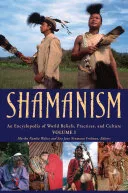
Shamanism
 72
72

Shamanism
Mariko Namba Walter and Eva Jane Neumann Fridman's "Shamanism" is an ambitious undertaking, presenting a sweeping international survey of a practice as old as humanity itself. The sheer breadth of contributors, drawing from diverse academic fields, offers a multi-faceted view of shamanism. One notable strength is the detailed ethnographical accounts, which ground abstract concepts in specific cultural contexts, such as the descriptions of Siberian shamanism. However, the work's encyclopedic nature, while informative, can sometimes feel detached, lacking a unified narrative voice to connect the disparate entries. The section on the psychological aspects of shamanic trance, for instance, could benefit from more direct engagement with the subjective experience described in other parts of the text. Ultimately, this is an indispensable reference for academic study, though perhaps less accessible for the general reader seeking a more personal exploration of shamanic paths.
📝 Description
72
Published in 1991, Shamanism is a two-volume academic survey of global shamanic practices.
This extensive two-volume work details shamanistic beliefs and practices worldwide, from their earliest origins to modern forms. It features nearly 200 entries written by experts in ethnography, psychology, archaeology, history, religion, and folklore. Each contribution clarifies general shamanic principles while describing the specific rituals, worldviews, and community roles of various shamanic traditions. The collection highlights how these practices have adapted historically and culturally, offering a wide view of shamanism's diverse expressions across the globe.
The authors employ rigorous academic methods to analyze shamanic experiences, their cultural foundations, and their historical progression. This resource is intended for academic study, not as a guide for practice. It is designed for scholars and dedicated students who require a thorough academic overview of shamanism, supported by empirical research and scholarly analysis of religious and cultural history.
Shamanism, as examined in this work, refers to ancient and ongoing traditions where individuals mediate between the human and spirit worlds. These practices are not a single religion but a category of spiritual technology found across many cultures, predating organized religions. The book approaches these phenomena through academic disciplines, analyzing the trance states, healing practices, and visionary journeys that characterize these traditions, placing them within their specific cultural and historical contexts rather than as a unified esoteric system.
💡 Why Read This Book?
• Understand the global diversity of shamanic practices, from specific historical examples like Siberian traditions to contemporary adaptations, as detailed in the nearly 200 entries. • Gain insight into the academic methodologies used to study shamanism, including ethnographic, psychological, and historical approaches, as presented by leading scholars. • Explore the cultural adaptations of shamanistic beliefs, appreciating how these practices have evolved and persisted across different societies and historical periods.
⭐ Reader Reviews
Honest opinions from readers who have explored this book.
❓ Frequently Asked Questions
When was the first edition of "Shamanism" by Walter and Fridman published?
The first edition of "Shamanism" by Mariko Namba Walter and Eva Jane Neumann Fridman was published on December 15, 2004. This comprehensive work was conceived as a two-volume reference.
What academic disciplines are represented by the authors in "Shamanism"?
The contributors to "Shamanism" hail from a wide array of academic fields, including ethnography, psychology, archaeology, history, and religious and folk literature studies.
Does "Shamanism" offer practical guidance for practicing shamanism?
No, "Shamanism" is presented as an academic reference work, not a practical guide. It focuses on explaining general principles and detailing diverse practices from a scholarly perspective.
What is the scope of "Shamanism" regarding time and geography?
The work provides an international survey of shamanistic beliefs, covering periods from prehistory to the present day and encompassing numerous cultures worldwide.
How many entries are included in this two-volume reference on shamanism?
The comprehensive reference "Shamanism" features nearly 200 detailed and readable entries, each contributed by a leading scholar in their respective field.
What is the primary emphasis of the "Shamanism" book?
The book's primary emphasis is on providing an international survey of shamanism, detailing beliefs and practices and highlighting their historical and current cultural adaptations.
🔮 Key Themes & Symbolism
Global Ethnographic Survey
This work excels in its encyclopedic approach to shamanism, presenting a vast array of practices and beliefs from diverse cultures. It moves beyond generalized notions to offer specific ethnographic accounts, detailing the intricate cosmologies and ritualistic frameworks that define shamanic traditions in regions from Siberia to the Americas. The emphasis on historical and current cultural adaptations provides a dynamic perspective, showing how these ancient practices persist and transform.
Scholarly Methodology
The strength of "Shamanism" lies in its rigorous academic foundation. Contributions from ethnographers, psychologists, archaeologists, historians, and religious scholars offer complex analyses. This interdisciplinary approach allows for a deep examination of shamanic phenomena, exploring not just the experiential aspects but also their socio-cultural, historical, and psychological dimensions, thus providing a comprehensive scholarly overview.
Prehistory to Present Day
Walter and Fridman meticulously chart the trajectory of shamanism from its earliest discernible roots to its contemporary forms. This temporal scope is crucial for understanding shamanism not as a static relic but as a living, evolving tradition. By examining historical adaptations and current manifestations, the book illuminates the enduring human impulse to connect with the spiritual or energetic dimensions of reality.
Cultural Adaptations
A central theme is how shamanistic practices are deeply embedded within and adapted to specific cultural contexts. The work showcases the remarkable flexibility and resilience of shamanism, demonstrating its ability to integrate with different belief systems and social structures. Understanding these adaptations is key to appreciating the universal threads and particular expressions of shamanic worldviews.
💬 Memorable Quotes
Direct passages from the work, attributed to the author.
“nearly 200 detailed, readable entries”
— This phrase highlights the immense scope and accessibility of the work, indicating that "Shamanism" is not a brief overview but an exhaustive reference intended for serious study, yet written in a manner that remains understandable.
“first international survey of shamanistic beliefs from prehistory to the present day”
— This statement underscores the pioneering nature of the publication, emphasizing its comprehensive chronological and geographical reach in cataloging shamanic traditions for academic and esoteric research.
“leading ethnographers, psychologists, archaeologists, historians, and scholars of religion and folk literature explain...”
— This points to the authoritative and multi-disciplinary nature of the content, assuring readers that the explanations are grounded in the expertise of respected academics from various relevant fields.
“historical and current cultural adaptations”
— This concept is central to the book's approach, suggesting that shamanism is not a monolithic entity but a dynamic set of practices that have evolved and changed in response to different societal and historical circumstances.
“general principles of shamanism as well as the details of widely varied practices”
— This indicates the dual focus of the work: to identify common threads and underlying structures in shamanic traditions while also celebrating and detailing the unique characteristics of specific cultural manifestations.
🌙 Esoteric Significance
Tradition
While not explicitly belonging to a single esoteric lineage like Hermeticism or Theosophy, "Shamanism" serves as a foundational text for contemporary esoteric practitioners interested in animistic and nature-based spiritualities. It provides an academic framework for understanding practices that often precede organized religion and exist outside mainstream esoteric orders, grounding esoteric explorations in empirical and historical data.
Symbolism
The work details numerous symbols central to shamanic traditions, such as the World Tree, spirit animals, and journeying to other realms. These symbols are not merely decorative but represent core cosmological principles and maps for navigating altered states of consciousness and the spirit world, aligning with esoteric quests for understanding universal structures and spiritual ascent.
Modern Relevance
Contemporary neo-shamanic movements, nature-based spiritual paths, and therapeutic approaches incorporating altered states of consciousness frequently draw upon the research presented in works like this. Thinkers and practitioners in fields such as ecopsychology, transpersonal psychology, and contemporary paganism find value in its detailed accounts of historical and cross-cultural shamanic engagement with the environment and the psyche.
👥 Who Should Read This Book
• Academic researchers in anthropology, religious studies, and comparative mythology seeking a comprehensive, multi-authored reference on global shamanic traditions. • Students of esoteric traditions interested in the historical and cross-cultural roots of animistic beliefs, spirit work, and altered states of consciousness. • Cultural historians and archaeologists examining the role of shamanism in early human societies and its evolution across millennia.
📜 Historical Context
Published in December 2004, Mariko Namba Walter and Eva Jane Neumann Fridman's "Shamanism" emerged during a period of renewed academic and popular interest in indigenous spiritualities and alternative healing modalities. The early 21st century saw scholars grappling with post-colonial perspectives and the globalization of spiritual practices, making an international survey particularly relevant. The work arrived as a significant counterpoint to earlier, often romanticized or narrowly focused, studies of shamanism. While Mircea Eliade's influential "Shamanism: Archaic Techniques of Ecstasy" (1951) had laid much of the groundwork, it was criticized for its generalized approach. Walter and Fridman's collection, with nearly 200 entries by diverse experts, aimed for a more granular, culturally specific, and up-to-date understanding. Its reception within academia was likely positive for its comprehensive scope, filling a gap for researchers needing a broad, cross-cultural reference. It engaged with ongoing debates in religious studies and anthropology concerning the definition and universality of shamanic phenomena.
📔 Journal Prompts
The concept of 'cultural adaptations' in shamanism: how might this apply to modern spiritual seeking?
Spirit animals and their symbolic meaning: reflection on personal totemic associations.
Prehistoric shamanism: imagine the earliest forms of ecstatic ritual.
Scholarly analysis of shamanic practices: what are the benefits of this approach?
The details of widely varied practices: compare two distinct cultural examples from the text.
🗂️ Glossary
Shaman
An individual in certain cultures who is believed to have the ability to commune with or influence the spirit world, often through altered states of consciousness, and who typically acts as a healer or spiritual mediator.
Ethnography
The scientific description of the customs of individual peoples and cultures, often involving detailed fieldwork and participant observation.
Cosmology
The study of the origin, evolution, and eventual fate of the universe; in a cultural context, it refers to a society's understanding of the structure and workings of the cosmos.
Ritual
A sequence of activities involving gestures, words, actions, or objects, performed according to a set sequence, often for religious or ceremonial purposes.
Altered States of Consciousness (ASC)
Any mental state significantly different from a normal waking state, often achieved through practices like meditation, trance, or the use of psychoactive substances.
Animism
The belief that objects, places, and creatures all possess a distinct spiritual essence, often leading to the attribution of souls or consciousness to inanimate things.
Mediator
An intermediary between two parties; in shamanism, the shaman often acts as a mediator between the human community and the spirit world.





![EBOOK COLLECTION ( PART 8) [ CSI][h 33t]](/img/thumb/ebook-collection-part-8-csi-h-33t.webp)