TAITTIRIYA UPANISHAD
 76
76

TAITTIRIYA UPANISHAD
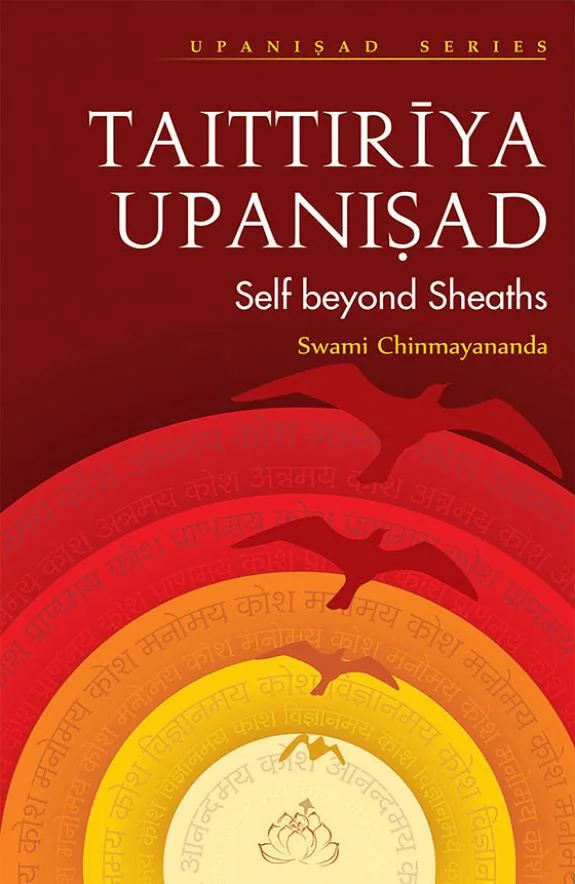
Swami Chinmayananda's rendition of the Taittiriya Upanishad offers a lucid entry point into one of Hinduism's most intricate philosophical texts. His commentary, presented here in its 2014 publication, excels at demystifying the complex layers of the Pancha Koshas, making this ancient wisdom accessible to a contemporary audience. The strength lies in Chinmayananda's ability to connect the abstract principles of Vedanta to practical living, particularly evident in the sections addressing student conduct and the pursuit of knowledge. However, the extensive exegesis, while thorough, can at times feel dense for those entirely new to Upanishadic thought, requiring dedicated focus. A particularly illuminating passage is the description of the Ananda Maya Kosha, which Chinmayananda unpacks with clarity, presenting bliss not as an ephemeral emotion but as the very substratum of existence. This work serves as a detailed guide for earnest seekers of self-knowledge.
📝 Description
76
Composed around the 8th to 6th centuries BCE, the Taittiriya Upanishad details the five sheaths of existence.
The Taittiriya Upanishad, a text from the Krishna Yajurveda, is divided into three sections. The Shiksha Valli offers instruction in Vedic recitation, focusing on phonetics and grammar. The Ananda Valli discusses the Pancha Koshas, the five layers of being that obscure the true self, moving from the physical body to the bliss sheath. Finally, the Bhrigu Valli records a dialogue between the sage Bhrigu and his father Varuni, who explains the nature of Brahman through a series of progressively subtler understandings.
This Upanishad presents a systematic approach to understanding the self and its relation to the ultimate reality. Its concepts are particularly relevant for practitioners of yoga and meditation, offering a framework for self-awareness through the analysis of the Koshas. Students of Advaita Vedanta will find its scriptural exegesis valuable, while scholars of comparative religion can examine its insights into ancient Indian educational practices and ethical principles.
As one of the older Upanishadic texts, the Taittiriya Upanishad belongs to the early Vedanta tradition. It predates many formal philosophical schools but establishes concepts that would later be central to Advaita Vedanta, particularly through its detailed examination of the layers of consciousness and the ultimate reality. The text's structured approach to understanding existence, moving from the gross to the subtle, aligns with yogic and meditative practices aimed at realizing the Atman, the true self, beyond the material and mental encasements.
💡 Why Read This Book?
• Gain a systematic understanding of the Pancha Koshas, the five sheaths of human existence, as detailed in the Shiksha Valli and Ananda Valli sections, to better discern the layers of your own being. • Explore the ancient Gurukula educational system's holistic approach to learning and life, as presented in the Bhrigu Valli, offering timeless principles for ethical conduct and spiritual development. • Grasp the concept of Brahman as pure Ananda (bliss) through Chinmayananda's detailed exposition, providing a profound perspective on ultimate reality that transcends ordinary happiness.
⭐ Reader Reviews
Honest opinions from readers who have explored this book.
❓ Frequently Asked Questions
What are the Pancha Koshas described in the Taittiriya Upanishad?
The Taittiriya Upanishad describes five sheaths or layers of the human personality: Annamaya (food-body), Pranamaya (energy-body), Manomaya (mind-body), Vijnanamaya (intellect-body), and Anandamaya (bliss-body), offering a framework for self-understanding.
Who was Swami Chinmayananda and why is his commentary important?
Swami Chinmayananda (1916-1993) was a renowned spiritual teacher who founded the Chinmaya Mission. His commentaries are valued for their clarity, practical application of Vedanta, and ability to make complex scriptures accessible to modern seekers.
What is the historical significance of the Taittiriya Upanishad?
As one of the older Upanishads, likely composed before 500 BCE, it represents an early articulation of Vedanta philosophy and influenced later schools of thought within Hinduism. It also provides insights into ancient Indian educational practices.
How does the Taittiriya Upanishad relate to the Vedas?
The Taittiriya Upanishad is part of the Taittiriya Aranyaka, which itself belongs to the Krishna (Black) Yajurveda. It represents the philosophical culmination of Vedic knowledge, moving from ritualistic to introspective inquiry.
What is the ultimate message of the Taittiriya Upanishad?
The Upanishad's ultimate message points to the realization that the highest reality, Brahman, is of the nature of Existence, Consciousness, and Bliss (Sat-Chit-Ananda), and that the individual self (Atman) is identical with this reality.
Where can I find the original publication date for Swami Chinmayananda's Taittiriya Upanishad?
The first published edition of Swami Chinmayananda's commentary on the Taittiriya Upanishad, as indicated, was in 2014, though his teachings predate this specific publication.
🔮 Key Themes & Symbolism
The Pancha Koshas
The text's most distinctive contribution is its detailed exposition of the five Koshas, or sheaths, that envelop the Atman. These are the Annamaya Kosha (physical body), Pranamaya Kosha (vital energy), Manomaya Kosha (mind), Vijnanamaya Kosha (intellect), and Anandamaya Kosha (bliss). By dissecting these layers, the Upanishad provides a systematic method for self-inquiry, enabling practitioners to distinguish the true Self from its conditioned coverings and understand the subtle anatomy of consciousness.
Brahman and Ananda
Central to the Taittiriya Upanishad is the concept of Brahman, the ultimate, unchanging reality. The text famously defines Brahman as Sat-Chit-Ananda—Existence, Consciousness, and Bliss. This definition shifts the focus from an abstract, impersonal absolute to one characterized by inherent joy. The Anandamaya Kosha is presented as the innermost sheath, closest to the Atman, and its nature is identified with this divine bliss, suggesting that true happiness is our essential nature.
Vedantic Education and Ethics
The Upanishad includes significant sections on education and ethical conduct, particularly the 'Sānti Pātha' (peace invocation) and the 'Anuvāka' sections concerning the duties of graduates. These passages outline the responsibilities of teachers and students within the Gurukula system, emphasizing the importance of truthfulness, discipline, and the pursuit of knowledge for spiritual growth. It frames education not merely as intellectual training but as a holistic preparation for life and self-realization.
The Path to Self-Knowledge
Through the dialogue between Bhrigu and Varuna, the Upanishad illustrates a method for approaching self-knowledge through progressive inquiry and austerity (Tapas). Bhrigu learns to discern Brahman through contemplation of his own nature and the cosmos. This narrative underscores that understanding the ultimate reality is an experiential process, achieved by peeling back layers of ignorance and realizing the inherent divinity within oneself and all existence.
💬 Memorable Quotes
Direct passages from the work, attributed to the author.
“Satyam Vada, Dharmam Chara”
— This imperative translates to 'Speak the truth, practice righteousness.' It expresses the ethical foundation of Vedanta, emphasizing that living truthfully and ethically is integral to the spiritual path and the pursuit of self-knowledge.
“Brahman is Existence, Consciousness, Bliss.”
— This is the famous definition of Brahman as Sat-Chit-Ananda. It asserts that the ultimate reality is not a void but a plenum of being, awareness, and inherent joy, our true nature.
“He who knows the bliss of Brahman fears not.”
— This statement links the realization of Brahman's blissful nature with the cessation of fear. It suggests that true contentment and security arise from understanding our connection to the ultimate source.
“Annam Brahmaneti Vyajanat.”
— Interpreted as 'Food is Brahman,' this highlights the sacredness of sustenance and the physical body (Annamaya Kosha). It elevates the mundane act of eating and the material form to a divine principle.
💡 Key Ideas
Editorial paraphrase of the work's core concepts — not direct quotes.
From whom these beings are born, by whom they live, into whom they merge; that seek to know. That is Brahman.
This passage defines Brahman as the fundamental source, sustainer, and ultimate destination of all creation. It prompts contemplation on the origin and dissolution of the universe as a means to comprehend the Absolute.
🌙 Esoteric Significance
Tradition
The Taittiriya Upanishad is a core part of the Vedanta tradition, a major school of Hindu philosophy that forms the basis for many esoteric practices within India. While not directly aligned with Western Hermeticism or Kabbalah, its exploration of subtle bodies (Koshas), the nature of consciousness, and the ultimate reality (Brahman) appeals to the universal quest for spiritual knowledge found across various mystical lineages. It provides a foundational framework for understanding the microcosm (human being) and macrocosm (universe) through an Indian lens.
Symbolism
The concept of the five 'Koshas' (sheaths) serves as a primary symbolic structure, representing layers of existence from the gross physical to the subtlest bliss. The 'Ananda' (bliss) itself functions as a symbol for the ultimate nature of reality, suggesting that spiritual fulfillment is not an acquired state but an inherent quality to be realized. Fire (Agni) and food (Anna) also appear symbolically, linking the material basis of life and existence to the divine principle of Brahman.
Modern Relevance
Contemporary thinkers and practitioners in yoga, meditation, and mindfulness draw heavily on the Taittiriya's model of the Pancha Koshas for understanding psychological and energetic states. Its emphasis on Brahman as Sat-Chit-Ananda informs modern non-dual spiritual movements. Furthermore, the text's insights into ethical living and the purpose of education continue to be relevant in discussions on holistic development and spiritual pedagogy within various global spiritual communities.
👥 Who Should Read This Book
• Students of Indian philosophy and comparative religion seeking foundational texts that explore consciousness and reality through the lens of Vedanta. • Yoga and meditation practitioners interested in a detailed understanding of the subtle human anatomy (Pancha Koshas) to deepen their self-awareness and practice. • Scholars of ancient Indian history and culture looking for insights into the Gurukula educational system and the ethical frameworks of the Vedic period.
📜 Historical Context
The Taittiriya Upanishad emerges from the intellectual milieu of the late Brahmana period in ancient India, a time preceding the formal codification of distinct philosophical schools like Samkhya or Yoga. Likely composed between the 8th and 6th centuries BCE, it represents an important phase in Vedic thought, shifting focus from ritualistic concerns (Brahmanas) to introspective inquiry (Upanishads). This era saw the flourishing of the Gurukula system of education, where students lived with their teachers, receiving holistic instruction, as evidenced by the sections on student conduct and duties. The philosophical underpinnings of the Taittiriya, particularly its emphasis on Brahman and the nature of reality, would profoundly influence later Advaita Vedanta thinkers, most notably Adi Shankara, who extensively commented on Upanishadic texts. While specific contemporary reception records are scarce for such ancient texts, its inclusion within the Krishna Yajurveda canon signifies its established importance within the Vedic tradition.
📔 Journal Prompts
The Ananda Maya Kosha as the nature of Brahman: How does this perspective challenge or affirm your current understanding of happiness?
Contemplating the Annamaya Kosha: Reflect on the relationship between your physical body and your sense of self.
Satyam Vada, Dharmam Chara: Identify one practical way to integrate these principles more fully into your daily life.
The concept of Brahman as the source, sustainer, and destination: What does this imply about your own existence?
The Gurukula's emphasis on holistic education: How might ancient pedagogical ideals inform modern learning?
🗂️ Glossary
Brahman
The ultimate, unchanging reality or absolute consciousness that underlies all existence in Hindu philosophy. It is often described as Sat-Chit-Ananda (Existence-Consciousness-Bliss).
Pancha Koshas
The five sheaths or layers of the human personality, as described in the Taittiriya Upanishad: Annamaya (food-body), Pranamaya (energy-body), Manomaya (mind), Vijnanamaya (intellect), and Anandamaya (bliss-body).
Atman
The individual soul or true Self, which in Advaita Vedanta is identical with Brahman. It is the innermost essence of a being, beyond the five Koshas.
Ananda
Bliss or supreme joy. In the Taittiriya Upanishad, it is presented as the essential nature of Brahman and the innermost Kosha.
Satyam
Truth. In a profound sense, it refers to ultimate reality or that which is unchanging and eternal, as opposed to transient phenomena.
Dharma
Righteousness, duty, cosmic law, or one's essential nature. Practicing Dharma is considered crucial for spiritual progress.
Gurukula
An ancient Indian system of education where students lived with their teacher (Guru) in close proximity, receiving instruction in various subjects, including spiritual and ethical principles.
This book appears in 1 collection
🔮 Readers Also Liked
Browse all →







From the “Upanishads” Collection
View all →






More Free Sacred Texts & Gnosticism Books
View all →