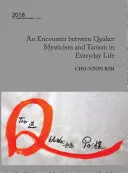
An Encounter Between Quaker Mysticism and Taoism in Everyday Life
 83
83

An Encounter Between Quaker Mysticism and Taoism in Everyday Life
Cho-Nyon Kim's exploration of Quaker mysticism and Taoism offers a refreshing perspective on integrating disparate spiritual paths. The strength of this work lies in its grounded approach, moving beyond abstract philosophy to consider the lived experience of faith and ethical action. Kim’s admiration for Ham Sok Hon’s activism provides a compelling anchor, illustrating how deeply held beliefs can translate into tangible efforts for peace. A particularly poignant aspect is the contemplation of living simply in a world increasingly defined by complexity and self-interest. However, the book's brevity, stemming from its lecture format, means some threads, like the intricate parallels between Quaker inwardness and Taoist wu wei, could benefit from further elaboration. The challenge for readers will be to unpack the specific applications of these traditions in their own lives. Ultimately, this is a thoughtful, if concise, invitation to reconsider the foundations of personal conduct and societal engagement.
📝 Description
83
Cho-Nyon Kim's 2018 book connects Quaker mysticism and Taoism for daily living.
Cho-Nyon Kim's spiritual inquiries appear in An Encounter Between Quaker Mysticism and Taoism in Everyday Life. The book stems from Kim's experiences growing up in Korea, a culture touched by Confucianism, Buddhism, Taoism, and Christianity. He pays particular attention to the impact of Ham Sok Hon, a Korean peace activist and Quaker, on his own thinking. The text is for anyone wanting to grasp how Eastern and Western contemplative paths might meet. It will interest those who study Quakerism, Taoism, or comparative spirituality. Readers concerned with ethical action, pacifism, and building calm societies in a complicated world will also find value here. It is for those inspired by people who connect different philosophical and religious traditions.
The book addresses the global situation after 2018, a time when countries are more connected but often act out of self-interest. It speaks to a need for spiritual advice that works in modern life. By using historical figures and traditions, the author suggests a way toward individual and group peace. The work also engages with the long history of spiritual ideas traveling between East and West. Kim discusses 'simplicity in a complex world,' 'peaceful society,' and weaving different spiritual influences into daily actions. He frames his thoughts within his personal spiritual path and his respect for Ham Sok Hon's work. The book aims to close the gap between mystical thought and everyday reality, proposing a unified approach to inner calm and social well-being.
This work enters the conversation between Quakerism and Taoism, two traditions that, despite originating in different parts of the world, share a focus on inner quietude and ethical conduct. Quakerism, with its emphasis on the 'inner light' and direct experience of the divine, finds resonance with Taoism's concept of the Tao, the natural order that underlies all existence. Both traditions encourage a life of simplicity, non-violence, and mindful action. Cho-Nyon Kim's text examines how these seemingly distinct paths can inform each other and offer practical wisdom for contemporary life, bridging the gap between contemplative ideals and everyday responsibilities.
💡 Why Read This Book?
• Gain practical wisdom on cultivating inner peace and outward action by examining Cho-Nyon Kim's interpretation of Ham Sok Hon's Quaker activism, offering a model for ethical engagement. • Discover actionable strategies for simplifying life amidst global complexity, inspired by the synthesis of Taoist principles and Quaker simplicity as presented in the text. • Explore how diverse religious influences, such as Confucianism, Buddhism, Taoism, and Christianity in Korea, can coalesce into a unified spiritual practice for building a more peaceful society.
⭐ Reader Reviews
Honest opinions from readers who have explored this book.
❓ Frequently Asked Questions
What is the core message of 'An Encounter Between Quaker Mysticism and Taoism in Everyday Life'?
The core message is about finding practical ways to live a simple, peaceful life in a complex world by drawing inspiration from Quaker mysticism and Taoist philosophy, exemplified by the life of Korean peace activist Ham Sok Hon.
Who was Ham Sok Hon and why is he significant in this book?
Ham Sok Hon was a prominent Korean peace activist and Quaker. Cho-Nyon Kim is inspired by his life and thoughts, using him as a key example of how spiritual principles can inform activism and the pursuit of peace.
How does the book connect Quakerism and Taoism?
The book explores the common ground and potential synthesis between the inward focus of Quaker mysticism and the principles of natural living and non-action (wu wei) found in Taoism, applying these to everyday life and societal concerns.
What is the 'Korean religious environment' mentioned in the book?
The Korean religious environment is characterized by a unique blend of influences from Confucianism, Buddhism, Taoism, and Christianity, which have historically been integrated into cultural practices and daily life in Korea.
Does the book offer specific techniques for achieving peace?
While not a manual of techniques, the book offers a philosophical framework and inspirational examples, like Ham Sok Hon's life, to guide readers toward personal and societal peace through mindful living and ethical consideration.
What does 'simplicity in a complex world' mean in the context of this book?
It refers to the intentional practice of reducing distractions and focusing on essential values and actions, drawing from both Quaker inwardness and Taoist naturalness, to navigate the challenges of modern existence with clarity and purpose.
🔮 Key Themes & Symbolism
Spiritual Synthesis
The work examines the potential for harmonizing seemingly disparate spiritual traditions, specifically Quaker mysticism and Taoism. It posits that their core tenets—emphasis on inner light and divine presence in Quakerism, and alignment with the natural order (Tao) in Taoism—can inform a unified approach to existence. This synthesis is not merely academic but is presented as a practical means to live more authentically and peacefully in the contemporary world, suggesting that shared values can bridge cultural and philosophical divides.
Simplicity and Complexity
A central concern is the challenge of maintaining simplicity and clarity of purpose amidst the overwhelming complexities of modern life. Cho-Nyon Kim uses the lecture format to question how individuals can foster inner peace and ethical conduct when faced with global challenges like nationalism and self-centeredness. The exploration draws parallels between Quaker discipline and Taoist naturalness as pathways to unburdening the self and living with greater intention and grace.
Activism and Inner Peace
The book highlights the intrinsic link between personal spiritual development and outward action for social good. The influence of Ham Sok Hon, a Korean peace activist, is paramount here. His life serves as a proof of how deep contemplative practice can fuel a commitment to peace and justice. The work suggests that true peace begins internally but must manifest externally, encouraging readers to consider their role in creating a more compassionate society.
Cultural Integration of Spirituality
Kim reflects on his Korean heritage, where Confucianism, Buddhism, Taoism, and Christianity have historically coexisted and intermingled. This context provides a backdrop for understanding how diverse spiritual influences can be integrated into the fabric of daily life without necessarily creating conflict. The book explores this phenomenon as a model for how individuals in any culture can draw from various wisdom traditions to enrich their spiritual journey.
💬 Memorable Quotes
Direct passages from the work, attributed to the author.
“Living a simple life in a complex world.”
— This phrase expresses the book's central aspiration: to find a path of groundedness and clarity amidst the overwhelming demands and distractions of contemporary existence, drawing on spiritual wisdom.
“Creating a peaceful society in the face of nationalism and self-centredness.”
— This points to the book's social and ethical dimension, emphasizing that individual spiritual practice is incomplete without a commitment to fostering collective well-being and overcoming divisive societal forces.
“Inspired by the life and thoughts of Ham Sok Hon.”
— This highlights the biographical and inspirational aspect, positioning Ham Sok Hon as a key figure whose example demonstrates the practical application of spiritual principles in active peacemaking and ethical living.
“Korean religious environment where Confucianism, Buddhism, Taoism and Christianity have all influenced cultural practices.”
— This provides context for the author's spiritual formation, illustrating a real-world example of how multiple religious and philosophical traditions can coexist and shape a society's daily life and values.
“Focus on how we can create a peaceful society.”
— This underscores the book's forward-looking and constructive aim, moving beyond personal enlightenment to address the broader need for societal harmony and the active role individuals can play in achieving it.
🌙 Esoteric Significance
Tradition
This work bridges contemplative traditions rather than adhering to a single esoteric lineage. It draws from Quaker mysticism, with its emphasis on the 'Inner Light' and direct experience of the divine, and Taoism, focusing on harmony with the Tao (the Way) and principles like wu wei (non-action). It aligns with the broader esoteric interest in practical spirituality and comparative mysticism, seeking universal principles applicable across diverse belief systems.
Symbolism
While the text is more conceptual than symbolic, the 'Inner Light' of Quakerism serves as a core symbol for divine presence within each individual, guiding action and understanding. Taoism's concept of the Tao itself functions as a supreme, ineffable principle of cosmic order. The integration of these suggests a symbolic move towards recognizing a universal, immanent divine principle accessible through both inner reflection and alignment with natural flow.
Modern Relevance
In contemporary times, where spiritual 'bricolage' is common, Kim's approach offers a model for integrating wisdom traditions without syncretic dilution. Thinkers and practitioners focused on mindfulness, ethical living, conscious consumerism, and peace activism find resonance in the book's call for simplicity and societal harmony. It speaks to modern spiritual-but-not-religious movements and those seeking grounded, actionable wisdom beyond dogma.
👥 Who Should Read This Book
['• Individuals interested in comparative spirituality, particularly the connections between Western Quakerism and Eastern Taoism, seeking to understand their philosophical intersections.', '• Peace activists and social justice advocates looking for frameworks that link contemplative practice with ethical action and the creation of harmonious societies.', '• Readers grappling with the challenges of modern life who seek practical guidance on living simply and meaningfully amidst complexity, inspired by historical and philosophical figures.']
📜 Historical Context
Published in 2018, Cho-Nyon Kim's lecture emerged in an era marked by increasing globalization alongside resurgent nationalist sentiments and widespread societal anxieties. The work engages with a long tradition of inter-spiritual dialogue, a current that gained momentum in the 20th century with figures like Thomas Merton exploring Eastern philosophies. Kim’s specific focus on Quakerism and Taoism taps into enduring interests in these traditions, particularly their emphasis on inner experience and natural living. The Korean context, rich with the syncretic influence of Confucianism, Buddhism, Taoism, and Christianity, offers a unique perspective on religious pluralism. The work implicitly addresses contemporary spiritual seekers grappling with secularism and existential concerns, offering solace and direction through contemplative practice and ethical engagement, a path echoed by thinkers like the Dalai Lama who advocate for secular ethics.
📔 Journal Prompts
The practice of simplicity in a complex world, as discussed in relation to Ham Sok Hon.
Your personal interpretation of the 'Inner Light' within Quaker mysticism.
How Taoist principles of naturalness might inform your daily interactions.
Reflecting on the integration of diverse religious influences in your own cultural context.
The concept of creating a peaceful society through individual action.
🗂️ Glossary
Quaker Mysticism
A branch of Quakerism emphasizing direct, personal experience of God or the 'Inner Light,' often through silent contemplation, rather than reliance on creeds or sacraments.
Taoism
An ancient Chinese philosophy and religion emphasizing living in harmony with the Tao (the Way), characterized by principles such as wu wei (non-action), spontaneity, and naturalness.
Ham Sok Hon
A prominent 20th-century Korean Christian pacifist, philosopher, and democracy activist, often referred to as the 'Gandhi of Korea,' who was a significant influence on Cho-Nyon Kim.
Wu Wei
A core Taoist concept, often translated as 'non-action' or 'effortless action,' signifying action that is natural, spontaneous, and in alignment with the flow of the Tao.
Inner Light
A central concept in Quaker theology, referring to the presence of God or divine guidance within every individual, accessible through inward reflection and silent worship.
Korean Religious Environment
The unique spiritual field of Korea, historically shaped by the co-existence and interplay of Confucianism, Buddhism, Taoism, and Christianity, influencing cultural practices and daily life.
Nationalism
A political ideology characterized by the promotion of the interests of a particular nation, often with the aim of gaining and maintaining the nation's sovereignty (self-governance) over its homeland.