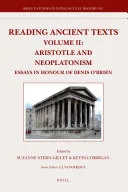
Reading Ancient Texts. Volume II: Aristotle and Neoplatonism
 82
82

Reading Ancient Texts. Volume II: Aristotle and Neoplatonism
The essays collected in Reading Ancient Texts, Volume II, offer a dense, scholarly exploration of the Aristotelian and Neoplatonic philosophical currents. The work excels in its detailed examination of specific textual interactions, particularly how figures like Plotinus and later commentators grappled with Aristotelian categories. A notable strength is the meticulous dissection of arguments, revealing subtle shifts in meaning over time. However, the collection’s primary limitation is its accessibility; the academic rigor, while commendable, renders it challenging for casual readers. The discussion on the concept of *ousia* as interpreted through both Aristotelian and Neoplatonic lenses, for instance, is particularly intricate, demanding significant prior knowledge. The volume serves as a valuable resource for specialists, but its specialized nature prevents broader appeal. It is a focused academic inquiry into philosophical reception.
📝 Description
82
Published in 2008, Volume II of Reading Ancient Texts analyzes Aristotle's influence on Neoplatonism.
This collection of essays does not present a chronological history but instead examines the philosophical relationship between Aristotle and the Neoplatonic tradition. Contributors analyze how later thinkers engaged with, interpreted, and reshaped Aristotle's works. The volume scrutinizes specific texts to illustrate a complex lineage of thought that transcends simple chronological development. It investigates the evolution of philosophical ideas and the methods employed in their preservation and transformation.
The work is aimed at serious students and academics of ancient philosophy, particularly those interested in how classical texts were received. Readers engaged with Neoplatonism, Aristotelianism, and the broader history of Western esoteric thought will find it relevant. It is for individuals who wish to understand the transmission and alteration of philosophical concepts through centuries of commentary, valuing rigorous textual analysis and intellectual history.
This volume situates itself within the study of how classical Greek philosophy, particularly Aristotle, was absorbed and transformed by Neoplatonic thinkers. It addresses the intellectual environment following the Renaissance and Enlightenment, periods of both rediscovery and critical engagement with antiquity. The essays implicitly consider the continuation of philosophical and mystical traditions, noting Plotinus's significant role in shaping Platonic thought and how his ideas were later integrated or contested by Aristotelian commentators.
💡 Why Read This Book?
• Gain a nuanced understanding of how Neoplatonists, such as Plotinus, reinterpreted Aristotelian concepts by examining specific textual commentaries discussed within the essays. • Appreciate the intricate methods of philosophical exegesis employed by ancient scholars, as demonstrated through the analysis of Aristotle's corpus and its reception. • Grasp the evolution of metaphysical ideas, particularly concerning *ousia* and causality, by tracing their transformation from Aristotelian foundations to Neoplatonic elaborations.
⭐ Reader Reviews
Honest opinions from readers who have explored this book.
❓ Frequently Asked Questions
What is the primary focus of Reading Ancient Texts, Volume II?
This volume concentrates on the complex relationship and intellectual dialogue between Aristotle's philosophy and the Neoplatonic tradition, exploring how later thinkers interpreted and engaged with Aristotelian texts.
Who are the key philosophers discussed in relation to Aristotle?
The work prominently features discussions involving Plotinus and other Neoplatonists, examining their interpretations and expansions of Aristotelian philosophical frameworks.
What kind of analysis does the book employ?
The book utilizes detailed textual analysis and scholarly essays to dissect specific philosophical arguments and the historical reception of classical texts, rather than presenting a simple historical narrative.
What is the publication date of this volume?
Reading Ancient Texts, Volume II, was first published on January 31, 2008.
Is this book suitable for beginners in philosophy?
Due to its academic nature and focus on specialized textual interpretation, this volume is best suited for advanced students and scholars of ancient philosophy rather than absolute beginners.
What does the volume say about the history of philosophy?
It examines the history of philosophy not just as a chronological account, but as a dynamic process of interpretation, recontextualization, and intellectual inheritance, particularly between Aristotle and Neoplatonism.
🔮 Key Themes & Symbolism
Textual Interpretation and Reception
This volume scrutinizes the active process by which ancient philosophical texts, particularly those of Aristotle, were read, understood, and transformed by subsequent generations of thinkers. It moves beyond simple commentary to explore how interpreters like Plotinus engaged with Aristotelian concepts, often re-casting them within new metaphysical or spiritual frameworks. The essays highlight the hermeneutic challenges and creative adaptations that define the transmission of philosophical ideas, emphasizing that reading is a form of philosophical creation in itself.
Aristotelian vs. Neoplatonic Metaphysics
A core theme is the comparative analysis of Aristotelian ontology and logic against the backdrop of Neoplatonic metaphysics. The contributors investigate how Neoplatonists, while often drawing on Aristotelian terminology, developed distinct philosophical systems emphasizing emanation, the One, and the spiritual ascent of the soul. This theme explores the points of divergence and convergence, revealing how Aristotelian principles were selectively adopted, modified, or rejected to construct a profoundly different philosophical vision.
The Nature of Philosophical Lineage
The book questions the straightforward linear progression often assumed in the history of philosophy. Instead, it proposes a more complex model of intellectual lineage, characterized by dialogue, critique, and reinterpretation across different schools and eras. By focusing on the interactions between Aristotle and Neoplatonism, the volume illustrates how philosophical traditions are not static entities but dynamic networks of influence and response, shaped by the evolving concerns of their adherents.
Hermeneutics of Ancient Wisdom
This theme addresses the specific methodologies required to engage with ancient philosophical texts. The essays demonstrate the critical importance of understanding the historical, cultural, and linguistic contexts in which these works were produced and received. It examines the art of exegesis, showing how scholars unravel the layers of meaning embedded within commentaries and original treatises, thereby clear the enduring power and many-sided interpretations of ancient philosophical thought.
💬 Memorable Quotes
Direct passages from the work, attributed to the author.
“The act of reading ancient texts is an act of philosophical creation.”
— This interpretation suggests that engaging with classical philosophy is not a passive reception of information but an active process of reinterpretation and creative synthesis, where the reader's understanding shapes the meaning of the text for a new context.
“Plotinus re-framed Aristotelian categories to articulate his doctrines of emanation.”
— This highlights how Neoplatonic philosophy, particularly through Plotinus, utilized the existing vocabulary and conceptual structures of Aristotelianism but adapted them to express a fundamentally different metaphysical worldview centered on divine outflow.
“The history of philosophy is a dialogue across centuries, not a mere chronology.”
— This concept challenges a simple timeline of philosophers, positing instead that intellectual history is a continuous conversation where ideas are debated, revised, and built upon by thinkers separated by vast spans of time.
“Understanding Aristotle requires grasping how his commentators understood him.”
— This emphasizes the crucial role of reception history in comprehending a philosopher's legacy. It implies that the influence and meaning of Aristotle's work are inseparable from the interpretations offered by figures like the Neoplatonists and later scholars.
“Metaphysical concepts undergo significant transformation through interpretive lenses.”
— This points to the dynamic nature of philosophical ideas, suggesting that core metaphysical principles, such as those found in Aristotle's work, can be radically altered in meaning and application when viewed through the distinct philosophical frameworks of later traditions like Neoplatonism.
🌙 Esoteric Significance
Tradition
This volume touches upon the Hermetic and Neoplatonic traditions, which form foundational pillars of Western esotericism. While primarily a work of academic philosophy, its focus on Plotinus and the interpretation of classical texts aligns with esoteric lineages that seek direct apprehension of higher realities through philosophical contemplation and the study of ancient wisdom. It bridges the gap between academic philosophy and esoteric studies by examining the very mechanisms through which esoteric ideas were preserved and transmitted from antiquity.
Symbolism
The text implicitly engages with the symbolism inherent in the transition from Aristotelian empiricism and logic to Neoplatonic idealism. The 'One' in Neoplatonism, for instance, functions as a ultimate symbol of transcendent unity, contrasting with Aristotle's more immanent focus on form and matter. The act of interpretation itself becomes symbolic, representing the soul's journey towards higher knowledge through the deciphering of ancient texts.
Modern Relevance
Contemporary esoteric practitioners and philosophers of religion interested in the roots of Western mysticism, Gnosticism, and Hermeticism find significant relevance here. Thinkers exploring consciousness studies, perennial philosophy, and comparative mysticism can draw upon the volume’s detailed analysis of how foundational philosophical concepts were shaped. It informs modern esoteric discourse by providing rigorous, historically grounded insights into the intellectual lineage that underpins many contemporary esoteric practices and beliefs.
👥 Who Should Read This Book
• Students of Neoplatonism: Those seeking to understand the philosophical underpinnings of Plotinus and his school will benefit from the detailed examination of his engagement with Aristotle. • Scholars of Ancient Philosophy: Researchers interested in the reception history of classical texts and the evolution of metaphysical thought will find in-depth textual analysis. • Practitioners of Western Esotericism: Individuals exploring the philosophical roots of traditions like Hermeticism and Kabbalah can gain a deeper appreciation for the classical influences that shaped these paths.
📜 Historical Context
Published in 2008, Reading Ancient Texts, Volume II, enters contemporary academic discourse on the history of philosophy, a field deeply influenced by the post-structuralist turn and renewed interest in classical hermeneutics. This work engages with the legacy of thinkers who grappled with the transition from Aristotelian logic and metaphysics to the more spiritualized cosmology of Neoplatonism, exemplified by Plotinus. The volume implicitly responds to scholarship that increasingly recognizes the complex, non-linear transmission of ideas. It stands in contrast to earlier, more positivist approaches to intellectual history, favoring a nuanced examination of how philosophical concepts are adapted and re-signified. While not directly engaging with a specific contemporary critic in its blurb, the collection’s focus on interpretive dialogue positions it within ongoing debates about textual authority and the evolution of philosophical traditions, a discourse heavily shaped by scholars like Pierre Hadot and the broader reception of Michel Foucault's ideas on historical discourse.
📔 Journal Prompts
The interpretive transformation of Aristotelian *ousia.
Dialogue between Aristotle's logic and Neoplatonic ascent.
The role of commentary in philosophical lineage.
Re-contextualizing ancient philosophical frameworks.
The hermeneutics of Platonic and Aristotelian texts.
🗂️ Glossary
Neoplatonism
A philosophical system originating in the Roman Empire, primarily associated with Plotinus, which synthesized Platonic philosophy with other mystical and religious traditions. It emphasizes the concept of 'The One' as the ultimate source of all reality.
Aristotelianism
The philosophical system developed by Aristotle, focusing on logic, empirical observation, metaphysics, ethics, and politics. It emphasizes reason, causality, and the study of the natural world.
Exegesis
The critical explanation or interpretation of a text, especially of ancient religious or philosophical works. It involves careful analysis of the language, context, and historical background.
Ousia
A Greek term often translated as 'being,' 'essence,' or 'substance.' In philosophy, it refers to the fundamental nature or reality of a thing, with differing interpretations in Aristotelian and Neoplatonic thought.
Metaphysics
The branch of philosophy that deals with the first principles of things, including abstract concepts such as being, knowing, substance, cause, identity, time, and space. It seeks to understand the fundamental nature of reality.
Emanation
In Neoplatonic philosophy, the process by which all reality proceeds or flows outward from a single, transcendent source (The One) without diminishing the source itself. It is a hierarchical outflow of being.
Reception History
The study of how a particular work, author, or philosophical tradition has been understood, interpreted, and utilized by subsequent generations and different cultural contexts.