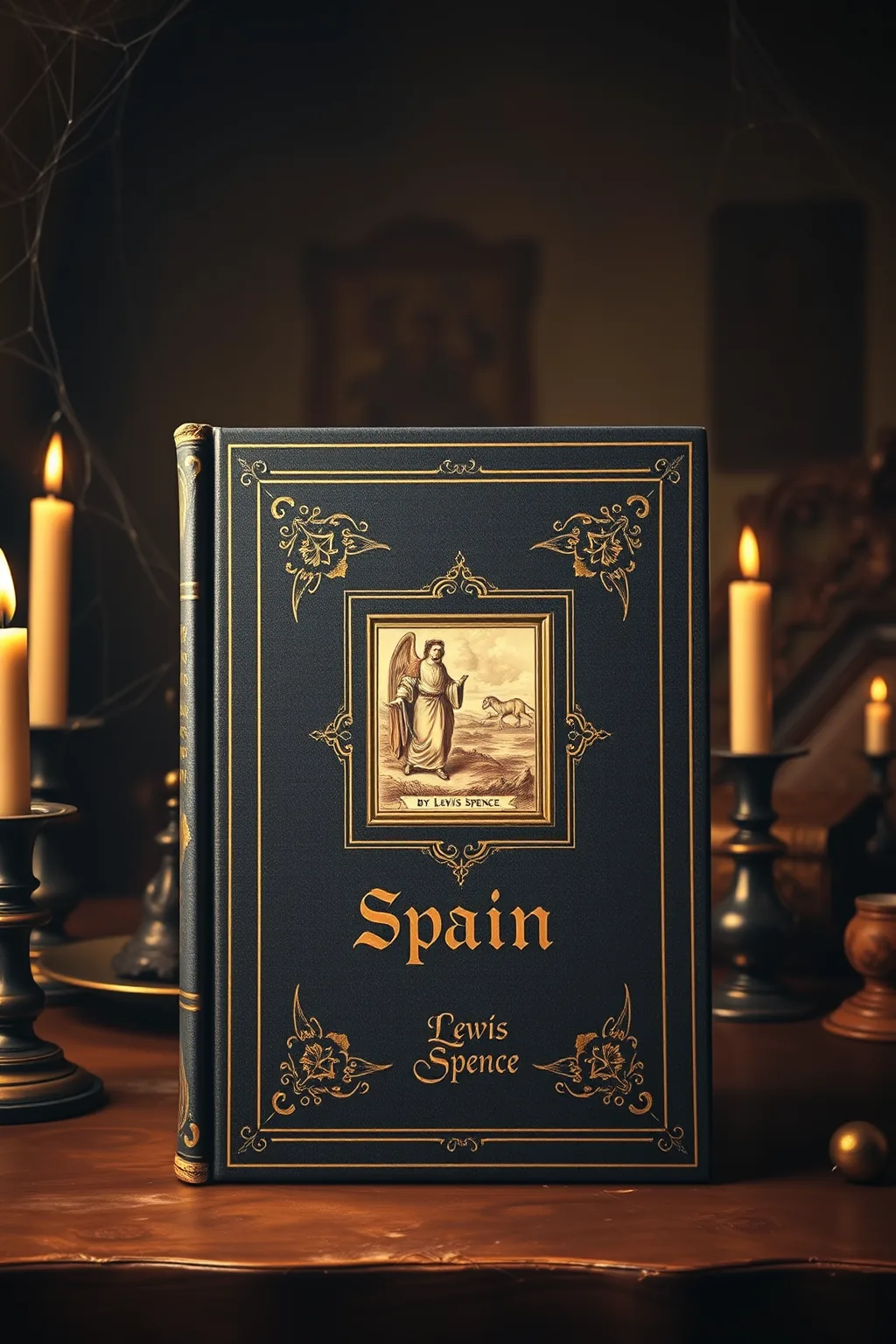
Legends and Romances of Spain
 71
71

Legends and Romances of Spain


Ophelia Vance, Mystical Literature Reviewer — Lewis Spence masterfully excavates the esoteric undercurrents of Spanish lore in 'Legends and Romances of Spain.' This seminal work is not merely a collection of stories but a potent exploration of collective consciousness, revealing veiled spiritual insights and archetypal wisdom. Spence’s scholarly yet evocative prose illuminates the symbolic language embedded within chivalric romances and ancient myths, offering profound connections to universal human quests. It is an essential text for those who delve beyond the surface, seeking to understand the mystical foundations of culture and the enduring power of narrative. Highly recommended for serious students of folklore and esoteric traditions.
📝 Description
71
Lewis Spence published 'Legends and Romances of Spain' in 1920, collecting Iberian folklore.
Lewis Spence's 1920 book collects Spanish legends and romances, moving beyond simple storytelling to show mythic traditions, heroic sagas, and romantic tales. Spence drew on medieval ballads, Moorish legends, and regional folklore. The narratives contain symbolism related to chivalry, religion, and the history of the Iberian Peninsula. The book examines courage, devotion, and spiritual longing in Spanish culture, where the ordinary and magical often connect. It appeals to those interested in hidden knowledge, comparative mythology, and the spirit of Spain. Readers will find stories of knights, lovers, and myths.
Published in 1920, this work aligns with a period of increased interest in folklore and comparative mythology as avenues for understanding deeper cultural currents. Spence, known for his work in esoteric studies, approached these legends not merely as historical artifacts but as expressions of enduring archetypes and hidden spiritual meanings. The collection taps into a tradition that views myths and romances as carriers of ancient wisdom and symbolic truths, reflecting a worldview where the supernatural and the human experience are deeply interconnected.
✍️ Author
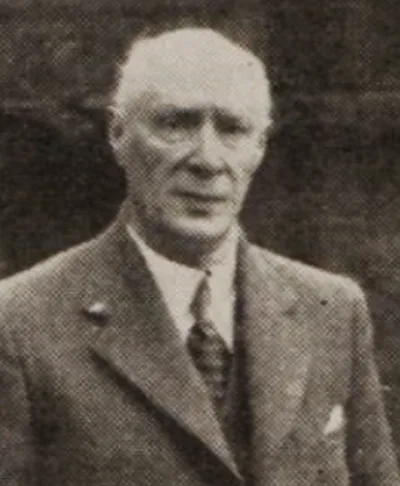
Lewis Spence
Scottish journalist, poet, author, folklorist and occult scholar.
Occultist
💡 Why Read This Book?
Delve into the hidden spiritual and symbolic layers of Spanish heritage. Uncover ancient myths and heroic sagas that reveal timeless human truths and archetypal patterns. Ideal for seekers of esoteric knowledge, folklorists, historians, and practitioners interested in the magical underpinnings of culture. Discover the soul of Spain through its most captivating legends.
⭐ Reader Reviews
Honest opinions from readers who have explored this book.
❓ Frequently Asked Questions
What historical periods does 'Legends and Romances of Spain' cover?
The book draws from a broad historical spectrum, primarily focusing on medieval Spain, including its Moorish influences, and extends to the romantic and chivalric eras, touching upon legends that have persisted through centuries.
Is this book suitable for beginners in folklore studies?
Yes, while rich in detail, Spence's accessible writing style makes it an excellent entry point for those new to folklore, providing a captivating introduction to Spanish myth and legend.
What kind of 'esoteric' themes are present?
The book explores themes of spiritual quests, divine intervention, the interplay of fate and free will, symbolic representations of virtues and vices, and the mystical dimensions of love and heroism.
Does the book include analyses of the symbolism within the legends?
While primarily a collection of tales, Spence's introductions and narratives often hint at or explicitly discuss the deeper symbolic meanings and cultural significance of the stories presented.
Can this book be read alongside other works on Spanish culture or mythology?
Absolutely. It serves as a foundational text and can be effectively cross-referenced with scholarly works on Spanish history, religion, and comparative mythology for a more comprehensive understanding.
🔮 Key Themes & Symbolism
The Traces of Moorish Mysticism
Spence masterfully combines the profound influence of Moorish culture into the fabric of Spanish legend. This theme explores the lingering traces of Islamic mysticism, intricate geomancy, and the sophisticated philosophical underpinnings that shaped the Iberian Peninsula. It studies how these esoteric traditions, often veiled in allegory and poetry, infused the land with a unique spiritual resonance, influencing tales of enchanted gardens, wise hermits, and the pursuit of hidden knowledge, offering a counterpoint to Western chivalric ideals and enriching the magical range of Spain.
Chivalry as a Spiritual Path
Beyond tales of knights and battles, this theme examines chivalry as an encoded spiritual discipline. Spence highlights how the ideals of courage, honor, piety, and courtly love in Spanish romances served as allegorical pathways to self-mastery and divine union. The quests of knights often symbolize an inner journey, the taming of baser instincts, and the pursuit of a higher purpose, reflecting a profound metaphysical understanding where earthly deeds held celestial significance. This perspective reveals a hidden layer of spiritual practice embedded within seemingly secular sagas.
The Archetypes of the Spanish Soul
This theme studies the enduring archetypes that define the Spanish character as depicted in its legends. From the stoic resilience of the common folk to the passionate fervor of its saints and lovers, Spence unearths primal human patterns. These archetypes—the tragic hero, the devoted lover, the wise elder, the elusive mystic—are not just characters but vessels carrying universal wisdom about life, death, faith, and the human condition. Their recurring presence offers a window into the collective unconscious and the spiritual aspirations that have shaped Spain's cultural identity.
💬 Memorable Quotes
Direct passages from the work, attributed to the author.
“In every hero's quest, a hidden truth resides.”
— This highlights the allegorical nature of heroic journeys, suggesting that the outward adventures of legendary figures often symbolize an inner spiritual or psychological transformation, revealing deeper wisdom.
“Love’s enchantment mirrors the divine.”
— This points to the spiritual significance of love in Spanish lore, positing that earthly romantic love can be a reflection or pathway to understanding higher, divine affections and spiritual union.
“The whispers of ancient magic still linger.”
— This suggests that the mystical and magical forces depicted in legends are not entirely bygone but retain a subtle presence and influence in the world, waiting to be rediscovered or perceived.
“Faith and folklore walk hand in hand.”
— This illustrates the inseparable connection between religious belief and popular storytelling in Spain, where spiritual conviction often permeates and shapes the narratives of everyday life and legendary events.
💡 Key Ideas
Editorial paraphrase of the work's core concepts — not direct quotes.
The soul of Spain is woven from threads of legend.
This quote emphasizes that the essence and identity of Spain are deeply intertwined with its collection of myths, folklore, and romantic narratives, suggesting these stories are more than mere tales but fundamental to understanding the nation's spirit.
🌙 Esoteric Significance
Tradition
This work draws heavily from the Western esoteric traditions, particularly folk magic, comparative mythology, and early forms of occult psychology. It taps into archetypal symbolism prevalent in Hermeticism and Neoplatonism, viewing myths and legends as encoded expressions of universal spiritual laws and the human journey towards enlightenment. The emphasis on chivalric ideals also connects to concepts of inner alchemy and the purification of the self through trials.
Symbolism
Key symbols abound, including the enchanted castle representing the soul or hidden self, the questing knight symbolizing the spiritual aspirant, the dragon or monster as an obstacle to overcome, and the damsel in distress often embodying divine grace or spiritual wisdom. Water frequently symbolizes the subconscious or emotional realm, while mountains represent spiritual ascent. Colors and natural elements also carry deep symbolic weight within the narratives.
Modern Relevance
In an age often perceived as overly rational and disconnected, 'Legends and Romances of Spain' offers a vital reconnection to the power of narrative and symbolic thinking. It reminds us of the enduring human need for meaning, heroism, and spiritual depth. The archetypes explored remain potent forces in our collective unconscious, influencing behavior and understanding. The book provides a rich resource for those seeking to explore the metaphysical dimensions of culture, personal transformation, and the timeless wisdom embedded in myth.
👥 Who Should Read This Book
This captivating volume is ideal for a broad audience. **Beginners** in folklore and mythology will find it an accessible and enchanting introduction to Spanish narratives. **Scholars and historians** will appreciate its breadth and Spence's insightful, though often romantically tinged, compilation. **Seekers of esoteric knowledge** will discover a rich source of symbolic wisdom and spiritual undertones woven into the tales. **Practitioners** of magical or spiritual arts may find inspiration in the archetypal patterns and the potent imagery presented, offering a rich source for contemplation and study.
📜 Historical Context
Published in 1920, Lewis Spence’s 'Legends and Romances of Spain' emerges from a period of intense interest in folklore, mythology, and national identity across Europe. The early 20th century saw scholars and writers actively collecting and reinterpreting oral traditions and ancient texts, seeking to understand the cultural soul of nations. Spence, a prolific folklorist and occultist, was part of a movement that viewed these narratives not just as entertainment, but as repositories of ancient wisdom, psychological insights, and spiritual truths. The book reflects a Romantic sensibility, an appreciation for the mysterious and the heroic, and a desire to preserve and illuminate the unique cultural heritage of Spain, a land rich with a complex history of Iberian, Roman, Visigothic, and Moorish influences, which provided fertile ground for a vibrant and enduring mythology.
📔 Journal Prompts
Reflect on a legend from the book that resonated with your personal journey. What parallels do you see?
Consider the archetype of the knight or the lover presented in these tales. How do these archetypes manifest in modern life?
Analyze the role of faith and destiny in the legends. How do these concepts influence the characters' actions and outcomes?
Explore the symbolic meaning of a specific element (e.g., a castle, a sword, a mystical creature) from one of the stories. What deeper truths might it represent?
How do the Moorish influences, as described by Spence, contribute to the unique mystical atmosphere of Spanish legends?
🗂️ Glossary
Chivalry
A medieval knightly code of conduct emphasizing honor, courage, piety, courtesy, and loyalty. In a spiritual context, it represents an inner discipline and the pursuit of noble ideals.
Moorish Legends
Tales and folklore originating from the period of Muslim rule in the Iberian Peninsula, often characterized by rich imagery, philosophical depth, and influences from Islamic mysticism and Arabian Nights traditions.
Archetype
A universal, archaic symbol, image, or pattern of thought that recurs across cultures and time, representing fundamental human experiences and motivations, as described in Jungian psychology.
Folklorist
An individual who studies, collects, and interprets folklore, the traditional beliefs, customs, and stories of a community, passed through generations by word of mouth.
Allegory
A story, poem, or picture that can be interpreted to reveal a hidden meaning, typically a moral or political one. In this context, often a spiritual or psychological truth.
This book appears in 1 collection
🔮 Readers Also Liked
Browse all →








More by Lewis Spence
All books →





From the “Transcendental Meditation” Collection
View all →




More Free Esoteric History & Biography Books
View all →