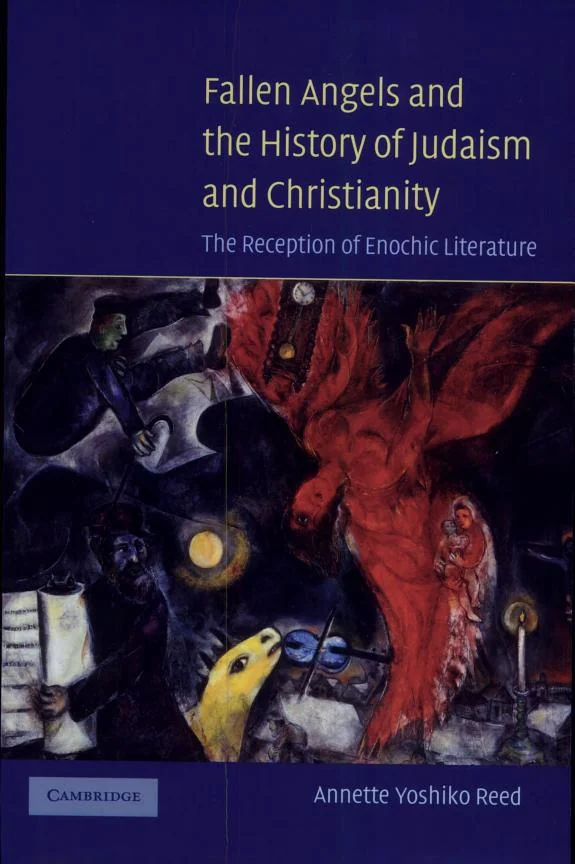
Fallen Angels and the History of Judaism and Christianity
 82
82

Fallen Angels and the History of Judaism and Christianity
Annette Yoshiko Reed’s exploration of fallen angels is a precisely argued academic treatise that avoids sensationalism. Its strength lies in its meticulous dissection of primary texts, demonstrating how the interpretation of angelic transgressions served as a crucial battleground for early Jewish and Christian identity formation. The author compellingly shows, for instance, how the narrative of the Watchers in 1 Enoch was adapted and reinterpreted by various groups to bolster their own theological claims and denigrate rivals. A limitation, however, is that the sheer density of scholarly engagement may render certain sections challenging for those without a deep background in patristics and rabbinic literature. The discussion around the reception of the Book of Revelation and its angelic hierarchies, while informative, sometimes feels dense. Nevertheless, the book provides an indispensable, sober analysis of a pivotal, often mythologized, aspect of early religious history.
📝 Description
82
Annette Yoshiko Reed's 2005 book examines fallen angels in Judaism and Christianity.
Published in 2005, Annette Yoshiko Reed's "Fallen Angels and the History of Judaism and Christianity" analyzes early Jewish-Christian interactions through the study of angelology. The book tracks how stories about celestial beings, especially those who defied divine order, influenced theological arguments and disputes between emerging Christianity and Rabbinic Judaism. Reed's scholarship centers on the Second Temple period and the following centuries, a crucial time for the development of both religious traditions. She investigates how these communities defined themselves and critiqued each other using shared or contested interpretive methods, particularly in apocalyptic texts and discussions of demonology.
The author focuses on figures like the Watchers from the Book of Enoch. Reed shows how these "fallen" angels became important for explaining divine justice, human wrongdoing, and the source of evil. The interpretation of these angelic figures served theological aims and also functioned as a rhetorical strategy in the distinctions and mutual criticisms between Jewish and Christian groups.
This work engages with traditions that trace their roots to ancient Near Eastern mythologies and early Jewish apocalyptic literature. It examines how interpretations of angelic hierarchies, divine transgressions, and cosmic rebellion became central to both mainstream and less common religious expressions. By focusing on texts like the Book of Enoch, the study illuminates a strand of thought concerned with hidden knowledge, celestial beings, and the hidden workings of the spiritual world, which has long been a feature of esoteric traditions.
💡 Why Read This Book?
• Understand the specific theological function of fallen angel narratives in differentiating early Judaism and Christianity, particularly how figures like the Watchers were reinterpreted. • Grasp the scholarly debates surrounding the influence of texts like 1 Enoch on both nascent Christian and Rabbinic Jewish thought, gaining insight into the period around the 2nd century CE. • Analyze how interpretations of angelic rebellion were employed as polemical tools, revealing a critical strategy for defining religious boundaries in antiquity.
⭐ Reader Reviews
Honest opinions from readers who have explored this book.
❓ Frequently Asked Questions
What specific ancient texts does Annette Yoshiko Reed analyze regarding fallen angels?
Reed's work extensively analyzes texts such as the Book of Enoch (particularly the sections on the Watchers), early Christian apocrypha, and relevant passages from canonical scriptures, examining their interpretations within both Jewish and Christian contexts from antiquity.
How did the concept of fallen angels contribute to the separation of Judaism and Christianity?
The book demonstrates how differing interpretations of angelic figures, their origins, and their roles in human history became points of theological contention, used by both emerging Christian and Rabbinic Jewish groups to define their own orthodoxy and critique opposing viewpoints.
What is the historical period covered by "Fallen Angels and the History of Judaism and Christianity"?
The book primarily focuses on the Second Temple period and the early centuries CE, tracing the development of angelological traditions and their polemical use from roughly the Hellenistic era through the patristic period.
Who were the 'Watchers' discussed in the book?
The 'Watchers' are angelic beings mentioned in texts like 1 Enoch, who are depicted as descending to Earth, cohabiting with human women, and teaching forbidden knowledge, leading to divine judgment. Reed explores their varied interpretations.
Is this book suitable for someone new to esoteric studies?
While the subject matter is esoteric, Reed's approach is rigorously academic. It is best suited for readers with a solid foundation in religious studies or biblical scholarship, rather than absolute beginners in esoteric topics.
When was Annette Yoshiko Reed's book first published?
Annette Yoshiko Reed's "Fallen Angels and the History of Judaism and Christianity" was first published on November 28, 2005.
🔮 Key Themes & Symbolism
Angelology as Polemic
This theme examines how narratives of angelic transgression and rebellion were strategically employed by early Jewish and Christian communities. Reed shows that discussions surrounding figures like the Watchers were not merely theological curiosities but potent tools for mutual critique and self-definition. By interpreting these celestial figures and their interactions with humanity, groups could establish their own doctrines, condemn rival interpretations, and solidify their distinct religious identities in the formative centuries CE.
The Watchers and 1 Enoch
Central to Reed's argument is the figure of the Watchers, prominent in the pseudepigraphal Book of Enoch. The work meticulously traces how this ancient text, and particularly its account of angelic descent and forbidden teachings, was received, adapted, and contested by various Jewish and Christian thinkers. Understanding the varying interpretations of the Watchers provides a crucial window into the anxieties and theological preoccupations of the period, including concerns about divine judgment, cosmic order, and the origins of evil.
Boundary Formation in Antiquity
Reed's study illuminates the complex process by which distinct Jewish and Christian traditions emerged and differentiated themselves. The interpretation of shared scriptural and apocryphal materials, especially concerning angelic beings, became a significant site for negotiating these boundaries. The book argues that the discourse surrounding fallen angels played a vital role in shaping theological positions and polemical strategies that ultimately contributed to the eventual separation of these two religious lineages.
Apocalyptic and Demonological Developments
The book situates its analysis within the broader context of apocalyptic thought and the development of demonology in the Greco-Roman and early Rabbinic periods. Reed demonstrates how ideas about fallen angels intersected with evolving conceptions of cosmic hierarchies, spiritual warfare, and the nature of evil. This provides essential context for understanding the theological landscape in which early Christianity and Rabbinic Judaism were forming their foundational beliefs and practices.
💬 Memorable Quotes
Direct passages from the work, attributed to the author.
“The interpretation of angelic transgressions became a key site for the polemical differentiation between emergent Christian traditions and Rabbinic Judaism.”
— This concept highlights how debates about figures like the Watchers were not abstract theological exercises but served as active battlegrounds for asserting religious authority and defining one's own group against perceived rivals.
“The reception of 1 Enoch's narrative of the Watchers varied significantly across different communities in antiquity.”
— This points to the dynamic and contested nature of religious texts, showing that a single narrative could be understood and utilized in diverse ways to support different theological claims and polemical agendas.
“Discussions of angelic rebellion served to explain the origins of sin and divine judgment in the cosmos.”
— This interpretation emphasizes the cosmological and soteriological functions of angelological narratives, linking the actions of celestial beings to fundamental questions about evil, human fallibility, and the divine plan.
“Early Christian authors often re-contextualized Jewish angelological traditions to support their Christological claims.”
— This suggests a process of theological appropriation, where emerging Christian thinkers selectively adopted and adapted existing Jewish narratives about angels to bolster their unique doctrines concerning Jesus Christ.
“The boundary between acceptable and deviant interpretations of scripture was often policed through discussions of angelic figures.”
— This highlights the regulatory function of angelological discourse, indicating how debates about angels could serve to enforce orthodoxy and marginalize dissenting viewpoints within both Jewish and Christian circles.
🌙 Esoteric Significance
Tradition
While not strictly an esoteric text itself, Reed's work is important for understanding the historical roots of angelological traditions that later informed various esoteric lineages, including Gnosticism, Kabbalah, and Hermeticism. It provides the critical, historical framework for examining how celestial hierarchies, fallen beings, and their interactions with the material world became foundational concepts in mystical and occult thought, offering a scholarly counterpoint to purely speculative interpretations.
Symbolism
The primary symbolic figures are the fallen angels themselves, often represented as transgressors of divine law (e.g., the Watchers teaching forbidden arts). Their fall symbolizes cosmic disharmony, the origin of evil, and the consequences of forbidden knowledge. The motif of divine judgment against these beings also carries significant symbolic weight, representing the restoration of cosmic order and the affirmation of divine authority, themes resonant in many esoteric cosmologies.
Modern Relevance
Contemporary esoteric practitioners and scholars of Western esotericism frequently draw upon historical angelological lore. Reed's work provides a crucial historical grounding for understanding modern interpretations of angelic beings, demonology, and the concept of spiritual warfare found in various occult orders and New Age philosophies. It helps contextualize modern engagements with these ancient ideas, distinguishing between historical development and later syncretic or speculative constructions.
👥 Who Should Read This Book
• Academic researchers in early Judaism and Christianity: They will gain a focused analysis of how angelological debates shaped inter-religious polemics and identity. • Students of comparative religion: This book offers a case study in how shared mythic elements were reinterpreted to create distinct theological systems. • Esoteric scholars and practitioners: Readers interested in the historical origins of angelology and demonology will find crucial context for understanding later occult traditions.
📜 Historical Context
Annette Yoshiko Reed's "Fallen Angels and the History of Judaism and Christianity" emerged in 2005, a period of robust scholarly engagement with Second Temple Judaism and the origins of Christianity. The book addresses ongoing debates concerning the precise nature of the relationship between these two nascent religious movements, particularly in the centuries surrounding the turn of the Common Era. Reed's work engages with, and builds upon, scholarship that had been exploring the influence of apocalyptic literature, such as the Book of Enoch, and the development of demonological concepts. Key contemporaries in related fields include scholars like Michael D. Coogan, whose work also touches on early Near Eastern religious history, and scholars focusing on the Dead Sea Scrolls, which provide crucial textual evidence from this era. Reed's specific contribution lies in demonstrating the critical role angelology played in the polemical discourse and identity formation that characterized the divergence of Judaism and Christianity, a nuanced perspective that enriched the existing academic conversation.
📔 Journal Prompts
The polemical use of fallen angel narratives: How did early groups leverage these stories?
The varied interpretations of the Watchers: What does this diversity reveal about ancient beliefs?
The role of angelic transgressions in defining religious boundaries.
How does the concept of divine judgment applied to angels inform early Jewish and Christian ethics?
Reflect on the symbolic meaning of celestial rebellion in ancient cosmologies.
🗂️ Glossary
Angelology
The systematic study of angels, their nature, origins, roles, and hierarchies, particularly as discussed in religious and theological contexts.
Watchers
A class of angelic beings prominent in the pseudepigraphal Book of Enoch, known for descending to Earth, cohabiting with human women, and teaching forbidden knowledge.
Pseudepigrapha
Ancient Jewish and Christian writings that are falsely attributed to biblical figures, such as the Book of Enoch, often containing traditions not found in canonical texts.
Second Temple Period
The era of Jewish history from the rebuilding of the Second Temple in Jerusalem (c. 516 BCE) to its destruction by the Romans in 70 CE.
Polemics
The art or practice of engaging in controversial dialogue or debate, often characterized by aggressive argumentation, particularly in religious or theological contexts.
Rabbinic Judaism
The form of Judaism that emerged after the destruction of the Second Temple, based on the teachings and interpretations of the rabbis.
Apocalyptic Literature
A genre of literature characterized by visions, divine revelations, and prophecies concerning the end times, cosmic judgment, and the establishment of a new divine order.
This book appears in 2 collections
🔮 Readers Also Liked
Browse all →





From the “Angels” Collection
View all →


More Free Sacred Texts & Gnosticism Books
View all →