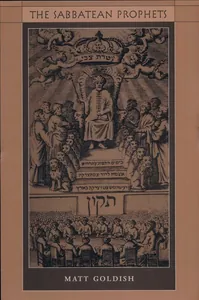
Religion und Politik

 77
77

Religion und Politik
Palmer and Brose's "Religion und Politik" offers a rigorous examination of how messianism transitioned from a religious concept to a potent force in 20th-century secular politics. The collection excels in demonstrating the pervasive nature of such ideas, particularly how they fueled political movements that promised radical societal transformation. A standout contribution details the influence of religious eschatology on early 20th-century political manifestos, showing a direct lineage of thought. However, the volume occasionally struggles with a consistent focus, with some essays feeling more like tangential explorations rather than direct engagements with the core thesis. The limitation lies in the sheer breadth of contexts covered, which, while impressive, can sometimes dilute the central argument. Nevertheless, the work provides a crucial lens for understanding the enduring power of redemptive narratives in shaping historical events and political ideologies. It is an essential, albeit demanding, read for those interested in the intersection of belief and power.
📝 Description
77
Religion und Politik, published in 2013, analyzes messianism's influence on 20th-century secular thought.
This 2013 collection examines how messianic ideas, originating in Abrahamic faiths, shaped 20th-century secular thought and political movements. The essays scrutinize the adaptation of these concepts, originally tied to divine redemption and prophecy, into ideologies of historical progress and societal transformation. The authors trace this phenomenon across various cultural and philosophical contexts, demonstrating how notions of salvation and a predestined future were reinterpreted outside of theological frameworks. The work is situated within the historical milieu of the 20th century, engaging with the intellectual climate influenced by major global conflicts and the development of diverse political philosophies. It considers how figures from political ideologues to artists grappled with themes of apocalypse and redemption. The core concept is messianism, viewed not merely as a religious doctrine but as a potent, adaptable structure for understanding historical trajectories. The collection investigates its reinterpretation within secular political thought, leading to powerful, sometimes destructive, mythologies of societal rebirth.
The book is intended for scholars of religious studies, political science, and intellectual history, particularly those interested in the evolution of eschatological thought. It speaks to readers who question the division between faith and secular ideology and who seek to understand the historical roots of modern political fervor through theological concepts. It will appeal to those who examine the ways religious frameworks inform secular discourse.
While not strictly an esoteric text itself, Religion und Politik engages with themes that resonate within esoteric traditions. It examines how archetypal concepts of redemption, apocalypse, and a divinely ordained or inevitable future, central to many esoteric belief systems, were secularized and recontextualized in the 20th century. The book's analysis of messianic frameworks as adaptable structures for societal transformation echoes discussions found in traditions that explore hidden historical patterns or prophetic cycles. It offers a lens through which to understand the persistence of salvific narratives in secularized societies, a phenomenon often scrutinized within esoteric scholarship.
💡 Why Read This Book?
• Gain insight into the secularization of messianic ideas by understanding how concepts like "apocalyptic" and "redemption" were recontextualized in 20th-century political discourse, as explored in the historical context section. • Discover the influence of religious eschatology on early 20th-century political movements, learning how theological frameworks provided blueprints for secular societal transformation. • Appreciate the complex relationship between monotheistic religions and political ideology, recognizing the persistent patterns of division and unity exemplified by the "messianic problem" across different faiths.
⭐ Reader Reviews
Honest opinions from readers who have explored this book.
❓ Frequently Asked Questions
What is the central theme of "Religion und Politik"?
The central theme is the analysis of messianism, exploring its historical transition from a primarily religious concept within monotheistic faiths to a significant, often secularized, force in 20th-century political thought and movements.
Who are the authors of "Religion und Politik"?
The volume is edited by Gesine Palmer and Thomas Brose, collecting articles from various contributors who examine the multifaceted nature of messianism.
When was "Religion und Politik" first published?
The book was first published in 2013, offering a contemporary analysis of historical phenomena related to religion and politics.
How does the book discuss the "messianic problem"?
It examines how the concept of messianism, often a source of division within and between monotheistic religions like Judaism and Christianity, also influenced secular political ideologies in the 20th century.
What is the intended audience for this book?
It is aimed at academics and students of religious studies, political science, and intellectual history, as well as general readers interested in the interplay of faith, ideology, and historical events.
Does the book focus only on Western religions?
While the original blurb specifically mentions Judaism and Christianity, the collected articles deal with messianism in various contexts, suggesting a broader scope beyond just Western traditions.
🔮 Key Themes & Symbolism
Secular Messianism
This theme examines the reinterpretation of messianic narratives, traditionally rooted in religious prophecy, into secular political ideologies. The essays explore how concepts of a coming savior, an inevitable historical progression, or a radical societal transformation were adopted by political movements. This process involved detaching the idea of redemption from divine intervention and attaching it to political leaders, parties, or historical forces, creating potent mythologies that drove significant events in the 20th century.
The "Messianic Problem"
The volume addresses the inherent divisiveness that the concept of messianism has historically introduced, not only between different monotheistic religions (like Jews and Christians) but also within them. This "problem" is extended to the 20th century, where secular messianic movements often created sharp ideological divides and conflicts, mirroring, in a secular guise, the schisms caused by religious interpretations of salvation and divine mandate.
20th Century Political Ideologies
A central focus is the application of messianic thinking to the political field of the 20th century. The book investigates how various political philosophies and movements, from utopian ideals to revolutionary fervor, drew upon or mirrored the structure and emotional appeal of religious messianism. This includes analyzing how leaders and ideologies promised a new era or a perfect society, fulfilling a role once occupied by religious saviors.
Interplay of Religion and Politics
This theme underscores the blurred lines between religious belief and political action. It demonstrates how theological concepts, even when secularized, continue to influence political discourse and behavior. The collection highlights that understanding the historical and conceptual links between religious eschatology and political aspirations is crucial for comprehending societal dynamics and historical developments.
💬 Memorable Quotes
Direct passages from the work, attributed to the author.
“The messianic has always been a problem between the monotheistic religions.”
— This opening statement identifies a core tension in Abrahamic faiths, suggesting that differing interpretations of messianic prophecies have historically led to division and conflict, setting the stage for the book's broader analysis.
“In the 20th century, philosophers and political leaders attached increasing importance to it in a more secular form.”
— This highlights the key transition the book examines: the appropriation and adaptation of messianic concepts into secular political discourse and action during the modern era.
“The authors of the articles collected in this volume deal with the subject of messianism in the 20th century in various contexts.”
— This indicates the scope and methodology of the book, emphasizing the diverse application and interpretation of messianic themes across different fields and situations within a specific historical period.
“The articles are written from the standpoint of di”
— This phrase suggests the analytical perspective of the contributors, implying an approach that is perhaps critical, analytical, or focused on specific disciplinary viewpoints in their examination of messianism.
“The messianic concept's divisiveness extended beyond interfaith relations to intra-faith schisms.”
— This interpretation elaborates on the "problem" of messianism, showing how it created internal factions and disagreements within religious communities, not just between them, a pattern potentially mirrored in secular movements.
🌙 Esoteric Significance
Tradition
While not explicitly tied to a single esoteric lineage like Hermeticism or Gnosticism, "Religion und Politik" engages with themes that resonate within esoteric thought. The study of messianism, eschatology, and the transformative power of belief systems touches upon the esoteric interest in hidden divine plans, cycles of history, and the potential for spiritual or societal rebirth. It explores how these archetypal narratives, often central to esoteric cosmologies, manifest in the material world through political and social movements.
Symbolism
The primary symbolic motif is the "messiah" or "redeemer" figure, which, in its secularized form, represents the leader or ideology promising salvation. Other relevant symbolic dimensions include apocalyptic imagery, representing radical societal upheaval or transformation, and the concept of a "chosen people" or a destined historical path, which can imbue political movements with a sense of unique purpose and inevitability, akin to esoteric notions of spiritual election.
Modern Relevance
Contemporary political discourse often exhibits traces of secular messianism, particularly in populist movements or ideologies promising radical change and societal perfection. Thinkers and activists concerned with the psychology of belief, the formation of political cults, and the enduring human need for meaning and redemption can find valuable historical and analytical frameworks in this work. It informs current debates on how seemingly rational political systems can be driven by deeply ingrained, mythic narratives.
👥 Who Should Read This Book
['• Scholars of political science and religious studies seeking to understand the historical evolution of messianic thought from theological doctrine to secular ideology.', '• Intellectual historians interested in the pervasive influence of religious concepts on 20th-century philosophical and political movements.', '• Readers intrigued by the intersection of eschatology, political theory, and the psychology of belief systems in shaping historical events.']
📜 Historical Context
The intellectual field of the 20th century, particularly the period between World War I and the late 20th century, was profoundly shaped by grand narratives of redemption and societal transformation. "Religion und Politik" situates its analysis within this era, where the decline of traditional religious authority coincided with the rise of potent secular ideologies. Thinkers like Carl Schmitt, who explored the political implications of theological concepts, were active during this period, engaging with ideas that "Religion und Politik" revisits. The volume implicitly engages with the reception of these secularized messianic ideas, which often led to totalitarian regimes and ideological conflicts, a stark contrast to the more diffuse spiritual aspirations of earlier eras. The book's focus on the 2013 publication date places its synthesis within contemporary academic discourse, reflecting on the legacy of these 20th-century phenomena.
📔 Journal Prompts
The "messianic problem" as a source of division within monotheistic religions.
Secularization of messianic ideas in 20th-century political movements.
The role of "redemption" narratives in contemporary political discourse.
Comparing divine salvation with secular societal transformation promises.
Analyzing how messianic fervor manifests in political leadership today.
🗂️ Glossary
Messianism
A religious or philosophical doctrine centered on the belief in a messiah or savior figure who will bring about a period of peace, justice, and salvation. It often involves eschatological expectations of a redeemed world.
Eschatology
The branch of theology concerned with the final destiny of the soul and of humankind, as well as the world. It typically deals with concepts of the end times, judgment, and the afterlife or a transformed future.
Secularization
The process by which religion loses its influence over public life and society. In the context of "Religion und Politik," it refers to the adaptation of religious concepts for non-religious, often political, purposes.
Monotheistic Religions
Religions that believe in the existence of only one God. The primary examples discussed in relation to messianism are Judaism, Christianity, and Islam.
Political Ideology
A set of beliefs, theories, and aims that constitutes the program of a political party or political group. In this context, it refers to how these ideologies adopted or mirrored messianic narratives.
Apocalypse
In a religious context, the prophetic revelation concerning the end of the world. In a secular context, it can refer to a catastrophic event or a moment of profound, transformative change.
Redemption
The action of being saved from sin, error, or evil. In secular politics, it refers to the idea of being saved from social ills, oppression, or historical injustices.
This book appears in 1 collection
🔮 Readers Also Liked
Browse all →








From the “Messianism” Collection
View all →






More Free Esoteric History & Biography Books
View all →