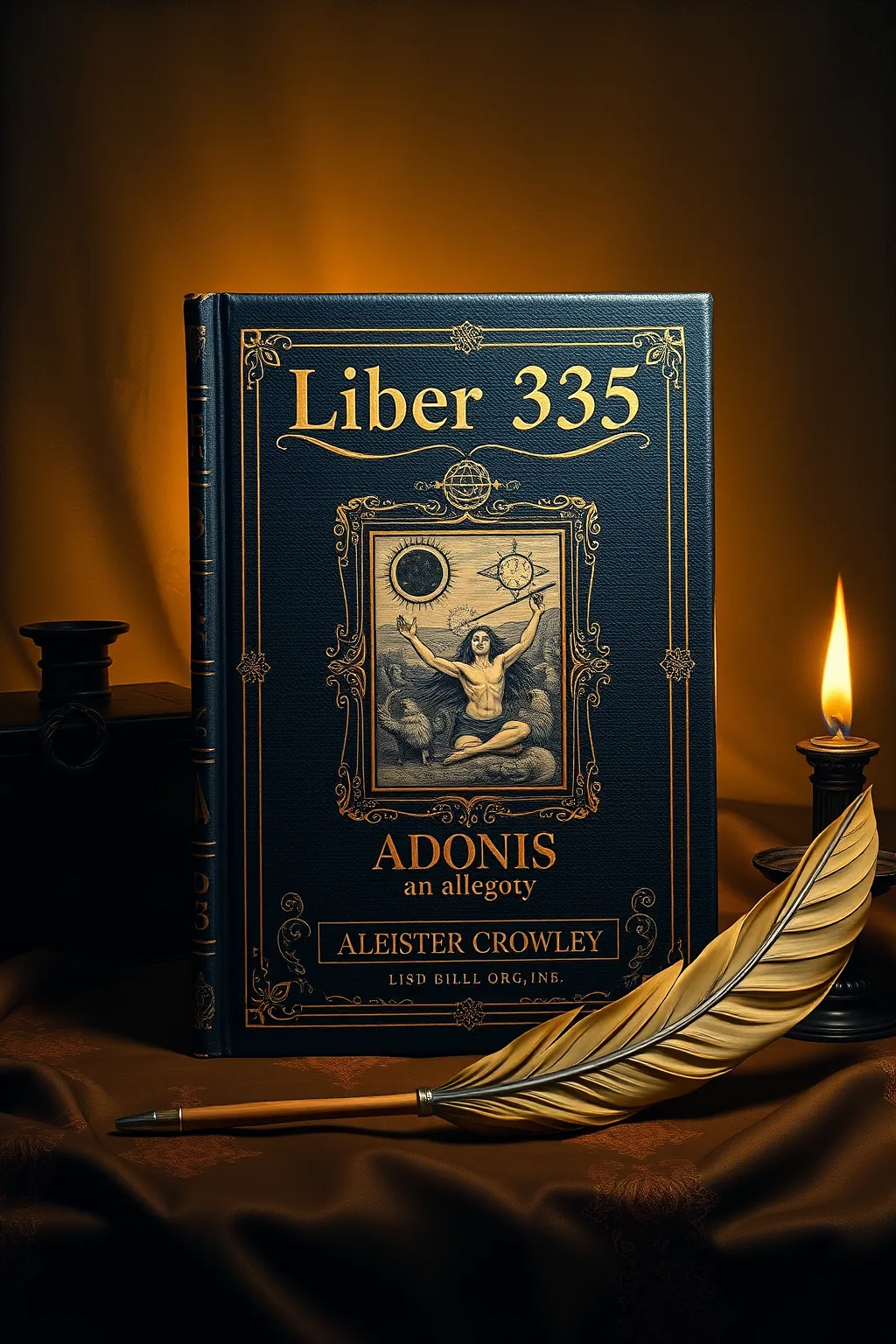
Liber 335 - ADONIS an allegory
 75
75

Liber 335 - ADONIS an allegory

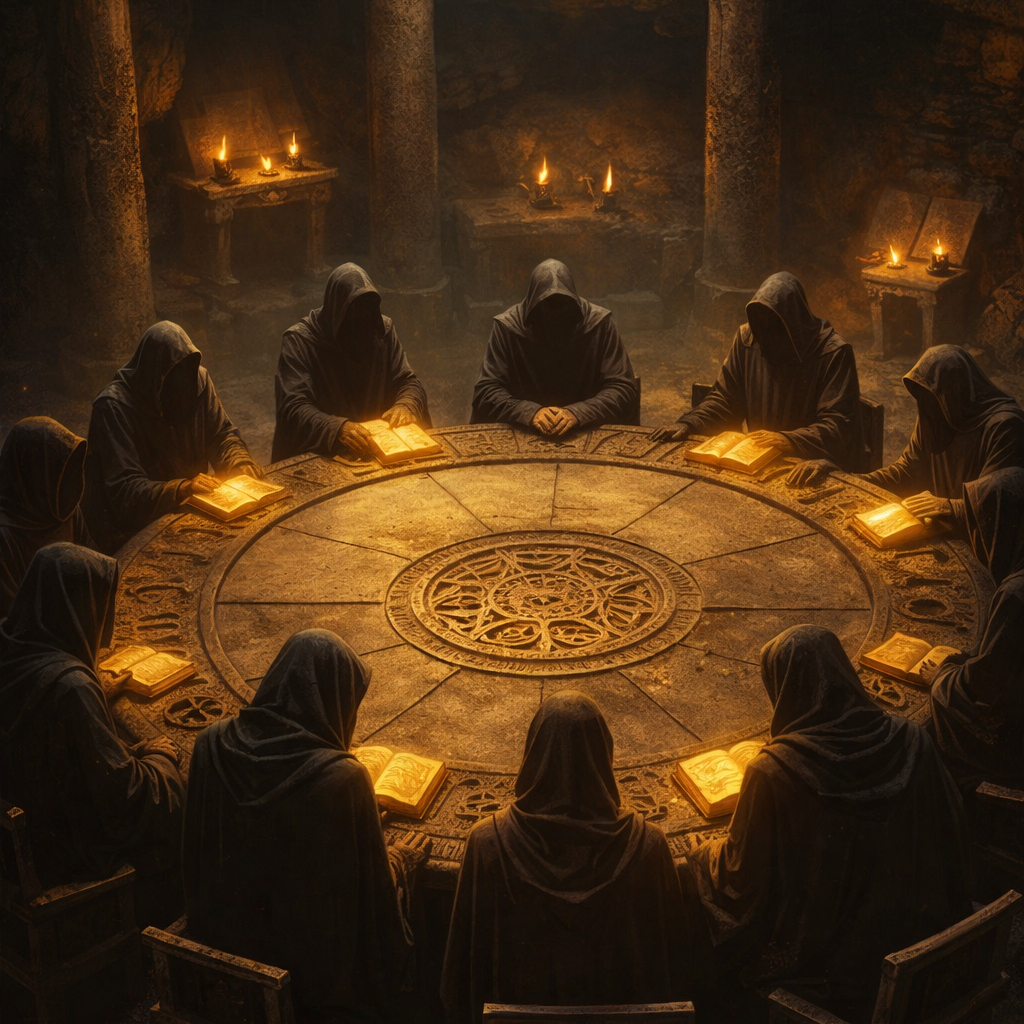

By Aurelia Blackwood (Occult Philosophy Critic) — 'Liber 335 - ADONIS' is a cornerstone text for understanding Crowley's unique brand of Thelemic mysticism. This allegory, far from being a simple narrative, serves as a potent vehicle for exploring the Great Work, particularly its initiatory and regenerative aspects. Crowley's genius lies in his ability to imbue seemingly pagan motifs with profound Kabbalistic and alchemical significance. The text demands deep contemplation, rewarding the dedicated reader with insights into sexual magick, the nature of the divine masculine, and the soul's journey towards integration. It is an essential read for scholars of Western Esotericism and practitioners seeking to deepen their understanding of symbolic language and ritualistic practice.
📝 Description
75
Aleister Crowley inscribed 'Liber 335 - ADONIS an allegory' to the mythic Adonis.
This text from Aleister Crowley presents 'Liber 335 - ADONIS an allegory,' dedicated to the figure of Adonis. The work functions as an allegory that details a symbolic path of awakening and personal change. Crowley structures the text to reveal layers of meaning. Readers are encouraged to consider themes of desire, the cycles of life and death, and the search for spiritual completion.
The writing evokes a sense of sensual experience alongside spiritual insight, drawing parallels to older mystery traditions. It is aimed at individuals seriously studying occult subjects, those seeking hidden knowledge, and people interested in examining the inner self. The book discusses philosophical ideas about existence, mortality, and renewal. It uses the symbolism of Adonis to question standard viewpoints and to suggest a route to self-understanding. Engaging with this text can lead to internal transformation and a deeper, personal form of knowledge.
Within the broader field of Western esotericism, Crowley's work often engages with themes of initiation and the occult. 'Liber 335' connects to traditions that use mythology as a framework for spiritual development. The focus on Adonis, a figure associated with death and rebirth in classical mythology, aligns with cyclical views of existence common in various esoteric systems. The text invites a personal interpretation of these themes, characteristic of magical and mystical practices that emphasize individual experience.
💡 Why Read This Book?
Unlock profound esoteric wisdom within 'Liber 335 - ADONIS.' This allegory serves as a potent key to understanding cyclical rebirth, divine union, and the transformative power of desire. Ideal for seekers of hidden knowledge, students of Aleister Crowley, and practitioners of Western Esotericism interested in the symbolic language of myth and ritual.
⭐ Reader Reviews
Honest opinions from readers who have explored this book.
❓ Frequently Asked Questions
What is the primary allegorical significance of Adonis in this text?
Adonis represents the divine masculine principle, often associated with beauty, youth, and the cyclical nature of life and death. His awakening symbolizes the soul's emergence from slumber and its journey towards spiritual illumination and union.
Is 'Liber 335 - ADONIS' a difficult text to understand?
While rich in symbolism and requiring contemplation, the allegory's power lies in its evocative nature. It is accessible to those familiar with esoteric concepts, though deeper study will reveal its multifaceted meanings.
What is the connection between this text and Freemasonry?
The category 'Freemasonry & Secret Societies' suggests a thematic resonance with ritualistic practices, symbolism of initiation, and the pursuit of hidden truths common to these traditions. Crowley often drew parallels between various esoteric systems.
What does 'Liber 335' signify?
'Liber' is Latin for 'book.' The number 335 is significant within Crowley's numerological system and the Qabalah, often associated with specific divine names or concepts that add layers of esoteric meaning to the text.
What is the 'Great Work' referenced in relation to this text?
The Great Work is the alchemical and spiritual pursuit of transformation, often understood as achieving self-realization, union with the divine, or the perfection of the soul. This allegory is seen as a symbolic representation of aspects of this process.
🔮 Key Themes & Symbolism
Thematic Resurrection and Rebirth
The myth of Adonis, with his death and subsequent rebirth, serves as a profound allegory for the cyclical nature of existence and the potential for spiritual renewal. This theme explores the death of the old self, the shedding of limitations, and the triumphant emergence of a transformed consciousness. It speaks to the universal human experience of loss, sorrow, and the eventual promise of renewal, echoing ancient mystery cults that celebrated the eternal return and the victory of life over death through symbolic sacrifice and resurrection.
Sensual Awakening and Divine Union
Crowley masterfully intertwines themes of sensuality and spirituality, portraying the awakening of Adonis as an experience deeply rooted in carnal allure and ecstatic union. This explores the idea that the divine can be encountered not only through asceticism but also through embracing the full spectrum of human experience, including desire and pleasure. The text suggests that true gnosis can be achieved by bridging the material and spiritual realms, recognizing the sacredness inherent in physical existence and its potential to lead to higher states of consciousness.
The Nature of the Divine Masculine
Adonis, as the object of devotion and awakening, embodies a specific aspect of the divine masculine – one characterized by beauty, vitality, and perhaps a certain passivity that invites invocation. This theme studies the archetypal representation of the masculine force, not as dominant or aggressive, but as a focal point for spiritual energy and creative potential. The allegory invites contemplation on how this archetype is perceived, invoked, and ultimately integrated within the seeker's own spiritual framework, contributing to a balanced understanding of cosmic forces.
💬 Memorable Quotes
Direct passages from the work, attributed to the author.
“Wake him with perfume till he smile...”
— This evokes a ritualistic invocation, suggesting that the divine or awakened consciousness is coaxed into presence through gentle, alluring, and sensory means, like the offerings of fragrance.
“Softer than moonbeams till he turn, and sigh...”
— Highlights the delicate and ethereal nature of the awakening process, emphasizing subtle influence and the emotional release that accompanies spiritual emergence.
“With five slow drops of wine between his lips...”
— Symbolizes the sacramental nature of the awakening, suggesting that spiritual nourishment and intoxication are essential components of the transformative journey.
“Until his heart heave, with young thrills of song...”
— Illustrates the vital and joyous response to spiritual awakening, characterized by profound emotional stirring and the expression of ecstatic creative energy.
“So that awakened he may break from you and turn to me who am all these in one.”
— This powerful line suggests that the ultimate goal is not mere individual awakening, but a transcendent union with a higher, all-encompassing divine principle that integrates all aspects of existence.
🌙 Esoteric Significance
Tradition
This work is deeply rooted in the Western Esoteric Tradition, particularly influenced by Hermeticism, Kabbalah, and Crowley's own Thelemic philosophy. It synthesizes elements of ancient mystery rites, alchemical symbolism, and the concept of divine union, aiming to guide the practitioner through stages of spiritual transformation and self-realization.
Symbolism
Key symbols include Adonis himself (representing the divine masculine, beauty, and cyclical life), the act of awakening (spiritual rebirth), perfume and wine (sacramental offerings and intoxication), and the ultimate 'turning to me' (union with the divine or the magician's higher self). The text employs a wide range of archetypal imagery to convey profound metaphysical concepts.
Modern Relevance
In contemporary times, 'Liber 335 - ADONIS' remains relevant for its exploration of the integration of sensuality and spirituality, the cyclical nature of personal growth, and the pursuit of authentic selfhood. It offers a powerful framework for understanding transformation and divine connection in a modern context, encouraging a holistic approach to spiritual development that embraces all facets of existence.
👥 Who Should Read This Book
This allegorical work is recommended for serious students of Aleister Crowley and Thelemic philosophy, seeking to understand his unique interpretations of myth and magick. Scholars of Western Esotericism and comparative mythology will find valuable insights into the reinterpretation of classical figures within occult traditions. Practitioners of ceremonial magic and those interested in the symbolic language of awakening and divine union will benefit from its esoteric depths. Beginners may find it challenging but rewarding with dedicated study and an open mind to symbolic interpretation.
📜 Historical Context
Written during the early 20th century, a period rife with occult revival and intellectual ferment, Aleister Crowley's 'Liber 335 - ADONIS' emerged within a rich milieu of esoteric exploration. This era saw renewed interest in ancient mystery religions, Kabbalistic studies, and ceremonial magic, often interwoven with burgeoning psychological theories. Crowley, a central figure in this landscape, sought to synthesize diverse spiritual traditions, including Thelema, Hermeticism, and Eastern mysticism. 'Liber 335' reflects this syncretic approach, drawing upon classical mythology (Adonis) and reinterpreting it through a lens of personal gnosis and alchemical transformation. The text's publication and dissemination contributed to the broader discourse on hidden knowledge and spiritual liberation that characterized the age.
📔 Journal Prompts
Reflect on the 'awakening' of Adonis. What aspects of yourself feel dormant and ready to be awakened?
How does the interplay of sensuality and spirituality manifest in your own spiritual journey?
Consider the 'perfume' and 'wine' as symbolic offerings. What are your personal 'offerings' to the divine or your higher self?
Analyze the concept of 'breaking from you and turning to me.' What does this ultimate union signify in your life?
Explore the archetype of Adonis in your personal mythology. What qualities does he represent to you?
🗂️ Glossary
Liber
Latin for 'book,' often used in titles of occult texts, particularly by Aleister Crowley, to denote a significant magical or philosophical work.
Adonis
A figure from Greek mythology, known for his exceptional beauty, whose myth involves death and rebirth, symbolizing natural cycles and the power of love and beauty.
Allegory
A story, poem, or picture that can be interpreted to reveal a hidden meaning, typically a moral or political one. In this context, it refers to a symbolic narrative conveying esoteric truths.
Gnosis
Knowledge, particularly spiritual or mystical knowledge, attained through direct experience or intuition rather than through empirical means. It often refers to salvific knowledge.
Thelema
A philosophical and religious system developed by Aleister Crowley, centered on the principle 'Do what thou wilt shall be the whole of the Law.'
This book appears in 2 collections
🔮 Readers Also Liked
Browse all →









From the “Secret Societies” Collection
View all →



More Free Freemasonry & Secret Societies Books
View all →