The book of Thoth
 95
95

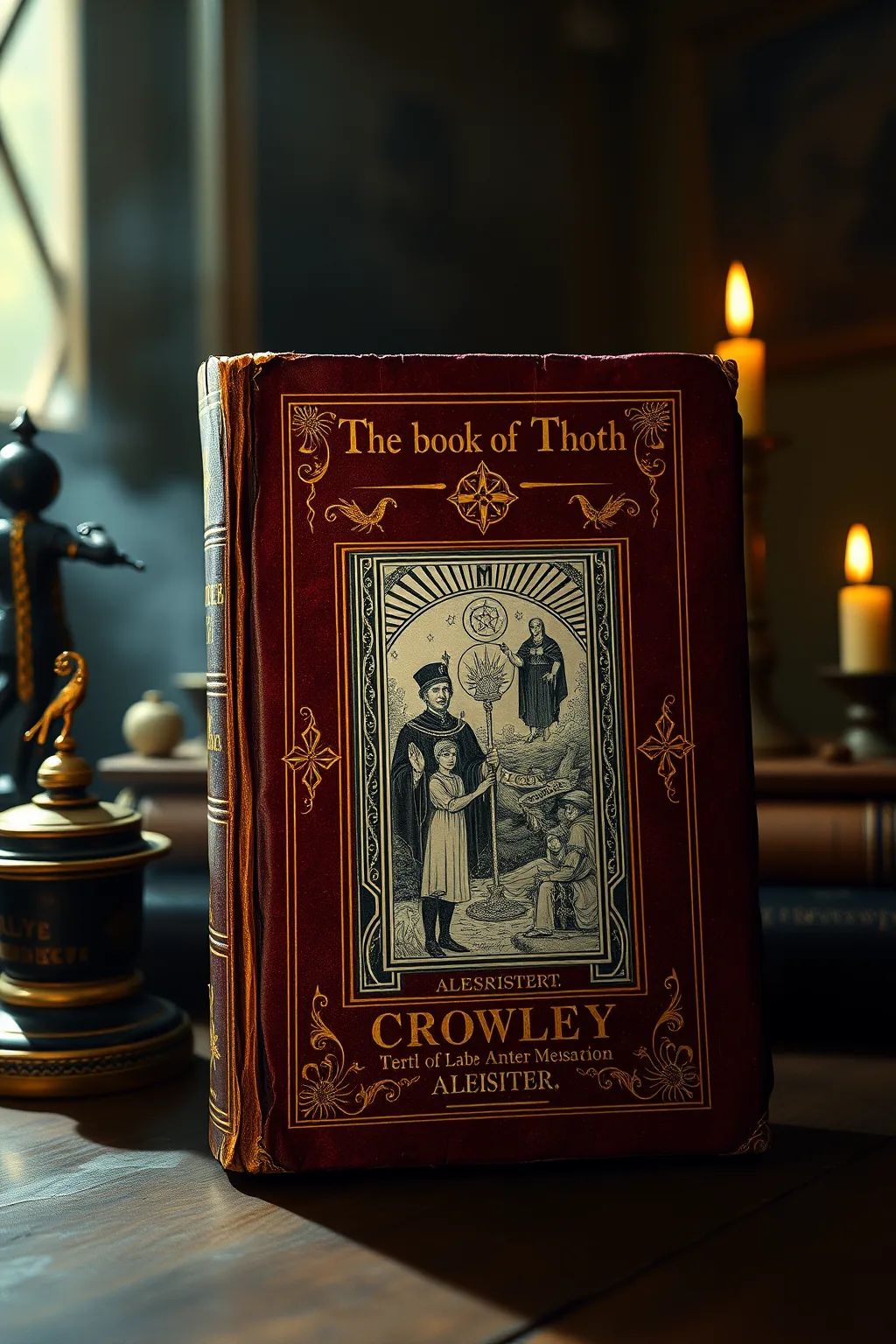
The book of Thoth



Cassian Rothmann (Senior Critic, Ancient Wisdom) — Aleister Crowley's 'The Book of Thoth' remains an unparalleled cornerstone of Tarot scholarship and occult literature. Far from a simple instructional manual, it is a dense, intellectual, and profoundly esoteric treatise that demands deep engagement. Crowley's unique synthesis of Kabbalah, Qabalah, and his personal magical system provides an unparalleled depth of interpretation for each card. While its complexity may daunt novices, for the serious practitioner, scholar, or seeker of arcane truths, this book offers illuminations found nowhere else. Its strength lies in its uncompromising exploration of the Tarot's metaphysical architecture, making it an indispensable, albeit challenging, addition to any occult library.
📝 Description
95
Aleister Crowley published 'The Book of Thoth' in 1944, a unique system of Tarot interpretation.
Aleister Crowley's 'The Book of Thoth' presents his personal system for understanding the Tarot. Published in 1944, the work goes beyond simple fortune telling. Crowley, a central figure in modern occultism, assigns specific meanings to each of the 78 cards. These meanings connect to Kabbalah, astrology, mythology, and his own magical experiences.
The book guides the reader toward a deeper perception of the Tarot. Crowley views the cards as a map of human consciousness and a device for spiritual growth. The text uses detailed language and a complex structure. It aims to help readers grasp the hidden forces of reality and use cosmic energies. 'The Book of Thoth' functions as an introduction to a system of self discovery and universal awareness.
This work is situated within the Western Esoteric Tradition, particularly the Hermetic Order of the Golden Dawn and Crowley's own Thelema. It builds upon earlier systems of Tarot interpretation that linked the cards to Kabbalah and astrology. Crowley's unique contribution was his detailed systemization and integration of these elements with his personal magical theory and practice, presenting the Tarot not just as a divinatory tool but as a comprehensive symbolic language for understanding the cosmos and the human psyche.
💡 Why Read This Book?
Unravel the deepest mysteries of consciousness through the 78 cards of the Tarot. 'The Book of Thoth' offers a unique, esoteric perspective from Aleister Crowley, blending Kabbalah, astrology, and magic. Ideal for serious practitioners, occult scholars, and seekers yearning for profound self-knowledge and a deeper understanding of universal energies. This is not just divination; it's an initiation into a sacred symbolic language.
⭐ Reader Reviews
Honest opinions from readers who have explored this book.
❓ Frequently Asked Questions
What is the primary purpose of 'The Book of Thoth'?
Its primary purpose is to present the Tarot not merely as a tool for fortune-telling, but as a comprehensive system of occult philosophy, a symbolic map of the universe, and a guide to spiritual initiation and self-understanding.
Is this book suitable for beginners in Tarot?
While comprehensive, 'The Book of Thoth' is dense and intellectually demanding, often considered more suitable for intermediate to advanced Tarot practitioners and occult students due to its complex theoretical framework and esoteric references.
What esoteric traditions does Crowley integrate into his Tarot interpretation?
Crowley integrates Kabbalah, Qabalah (his specific system), astrology, Egyptian mythology, alchemy, and his own personal magical experiences and philosophy into his interpretation of the Tarot.
What is the significance of the 'Thoth' in the title?
The title references the ancient Egyptian god Thoth, the divine scribe, magician, and keeper of hidden knowledge, symbolizing the book's role as a conduit to profound esoteric wisdom.
Does the book include the actual Tarot cards?
The book primarily serves as a textual interpretation and guide to the Tarot. While it describes the cards in detail and their symbolic significance, the physical deck of cards (often referred to as the Thoth Tarot deck) is typically a separate purchase.
🔮 Key Themes & Symbolism
The Tarot as a Cosmic Map
Crowley posits the Tarot as a symbolic representation of the entire cosmos, a divine blueprint of existence. Each card acts as a signpost on the journey of consciousness, detailing the interplay of universal forces, archetypes, and the unfolding of destiny. This interpretation elevates the Tarot from a mere divinatory tool to a profound philosophical and metaphysical system, offering insights into creation, evolution, and the hidden order of reality. It encourages readers to see the cards not as separate entities, but as interconnected facets of a singular, divine consciousness.
Qabalistic and Astrological Correspondences
A central to Crowley's system is the intricate combining of Qabalistic Tree of Life principles and astrological influences with each Tarot card. He meticulously details how specific Hebrew letters, divine names, paths, and planetary/zodiacal energies are embedded within the imagery and meaning of the Major and Minor Arcana. This fusion creates a multi-layered interpretive framework, allowing for a deeper, more scientific and magical understanding of the cards' potent symbolic language and their application in ritual and personal development.
The Path of Initiation and Self-Transformation
'The Book of Thoth' is fundamentally a guide to initiation, presenting the Tarot as a curriculum for spiritual growth and self-mastery. Crowley frames the Major Arcana as stages of the Great Work, the alchemical process of transforming the profane into the divine. By understanding and internalizing the lessons encoded within the cards, the practitioner begins a journey of confronting their shadow self, integrating higher consciousness, and ultimately achieving union with the divine. The book serves as a roadmap for this profound inner transformation.
💬 Memorable Quotes
Direct passages from the work, attributed to the author.
“Every card is a revelation.”
— Highlighting the inherent depth and many-sided meaning within each Tarot card, suggesting that dedicated study unlocks useful insights into the self and the universe.
“The Tarot is the key to the universe.”
— Emphasizing the Tarot's comprehensive nature as a symbolic language that unlocks understanding of all aspects of existence, from the material to the spiritual.
“The Fool is the beginning of the journey.”
— Referencing the foundational card of the Major Arcana, symbolizing innocence, potential, and the initial step into the unknown of spiritual exploration.
“The Magus holds the power of manifestation.”
— Illustrating the potent, active energy of the Magus card, representing the conscious will and ability to shape reality through focused intent and magical practice.
💡 Key Ideas
Editorial paraphrase of the work's core concepts — not direct quotes.
The Tarot is the science of the divine.
This quote expresses Crowley's view of the Tarot as a profound system of knowledge that reveals the fundamental principles and workings of the divine order, transcending simple fortune-telling.
🌙 Esoteric Significance
Tradition
Crowley's 'The Book of Thoth' is deeply rooted in the Western Esoteric Tradition, particularly its modern manifestation. It draws heavily from Hermeticism, Kabbalah (specifically the Qabalistic system he developed), Gnosticism, and ceremonial magic. The work is a evidence of Crowley's ambition to create a comprehensive magical system that integrated ancient wisdom with his own unique insights and experiences, making the Tarot a central, potent artifact within this framework for spiritual evolution.
Symbolism
The book meticulously decodes the detailed symbolism of the Tarot, linking each card to specific Qabalistic paths, planetary and zodiacal energies, mythological figures, and alchemical processes. This creates a dense, interconnected web of meaning where the imagery of the cards becomes a visual language for universal principles. Crowley's interpretations emphasize the dynamic interplay of forces, the archetypal journeys of the soul, and the hidden correspondences that govern reality, offering profound layers of interpretation beyond surface-level divinatory meanings.
Modern Relevance
Despite its historical origins, 'The Book of Thoth' remains profoundly relevant for contemporary seekers and practitioners of esoteric arts. Its intricate system provides a robust framework for understanding consciousness, psychology, and the underlying structures of reality. The emphasis on self-transformation, the integration of symbolism, and the exploration of hidden knowledge continue to resonate with those seeking deeper meaning, spiritual growth, and practical tools for working through the complexities of modern life through the lens of ancient wisdom.
👥 Who Should Read This Book
This important work is essential for serious Tarot practitioners, occult scholars, and students of Western Esotericism. It is a must-read for those interested in Aleister Crowley's philosophy and magical system. While beginners might find its density challenging, dedicated individuals seeking a profound, intellectual, and deeply symbolic understanding of the Tarot beyond simple fortune-telling will find immense value. It is particularly suited for those who appreciate rigorous theoretical frameworks and are prepared to engage in deep study and contemplation of arcane knowledge.
📜 Historical Context
Published in the early to mid-20th century, 'The Book of Thoth' emerged during a fervent period of occult revival and intellectual exploration. Aleister Crowley, a controversial yet highly influential figure, was at the height of his magical and philosophical endeavors. This era saw a resurgence of interest in ancient mystery traditions, Kabbalah, Gnosticism, and Eastern philosophies, all of which informed Crowley's unique synthesis. The book reflects the intellectual currents of its time, blending rigorous scholarship with personal mystical experience, and sought to provide a definitive, modern interpretation of the Tarot that was both scientifically structured and magically potent. Its publication challenged existing paradigms and solidified the Tarot's place as a serious subject of esoteric study.
📔 Journal Prompts
Reflect on the 'Fool' card as a metaphor for your own life's journey. What leaps of faith have you taken, and what were the outcomes?
Choose a Major Arcana card that appeals to your current challenges. How do the Qabalistic and astrological correspondences offer a new perspective on your situation?
Analyze a Minor Arcana suit (Wands, Cups, Swords, Pentacles) in relation to a specific area of your life. How do these elemental energies manifest?
How can the concept of 'The Great Work' as described in relation to the Tarot be applied to your personal goals and spiritual development?
Consider the interplay of divine and human will as symbolized in the Tarot. Where do you see this dynamic playing out in your daily life?
🗂️ Glossary
Kabbalah/Qabalah
A mystical tradition that explores the divine nature of God and the universe through a system of correspondences, often represented by the Tree of Life. Crowley's Qabalah is a specific interpretation and application of these principles.
Major Arcana
The trump cards of the Tarot deck, typically numbered 0-21, representing significant life lessons, archetypal journeys, and profound spiritual themes.
Minor Arcana
The four suits of the Tarot deck (Wands, Cups, Swords, Pentacles), representing daily life experiences, practical matters, emotions, and material concerns.
Hermeticism
A philosophical and religious tradition based on the purported teachings of Hermes Trismegistus, emphasizing spiritual enlightenment, the interconnectedness of all things, and the principle of 'As Above, So Below'.
Archetype
A universal, archaic pattern or image that derives from the collective unconscious and is believed to influence human behavior and perception, often represented in Tarot imagery.
This book appears in 3 collections
🔮 Readers Also Liked
Browse all →
More by Aleister Crowley
All books →
From the “Tarot” Collection
View all →
More Free Divination & Tarot Books
View all →