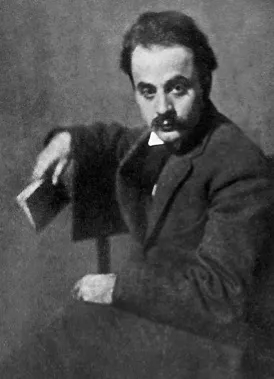
Kahlil Gibran
Kahlil Gibran was a Lebanese-American writer, poet, and artist known for "The Prophet," blending spiritual and philosophical themes.
Kahlil Gibran, born Jubrān Khalīl Jubrān in Lebanon in 1883, was a writer, poet, and visual artist who later immigrated to the United States. He gained international acclaim primarily for his 1923 book, "The Prophet," which has become one of the best-selling books of all time and has been translated into numerous languages. Despite being considered a philosopher, Gibran himself rejected the title. His early life was marked by poverty and significant family losses, including the deaths of siblings and parents. He received early education in his native village and later in Beirut, returning to Boston where his artistic talents were recognized. Supported by patrons like Mary Haskell, he studied art in Paris and engaged with intellectual circles, with some of his writings facing censorship due to their critical stance on authority. Gibran's work, encompassing both visual art and literature, explored spiritual and mythological symbolism, drawing influences that have been described as a blend of Nietzschean rebellion, Blakean pantheism, and Sufi mysticism. He died in 1931, leaving a significant literary and artistic legacy.
Early Life and Artistic Development
Born in the village of Bsharri, Lebanon, Kahlil Gibran's family faced poverty and upheaval. His father's imprisonment led to the family's property confiscation, prompting his mother to immigrate with her children to Boston in 1895. There, Gibran's creative talents were quickly identified, leading to early artistic exhibitions and publications. He was introduced to influential figures like photographer F. Holland Day, who supported his artistic pursuits. Despite his early immersion in Western culture, his family encouraged him to reconnect with his heritage, leading to a period of study in Beirut. Tragically, his return to Boston coincided with the deaths of his sister, brother, and mother, leaving him to rely on his remaining sister for support. His artistic journey continued with exhibitions and the publication of his first works in Arabic and later in English.
Literary Career and Philosophical Undertones
Gibran's literary career began with publications in Arabic, followed by his first English work, "The Madman," in 1918. His most famous work, "The Prophet," published in 1923, achieved widespread international success, becoming a perennial bestseller. His writings often explored profound themes, leading some to label him a philosopher, a title he reportedly declined. His work was influenced by diverse spiritual and philosophical currents, with critics noting connections to Blakean pantheism and Sufi mysticism, alongside a spirit of rebellion. Some of his writings, particularly those critical of secular and spiritual authorities, faced censorship and were banned in Ottoman territories. Gibran's artistic output extended beyond writing to visual arts, with his paintings often imbued with spiritual and mythological symbolism.
Patronage and Later Life
A significant aspect of Gibran's career was the patronage he received, most notably from Mary Haskell. Haskell provided substantial financial support and acted as an editor for his English writings, playing a crucial role in his development and career advancement. Their relationship, though complex and debated by biographers, was a lifelong bond of friendship and support. Haskell's influence helped Gibran pursue his artistic studies in Paris and navigate the literary world. By the time of his death in 1931 from illness, Gibran had achieved considerable fame. He bequeathed all future royalties from his works to his birth village in Lebanon, where a museum dedicated to his legacy now exists. His work continues to be celebrated for its artistic merit and philosophical depth.
Key Ideas
- Exploration of spiritual and mythological symbolism in art and writing.
- Critique of secular and spiritual authority.
- Blending of diverse philosophical and mystical influences, including pantheism and Sufi mysticism.
- Themes of rebellion and challenging established norms.
Books by Kahlil Gibran
10 free public domain books · Read online or download