Pat Zalewski
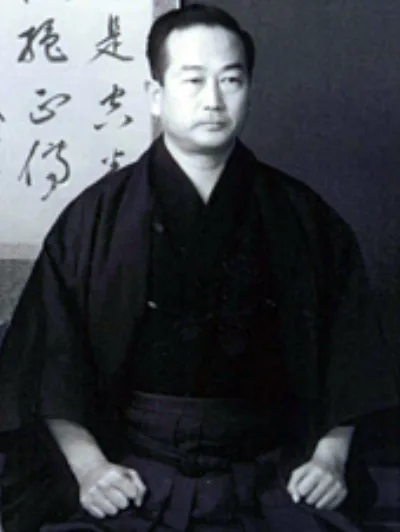
Masatoshi Nakayama was a pivotal figure in Shotokan karate, instrumental in establishing the JKA and popularizing the art globally through his teachings and writings.
Masatoshi Nakayama (1913-1987) was a highly regarded Japanese master of Shotokan karate, recognized internationally for his significant contributions to the martial art. He played a crucial role in the founding of the Japan Karate Association (JKA) in 1949 and dedicated nearly four decades to expanding Shotokan karate's reach worldwide. Nakayama's efforts extended beyond instruction to authorship, producing numerous influential karate textbooks that aided in the martial art's global dissemination. He achieved the rare distinction of being the first Shotokan master to be awarded the 9th dan rank during his lifetime, with a posthumous promotion to 10th dan acknowledging his profound impact.
Founding and Global Expansion of Shotokan
Born in 1913 in Japan's Yamaguchi prefecture, Masatoshi Nakayama's early life included martial arts training. He began studying karate under Gichin and Yoshitaka Funakoshi at Takushoku University. After graduating in 1937 and serving as a military interpreter in China, Nakayama returned to Japan post-World War II. In May 1949, he co-founded the Japan Karate Association (JKA), serving as Chief Instructor. Under his guidance, the JKA developed a structured training program that integrated traditional karate principles with modern sports science, a significant innovation in martial arts pedagogy. Nakayama was instrumental in establishing kata and kumite as recognized tournament disciplines. He also spearheaded the JKA instructor trainee program, sending graduates globally to establish new Shotokan branches and boost membership, thereby significantly contributing to the art's international proliferation.
Pedagogical Innovations and Rank Progression
Nakayama's influence extended to the academic sphere, where he held positions in the Physical Education department at Takushoku University, eventually leading the department and its ski team. His dedication to refining Shotokan training methods was evident in his collaboration with Teruyuki Okazaki in 1956 to restructure the curriculum, emphasizing both tradition and contemporary scientific approaches. His own karate rank progressed steadily; by 1951 he was a 3rd dan, reaching 5th dan by 1955. A significant promotion to 8th dan occurred in 1961, facilitated by Japan's consensus-based promotion system. Later, in the 1980s, he achieved the 9th dan, a historic first for a living Shotokan master. He continued to teach until his passing in 1987, leaving a legacy of structured, accessible karate instruction.
Literary and Lasting Legacy
Masatoshi Nakayama authored a substantial body of work that played a critical role in popularizing Shotokan karate. His most notable contribution is the expansive 11-volume "Best Karate" series, alongside other influential books such as "Dynamic Karate" and co-authored works like "Practical Karate." These publications, often created with collaborators like Donn Draeger, provided detailed instruction and analysis, making Shotokan techniques and philosophy accessible to a wider audience. His work also included numerous video productions. Following Nakayama's death in 1987, the JKA experienced significant internal divisions, leading to the formation of numerous independent Shotokan organizations by senior instructors who had trained under him and his contemporaries.
Books by Pat Zalewski
21 free public domain books · Read online or download