Tarot Divination
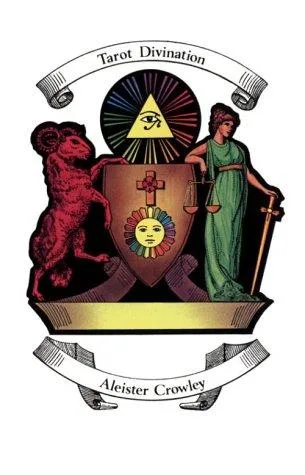
 64
64

Tarot Divination



Alaric Kestrel (Metaphysical Studies Reviewer) — Aleister Crowley's 'Tarot Divination' stands as a monumental pillar in esoteric literature, offering an unparalleled depth of insight into the symbolic language of the Tarot. Crowley’s rigorous approach, grounded in Qabalistic principles and his vast occult experience, transcends superficial fortune-telling. He reveals the Tarot as a living map of consciousness, a tool for spiritual ascent and the realization of the True Will. This work is essential for serious practitioners and scholars seeking a profound, challenging, and ultimately transformative understanding of the cards. Its strengths lie in its comprehensive systemization and its direct, often stark, illumination of the hidden forces at play. It is a guide for those ready to engage with the ultimate mysteries.
📝 Description
64
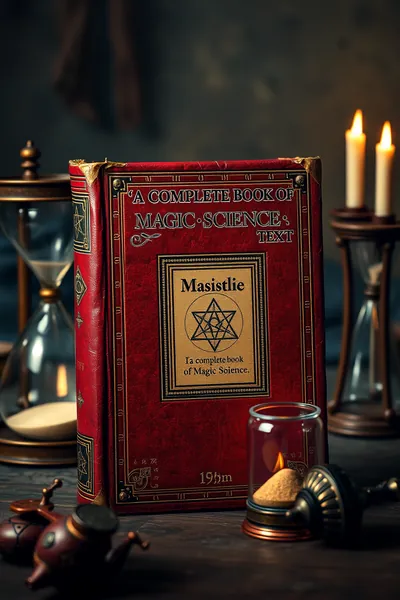
Aleister Crowley published 'Tarot Divination' to detail his Qabalistic system for interpreting the cards.
Aleister Crowley's 'Tarot Divination' presents a structured approach to understanding the Tarot, moving beyond simple fortune-telling. Crowley, a significant figure in modern occultism, details the symbolic meanings of each card, connecting them to numerology and Qabalistic principles. He outlines how these elements form a system for self-understanding and spiritual development. The book examines the archetypal forces influencing human experience and the celestial connections influencing life paths. Crowley's exposition aims to reveal the Tarot as a tool for personal transformation and insight into the esoteric 'Great Work.' It encourages a deep engagement with the seventy-eight cards, viewing them as keys to unlocking inner and outer realities.
The text serves as a manual for serious students interested in the occult uses of the Tarot. Crowley emphasizes the Tarot's role in self-discovery and gaining a broader perspective on the universe. This work is intended for those who wish to use the cards not just for prediction, but as a means toward deeper knowledge and personal alchemy. It is a guide for individuals dedicated to spiritual or magical pursuits who seek to understand the symbolic language of the cosmos.
This work sits within the Western Esoteric Tradition, specifically drawing from ceremonial magic and Qabalistic systems that gained prominence in the late 19th and early 20th centuries. Crowley's interpretation is deeply influenced by his own magical order, the Hermetic Order of the Golden Dawn, and his later philosophical system, Thelema. He sought to integrate the Tarot into a comprehensive framework for understanding the universe and achieving spiritual enlightenment, often referred to as the 'Great Work.' His approach emphasizes esoteric symbolism and its application to personal gnosis and magical practice.
💡 Why Read This Book?
Unravel the profound esoteric connections between the Tarot, Qabalah, and the human psyche. This book offers not just predictive techniques, but a pathway to spiritual enlightenment and self-mastery. It is ideal for seasoned practitioners, occult scholars, and sincere seekers ready to delve into the deepest layers of Tarot symbolism and its application in the Great Work.
⭐ Reader Reviews
Honest opinions from readers who have explored this book.
❓ Frequently Asked Questions
What is the core philosophy behind Crowley's Tarot interpretation?
Crowley's Tarot philosophy is deeply rooted in his Thelemic system, emphasizing the Tarot as a symbolic representation of the universe and the path of spiritual evolution, aligning with the concept of the 'Great Work' and the realization of one's True Will.
How does this book differ from other Tarot guides?
Unlike many introductory guides, Crowley's work delves into the Qabalistic, astrological, and alchemical correspondences of each card, offering a complex, layered system for advanced practitioners and scholars.
Is this book suitable for beginners?
While rich in esoteric detail, this book is best approached by those with some prior familiarity with occult concepts or a strong desire for in-depth study. Beginners may find its complexity challenging but rewarding with dedicated effort.
What is the significance of the 'Seven Abodes' mentioned in the original notes?
The 'Seven Abodes' likely refers to the seven classical planets or the seven lower Sephiroth on the Qabalistic Tree of Life, signifying different realms of consciousness and influence that the Tarot keys illuminate.
Can 'Tarot Divination' be used for practical magic?
Absolutely. Crowley viewed the Tarot not just as a divinatory tool but as a powerful system for ritual, meditation, and magical working, integral to the practice of the Lesser and Greater Mysteries.
🔮 Key Themes & Symbolism
The Qabalistic Framework of the Tarot
Crowley meticulously interweaves the Tarot with the Qabalistic Tree of Life, demonstrating how each card corresponds to specific paths and Sephiroth. This reveals the Tarot not as a collection of random images, but as a structured map of cosmic and psychic energies, essential for understanding the divine order and the journey of the soul towards union with the Absolute. This interconnectedness provides a profound framework for interpreting the deeper meanings behind the cards.
Archetypal Energies and the Great Work
This text posits the Tarot as a living embodiment of archetypal forces that govern human existence and spiritual development. Crowley guides the reader to recognize these potent energies within the cards and, by extension, within themselves. The ultimate aim is to harness these forces through the 'Great Work' – the alchemical transformation of consciousness – leading to the realization of one's True Will and ultimate liberation from illusion.
Symbolism as a Language of the Unseen
Crowley treats Tarot symbolism as a divine language, capable of conveying complex metaphysical truths that transcend ordinary linguistic expression. The intricate imagery, numbers, and associations within the cards are presented as keys to unlocking the hidden dimensions of reality and the subconscious mind. By deciphering this symbolic lexicon, the practitioner gains access to clear insights into the nature of existence, karma, and destiny.
💬 Memorable Quotes
Direct passages from the work, attributed to the author.
“Know thyself, and thou shalt know the universe.”
— A fundamental tenet of many mystical traditions, this highlights the interconnectedness of the microcosm (the self) and the macrocosm (the universe), suggesting that self-understanding is the key to cosmic comprehension.
“The cards are but a mirror to the soul.”
— This emphasizes the divinatory function of the Tarot not as predicting a fixed future, but as revealing the inner landscape, desires, and potentials of the querent.
“Every man and every woman is a star.”
— A Thelemic principle, this signifies the inherent divinity and unique potential within each individual, encouraging the pursuit of one's True Will.
“The path of initiation is the path of knowledge.”
— This underscores the idea that genuine spiritual progress and transformation are achieved through the acquisition of esoteric knowledge and direct experience, not mere belief.
💡 Key Ideas
Editorial paraphrase of the work's core concepts — not direct quotes.
The world is a mirror of the divine.
This quote captures the core esoteric belief that the external reality we perceive is a reflection of higher, spiritual truths and patterns, accessible through diligent study and inner work.
🌙 Esoteric Significance
Tradition
Crowley's work is deeply embedded in the Western Esoteric Tradition, particularly Hermeticism, Qabalah, and ceremonial magic. It draws heavily from his own Thelemic philosophy, which posits the Tarot as a symbolic representation of cosmic law and the path of individual spiritual evolution towards self-realization and the union with the divine.
Symbolism
The book meticulously decodes the strong symbolism of the Tarot, linking each card to Qabalistic paths, planetary and astrological correspondences, and alchemical processes. This layered approach reveals the Tarot as a cosmic map, where figures, numbers, and colors represent profound archetypes and forces governing existence, offering a sophisticated system for understanding both the inner and outer worlds.
Modern Relevance
Despite its historical roots, Crowley's 'Tarot Divination' remains profoundly relevant for contemporary seekers. Its emphasis on self-knowledge, personal empowerment, and the pursuit of one's True Will resonates deeply in an age seeking deeper meaning. The text provides advanced tools for psychological exploration, spiritual growth, and sophisticated divination practices for those ready to engage with its challenging depth.
👥 Who Should Read This Book
This important work is indispensable for serious Tarot practitioners seeking to move beyond superficial readings into a profound understanding of the cards' esoteric underpinnings. Occult scholars will find it a cornerstone text for studying the intersection of Tarot and Qabalah. For dedicated spiritual seekers, it offers a challenging yet rewarding path to self-discovery and gnosis. Beginners with a strong inclination for deep metaphysical study may also find value, though prior exposure to occult concepts is recommended for optimal comprehension.
📜 Historical Context
Published in the early 20th century, Aleister Crowley's 'Tarot Divination' emerged from a vibrant period of occult revival and intellectual ferment. The late Victorian and Edwardian eras witnessed a burgeoning interest in ancient mysticism, Eastern philosophies, and esoteric systems like Qabalah and Hermeticism. Crowley, a central figure in this milieu, synthesized these diverse traditions into his own unique system of magic and philosophy. His work on the Tarot, particularly the Thoth Tarot which he designed, built upon the foundations laid by earlier occultists like Eliphas Lévi and the Hermetic Order of the Golden Dawn. This book reflects a desire to clarify and systematize Tarot knowledge, presenting it as a profound tool for spiritual advancement and a key to unlocking the secrets of the universe, deeply influencing subsequent generations of occultists and Tarot practitioners.
📔 Journal Prompts
Reflect on a card that has consistently appeared in your readings. What archetypal energy does it represent for you, and how is it manifesting in your life?
How can the Qabalistic correspondences of a Tarot card deepen your understanding of its meaning beyond its imagery?
Consider a challenging Tarot spread. How can you apply the principles of the 'Great Work' to work through the energies presented?
What personal 'True Will' is the Tarot revealing to you through its symbolism, and what steps can you take to actualize it?
Explore the connection between the 'Seven Abodes' (planets/Sephiroth) and a specific Tarot card; how do these layers of meaning inform each other?
🗂️ Glossary
Qabalah
An esoteric system of Jewish mysticism that explores the nature of God and the universe through a symbolic framework, most notably the Tree of Life, which Crowley extensively utilizes in his Tarot interpretations.
Thelema
Crowley's own religious and philosophical system, centered around the dictum 'Do what thou wilt shall be the whole of the Law.' It emphasizes individual sovereignty and the pursuit of one's True Will.
Great Work
The ultimate spiritual goal in esoteric traditions, often referring to the alchemical transformation of the self, the union of opposites, and the attainment of gnosis or enlightenment.
Sephiroth
The ten divine emanations or attributes of God described in Qabalistic cosmology, forming the 'Tree of Life,' a central diagram for understanding the structure of the universe and consciousness.
True Will
A core concept in Thelema, representing an individual's unique divine purpose or destiny, distinct from ego-driven desires, which must be discovered and followed to achieve fulfillment.
This book appears in 3 collections
🔮 Readers Also Liked
Browse all →
More by Aleister Crowley
All books →
From the “Tarot” Collection
View all →
![The New-England primre [sic] improved.](/img/thumb/the-new-england-primre-sic-improved.webp)
More Free Divination & Tarot Books
View all →