Shamanism and Traditional Beliefs
 71
71

Shamanism and Traditional Beliefs
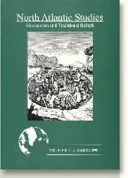
Torben A. Vestergaard's edited volume, 'Shamanism and Traditional Beliefs,' tackles the ambitious task of unifying research on North Atlantic spiritual practices. Its strength lies in juxtaposing studies that might otherwise remain siloed, revealing striking cross-cultural resonances in shamanistic expressions. The exploration of ritual and dream imagery as primary means of engaging with 'other realms' is particularly compelling. However, the collection occasionally suffers from the inherent fragmentation of its source material; some papers feel less integrated than others, leaving the reader to make more connections than might be ideal. A notable strength is the detailed analysis of specific regional practices, such as those found in Greenlandic Inuit traditions, which offers concrete examples of the broader theoretical points. The book's limitation is its academic tone, which may make some sections dense for the casual reader. Despite this, Vestergaard provides a valuable scholarly resource for understanding the shared underpinnings of belief in the North Atlantic.
📝 Description
71
Published in 2001, this collection examines shamanistic practices and traditional beliefs across the North Atlantic.
This 2001 volume gathers research on the intersection of shamanistic practices and traditional beliefs within the North Atlantic region. It investigates how societies engage with non-physical dimensions through ritual, dream states, and symbolic imagery. The papers highlight commonalities and connections in these practices across various Northern cultures, countering a trend among scholars to analyze them separately. The research emerged during a time when North Atlantic Studies were growing, but academic disciplines often kept scholars from discussing similar observations. This collection aims to connect researchers working within different academic traditions who noticed comparable phenomena in shamanistic practices. The goal was to encourage a more complete understanding of the region's religious and cultural life in the early 21st century.
Scholars of comparative religion, anthropology, and North Atlantic Studies will find extensive comparative data. Researchers interested in the phenomenology of religious experience, especially altered states of consciousness, ritual effectiveness, and the role of imagery in belief systems, will find it beneficial. The book is also for those curious about how ancient and indigenous belief systems in northern areas describe their relationship with perceived spiritual or other dimensions.
This work situates itself within the academic study of shamanism and comparative religion, specifically focusing on Northern European and North Atlantic cultures. It addresses concepts like the 'other realm' and the use of ritual and altered states of consciousness to interact with perceived spiritual dimensions. By drawing connections between disparate cultural expressions of shamanic practice, it contributes to a broader understanding of how humans have historically conceptualized and engaged with non-ordinary reality.
💡 Why Read This Book?
• Gain a nuanced understanding of how ritual and dream states function as bridges to 'other realms' across diverse North Atlantic cultures, as detailed in the comparative analyses. • Explore specific shamanistic practices and imagery prevalent in Northern regions, moving beyond generalized notions of spirituality to concrete cultural expressions. • Appreciate the early 21st-century scholarly effort to overcome disciplinary isolation in North Atlantic Studies, fostering a more integrated view of regional belief systems.
⭐ Reader Reviews
Honest opinions from readers who have explored this book.
❓ Frequently Asked Questions
What is the primary focus of 'Shamanism and Traditional Beliefs'?
The book focuses on shamanistic practices and traditional beliefs in the North Atlantic region, examining how human societies interact with perceived spiritual or other realms through ritual, dreams, and imagery.
When was 'Shamanism and Traditional Beliefs' first published?
The collection of papers was first published in 2001, reflecting research conducted in the years leading up to the turn of the millennium.
What makes the cross-cultural resemblances in the book significant?
The resemblances are significant because they highlight commonalities in belief and practice across different Northern cultures, suggesting shared human experiences or orientations towards the spiritual.
Who is the editor of 'Shamanism and Traditional Beliefs'?
The editor of this collection is Torben A. Vestergaard, who compiled papers aiming to connect disparate research on North Atlantic traditions.
Does the book discuss specific geographical areas within the North Atlantic?
Yes, the work explores various Northern regions, looking at cultural similarities and differences in shamanistic traditions found in areas such as Greenland and other parts of the North Atlantic.
What academic disciplines does this book bridge?
The book bridges disciplines such as anthropology, comparative religion, and North Atlantic Studies, encouraging dialogue between scholars who might otherwise work in isolation.
🔮 Key Themes & Symbolism
The 'Other Realm' in North Atlantic Belief
This theme examines how various North Atlantic cultures conceptualize and interact with dimensions beyond the mundane. The papers analyze the consistent presence of a perceived 'other realm' across disparate societies, functioning as a source of power, knowledge, or spiritual presence. It examines the linguistic and symbolic frameworks used to describe these non-physical spaces and the methods employed to bridge the gap between the human and the divine or ancestral worlds.
Ritual as a Bridge
Central to the collection is the examination of ritual as a primary mechanism for engaging with the 'other realm'. The research illustrates how specific ceremonies, practices, and communal actions serve not merely as symbolic expressions but as active means to influence, commune with, or navigate these spiritual dimensions. The efficacy of ritual is explored in relation to its ability to maintain social cohesion and facilitate individual spiritual experiences.
Dreaming and Imagery
The role of dreams and visual imagery in shamanistic traditions is a significant focus. The papers highlight how dream narratives are interpreted as messages from spirits or ancestors, providing guidance and insight. Furthermore, the use of potent visual symbols and iconography in art, artifacts, and ritual objects is analyzed for its power in solidifying belief systems and facilitating altered states of consciousness for practitioners.
Cross-Cultural Resonances
A key argument is the prevalence of striking resemblances in shamanistic beliefs and practices across the diverse cultures of the North Atlantic. This theme challenges previous scholarly tendencies to compartmentalize such studies. By comparing data from different regions, the collection reveals underlying commonalities in human spiritual expression, suggesting shared psychological structures or universal responses to existence.
💬 Memorable Quotes
Direct passages from the work, attributed to the author.
“The relationship between human society and the other realms is explored.”
— This concise statement expresses the core focus: understanding how cultures articulate and manage their connection to spiritual or non-physical dimensions through observable practices.
“Extensive cross cultural resemblances between such beliefs and practices within the northern regions.”
— This highlights a major finding of the research, emphasizing the interconnectedness of spiritual traditions across the North Atlantic despite apparent cultural differences.
“Looking at ritual, dreams, imagery and other shamanistic practices.”
— This identifies the key methodologies and phenomena examined, pinpointing the practical and experiential elements central to shamanistic traditions discussed in the volume.
“Scholars from different disciplinary frameworks with limited mutual contact.”
— This points to a historical problem in academia that the collection seeks to address: the need for interdisciplinary dialogue to better understand complex cultural phenomena.
“The work explores the function of ritual as a mechanism for accessing or influencing these realms.”
— This interpretation emphasizes the active, functional role attributed to ritual within the belief systems studied, positioning it as more than mere ceremony.
🌙 Esoteric Significance
Tradition
This work does not strictly adhere to a single esoteric lineage like Hermeticism or Theosophy. Instead, it engages with a broader, more anthropological understanding of shamanism, which often informs modern esoteric practices. It fits within the Esoteric Library's scope by examining belief systems that posit direct interaction with spiritual forces and non-physical realities, a common thread in much esoteric thought, albeit approached from an academic research perspective.
Symbolism
Key symbols often revolve around animals (spirit guides, totems), natural elements (sacred mountains, waters), and celestial bodies (sun, moon, stars) as conduits or manifestations of spiritual power. The imagery of the 'other realm' itself functions symbolically, representing states of consciousness, ancestral domains, or divine landscapes that practitioners seek to access or influence through their practices.
Modern Relevance
Contemporary Neo-shamanic practitioners and scholars of comparative spirituality often draw on compiled research like this to understand the roots and variations of shamanic techniques. Thinkers exploring consciousness studies, altered states, and cross-cultural psychology find value in the detailed accounts of dream work and ritual efficacy presented, informing modern approaches to healing and spiritual development.
👥 Who Should Read This Book
• Comparative religion scholars and anthropologists researching Northern European and Arctic indigenous cultures, seeking detailed case studies and cross-cultural analysis. • Students of esotericism interested in the practical application of belief systems that posit direct interaction with spiritual realms through ritual and altered states. • Researchers of altered states of consciousness and the phenomenology of religious experience, looking for empirical examples from diverse cultural contexts.
📜 Historical Context
Published in 2001, 'Shamanism and Traditional Beliefs' emerged during a period of increasing interdisciplinary focus in the humanities, yet academic fields like anthropology and religious studies often remained compartmentalized. North Atlantic Studies, in particular, was developing as a field that sought to connect the disparate cultures of the region, moving beyond national or linguistic boundaries. The volume's emphasis on comparing shamanistic practices across cultures directly challenged the prevailing trend of studying indigenous or folk religions in isolation, often within separate national or area studies frameworks. While not a major event, the collection aimed to foster dialogue, implicitly engaging with scholars like Åke Hultkrantz, a prominent historian of religion who extensively studied Native American religions and comparative mythology, by providing a similar comparative lens for Northern traditions.
📔 Journal Prompts
The concept of the 'other realm' as presented in North Atlantic traditions.
Dream narratives as spiritual communication pathways.
The function of specific shamanistic rituals in accessing spiritual power.
Cross-cultural resemblances in imagery across Northern belief systems.
The scholar's challenge of limited mutual contact between disciplinary frameworks.
🗂️ Glossary
Shamanism
A religious practice characterized by the belief that a practitioner (shaman) can communicate with or influence the spirit world for the benefit of the community, often through trance states.
Other Realm
A conceptual space or dimension perceived by various cultures as existing parallel to the physical world, inhabited by spirits, deities, ancestors, or other non-corporeal entities.
Ritual
A set of actions, performed according to a prescribed order, often symbolic, designed to achieve a specific spiritual, social, or magical outcome.
Imagery
The use of visual representations, symbols, and mental pictures within religious or spiritual contexts to convey meaning, evoke emotion, or facilitate altered states of consciousness.
Cross-cultural Resemblances
Similarities in beliefs, practices, or symbols found across different cultures, suggesting shared human psychological traits or common responses to fundamental life experiences.
North Atlantic Studies
An interdisciplinary field of academic inquiry focusing on the historical, cultural, social, and political connections and interactions within the North Atlantic region.
Phenomenology of Religion
The study of religious experiences and phenomena as they appear to the consciousness of the believer, focusing on the subjective experience rather than objective explanation.
This book appears in 1 collection
🔮 Readers Also Liked
Browse all →







From the “Shamanism” Collection
View all →







More Free Esoteric History & Biography Books
View all →