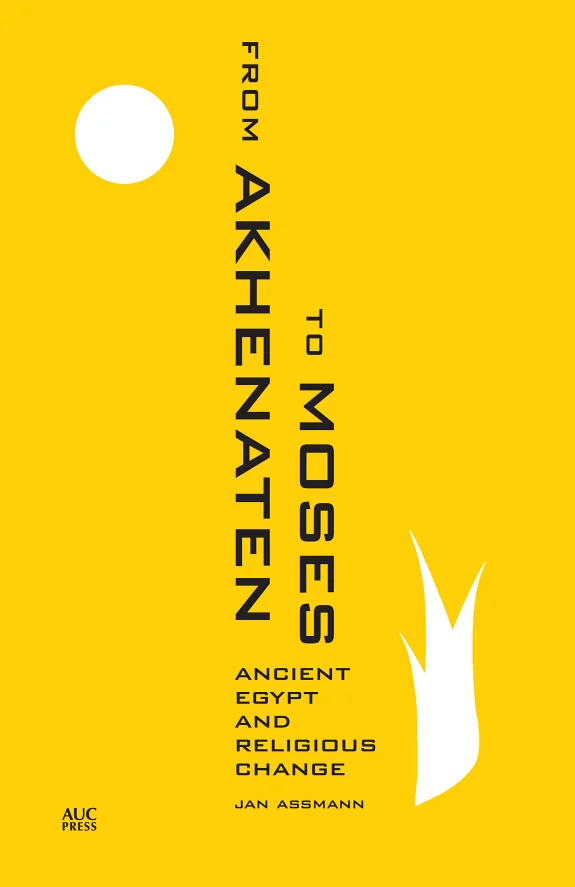
From Akhenaten to Moses
 75
75

From Akhenaten to Moses
Jan Assmann's "From Akhenaten to Moses" offers a compelling analysis of the world-altering shift from polytheism to monotheism, using Akhenaten and Moses as its dual focal points. The book's strength lies in its meticulous comparison of the Egyptian Atenist revolution and the nascent Israelite monotheism, demonstrating how both represented radical breaks from established norms. Assmann's exploration of how Egypt serves as a symbolic 'old world' to be rejected in the Exodus narrative is particularly insightful. A limitation, perhaps inherent in such a broad historical sweep, is the occasional reliance on interpreting symbolic representation over definitive historical proof for certain connections. The chapter discussing the "primordial” nature of monotheism and its relationship to violence is a standout, challenging conventional understandings. This is a vital study for anyone seeking to grasp the deep historical roots of Western religious thought.
📝 Description
75
Jan Assmann's 2014 book traces monotheism's rise from Egyptian and Israelite roots.
Published in 2014, Jan Assmann's "From Akhenaten to Moses" examines the shift from polytheism to monotheism in the ancient world. Assmann focuses on the Egyptian pharaoh Akhenaten and the biblical figure Moses as key examples of this transition. He argues that this change was not just religious but also deeply cultural and political, affecting societal structures and beliefs.
The book places this religious transformation within the context of the Late Bronze Age, a time of significant change in the Near East. It contrasts Akhenaten's promotion of the sun disk Aten with the development of monotheism attributed to Moses. Assmann investigates possible links and differences between these two significant religious movements, offering a comparative perspective on their origins and impact.
This work engages with the esoteric tradition by examining the foundational shifts in religious thought that shaped Western and Middle Eastern consciousness. It looks at how singular divine concepts emerged and were transmitted, influencing later mystical and theological developments. The book considers the construction of religious identity through historical narrative and the reinterpretation of transformative events, a process often central to esoteric schools seeking to understand ultimate realities and divine order.
💡 Why Read This Book?
• Understand the revolutionary impact of Akhenaten's Aten cult in 14th century BCE Egypt and its contrast with other ancient polytheisms, gaining insight into early attempts at religious singularity. • Grasp the symbolic significance of Egypt as the "old world" to be abandoned in the Book of Exodus, learning how this motif shapes the narrative of religious renewal and departure. • Explore Jan Assmann's concept of "religious memory," discovering how foundational religious shifts are transmitted and reinterpreted across generations, influencing collective identity.
⭐ Reader Reviews
Honest opinions from readers who have explored this book.
❓ Frequently Asked Questions
What historical period does Jan Assmann focus on in From Akhenaten to Moses?
The book primarily examines the Late Bronze Age, specifically focusing on the 14th century BCE for Akhenaten's reign and the subsequent development of Mosaic traditions.
Who are the two central figures discussed in the book?
The central figures are the Egyptian pharaoh Akhenaten, known for his Atenist reforms, and Moses, the prophet central to the Exodus narrative and the establishment of Israelite monotheism.
What is the main thesis regarding the transition from polytheism to monotheism?
Assmann argues that this transition was a radical, world-changing event that involved not just theological shifts but also profound cultural and political transformations, with Akhenaten and Moses symbolizing its early stages.
How does the book relate Akhenaten and Moses?
It presents them as figures who, though from different civilizations, represent similar revolutionary impulses towards religious singularity and the rejection of older, polytheistic systems.
What is the symbolic role of Egypt in the context of the Exodus?
Egypt, particularly during the Amarna period with Akhenaten, is presented as the 'old world' to be rejected and abandoned in the foundational narrative of the Exodus, signifying a move towards a new spiritual and societal order.
What is the significance of the Aten cult?
The Aten cult, promoted by Akhenaten, is examined as a precursor or parallel to monotheistic thought, emphasizing a singular divine entity and a cosmic order, contrasting sharply with traditional Egyptian polytheism.
🔮 Key Themes & Symbolism
The Polytheism to Monotheism Shift
This study meticulously dissects the profound transformation from widespread polytheistic worship to the emergence of monotheism. It positions Akhenaten's radical reforms in 14th century BCE Egypt, elevating the Aten, and the biblical narrative of Moses as important, albeit distinct, moments in this global shift. Assmann investigates how these movements challenged established cosmologies and social orders, proposing that the move towards a singular deity was a revolutionary act with deep cultural and political ramifications, fundamentally altering humanity's relationship with the divine and the world.
Symbolism of Egypt and Exodus
The book employs Egypt not merely as a historical backdrop but as a potent symbol. In the context of the Exodus, Egypt represents the 'old world' – the established, polytheistic order that must be rejected for a new spiritual and communal existence. This symbolic function highlights the radical nature of the transition, portraying the departure from Egypt as a necessary shedding of outdated beliefs and societal structures. Assmann explores how this narrative of abandonment and renewal became foundational for subsequent monotheistic traditions.
Religious Memory and Identity
Jan Assmann examines the concept of 'religious memory,' examining how important events and transformations are encoded and transmitted across generations. The study considers how the revolutionary experiences of Akhenaten's reign and the Exodus shaped the collective identity of both Egyptians and, more enduringly, the Israelites. This process of remembering and reinterpreting foundational moments is crucial for understanding the persistence and evolution of religious traditions and their role in defining cultural and historical consciousness.
Historical Figures as Archetypes
The work utilizes Akhenaten and Moses not just as historical individuals but as archetypes embodying the forces of religious revolution. Akhenaten represents a state-sponsored, top-down attempt at radical theological change, while Moses embodies a covenantal, tradition-forming prophet. By examining them side-by-side, Assmann illuminates the many-sided nature of religious upheaval and the enduring power of these figures to symbolize humanity's ongoing quest for meaning and divine connection.
💬 Memorable Quotes
Direct passages from the work, attributed to the author.
“Akhenaten and Moses--a figure of history and a figure of tradition--symbolize this shift in its incipient, revolutionary stages.”
— This highlights Assmann's core argument that these two figures, one historically verifiable and the other a foundational tradition, serve as potent symbols for the initial, radical phases of monotheism's emergence.
“Egypt stands for the old world to be rejected and abandoned in order to enter the new one.”
— This interpretation emphasizes the symbolic weight of Egypt within the Exodus narrative, representing a polytheistic past that must be renounced for the sake of a new covenantal and monotheistic future.
“The shift from polytheism to monotheism changed the world radically.”
— This statement underscores the profound and far-reaching consequences of the move towards monotheism, framing it not as a minor theological adjustment but as a fundamental reshaping of civilization.
“The seven chapters of this seminal study shed light on the great transformation from different angles.”
— This indicates the comprehensive approach Assmann takes, exploring the complex transition from multiple perspectives to offer a thorough analysis of this critical historical and religious development.
💡 Key Ideas
Editorial paraphrase of the work's core concepts — not direct quotes.
The work explores the relationship between cosmic law and historical revelation.
This paraphrased concept points to Assmann's examination of different conceptualizations of divinity—one based on universal order (cosmic law) and another on divine intervention in human history (historical revelation), central to understanding polytheistic vs. monotheistic frameworks.
🌙 Esoteric Significance
Tradition
While not strictly within a single esoteric lineage like Hermeticism or Gnosticism, Assmann's work provides foundational context for many esoteric traditions that draw heavily on ancient Egyptian and biblical sources. It speaks to traditions interested in the primal origins of spiritual thought and the archetypal shifts in human consciousness. By examining the historical and symbolic roots of monotheism, it offers a critical lens through which esotericists can re-evaluate their own mythologies and cosmologies, particularly those that venerate singular divine principles or cosmic orders.
Symbolism
The book's core symbolism lies in the contrast between Akhenaten's Aten, representing a radiant, universal cosmic principle, and Moses's Yahweh, embodying a covenantal, historical, and often hidden divine will. The concept of Egypt as the 'old world' to be left behind is another potent symbol, signifying the shedding of material or polytheistic limitations to embrace a higher spiritual truth. The sun disk (Aten) itself serves as a symbol of divine immanence and universal presence, contrasting with the more transcendent and exclusive nature often associated with early monotheistic deities.
Modern Relevance
Contemporary thinkers and practitioners interested in the evolution of consciousness, the psychology of religious belief, and comparative mythology find Assmann's work highly relevant. Schools exploring archetypal psychology, the roots of Western esotericism, and critical examinations of religious history often cite Assmann. His analysis of how foundational religious shifts create lasting cultural memory informs modern discussions on identity, secularization, and the enduring power of myth and ritual in contemporary society.
👥 Who Should Read This Book
• Comparative religion scholars and students seeking to understand the foundational shifts that shaped Western and Middle Eastern religious thought, particularly the transition from polytheism. • Egyptology enthusiasts and biblical studies researchers interested in the historical and symbolic connections between ancient Egypt (specifically the Amarna period) and the origins of Israelite monotheism. • Readers fascinated by the philosophical and cultural impact of revolutionary ideas, exploring how figures like Akhenaten and Moses represent profound breaks with established traditions and worldviews.
📜 Historical Context
Jan Assmann's study, "From Akhenaten to Moses," emerged in 2014, building upon decades of scholarship concerning the Amarna Period and the origins of Israelite religion. The book engages directly with the intellectual currents of the late 20th and early 21st centuries, particularly within Egyptology and biblical studies, which grappled with the nature of Akhenaten's reforms and the historical plausibility of the Exodus. Assmann's work implicitly responds to earlier theories, such as those positing direct Egyptian influence on early Israelite religion, while also considering the distinct theological developments. The reception of his work within academia highlights its contribution to comparative religion and the history of consciousness, engaging with scholars like Erik Hornung who also studied Egyptian religion. The book's comparative method itself was a significant intellectual current, moving away from isolated studies of ancient cultures.
📔 Journal Prompts
The symbolic role of Egypt as the 'old world' in the Exodus narrative.
Akhenaten's Aten cult versus Mosaic monotheism: points of divergence and convergence.
The concept of 'religious memory' and its impact on collective identity formation.
Analyze the pharaoh Akhenaten as a historical figure versus an archetype of religious revolution.
Reflect on the radical nature of shifting from polytheism to monotheism as depicted in the book.
🗂️ Glossary
Aten
The solar disk deified by the Egyptian pharaoh Akhenaten during the Amarna Period. Akhenaten promoted the Aten as the supreme, universal deity, radically altering traditional Egyptian polytheism.
Amarna Period
A period in ancient Egyptian history (roughly 1353–1336 BCE) characterized by the religious revolution of Pharaoh Akhenaten, who moved the capital to Akhetaten (modern Amarna) and promoted the worship of the Aten.
Monotheism
The belief in the existence of only one God. This contrasts with polytheism, the belief in multiple gods.
Polytheism
The belief in or worship of more than one god. This was the prevalent religious system in most ancient cultures before the rise of monotheistic traditions.
Book of Exodus
The second book of the Hebrew Bible (Old Testament), narrating the Israelites' departure from slavery in Egypt, led by Moses, and their journey towards the Promised Land.
Religious Memory
A concept referring to how societies collectively remember, interpret, and transmit foundational religious events and beliefs, shaping their ongoing identity and worldview.
Cosmic Law
In the context of Akhenaten's Atenism, this refers to the universal, inherent order of the cosmos believed to be embodied and maintained by the Aten, as opposed to a God acting through historical covenants.
This book appears in 1 collection
🔮 Readers Also Liked
Browse all →









From the “Egyptian Mysteries” Collection
View all →




![The Kybalion [A Study Of The Hermetic Philosophy Of Ancient Egypt And Greece].pdf (PDFy mirror)](/img/thumb/the-kybalion-a-study-of-the-hermetic-philosophy-of-ancient-egypt-and-greece-pdf-pdfy-mirror.webp)


More Free Esoteric History & Biography Books
View all →