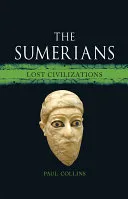
The Sumerians
 84
84

The Sumerians
Collins’ "The Sumerians" offers a bracing corrective to the often-unquestioned genesis myths of Western civilization. Rather than simply recounting Sumerian achievements, the book dissects the very *idea* of Sumer, tracing its construction from fragmented evidence unearthed in the late 19th and early 20th centuries. Collins demonstrates a keen eye for the historiographical underpinnings of Near Eastern archaeology, particularly how early interpretations, influenced by prevailing colonial and nationalist sentiments, shaped our understanding of these ancient peoples. A particular strength is the detailed examination of how scholars like Archibald Sayce engaged with the textual record, often projecting modern concepts onto ancient realities. If there's a limitation, it's that the narrative occasionally becomes deeply enmeshed in the minutiae of scholarly disputes, which might test the patience of readers less familiar with the academic debates of the era. The discussion surrounding the cuneiform tablets found at Nineveh, and their initial translation, serves as a potent example of both the challenges and the biases inherent in reconstructing ancient history. Ultimately, Collins compels us to reconsider not just Sumer, but the very act of historical interpretation.
📝 Description
84
Paul Collins' "The Sumerians" questions the very idea of a distinct Sumerian civilization.
Published in 2001, Paul Collins' "The Sumerians" examines how our understanding of this ancient Mesopotamian civilization, flourishing between 3500 and 2000 BCE, was built.
Collins investigates the archaeological finds and textual fragments from Iraq and Syria that led scholars to define a unique Sumerian culture. He looks at the late 19th and early 20th centuries, a time of extensive excavation and interpretation by figures like Archibald Sayce. The book considers how these early scholars constructed a narrative of Sumerian identity, separating it from Akkadian and Babylonian traditions, and questions if this construction was entirely accurate.
This work is for those interested in how history is written, particularly concerning early urban societies. It offers a perspective on the historiography of archaeology, focusing on how interpretations of evidence shape our knowledge of the past. Readers who prefer critical examinations of established historical accounts over simple origin stories will find it valuable.
While not strictly esoteric in the occult sense, this book engages with a tradition of questioning established origins and hidden histories, common in esoteric thought. It examines how 'civilizational invention' is a process of scholarly interpretation, akin to how esoteric traditions often re-examine accepted religious or historical narratives to uncover deeper, perhaps suppressed, meanings. The book's focus on the constructed nature of historical knowledge and the potential for bias in scholarly consensus aligns with a broader esoteric impulse to look beyond surface appearances.
💡 Why Read This Book?
• Understand the construction of the 'Sumerian' identity: Learn how archaeological discoveries and textual analyses between the late 19th century and 2021 shaped our modern perception of this foundational civilization. • Critically evaluate historical narratives: Gain tools to question established accounts of ancient history by examining how evidence from sites like southern Iraq was interpreted by scholars like Paul Collins. • Explore the origins of urbanism: Discover how concepts like cities, writing, and the wheel, often attributed solely to Sumerians, are re-examined through Collins' analysis of evidence uncovered in Iraq and Syria.
⭐ Reader Reviews
Honest opinions from readers who have explored this book.
❓ Frequently Asked Questions
What is the primary argument of Paul Collins' 'The Sumerians'?
The book argues that the modern concept of 'the Sumerians' as a distinct people with singular inventions was largely constructed from archaeological and textual evidence uncovered in Iraq and Syria, challenging the idea of a simple, unified origin story.
When was the earliest civilization of the Sumerians believed to have existed?
The Sumerian civilization is conventionally believed to have flourished in southern Iraq from approximately 3500 to 2000 BCE, a period Collins' work critically examines.
What key inventions are traditionally attributed to the Sumerians?
Traditionally, the Sumerians are credited with inventing cities, writing (cuneiform), and the wheel, innovations that profoundly shaped subsequent human history.
How does 'The Sumerians' challenge conventional historical views?
It questions the straightforward narrative by exploring how the idea of a 'Sumerian people' was assembled from evidence, suggesting a more complex and potentially less singular origin for their civilization.
What regions are central to the archaeological evidence discussed in the book?
The book focuses on archaeological and textual evidence primarily from southern Iraq (Mesopotamia) and Syria, regions where the earliest signs of complex civilization were found.
Who is the author of 'The Sumerians' and when was it first published?
The author is Paul Collins, and the book was first published on March 22, 2021.
🔮 Key Themes & Symbolism
Historiography of Ancient Civilizations
This theme scrutinizes how our understanding of ancient peoples, specifically the Sumerians, is formed. Collins examines the process by which archaeological discoveries in places like southern Iraq and textual fragments from Syria were interpreted by scholars from the late 19th century onwards. It highlights how prevailing academic theories and biases can shape the narrative of history, potentially creating a more cohesive, yet less accurate, picture of past societies than the fragmented evidence might suggest.
The Construction of 'Sumerian' Identity
Collins questions the very notion of a unified 'Sumerian people' by analyzing how this identity was assembled from disparate archaeological and textual sources. The work explores the scholarly efforts to define Sumerian culture, distinct from its neighbors, and suggests that this definition might be more a product of modern interpretation than an inherent ancient reality. It looks at how concepts like cities, writing, and the wheel became definitively 'Sumerian' in the historical record.
Evidence and Interpretation in Archaeology
This theme focuses on the critical assessment of archaeological and textual evidence. The book demonstrates how the same evidence uncovered in Iraq and Syria could be interpreted differently over time, leading to evolving understandings of the Sumerians. It emphasizes the importance of questioning the methods and conclusions of past scholarship, particularly when dealing with civilizations that left behind complex but often ambiguous records, predating 2000 BCE.
Origins of Urbanism and Writing
The work revisits the traditional claims that Sumerians invented fundamental aspects of civilization such as urban living, written language, and the wheel. Collins' analysis suggests a more nuanced view of these developments, exploring how the evidence from southern Iraq and Syria might point to a more gradual or interconnected emergence of these innovations, rather than a singular point of origin solely attributable to the Sumerians.
💬 Memorable Quotes
Direct passages from the work, attributed to the author.
“The idea of a Sumerian people was assembled from the archaeological and textual evidence uncovered in Iraq and Syria.”
— This statement captures the book's core argument: that 'Sumerian' is not a self-evident historical category but a construct built by scholars interpreting findings from specific geographical regions and time periods.
“They have been credited with the invention of nothing less than cities, writing, and the wheel.”
— This highlights the monumental achievements traditionally ascribed to the Sumerians, setting the stage for the book's critical examination of whether this attribution is accurate or an oversimplification.
“But is this picture correct?”
— This direct question serves as the central impetus for Collins' inquiry, challenging the reader and the academic consensus regarding the earliest Mesopotamian civilization.
“They hold an ancient mirror to our own urban, literate world.”
— This suggests a perceived continuity between ancient Sumerian society and our modern world, a connection the book seeks to explore and potentially re-evaluate through a more critical lens.
“The Sumerians are widely believed to have created the world’s earliest civilization on the fertile floodplains of southern Iraq from about 3500 to 2000 BCE.”
— This establishes the conventional timeline and geographical locus for Sumerian civilization, providing the foundational context that the subsequent analysis will deconstruct.
🌙 Esoteric Significance
Tradition
While not explicitly part of a defined esoteric tradition like Hermeticism or Kabbalah, 'The Sumerians' engages with the esoteric fascination surrounding the origins of civilization. Many esoteric schools, from Theosophy to later New Age movements, have drawn heavily on perceived Sumerian wisdom, attributing advanced knowledge and spiritual insights to them. This book serves as a critical counterpoint, grounding the discussion in historical and archaeological evidence, thereby challenging unsubstantiated esoteric claims by examining the *construction* of Sumerian history itself.
Symbolism
The book implicitly engages with symbols of ancient power and knowledge often appropriated by esoteric traditions. Concepts like the 'wheel' (symbolizing cyclicality, progress, or divine order), 'cities' (representing organized society, civilization, or even lost paradises), and 'writing' (the sacred word, divine communication, or the recording of arcane knowledge) are central. Collins' work prompts a re-evaluation of their origins, suggesting that their significance may be more historically contingent than universally symbolic.
Modern Relevance
Contemporary esoteric thinkers and practitioners often look to Sumer for ancient roots, seeking lost wisdom or proto-religious concepts. Works like Collins' "The Sumerians" are crucial for providing a historically accurate baseline, encouraging a more critical engagement with sources. By deconstructing the narrative of Sumerian invention, it challenges esoteric interpretations that rely on an idealized or mythologized past, prompting a search for genuine historical understanding rather than esoteric projections onto ancient cultures.
👥 Who Should Read This Book
• Aspiring archaeologists and historians: Those beginning their studies will benefit from a critical examination of how historical narratives about foundational civilizations like Sumer are constructed from evidence found in Iraq and Syria. • Students of ancient Near Eastern history: Readers interested in the period between 3500 and 2000 BCE will gain a nuanced perspective that moves beyond simplistic attributions of invention. • Critical thinkers interested in historiography: Individuals who enjoy questioning established accounts and understanding the scholarly processes behind historical knowledge will find Collins' analysis of evidence compelling.
📜 Historical Context
Published in 2021, Paul Collins' "The Sumerians" arrives in an era deeply informed by the archaeological and philological work of the late 19th and early 20th centuries. Key figures like Archibald Sayce, who published extensively on Babylonian and Assyrian languages and history, and later scholars like Samuel Noah Kramer, cemented the popular and academic image of the Sumerians as singular innovators. The intellectual currents of the time, including burgeoning nationalism and a fascination with ancient origins, influenced how evidence from sites like Ur and Uruk in southern Iraq was interpreted. This work engages directly with that legacy, questioning the received wisdom that emerged from early excavations and translations of cuneiform texts. While not a direct contemporary of Sayce, Collins' book functions as a critical retrospective, examining the foundations upon which these earlier scholars built their understanding, often in dialogue with (or in opposition to) contemporary Assyriological debates.
📔 Journal Prompts
The assembly of the 'Sumerian people' concept: Reflect on how evidence from southern Iraq and Syria might have been interpreted differently.
The invention of the wheel: Consider how a single invention's attribution can shape historical narratives.
Archaeological interpretation: Analyze a historical claim about ancient civilizations and identify potential biases.
The role of cities and writing: How do these concepts, traditionally linked to Sumer, define civilization?
Challenging established narratives: What are the implications of questioning the origins of foundational inventions?
🗂️ Glossary
Fertile Crescent
A crescent-shaped region in the Middle East, encompassing modern-day Iraq, Syria, Lebanon, Jordan, Israel, Palestine, and parts of Turkey and Iran, historically known for its rich agricultural land.
Mesopotamia
An ancient region located between the Tigris and Euphrates rivers, corresponding to modern-day Iraq, often called the 'cradle of civilization'.
Cuneiform
One of the earliest systems of writing, invented by the ancient Sumerians, characterized by wedge-shaped marks impressed on clay tablets.
Historiography
The study of the writing of history; it examines the methods, theories, and assumptions used by historians to construct historical accounts.
Archaeological Evidence
Material remains from the past, such as artifacts, structures, and human or animal remains, used to reconstruct past human behavior and environments.
Urbanism
The study of cities and urban life; in historical contexts, it refers to the development and characteristics of early cities and urban societies.
The Wheel
A circular object that revolves on an axle, traditionally used for transport or machinery; its invention is often attributed to the Sumerians.