Our primitive contemporaries

 63
63

Our primitive contemporaries

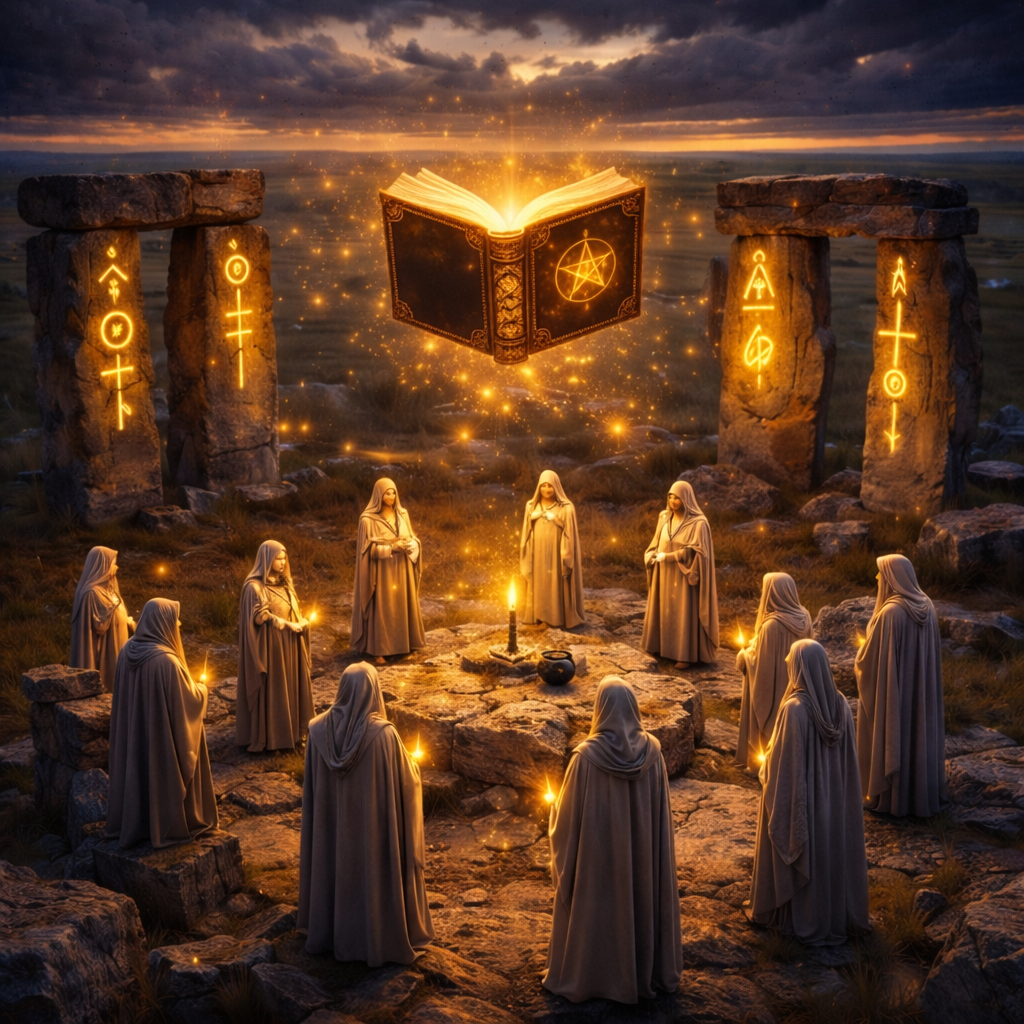

Balthazar Finch (Senior Critic, Occult Philosophy) — 'Our Primitive Contemporaries' is a cornerstone for any serious student of comparative ritual and shamanic traditions. Murdock's anthropological rigor is matched by an uncanny ability to discern the subtle esoteric threads woven through seemingly mundane practices. He masterfully decodes the symbolic language of death rituals, the spiritual resonance of tribal music, and the transformative power of scarification, revealing them not as mere customs, but as profound expressions of the human soul's engagement with the unseen. This book transcends mere ethnography; it offers a vital key to understanding the archetypal patterns of magic and mystery that persist across all cultures and epochs.
📝 Description
63
George Peter Murdock's 1934 book examines the rituals and beliefs of early societies.
In 'Our Primitive Contemporaries,' George Peter Murdock examined the rituals and social structures of various early societies. He detailed their magic, death rites, and communal ceremonies, seeking to understand the symbolic language within their customs. Murdock specifically looked at the meaning behind mortuary practices, the symbolic power of weapons, and the role of music in spiritual life.
The book also discusses practices like scarification, interpreting them not just as decoration but as markers of transformation and connection. Murdock aimed to illuminate the underlying currents of human spiritual expression and the universal search for meaning. The work offers insight into the beliefs that shaped early human communities and their understanding of the world.
Published in 1934, 'Our Primitive Contemporaries' approaches the study of early societies from a perspective interested in their spiritual and symbolic life. It looks beyond purely functional explanations to consider the meanings embedded in rituals, magic, and ceremonies. The book connects these practices to broader human quests for meaning and understanding, viewing them as expressions of a collective human experience. It situates the beliefs and actions of these groups within a framework that acknowledges the power of the symbolic and the sacred in shaping human consciousness.
💡 Why Read This Book?
Uncover the ancient roots of ritual and symbolism. 'Our Primitive Contemporaries' offers profound insights into the magical thinking and spiritual practices of early humanity. Ideal for seekers of hidden knowledge, scholars of anthropology and comparative religion, and practitioners looking to understand the universal archetypes underlying sacred traditions. Gain a deeper appreciation for the profound connection between culture, spirit, and the human psyche.
⭐ Reader Reviews
Honest opinions from readers who have explored this book.
❓ Frequently Asked Questions
What is the primary focus of 'Our Primitive Contemporaries'?
The book meticulously examines the magical, ritualistic, and spiritual practices of various primitive societies, exploring their beliefs surrounding death, warfare, and communal life through the lens of anthropology.
How does the book relate to esoteric studies?
It provides a foundational understanding of universal symbolic languages and ritualistic patterns that are central to many esoteric traditions, revealing the deep-seated human need for connection to the sacred.
What kind of rituals are discussed?
The book delves into mortuary rites, ceremonial use of weapons, the spiritual significance of percussion and music, and the symbolic meaning of scarification as forms of ritualistic expression.
Is this book suitable for beginners in esoteric studies?
Yes, it offers a solid, empirically grounded introduction to the conceptual frameworks and symbolic expressions that underpin more advanced esoteric studies.
What is the anthropological significance of this work?
It is a landmark study in cultural anthropology, offering invaluable comparative data on social structures, belief systems, and ritual behaviors across diverse pre-industrial societies.
🔮 Key Themes & Symbolism
The Sacredness of Death and the Mortuary Ritual
Murdock illuminates how primitive societies imbued death with profound spiritual significance, transforming the cessation of life into a complex ritual. Mortuary practices were not merely about disposal but served as vital rites of passage, ensuring the deceased's journey to the afterlife and maintaining cosmic balance. These ceremonies often involved elaborate preparations, symbolic offerings, and communal mourning, all aimed at appeasing spirits and reinforcing social bonds in the face of mortality. The book explores the hidden knowledge embedded in these rituals, revealing a deep understanding of the cyclical nature of existence and the interconnectedness of the living and the departed.
The Symbolic Power of Objects: Bags and Weapons
Beyond their utilitarian functions, objects like bags and weapons held potent symbolic and magical meanings for primitive peoples. Bags were often more than mere containers; they could represent status, contain sacred amulets, or serve as vessels for spiritual power. Similarly, weapons, while instruments of conflict, were frequently imbued with spiritual energies, blessed for protection or imbued with the spirits of ancestors. Murdock's analysis reveals how these everyday items became focal points for ritual, magic, and the projection of collective will, demonstrating a sophisticated system of belief where the material world was deeply intertwined with the metaphysical.
Rhythm, Resonance, and Transformation: Percussion and Music
The vibrant pulse of percussion and the resonant melodies of music played a critical role in the spiritual and magical life of primitive societies. These auditory experiences were not just for entertainment but served as powerful tools for inducing altered states of consciousness, facilitating communication with the spirit world, and marking significant life events. The rhythmic patterns could synchronize the community, amplify magical intent, and invoke ancestral spirits. Murdock explores how the energetic vibrations of sound were understood and harnessed, revealing a profound connection between sonic frequencies and spiritual transformation, a concept echoed in modern vibrational healing and sound therapy.
💬 Memorable Quotes
Direct passages from the work, attributed to the author.
“Death is but a doorway, not an end.”
— Emphasizes the primitive belief in an afterlife and the transitional nature of death, central to their mortuary rituals.
“The markings on the skin tell tales of the soul's journey.”
— Refers to scarification as a form of sacred inscription, mapping spiritual experiences and transformations onto the physical body.
“A weapon blessed is a spirit guided.”
— Illustrates the belief that objects, especially weapons, could be imbued with spiritual power and intention through ritual.
“The pouch holds more than objects; it holds power.”
— Suggests that seemingly simple items like bags possessed symbolic and magical significance, acting as repositories of spiritual energy.
💡 Key Ideas
Editorial paraphrase of the work's core concepts — not direct quotes.
The drumbeat carries the heartbeat of the cosmos.
This quote highlights the profound connection between rhythmic sound and universal energies, suggesting music as a conduit to cosmic forces.
🌙 Esoteric Significance
Tradition
This work resonates deeply with animistic, shamanistic, and early forms of sympathetic magic. It provides empirical grounding for understanding the universal archetypes of ritual, spirit communication, and the perceived interconnectedness between the human, natural, and spiritual realms that are foundational to many esoteric traditions, including certain branches of Hermeticism and indigenous spiritual practices.
Symbolism
Murdock decodes the symbolic languages embedded in primitive rituals, from the mortuary rites signifying transition and rebirth to the ritualistic preparation of weapons as extensions of spiritual will. Scarification is revealed as a sacred text etched onto the body, and the rhythmic pulse of percussion as a direct link to primal energies, demonstrating a body of symbolic meaning in everyday objects and actions.
Modern Relevance
In an age often characterized by spiritual disconnection, 'Our Primitive Contemporaries' offers a vital reminder of humanity's ancient and enduring need for ritual, community, and a connection to the sacred. Its insights into symbolic thinking, altered states, and the power of communal ceremony are increasingly relevant for understanding contemporary therapeutic practices, mindfulness, and the resurgence of interest in indigenous wisdom traditions.
👥 Who Should Read This Book
This important work is essential for the dedicated seeker of ancient wisdom, offering useful insights into the universal currents of human spirituality. Scholars of anthropology, comparative religion, and mythology will find it an invaluable resource for understanding cultural evolution and the roots of ritual. Practitioners of esoteric arts, particularly those interested in shamanism, animism, or the foundational principles of magic, will discover a rich wellspring of knowledge. Even the curious beginner can approach this book to gain a deeper, more nuanced understanding of humanity's perennial quest for meaning and connection.
📜 Historical Context
Published in 1937, 'Our Primitive Contemporaries' emerged during a central era in anthropology, a time when scholars were actively seeking to understand the diversity of human cultures and their underlying organizational principles. The interwar period saw a surge of interest in the 'exotic' and the comparative study of societies, moving beyond purely evolutionary models to embrace functionalist and diffusionist perspectives. Murdock's work drew heavily on extensive ethnographic data, reflecting a growing desire to systematically categorize and analyze human behavior. This period also saw the burgeoning of interest in psychology and psychoanalysis, which influenced interpretations of ritual and belief as expressions of deeper human needs and anxieties. The book's focus on magic, ritual, and kinship systems provided a wide range for understanding the foundations of social order and the human psyche.
📔 Journal Prompts
Reflect on a personal or cultural ritual that signifies transformation. How does its symbolism compare to those described by Murdock?
Consider an object you own that holds significant personal or symbolic meaning. What 'hidden knowledge' or power might it embody?
How does the rhythmic nature of music or sound in your life impact your emotional or spiritual state?
Imagine a contemporary ritual for acknowledging death. What elements from primitive practices could be respectfully incorporated?
Explore the concept of 'sacred markings' in your own life or culture. What do they signify?
🗂️ Glossary
Mortuary
Relating to or concerned with death and burial. In the context of the book, it encompasses the rituals, beliefs, and practices surrounding the deceased.
Percussion
The act of striking one object against another; in music, the production of sound by striking or shaking instruments, often used for rhythmic and ritualistic purposes.
Scarification
The practice of deliberately making cuts or wounds on the skin for decorative or ritualistic purposes, often carrying symbolic meaning of status, achievement, or spiritual connection.
Sympathetic Magic
A form of magic based on the principle that like produces like, or that a cause affects its product through a similarity or connection, often involving effigies or symbolic representations.
Animism
The belief that natural objects, phenomena, and the universe itself possess souls or spirits, a fundamental concept in many indigenous spiritual traditions.
This book appears in 3 collections
🔮 Readers Also Liked
Browse all →



From the “Ritual Magic” Collection
View all →







More Free Magic & Ritual Books
View all →