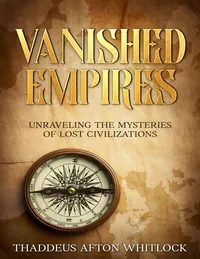
Mysteries of Lost Civilizations

 82
82

Mysteries of Lost Civilizations
Anne Millard's "Mysteries of Lost Civilizations" offers a grounded perspective on ancient societies, eschewing sensationalism for a direct engagement with archaeological data. Its strength lies in its systematic presentation of evidence, allowing readers to visualize the tangible remnants of cultures like the Sumerians or the Minoans. Millard's description of the Uruk period's urban expansion, for example, effectively illustrates the dawn of complex city-states based on excavated urban layouts and artifact distribution. A notable limitation, however, is the book's occasional tendency to present interpretations as definitive, a common challenge in archaeological writing where evidence is incomplete. The section detailing the collapse of the Mycenaean civilization, while informative, might benefit from more explicitly acknowledging ongoing scholarly debate regarding its precise causes. Despite this, the book remains a valuable resource for understanding how archaeologists piece together the past from fragmented clues.
📝 Description
82
Anne Millard's 1996 book reconstructs ancient cultures using archaeological evidence.
Published in 1996, Anne Millard's "Mysteries of Lost Civilizations" reconstructs ancient cultures using archaeological evidence. The book details the daily lives, belief systems, and technological achievements of peoples from antiquity. Millard grounds her narrative in tangible artifacts and documented discoveries, avoiding speculative theories. This approach offers a scholarly yet accessible overview of civilizations that have long since vanished.
The work examines societies that flourished millennia ago, such as those in Mesopotamia, Egypt, and the Indus Valley. It places these civilizations within their chronological frameworks, referencing key periods like the Bronze Age and the development of early writing systems. The interpretations of archaeological findings reflect late 20th-century understanding and methodologies, providing a snapshot of how these ancient worlds were perceived at the time of the book's original publication.
"Mysteries of Lost Civilizations" is for readers interested in history, archaeology, and the foundational cultures that shaped the modern world. It appeals to those seeking factual accounts of ancient peoples, moving beyond myth to understand their actual societal structures and innovations. Students of history, anthropology, and comparative cultures will find it a valuable resource.
While presented as a scholarly archaeological account, the book's focus on "lost civilizations" and the reconstruction of their belief systems and societal structures touches upon themes often found in esoteric traditions. These traditions frequently engage with the idea of ancient, advanced societies and the hidden knowledge they may have possessed. Millard's work, by examining the material remains and inferred practices of these cultures, indirectly engages with the popular fascination surrounding forgotten peoples and their potential connections to deeper, more mysterious aspects of human history.
💡 Why Read This Book?
• Gain a factual understanding of early urbanism by examining the development of cities like Uruk, as detailed in the book's archaeological analyses. • Appreciate the material culture of ancient peoples, such as Minoan pottery or Egyptian funerary objects, to grasp their daily lives and beliefs. • Understand the process of historical reconstruction by seeing how archaeological findings from sites like Mohenjo-daro inform our knowledge of lost civilizations.
⭐ Reader Reviews
Honest opinions from readers who have explored this book.
❓ Frequently Asked Questions
What specific archaeological sites are discussed in "Mysteries of Lost Civilizations"?
The book discusses numerous sites, including those central to understanding early civilizations like Uruk in Mesopotamia, the Egyptian pyramids at Giza, and the Indus Valley city of Mohenjo-daro.
Does the book focus on a particular time period?
While its primary focus is on ancient civilizations from roughly 5000 BCE to the Common Era, the book explores various periods within this vast span, covering the Bronze Age, early Dynastic periods, and more.
What kind of evidence does Anne Millard use to describe these lost cultures?
Millard relies on evidence derived from archaeological excavations, including pottery, tools, architectural remains, inscriptions, and burial goods, to reconstruct aspects of these ancient societies.
Is "Mysteries of Lost Civilizations" based on speculative theories or factual findings?
The book is firmly grounded in factual findings from archaeological research, aiming to describe cultures based on tangible evidence rather than unsubstantiated theories.
What makes this book different from other historical accounts of ancient civilizations?
Its strength lies in its direct engagement with archaeological data, offering a detailed look at the material culture and societal structures as revealed by excavations, rather than relying solely on textual or mythological sources.
When was "Mysteries of Lost Civilizations" first published?
The book was first published in 1996, reflecting the archaeological understanding and research available at that time.
🔮 Key Themes & Symbolism
Urban Origins
The book meticulously details the emergence of urban centers, such as Uruk, which represent some of the earliest examples of complex city-states. It examines the societal structures, infrastructure, and administrative systems that allowed these ancient metropolises to function and grow. This theme explores how human societies transitioned from smaller settlements to organized urban environments, laying the groundwork for subsequent civilizations and influencing patterns of settlement and governance for millennia.
Material Culture and Daily Life
A significant focus is placed on the material culture—the artifacts, tools, art, and architecture—that provide tangible links to the past. Millard uses evidence from excavations to reconstruct aspects of daily life, from the types of food consumed and domestic practices to the creation of religious iconography and ceremonial objects. Understanding this material context is crucial for grasping the worldview and technological capabilities of ancient peoples.
Societal Structures and Beliefs
The work investigates the social hierarchies, political organizations, and religious beliefs that characterized ancient civilizations. It looks at how power was structured, how communities organized themselves, and the role of spirituality in their lives, often inferred from temple architecture, burial practices, and symbolic representations. This theme highlights the diversity of human social organization and the enduring human quest for meaning and order.
Technological Advancements
Millard documents the key technological innovations that defined these early societies. This includes the development of writing systems, advancements in agriculture through irrigation, the mastery of metallurgy for tools and weapons, and sophisticated construction techniques for monumental buildings. These advancements were not isolated events but interconnected developments that fueled societal progress and expansion.
💬 Memorable Quotes
Direct passages from the work, attributed to the author.
“The reconstruction of ancient cities relies on the careful analysis of stratigraphy and artifact distribution.”
— This highlights the fundamental methodology of archaeology: understanding layers of soil and the location of finds to interpret past human activity and settlement patterns.
“Evidence of early trade networks suggests extensive contact between geographically distant cultures.”
— This points to the interconnectedness of the ancient world, demonstrating that civilizations were not isolated but engaged in exchange of goods, ideas, and technologies.
“Monumental architecture often served a dual purpose of religious devotion and demonstration of political power.”
— This interpretation of structures like pyramids or ziggurats underscores their symbolic importance, reflecting both the spiritual beliefs and the hierarchical authority of their builders.
“The study of ancient pottery reveals details about daily life, artistic styles, and technological capabilities.”
— Pottery is presented as a key artifact, offering insights into the mundane aspects of life, aesthetic sensibilities, and the practical skills of ancient artisans.
“Understanding the environmental context is crucial to explaining societal developments and collapses.”
— This emphasizes the impact of geography and climate on the rise and fall of civilizations, acknowledging that external factors played a significant role.
🌙 Esoteric Significance
Tradition
While "Mysteries of Lost Civilizations" is primarily a work of archaeology and history, its focus on ancient cultures and their often-enigmatic achievements can resonate with esoteric traditions that seek to understand primordial wisdom or forgotten knowledge. It touches upon themes of lost golden ages and the cyclical nature of civilization, concepts explored within various esoteric lineages, including Theosophy and certain branches of Hermeticism that ponder ancient mysteries.
Symbolism
The book implicitly engages with symbolism through its discussion of artifacts. For instance, the recurring motifs found in Minoan art, such as bulls or the double-axe (labrys), carry layered meanings that have been interpreted esoterically as representing fertility, power, and cosmic order. Similarly, the complex iconography of Egyptian deities and funerary objects, such as the Eye of Horus, are discussed in their historical context but inherently carry symbolic weight relevant to spiritual understanding.
Modern Relevance
Contemporary thinkers in fields like archaeoastronomy and comparative mythology, as well as those exploring ancient wisdom traditions, may find Millard's factual grounding useful. While not explicitly esoteric, the book provides a solid basis of knowledge about early civilizations that can inform more speculative inquiries. It serves as a counterpoint to purely mythical interpretations, offering a scholarly foundation upon which esoteric hypotheses can be built or tested against known historical and archaeological data.
👥 Who Should Read This Book
• Students of ancient history and archaeology seeking a factual overview of early civilizations based on tangible evidence. • Readers interested in the development of urbanism and societal structures, with a focus on how archaeological findings inform our understanding. • Individuals curious about the material culture and daily lives of peoples from Mesopotamia, Egypt, and the Indus Valley, who appreciate a scholarly approach.
📜 Historical Context
Published in 1996, "Mysteries of Lost Civilizations" emerged during a period of robust archaeological discovery and evolving interpretative frameworks. The late 20th century saw significant advancements in dating techniques and comparative analysis of ancient cultures. Millard's work aligns with a scholarly tradition that prioritizes empirical evidence, distinguishing it from earlier, more speculative accounts of lost civilizations. While figures like Thor Heyerdahl were exploring more adventurous theories of transoceanic contact, Millard's approach remained firmly rooted in excavation data. The book was part of a broader academic and popular interest in the ancient world, influenced by ongoing excavations at sites like Çatalhöyük and renewed studies of Mesopotamian urbanism. Its reception likely contributed to public engagement with archaeology, reflecting a continued fascination with the origins of human society.
📔 Journal Prompts
The societal impact of the Uruk period's urban development.
Reconstructing daily life from the material culture of the Indus Valley Civilization.
The symbolic significance of monumental architecture in ancient Egypt.
Technological innovations and their role in the rise of Bronze Age societies.
Comparing the evidence for trade networks across different ancient cultures.
🗂️ Glossary
Stratigraphy
The study of the layers of soil and rock that make up the earth's crust, used in archaeology to determine the chronological sequence of human occupation at a site.
Artifact
An object made by a human being, typically an item of cultural or historical interest discovered during archaeological excavation.
Uruk Period
A prehistoric period in Mesopotamian history (c. 4000–3100 BCE) characterized by the rise of the first true cities, monumental architecture, and the development of early writing systems.
Indus Valley Civilization
An ancient civilization that flourished in the Bronze Age in the northwestern regions of South Asia, known for its sophisticated urban planning and distinctive script.
Bronze Age
A prehistoric period in human history characterized by the widespread use of bronze for tools and weapons, typically following the Stone Age and preceding the Iron Age.
Minoan Civilization
An Aegean Bronze Age civilization on the island of Crete, known for its advanced art, palaces, and early forms of writing.
Mycenaean Civilization
A late Bronze Age civilization in mainland Greece, characterized by its fortified palaces and warrior aristocracy, which flourished from around 1600 to 1100 BCE.
This book appears in 1 collection
🔮 Readers Also Liked
Browse all →








From the “Lost Civilizations” Collection
View all →







More Free Esoteric History & Biography Books
View all →