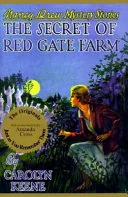
The Secret of Red Gate Farm
 79
79

The Secret of Red Gate Farm
Carolyn Keene's "The Secret of Red Gate Farm" offers a surprisingly complex examination of clandestine organizations for its 1931 publication date. The novel excels in its depiction of Nancy Drew’s methodical approach to unraveling the mystery surrounding the titular farm and its associated secret society. Keene avoids superficial explanations, instead focusing on the procedural steps Nancy takes to uncover the group's motives and methods. A notable strength is the palpable sense of intrigue built around the farm itself, transforming it into a character laden with potential secrets. However, the resolution, while satisfying the mystery's immediate demands, feels somewhat abrupt, leaving the deeper philosophical implications of the secret society's existence less explored than one might hope. The recurring motif of the society's peculiar rituals, while central to the plot, could have been more deeply integrated into the narrative's thematic core. Ultimately, the book succeeds as a historical mystery that touches upon themes of hidden influence and organized secrecy.
📝 Description
79
Carolyn Keene's 1931 novel, The Secret of Red Gate Farm, uses a farm as the stage for uncovering a secret society.
Nancy Drew investigates strange events at Red Gate Farm, a property that becomes the center of a web of secrecy. Her investigation pulls her into the world of a mysterious society, forcing her to discover their rituals and goals. The farm serves as a central location for suspected veiled activities, making it a crucial part of the unfolding mystery. This story is for readers who enjoy mysteries with subtle hints of the occult or organized secrecy. It appeals to those interested in historical detective fiction from the early 20th century and narratives about secret societies. The book presents a structured puzzle, encouraging readers to connect clues with the protagonist. Its appeal comes from solving the immediate crime and understanding the methods and motivations of a group operating outside normal societal structures, suggesting an examination of hidden power dynamics.
Published in 1931, the novel appeared when public interest in secret societies was high, influenced by prevalent occult and fraternal organizations. This period saw a rise in literature concerning hidden knowledge and clandestine groups, ranging from spiritualist movements to more shadowy, possibly conspiratorial organizations. This historical context frames the novel's themes of secrecy and investigation. The Hardy Boys series, another popular mystery franchise from the same era, often featured investigations into less overtly 'esoteric' but still hidden activities.
While framed as a juvenile mystery, The Secret of Red Gate Farm touches on themes common in early 20th-century literature exploring secret societies and hidden knowledge. The era was marked by a fascination with fraternal orders, occultism, and perceived clandestine groups influencing society. The novel's portrayal of a mysterious society with its own rituals and goals reflects this broader cultural interest in organizations operating outside public view. It situates itself within a tradition of popular fiction that, even in seemingly straightforward narratives, hinted at deeper, unseen currents and power dynamics.
💡 Why Read This Book?
• Understand the early 20th-century fascination with secret societies through the specific lens of the 'Red Gate Farm' society, learning how such groups were portrayed in juvenile literature of the 1930s. • Develop critical thinking skills by following Nancy Drew's investigative process, mirroring her methodical approach to uncovering clues related to the farm's hidden activities. • Gain insight into the narrative construction of mystery, observing how Carolyn Keene uses setting and character to build suspense around clandestine operations, particularly evident in the depiction of the farm.
⭐ Reader Reviews
Honest opinions from readers who have explored this book.
❓ Frequently Asked Questions
What year was "The Secret of Red Gate Farm" originally published?
"The Secret of Red Gate Farm" was first published in 1931, a period when juvenile mystery fiction was rapidly evolving and exploring new narrative themes.
Who is the main protagonist investigating the Red Gate Farm mystery?
The protagonist is Nancy Drew, the resourceful young detective created by Edward Stratemeyer and popularized by Carolyn Keene, known for her sharp intellect and determination.
What is the central mystery surrounding Red Gate Farm?
The mystery involves Nancy Drew becoming suspicious of a secret society operating near Red Gate Farm and investigating their clandestine activities and ultimate goals.
Does the book explore actual historical secret societies?
While inspired by the general fascination with secret societies in the 1930s, the specific society in "The Secret of Red Gate Farm" is a fictional construct within the narrative.
What makes this book relevant to esoteric studies?
Its exploration of secret societies, hidden rituals, and the pursuit of concealed knowledge offers a lens into the cultural imagination surrounding esoteric groups in the early 20th century.
Are there any specific symbols mentioned in "The Secret of Red Gate Farm"?
The book features various clues and symbols associated with the secret society, which Nancy must decipher to understand their operations and intentions.
🔮 Key Themes & Symbolism
Secret Societies and Their Influence
The narrative hinges on the presence of a clandestine organization operating in the shadows of Red Gate Farm. This society is depicted not as a mere criminal enterprise but as a group with specific rituals and an agenda, hinting at a more organized, perhaps influential, entity. The book taps into the early 20th-century public imagination regarding such groups, portraying them as possessing hidden knowledge and operating with a purpose unknown to the wider community. Nancy's investigation is driven by the desire to understand the mechanics and motivations behind this concealed power structure, exploring how such organizations might function and exert influence outside conventional channels.
Investigation as Unveiling
Nancy Drew's approach to the Red Gate Farm mystery exemplifies the theme of investigation as a process of unveiling hidden truths. Her methods involve meticulous observation, logical deduction, and persistent inquiry into the peculiar events surrounding the farm. The book suggests that understanding is achieved through careful examination of details and the piecing together of disparate clues. The secret society's activities, shrouded in mystery and potentially deceptive practices, serve as the primary target for Nancy's investigative prowess. Her success relies on her ability to penetrate the layers of secrecy and expose the society's true nature and intentions to the light.
The Farm as a Locus of Secrecy
Red Gate Farm functions as more than just a setting; it is the central nexus of the unfolding mystery and the suspected activities of the secret society. The farm's physical presence grounds the abstract concept of clandestine operations in a tangible location. The narrative imbues the property with an aura of secrecy, making it a focal point for suspicion and investigation. Nancy's efforts to understand the society are intrinsically linked to her exploration of the farm itself, suggesting that the location holds keys to unlocking the group's purpose and methods. The farm becomes a symbol of hidden activities concealed within a seemingly ordinary rural landscape.
Symbolism and Ritual in Mystery
The secret society within "The Secret of Red Gate Farm" is characterized by its rituals and symbolic language, elements that Nancy must decipher. These components are not merely decorative but integral to the society's operations and identity, serving as both a means of communication among members and a potential barrier to outsiders. The book uses these esoteric elements to build suspense and complexity into the mystery, requiring Nancy to interpret unfamiliar signs and practices. The exploration of symbols and rituals hints at a deeper, perhaps more profound, underlying structure or belief system that drives the society's actions, inviting readers to consider the meaning behind hidden practices.
💬 Memorable Quotes
Direct passages from the work, attributed to the author.
“Nancy became suspicious of a secret society and was drawn to investigate.”
— This core premise highlights Nancy's innate curiosity and her tendency to probe beneath the surface of apparent normalcy, especially when confronted with organized secrecy.
“The farm became the center of peculiar happenings.”
— This emphasizes the setting's role not just as a backdrop but as an active element in the mystery, a place where unusual events converge, demanding scrutiny.
“Nancy followed a trail of clues related to the Red Gate Farm.”
— This reflects the procedural nature of Nancy's investigation, underscoring the importance of evidence and logical progression in solving the mystery.
“The society operated with a purpose unknown to outsiders.”
— This captures the essence of the antagonist group, defining them by their hidden agenda and the deliberate concealment of their objectives from the general public.
💡 Key Ideas
Editorial paraphrase of the work's core concepts — not direct quotes.
Uncovering the society's rituals was key to understanding their aims.
This paraphrase points to the narrative's focus on deciphering symbolic actions and practices as the method for revealing the hidden motives of a clandestine group.
🌙 Esoteric Significance
Tradition
While not explicitly tied to a single formal esoteric tradition like Hermeticism or Kabbalah, "The Secret of Red Gate Farm" draws from the broader cultural currents of early 20th-century esotericism. It reflects a popular interest in secret societies, rituals, and hidden knowledge that permeated spiritualist and occult circles of the time. The narrative's structure, involving investigation into veiled practices, reflects the symbolic quest found in many initiatory traditions, albeit simplified for a younger audience. It engages with the archetype of the hidden order, a common motif in esoteric literature, presenting it as a tangible puzzle to be solved rather than a complex philosophical system.
Symbolism
The book utilizes symbolism primarily through the rituals and practices of the secret society. These symbolic elements, though not deeply elaborated, serve as the primary clues Nancy must interpret. They represent the hidden language and coded practices of the group, functioning as markers of their identity and intentions. The 'Red Gate Farm' itself can be seen as a symbolic locus, a threshold or gateway into the hidden world of the society. The act of deciphering these symbols is crucial for Nancy's success, mirroring the esoteric principle of understanding through symbolic interpretation.
Modern Relevance
Contemporary interest in "The Secret of Red Gate Farm" within esoteric circles stems from its early portrayal of secret societies in popular fiction. It serves as a historical artifact, illustrating how concepts of hidden orders and clandestine rituals were disseminated to a wide audience in the early 20th century. Modern readers might examine it for its foundational role in shaping public perception of such groups, influencing later fiction and even sparking curiosity in comparative studies of fictional vs. historical secret organizations. It offers a point of comparison for understanding the evolution of mystery narratives incorporating elements of the arcane.
👥 Who Should Read This Book
• Young readers and families interested in classic mystery novels, offering a gentle introduction to detective work and problem-solving. • Enthusiasts of early 20th-century American culture, providing insight into the popular imagination surrounding secret societies and their portrayal in fiction of the 1930s. • Aspiring writers and researchers of juvenile literature, serving as an example of narrative construction and thematic development in the foundational Nancy Drew series.
📜 Historical Context
Published in 1931, "The Secret of Red Gate Farm" emerged from an era captivated by the mystique of secret societies and fraternal organizations, which were numerous and influential in American culture. The preceding decades had seen a rise in occultism and spiritualism, fostering a public imagination ripe for narratives involving hidden knowledge and clandestine groups. Carolyn Keene's work tapped into this fascination, presenting a mystery centered around such an organization. While other juvenile mysteries of the period, like those featuring the Hardy Boys, focused more on common crime, Keene's inclusion of a 'secret society' offered a more esoteric flavor. The novel reflects the era's anxieties and curiosities about hidden power structures and the potential for organized influence operating outside public view. Reception was generally positive for the Nancy Drew series, contributing to its enduring popularity, though specific critical analyses of the esoteric elements were rare for its target audience.
📔 Journal Prompts
The Red Gate Farm's hidden society and its rituals.
Nancy Drew's methodical approach to uncovering secrets.
The symbolic significance of the farm as a locus of mystery.
Interpretations of the secret society's unknown aims.
The role of clandestine organizations in early 20th-century fiction.
🗂️ Glossary
Secret Society
An organization whose membership is restricted and whose activities are intentionally concealed from outsiders, often involving specific rituals and objectives.
Clandestine
Kept secret or done secretively, especially something illicit or unauthorized; implies concealment and often deliberate activity outside public knowledge.
Rituals
Established or prescribed procedure for a religious or other rite; in this context, refers to the specific, often symbolic, actions performed by the secret society.
Investigation
The action of investigating something or someone; in-depth inquiry or systematic examination to discover and examine the facts of an incident, crime, etc.
Motives
The reason or reasons for acting or behaving in a particular way; the underlying purpose or drive behind the actions of the secret society.
Locus
A particular position, point, or place; in this context, referring to Red Gate Farm as the central location for the mysterious activities.
Symbols
Signs or things that represent or stand for something else; elements used by the secret society for communication or identification, requiring interpretation.
This book appears in 1 collection
🔮 Readers Also Liked
Browse all →







From the “Secret Societies” Collection
View all →






More Free Esoteric History & Biography Books
View all →