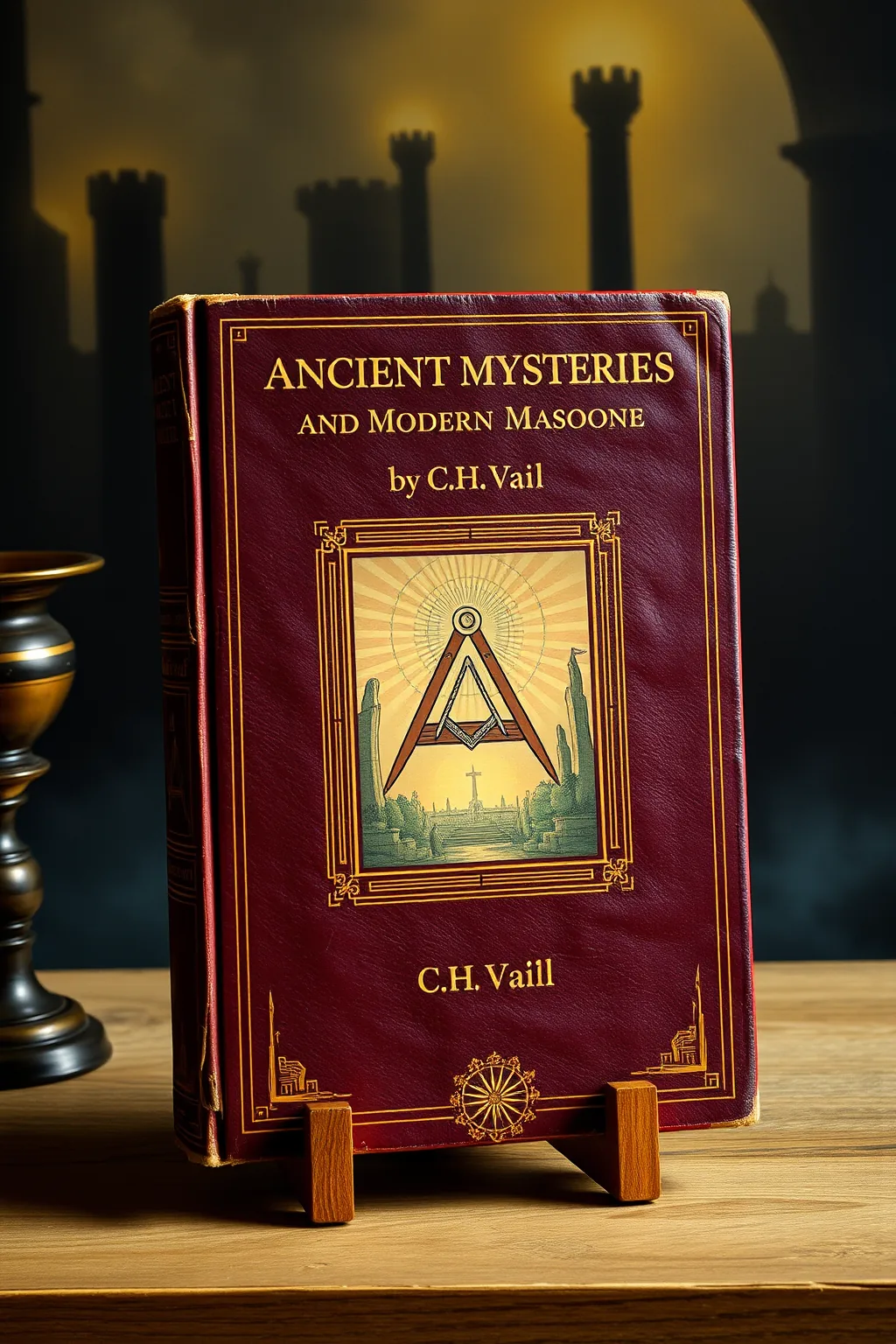
Ancient Mysteries and Modern Masonry
 72
72

Ancient Mysteries and Modern Masonry

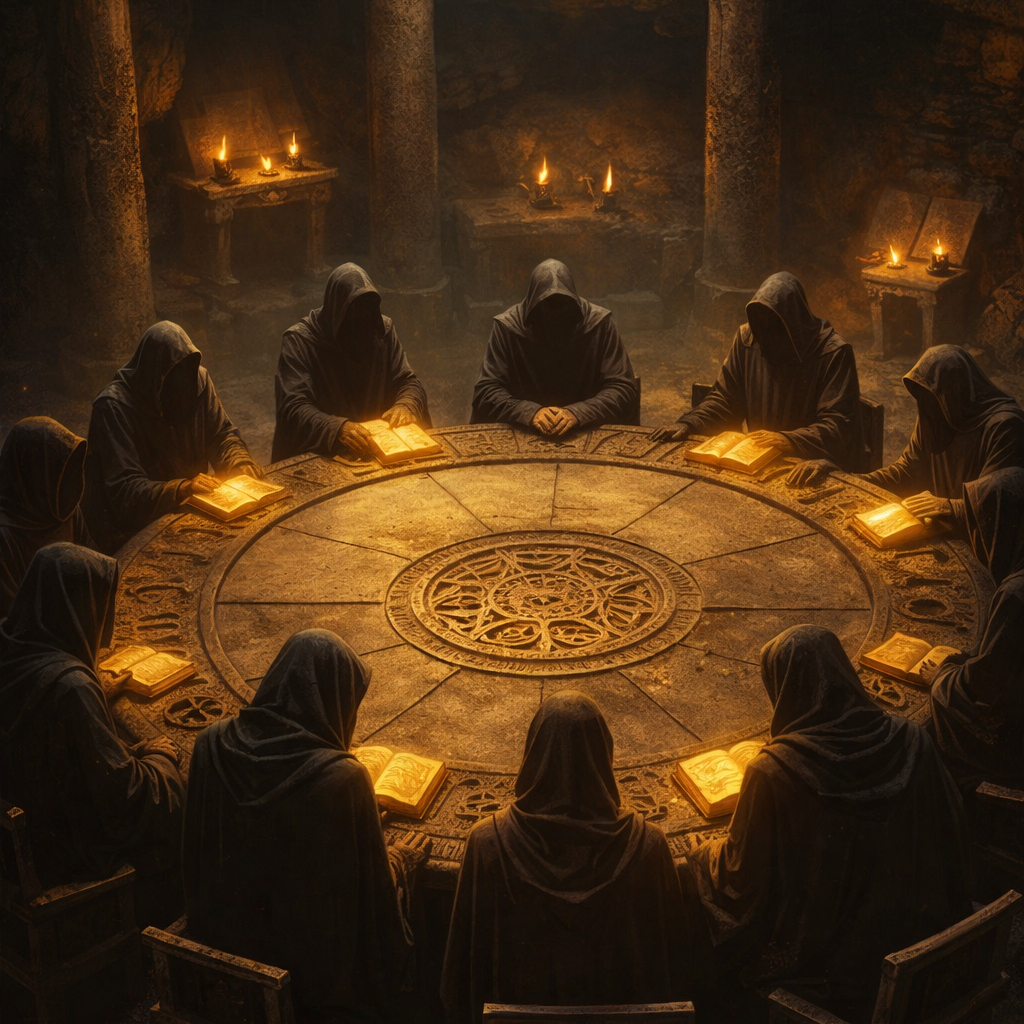

Isolde Whitaker, Sacred Texts Editor: Charles H. Vail's "Ancient Mysteries and Modern Masonry" is an indispensable volume for anyone seeking to understand the deep esoteric currents flowing beneath the surface of Freemasonry. Vail, with the authority of a seasoned Mason and a keen spiritual intellect, expertly traces the lineage of Masonic principles back through the grand mystery traditions of antiquity. His lucid prose demystifies complex symbolism, revealing the shared pursuit of divine knowledge and moral refinement across diverse cultures. This work is particularly potent for those who perceive the symbolic language of Freemasonry not merely as ritualistic, but as a vibrant conduit to ancient wisdom. It’s a compelling read for Masons and seekers alike, offering profound insights into the perennial philosophy.
📝 Description
72
Charles H. Vail's 1909 book connects ancient mystery schools with Masonic teachings.
Charles H. Vail's "Ancient Mysteries and Modern Masonry" was first published in 1909, stemming from Sunday evening lectures. The book examines connections between ancient spiritual traditions and Freemasonry. Vail, a 32nd-degree Mason, details how the symbolism and rituals of ancient cults, including those from Egypt, Greece, Druidic practices, Judaism, and early Christianity, parallel Masonic degrees and ethical teachings.
He argues that the allegorical stories and initiation rites found in these older traditions foreshadow and reflect the elements present in modern Masonic ceremonies. The work aims to bridge esoteric doctrines from antiquity with the principles of the Masonic fraternity. It encourages readers to contemplate universal truths found in both historical sacred texts and fraternal rituals. Vail seeks to reveal a consistent philosophical undercurrent in humanity's pursuit of knowledge and moral development.
This book sits within the tradition of Masonic writers who sought to demonstrate the ancient origins and spiritual depth of their fraternity. Vail aligns himself with authors who viewed Freemasonry not just as a fraternal organization, but as a continuation of older mystery traditions. He connects the craft's rituals and symbolism to a broader esoteric lineage, suggesting a perennial philosophy that spans across different cultures and historical periods. The work is part of a larger effort to articulate the spiritual and philosophical underpinnings of Freemasonry, drawing parallels with recognized systems of ancient wisdom.
✍️ Author
C H Vail
The following is a list of famous Olympians, those people of note who have lived in or around Olympia, Washington, U.S. == Actors, comedians == == Academia == == Film, television, animation == == Military == == Musicians, music producers == == P…
💡 Why Read This Book?
Discover the forgotten spiritual roots of Freemasonry and its profound connection to ancient wisdom traditions. "Ancient Mysteries and Modern Masonry" bridges the gap between esoteric history and fraternal philosophy, offering seekers, scholars, and practitioners a deeper understanding of universal truths. Uncover hidden meanings in symbols and rituals, and explore the enduring quest for enlightenment through the ages.
⭐ Reader Reviews
Honest opinions from readers who have explored this book.
❓ Frequently Asked Questions
What is the primary focus of "Ancient Mysteries and Modern Masonry"?
The book primarily explores the profound links between the secret teachings and symbolic systems of ancient mystery schools (Egyptian, Greek, Persian, Druidic, Jewish, Christian) and the rites, symbols, and moral purpose of modern Freemasonry.
Who was C. H. Vail?
Charles H. Vail was a 32nd-degree Mason and a respected figure who delivered these lectures as Sunday evening talks, aiming to elucidate the esoteric connections between ancient wisdom and Masonic principles.
What is the historical period of the book?
The book was first published in 1909, offering insights from a perspective at the dawn of the 20th century, looking back at historical and esoteric traditions.
Is this book for Masons only?
While highly valuable for Masons, the book is also intended for anyone interested in comparative religion, ancient mysteries, symbolism, and the perennial philosophy, regardless of their Masonic affiliation.
What kind of 'mysteries' are discussed?
The book delves into the initiatory rites, symbolic languages, and philosophical teachings of various ancient cultures that sought to impart spiritual knowledge and moral guidance to their initiates.
🔮 Key Themes & Symbolism
The Perennial Philosophy
This theme explores the concept that beneath the diverse exoteric expressions of religion and philosophy, there exists a single, universal esoteric truth or wisdom tradition. Vail argues that the ancient mysteries and Freemasonry are both manifestations of this perennial philosophy, sharing fundamental insights into the nature of the divine, the human soul, and the cosmos. He demonstrates how common symbols, allegories, and moral teachings recur across cultures, suggesting a shared origin or a universal archetypal language used to guide humanity towards spiritual understanding and ethical living.
Symbolism as a Universal Language
A central tenet of the book is the power and universality of symbolism, particularly within sacred traditions and fraternal orders. Vail meticulously dissects the symbolic language employed in ancient mystery rites—from Egyptian hieroglyphs to Greek allegories—and demonstrates how these same symbolic forms and meanings are transmuted and perpetuated within Masonic rituals and degrees. This theme emphasizes that symbols are not mere decorations but potent vehicles for transmitting complex spiritual and philosophical concepts, accessible to the initiated mind seeking deeper comprehension beyond literal interpretation.
The Initiatory Path to Enlightenment
The book highlights the common thread of initiation that binds ancient mysteries and Freemasonry. Vail posits that both systems offer a structured path for personal transformation, guiding individuals from ignorance to wisdom, from darkness to light. This initiatory journey involves symbolic trials, moral instruction, and the gradual unveiling of esoteric knowledge. The goal is not only intellectual understanding but also the cultivation of virtue, the strengthening of character, and the realization of one's divine potential—a lifelong pursuit of self-improvement and spiritual awakening.
💬 Memorable Quotes
Direct passages from the work, attributed to the author.
“Symbols are the silent language of the soul, speaking truths that words can often obscure.”
— This highlights the power of symbolic representation in conveying profound spiritual and philosophical concepts, suggesting that symbols offer a direct, intuitive understanding that bypasses the limitations of verbal language.
“In the ancient temples, as in our lodges, the aim was to elevate man from the earthly to the divine.”
— This underscores the shared purpose of ancient mystery traditions and Freemasonry: to facilitate spiritual transcendence and connect the individual to higher, divine principles through ritual and teaching.
“The geometric principles of the universe are echoed in the square and compass.”
— This points to the idea that Masonic symbols are not arbitrary but reflect fundamental cosmic laws and order, linking the physical and metaphysical realms through shared principles.
“Wisdom is a journey, not a destination, and every degree is a step upon the path.”
— This emphasizes the ongoing nature of spiritual and moral development, portraying Masonic progression as a continuous path of learning and self-discovery rather than a final attainment.
💡 Key Ideas
Editorial paraphrase of the work's core concepts — not direct quotes.
The true Mason is he who seeks light, not for himself alone, but for the illumination of all.
This quote emphasizes the altruistic and universal aspect of Masonic pursuit, suggesting that the quest for knowledge and spiritual enlightenment is not selfish but meant to benefit humanity as a whole.
🌙 Esoteric Significance
Tradition
This work is deeply rooted in the esoteric tradition of comparative mysticism and the concept of the Perennial Philosophy. It seeks to demonstrate that the core spiritual insights and initiatory practices found in various ancient mystery cults—from Egypt and Greece to Persia and the Celtic world—are not isolated phenomena but rather expressions of a single, universal wisdom that has been passed down through human history. Vail positions Freemasonry as a modern inherent of this ancient esoteric lineage.
Symbolism
The book emphasizes the profound, multi-layered symbolism employed in both ancient mysteries and Masonic rituals. It argues that symbols like the square, compass, level, plumb line, and various architectural elements in Masonry are not merely decorative but are potent archetypal keys designed to unlock deeper spiritual and philosophical truths about morality, the universe, and the human condition. Vail explores how these symbols serve as mnemonic devices and spiritual guides on the path of initiation.
Modern Relevance
Vail's work remains relevant today for its ability to connect the timeless quest for wisdom and moral betterment with a structured, symbolic system. In an era often characterized by fragmentation and superficiality, "Ancient Mysteries and Modern Masonry" offers a compelling argument for the enduring power of ancient esoteric traditions to provide meaning, ethical guidance, and a framework for personal transformation. It reassures readers that profound spiritual insights are accessible through diligent study and contemplation of enduring symbols and allegories.
👥 Who Should Read This Book
This book is a valuable collection for a diverse audience. **Freemasons**, particularly those seeking a deeper understanding of their Craft's historical and philosophical underpinnings, will find it informative. **Students of comparative religion and ancient history** will appreciate Vail's scholarly approach to tracing spiritual lineages. **Seekers of esoteric knowledge and spiritual truth** will be drawn to the exploration of hidden wisdom and universal symbolism. **Practitioners of contemplative or philosophical disciplines** may find resonance in the emphasis on moral development and the pursuit of inner light. It is an accessible yet profound read for anyone interested in the bridge between the ancient past and the enduring quest for enlightenment.
📜 Historical Context
Published in 1909, "Ancient Mysteries and Modern Masonry" emerges from a period of intense interest in esotericism, occultism, and comparative religion. The late 19th and early 20th centuries saw a resurgence of scholarly and popular fascination with ancient civilizations, their mythologies, and their hidden spiritual practices. Figures like Helena Blavatsky and the Theosophical Society had popularized the idea of a hidden, universal wisdom tradition. Freemasonry itself, with its historical roots and symbolic richness, was often seen as a repository of this ancient knowledge. Vail's work reflects this intellectual climate, seeking to legitimize and deepen the understanding of Masonic symbolism by grounding it in the grand traditions of antiquity, appealing to a burgeoning audience eager to explore the mystical underpinnings of human civilization and its institutions.
📔 Journal Prompts
Reflect on a symbol in your life (personal or cultural) that holds deeper meaning beyond its surface appearance. What is its message?
How does the concept of 'initiation' apply to your personal growth journey? What 'degrees' of understanding have you achieved?
Consider the moral teachings of ancient philosophies or religions. How do they parallel or contrast with ethical principles you hold dear today?
If ancient mystery schools and modern Masonry share a common goal of spiritual elevation, what does 'elevation' mean to you personally?
How can the pursuit of 'light' or wisdom be a guiding principle in your daily life, even outside of formal study or ritual?
🗂️ Glossary
Esoteric
Relating to or accessible only by a small number of people with specialized knowledge or interest; inner, hidden, or secret teachings.
Mysteries (Ancient)
Secret religious rites and initiations practiced in ancient Greece and other cultures, promising initiates a better afterlife or deeper spiritual understanding.
Perennial Philosophy
The concept that all major religions and spiritual traditions share a common, underlying metaphysical truth or wisdom, often referred to as the 'eternal wisdom'.
Allegory
A story, poem, or picture that can be interpreted to reveal a hidden meaning, typically a moral or political one.
Initiation
A ritual or ceremony marking entrance into a new stage or society, often involving symbolic acts and the imparting of secret knowledge or status.
This book appears in 2 collections
🔮 Readers Also Liked
Browse all →



From the “Secret Societies” Collection
View all →





More Free Freemasonry & Secret Societies Books
View all →