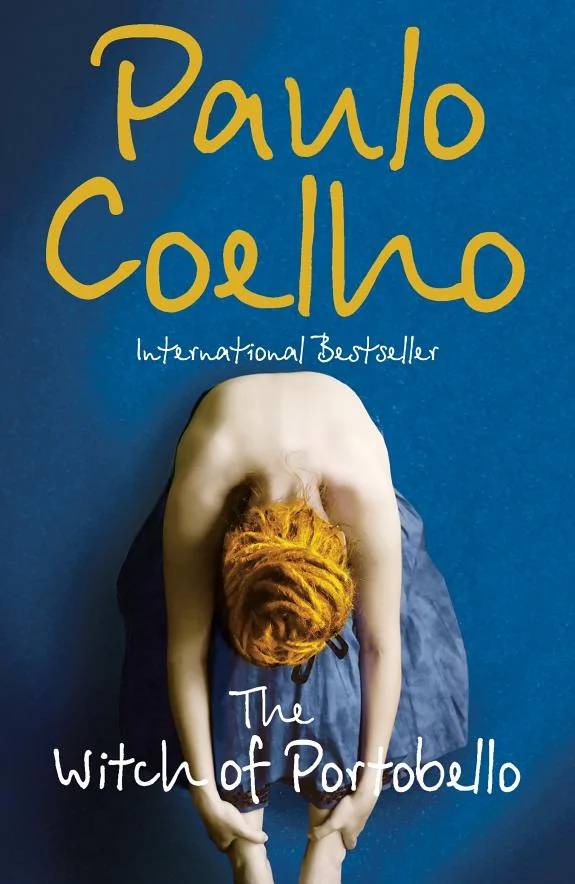
The Witch of Portobello
 75
75

The Witch of Portobello
Paulo Coelho’s *The Witch of Portobello* attempts to capture the essence of a woman who embodies spiritual power and unconventional wisdom. The novel’s structure, built on fragmented accounts from those who knew Athena, creates a compelling sense of mystery, drawing the reader into a quest to understand her. Coelho excels at portraying the allure of the unknown and the magnetic pull of a life lived authentically, even in the face of societal judgment. However, the narrative sometimes feels like a collection of anecdotes rather than a fully developed character study. While Athena is presented as a powerful spiritual figure, her internal world and motivations can remain somewhat opaque, filtered through the perceptions of others. A particularly striking element is the depiction of her connection to the 'Great Mother,' a concept that anchors her spiritual journey. Despite its limitations in character depth, the book offers a unique perspective on embracing one's spiritual path. It functions as an engaging, if at times elusive, exploration of feminine power and self-discovery.
📝 Description
75
Paulo Coelho published The Witch of Portobello in 2008, telling the story of a woman with spiritual gifts.
The Witch of Portobello recounts the life of Athena through the memories of those who knew her. The narrative unfolds as a collection of perspectives, from her childhood in a remote village to her emergence as a mysterious figure in London. These accounts assemble a portrait of a woman who embraced her unusual spiritual abilities. The novel considers themes of fate, the quest for personal meaning, and the unseen forces that influence human lives.
This story will appeal to readers interested in spiritual journeys and the divine feminine. It is suited for those who enjoy narratives that merge the ordinary with the mystical, questioning typical views of life and its purpose. Characters who reject societal expectations and trust their inner wisdom will likely resonate with readers. Fans of Paulo Coelho's allegorical and philosophical style will also find familiarity here.
Published in 2008, The Witch of Portobello arrived during a time when interest in spirituality and self-discovery was widespread. The novel engages with modern life while referencing older spiritual concepts, particularly the 'Great Mother' archetype. It reflects a cultural shift towards exploring alternative belief systems and finding personal empowerment outside established religious structures. The book touches on the manifestation of spiritual awareness and the reactions it can elicit.
💡 Why Read This Book?
• Gain insight into the archetype of the 'Great Mother' as presented through Athena’s life, understanding its connection to feminine power and intuition, a concept central to the novel's spiritual exploration. • Explore the notion of 'living your own legend' as demonstrated by Athena's commitment to her spiritual gifts, offering a perspective on embracing individuality against societal pressures. • Understand the narrative technique of piecing together a life story from multiple perspectives, mirroring how we often construct understanding of influential figures, a method used throughout the book's 2008 publication.
⭐ Reader Reviews
Honest opinions from readers who have explored this book.
❓ Frequently Asked Questions
What is the main spiritual concept explored in The Witch of Portobello?
The novel prominently features the concept of the 'Great Mother,' an archetype representing feminine spiritual power, intuition, and a deep connection to the earth, which is central to the protagonist Athena's identity and journey.
Who is Athena in The Witch of Portobello?
Athena is the enigmatic protagonist whose life story is told through the recollections of others. She is portrayed as a woman possessing extraordinary spiritual gifts and a deep connection to the divine feminine.
When was The Witch of Portobello originally published?
The Witch of Portobello by Paulo Coelho was first published in 2008, positioning it within the early 21st-century landscape of spiritual and philosophical fiction.
What is the narrative structure of the book?
The book employs a fragmented narrative, with Athena's life being recounted by various individuals who knew her. This creates a mosaic of perspectives, piecing together her story and enigmatic nature.
Does the book offer practical advice for spiritual development?
While not a direct self-help manual, the book explores themes of embracing one's spiritual gifts and living authentically, encouraging readers to consider their own paths and inner wisdom.
What does the title 'The Witch of Portobello' signify?
The title refers to the protagonist, Athena, and her perceived 'witchcraft,' symbolizing her unconventional spiritual power, her connection to ancient wisdom, and her ability to influence those around her.
🔮 Key Themes & Symbolism
The Great Mother Archetype
The novel deeply engages with the 'Great Mother' as a symbol of feminine divinity, intuition, and earth-centered spirituality. Athena embodies this archetype, demonstrating a profound connection to natural forces and a nurturing yet powerful presence. Her journey illustrates the rediscovery and reassertion of feminine spiritual authority in a world often dominated by patriarchal structures. The book suggests that embracing this archetype is crucial for personal and collective healing, aligning oneself with the primal creative and sustaining energies of the universe.
Living Your Own Legend
A core tenet explored is the imperative to 'live your own legend,' a concept central to Coelho's philosophy. Athena’s life serves as an example of unwavering commitment to her unique path, despite societal pressures and misunderstandings. The narrative encourages readers to recognize and pursue their individual destinies, viewing their lives as a sacred story unfolding. This theme emphasizes self-acceptance, courage in the face of adversity, and the importance of honoring one's inner calling above external validation.
The Nature of Spiritual Gifts
The book probes the experience of possessing extraordinary spiritual gifts and the impact they have on an individual's life and relationships. Athena’s abilities, perceived by some as witchcraft, highlight the societal tendency to fear or ostracize what it doesn't understand. The narrative explores the challenges of integrating such gifts into everyday life, the isolation they can bring, and the ultimate necessity of embracing them fully. It suggests that these gifts are not curses but integral parts of one's true self, meant to be shared.
Destiny and Free Will
The interplay between predetermined destiny and individual choice is a recurring motif. While Athena seems guided by a powerful inner compass and perhaps fate, her actions and the reactions of those around her demonstrate the agency that shapes outcomes. The book questions whether our paths are set or if we actively co-create them through our beliefs and actions. It invites contemplation on how much control we truly have over our lives and how we respond to the forces that seem to guide us.
💬 Memorable Quotes
Direct passages from the work, attributed to the author.
“‘I am not a witch.’”
— This simple denial by Athena, often repeated or implied, underscores the societal labeling of spiritual power as 'witchcraft.' It highlights the tension between her authentic self and how the world perceives her, suggesting a reclaiming of the term.
“The narrator's fragmented accounts of Athena.”
— The structure itself, built from the perspectives of various individuals, serves as a concept. It shows how a person's essence is perceived and interpreted differently, creating a composite portrait rather than a single, definitive truth.
“Athena's connection to nature and the earth.”
— This recurring imagery represents her grounding in primal energies and her role as a conduit for the 'Great Mother' archetype. It signifies a spiritual path rooted in the natural world, distinct from abstract or dogmatic systems.
“The concept of 'living your own legend'.”
— This phrase expresses the book's encouragement for readers to follow their unique life path and fulfill their personal destiny, embracing their true selves regardless of external judgment.
“Athena’s embrace of her spiritual 'gift'.”
— Her acceptance and integration of her extraordinary abilities, rather than suppressing them, represent a powerful act of self-realization and a challenge to societal norms that fear the unknown.
🌙 Esoteric Significance
Tradition
The work draws implicitly from Gnostic and Neopagan traditions, particularly in its focus on the feminine divine and the concept of inherent spiritual knowledge. Athena's journey carries the Gnostic idea of possessing a divine spark within, often misunderstood by the material world. Her connection to nature and intuitive wisdom aligns with modern interpretations of the 'Great Mother' found in Wicca and other nature-based spiritualities, positioning the novel within a contemporary resurgence of earth-centered mysticism.
Symbolism
The 'witch' herself is a potent symbol, representing the feared yet revered feminine spiritual power and intuitive knowledge that challenges patriarchal norms. Portobello Road, a vibrant and diverse market in London, symbolizes the melting pot of cultures and ideas where the mystical can intersect with the everyday. The recurring motif of dancing signifies liberation, spiritual ecstasy, and the embodiment of primal life force, a key element in Athena's expression of her spiritual identity.
Modern Relevance
Coelho’s exploration of feminine spirituality and the 'Great Mother' archetype continues to resonate with contemporary movements focused on ecofeminism and goddess worship. Thinkers and practitioners in fields like Jungian psychology, which analyzes archetypes, find the novel a useful illustration of the collective unconscious. Modern spiritual seekers often draw inspiration from Athena's courage to live authentically, making the book relevant to those exploring personal paths outside organized religion.
👥 Who Should Read This Book
• Individuals interested in exploring the 'Great Mother' archetype and its representation in contemporary literature, seeking a narrative that centers feminine spiritual power. • Readers drawn to Paulo Coelho’s distinctive style of allegorical storytelling, who appreciate philosophical and spiritual themes interwoven with character-driven narratives. • Those questioning societal norms around spirituality and individuality, looking for a story that champions self-acceptance and the courage to live one's unique destiny.
📜 Historical Context
Paulo Coelho's *The Witch of Portobello*, released in 2008, entered a literary landscape increasingly receptive to spiritual narratives and explorations of esoteric themes. The early 21st century saw a continued rise in interest in New Age thought, comparative religion, and personal mythology, genres Coelho had already significantly shaped with works like *The Alchemist* (1988). The novel’s setting in contemporary London provides a backdrop against which ancient spiritual concepts are examined, reflecting a global zeitgeist where individuals sought meaning beyond traditional religious institutions. While Coelho faced criticism from some literary circles for his accessible style, his work consistently engaged with universal themes of destiny and self-discovery, resonating with millions worldwide. Contemporary authors like Elizabeth Gilbert, with *Eat, Pray, Love* (2006), also tapped into this vein of spiritual travelogue and personal revelation, indicating a shared cultural appetite for stories of profound inner journeys.
📔 Journal Prompts
Athena's relationship with her spiritual 'gift'.
The significance of dancing as a spiritual practice.
The various interpretations of Athena by the narrators.
The concept of 'living your own legend'.
The symbolic meaning of Portobello Road.
🗂️ Glossary
The Great Mother
An archetypal concept representing the divine feminine, associated with creation, nurturing, fertility, and the cyclical nature of life and death. In the book, it is embodied by Athena and her connection to primal energies.
Living Your Own Legend
A philosophical concept, popularized by Coelho, suggesting that each person has a unique destiny or 'legend' to fulfill. It emphasizes the importance of following one's inner calling and living authentically.
Spiritual Gift
An innate ability or talent perceived as having a supernatural or divine origin, often involving intuition, psychic perception, or a deep connection to spiritual realms. Athena's 'gift' is central to her narrative.
Witchcraft
Historically, often a label applied to individuals, particularly women, who practiced alternative healing, intuitive wisdom, or spiritual paths outside dominant religious structures. In the book, it represents societal fear of the unknown feminine power.
Archetype
A universal, inherited pattern of thought or imagery derived from the collective unconscious, often found in myths, dreams, and literature. The 'Great Mother' is a prominent example discussed in relation to Athena.
Destiny
The predetermined course of events, often seen as being controlled by a supernatural power or fate. The book explores how destiny interacts with individual choice and free will in shaping a life.
Portobello Road
A famous street in London known for its vibrant market and diverse cultural influences. In the novel, it serves as a symbolic setting where the mystical and the mundane converge.
This book appears in 1 collection
🔮 Readers Also Liked
Browse all →









From the “Precognition” Collection
View all →




More Free Esoteric History & Biography Books
View all →