The Pursuit of the Millennium
 84
84

The Pursuit of the Millennium
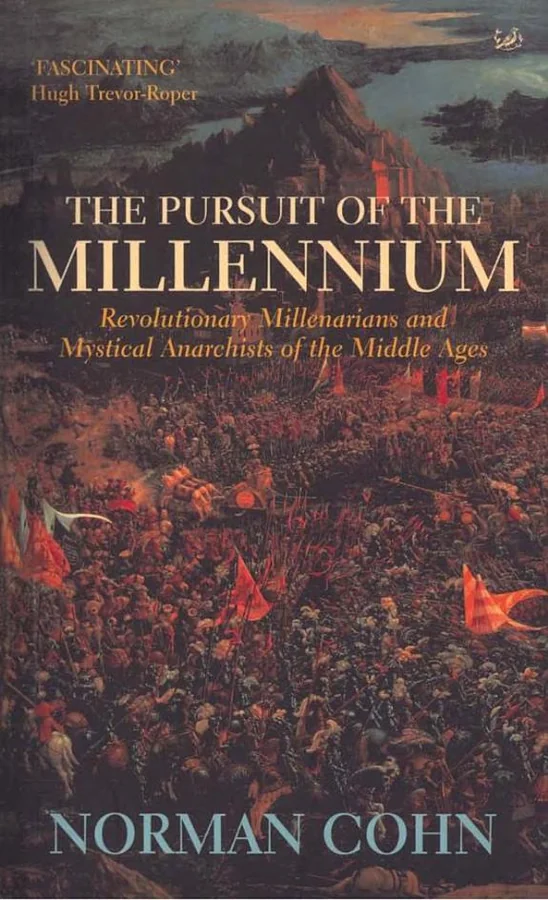
Norman Cohn’s "The Pursuit of the Millennium" offers a compelling, albeit challenging, historical survey of chiliastic movements. Cohn’s strength lies in his rigorous scholarship, connecting ancient prophetic traditions to the fervent medieval sects and their modern counterparts. He adeptly illustrates how apocalyptic expectations, when combined with social distress, can ignite potent and often destructive fanaticisms. A particularly striking aspect is his analysis of the psychological profiles of millenarian leaders and followers, revealing a consistent pattern across centuries. However, the sheer density of historical detail and the academic prose can, at times, make the narrative feel somewhat detached, especially for readers less familiar with medieval history or theological jargon. The work implicitly points to the enduring human yearning for radical societal change, a theme that resonates even today. Ultimately, Cohn provides an indispensable, scholarly account of how the dream of a perfect future has repeatedly fueled earthly conflict.
📝 Description
84
Norman Cohn's 1993 book traces chiliastic thought from ancient roots to modern times.
Norman Cohn's "The Pursuit of the Millennium" examines the history of chiliastic thought, focusing on movements that anticipated a radical, divinely ordained transformation of the world. The book details how religious fervor combined with social unrest to fuel these beliefs. Cohn investigates the psychological and social conditions that gave rise to such fervent convictions and the often violent actions they inspired.
First published in 1993, Cohn's study situates itself within a long tradition of analyzing apocalyptic and millenarian movements. It emerged when interest in cults, new religious movements, and the psychology of fanaticism was significant. The book connects medieval heresies and peasant revolts to later phenomena, implicitly referencing figures like Joachim of Fiore. It also contrasts these ideas with secular utopian visions that became prevalent in the 20th century.
This work connects the historical manifestation of millenarianism to broader esoteric traditions. It examines how beliefs in a coming spiritual age, such as the 'Eternal Gospel' or a 'Kingdom of God on Earth,' have historically driven movements. The book highlights the role of charismatic leaders and the societal conditions that foster these beliefs, providing context for understanding persistent undercurrents within various mystical and heterodox movements throughout Western history.
💡 Why Read This Book?
• Understand the origins of apocalyptic fervor by examining the medieval expectation of a coming paradise, as detailed in Cohn's analysis of Joachim of Fiore's influence on chiliastic thought. • Grasp the socio-psychological drivers of fanaticism through Cohn's exploration of the specific societal anxieties and leadership archetypes that fueled movements like the Flagellants in the 13th century. • Trace the persistence of utopian and destructive messianism into the modern era, a key argument Cohn develops by linking medieval movements to later revolutionary or radical ideologies.
⭐ Reader Reviews
Honest opinions from readers who have explored this book.
❓ Frequently Asked Questions
What is the historical period primarily covered by "The Pursuit of the Millennium"?
While "The Pursuit of the Millennium" traces millenarian ideas from antiquity, its primary focus is on the medieval period, examining movements and prophecies from roughly the 11th to the 15th centuries, before extending to their modern manifestations.
Who was Joachim of Fiore and why is he important to this book?
Joachim of Fiore was an Italian abbot and mystic who lived in the late 12th century. Cohn highlights him as a pivotal figure whose theological system, dividing history into ages and predicting a coming spiritual era, deeply influenced subsequent millenarian movements and prophecies.
Does the book discuss specific millenarian movements by name?
Yes, the book discusses numerous specific movements, including the Joachite schisms, the Brethren of the Free Spirit, the Taborites of the Hussite Wars, and the Münster Rebellion of 1534-1535, among others.
What is the relationship between millenarianism and social unrest according to Cohn?
Cohn argues that millenarian beliefs often flourish and gain traction during periods of intense social distress, economic hardship, or political instability, providing a framework for radical change and a promise of a better future.
Is "The Pursuit of the Millennium" considered a religious studies text or a historical one?
It is very much a work of historical scholarship that draws heavily on religious studies and sociology. Cohn analyzes religious beliefs and movements through a historical and social lens, focusing on their impact and development over time.
What ancient traditions influenced the millenarian ideas discussed?
The book discusses the influence of ancient prophetic traditions, including elements from Jewish apocalyptic literature, early Christian eschatology, and possibly some Gnostic ideas, which provided foundational concepts for later millenarian thought.
🔮 Key Themes & Symbolism
Apocalyptic Prophecy and Its Manifestations
The work meticulously details how ancient traditions of prophecy were revitalized in the Middle Ages, foretelling a coming earthly paradise. Cohn examines the fervent religious beliefs that drove individuals and groups to anticipate a divinely ordained millennium, often characterized by radical social upheaval and a rejection of existing structures. He shows how these prophecies, promising an end to suffering and sin, could morph into violent social movements and rebellions, illustrating a recurring pattern in human history.
The Psychology of Millenarian Movements
Cohn examines the social and psychological conditions that foster millenarianism. He explores the appeal of charismatic leaders, the societal anxieties and dislocations that make populations receptive to radical utopian visions, and the collective psychology of belief that can sustain movements through persecution and hardship. The book analyzes the common traits of followers and leaders, highlighting the intense fervor and often self-destructive tendencies inherent in these groups.
From Medieval Heresy to Modern Ideologies
A central thesis is the enduring legacy of millenarian thought. Cohn demonstrates how the patterns of belief and behavior seen in medieval apocalyptic sects, such as their revolutionary fervor and utopian ideals, find echoes in later historical periods. The work implicitly connects these historical movements to the development of modern ideologies that promise radical societal transformation, suggesting a continuous thread of chiliastic thinking beneath the surface of secular history.
The Promise and Peril of Earthly Paradise
The book scrutinizes the concept of a 'new paradise on earth' as envisioned by millenarians. It highlights the dual nature of this promise: a source of profound spiritual hope and a catalyst for extreme actions. Cohn illustrates how the desire for a perfect, sin-free existence, when projected onto the temporal realm, could justify immense suffering and violence in the pursuit of its realization, revealing the dangerous potential of absolute utopian aspirations.
💬 Memorable Quotes
Direct passages from the work, attributed to the author.
“The Middle Ages inherited from antiquity a tradition of prophecy and gave it new life.”
— This opening statement establishes the book's core argument: millenarianism is not a sudden medieval invention but a continuation and re-energization of ancient prophetic and apocalyptic expectations, adapted to a new historical context.
“This is the story of those millenarian fanaticisms, and points to their persistence in the modern era.”
— This declares the book's scope, focusing on the fervent, often extreme, nature of these movements and asserting that their underlying dynamics and appeal are not confined to the past but continue to manifest in contemporary society.
“The work explores the psychology of those who believed in the imminent end of the world and the coming of a divine kingdom.”
— This interpretation of Cohn's focus highlights his interest in the mental states and motivations of individuals caught up in millenarian fervor, moving beyond mere historical description to analyze the human element.
💡 Key Ideas
Editorial paraphrase of the work's core concepts — not direct quotes.
This tradition foretold a millennium in which humanity would enjoy a new paradise on earth, free from suffering and sin.
This summarizes the central utopian vision that fueled millenarian movements. It highlights the promise of a perfect, divinely ordered earthly existence that served as a powerful motivator for followers.
Cohn examines how the hope for a radical, divinely ordained transformation of society could inspire both intense devotion and brutal violence.
This paraphrased concept captures the book's critical examination of the paradox inherent in millenarianism: the pursuit of an ideal, peaceful kingdom often led to immense conflict and bloodshed in the present.
🌙 Esoteric Significance
Tradition
While not strictly an esoteric text itself, "The Pursuit of the Millennium" is crucial for understanding the historical underpinnings of certain esoteric traditions that incorporate millenarian or apocalyptic elements. It situates concepts found in movements like Gnosticism, early Christian eschatology, and later heterodox groups within a broader historical and social framework, revealing how the yearning for a radically transformed world has been a recurring motif outside mainstream religious or occult doctrines.
Symbolism
Key symbols explored include the concept of the 'Eternal Gospel' or a 'Third Age' (popularized by Joachim of Fiore), representing a spiritual epoch superseding the Age of the Father (Old Testament) and the Age of the Son (New Testament). Another motif is the divinely appointed 'King' or 'Spiritual Pope' who would usher in this new era. These symbols represent a yearning for ultimate redemption, a perfect spiritual order, and a radical break from corrupt earthly conditions.
Modern Relevance
Contemporary thinkers and practitioners within Western esotericism, particularly those exploring apocalyptic literature, messianic expectations, or the social dynamics of spiritual movements, draw upon Cohn's foundational research. His work provides essential context for understanding groups that anticipate radical societal or spiritual shifts, whether through overt religious prophecy or more secularized 'transformational' ideologies. It informs studies on the psychology of cults and the enduring appeal of utopian visions in contemporary culture.
👥 Who Should Read This Book
• Students of comparative religion and medieval history: Gain a comprehensive understanding of the historical development and social impact of millenarian beliefs from antiquity through the Middle Ages. • Scholars of political science and sociology: Analyze the recurring patterns of fanaticism, social unrest, and revolutionary fervor fueled by apocalyptic expectations. • Researchers in Western Esotericism: Understand the historical context and psychological drivers behind movements that anticipate radical societal or spiritual transformations, providing a critical lens on utopian aspirations.
📜 Historical Context
Published in 1993, Norman Cohn’s "The Pursuit of the Millennium" arrived at a time when academic interest in apocalypticism, social movements, and the psychology of belief was robust. The book builds upon and synthesizes decades of scholarship on medieval heresies, peasant revolts, and the history of utopian thought. It implicitly engages with the legacy of scholars like Henri Pirenne and the Annales School, who emphasized the deep structural changes and popular movements within medieval society. Cohn's work offered a compelling narrative thread connecting these disparate phenomena through the lens of millenarianism. While not directly engaging in polemics with specific contemporaries in its prose, its comprehensive scope and rigorous analysis provided a foundational text for many subsequent studies on the topic, influencing fields from religious history to political science. Its reception was largely scholarly, cementing its place as a key text in understanding the historical roots of radicalism and utopian aspirations.
📔 Journal Prompts
The medieval expectation of a new paradise on earth and its modern echoes.
The role of charismatic leaders in millenarian fanaticisms across centuries.
How societal anxieties, as explored by Cohn, contribute to the appeal of radical transformation.
The concept of the 'Eternal Gospel' and its historical influence.
The psychological profile of followers in movements anticipating a millennium.
🗂️ Glossary
Millenarianism
A belief system or social movement that anticipates a coming, radical transformation of society, often divinely ordained, leading to a period of perfection or a 'thousand-year' reign (millennium).
Chiliasm
A theological doctrine or belief in a future messianic age of happiness and holiness, typically lasting one thousand years, on earth, before the final judgment. Essentially synonymous with millenarianism.
Apocalypticism
A set of beliefs characteristic of apocalyptic literature, concerning the immediate end of the present age, the dramatic intervention of God, and the establishment of a new world order.
Joachim of Fiore
An influential Italian abbot and mystic (c. 1135-1202) whose theological system divided history into three ages and predicted a coming spiritual era, profoundly impacting later millenarian thought.
Eternal Gospel
A concept, notably associated with Joachim of Fiore, referring to a supposed third spiritual age that would supersede the Age of the Father (Old Testament) and the Age of the Son (New Testament), bringing about a new era of divine understanding.
Flagellants
Members of penitential, revivalist movements who practiced self-mortification, particularly whipping themselves publicly, as a means of atoning for sins and often associated with apocalyptic fervor in medieval Europe.
Socio-psychological Conditions
The interplay of social factors (e.g., poverty, war, social upheaval) and psychological states (e.g., anxiety, fervor, desire for meaning) that make individuals and groups susceptible to specific belief systems like millenarianism.
This book appears in 1 collection
🔮 Readers Also Liked
Browse all →







From the “Messianism” Collection
View all →







More Free Esoteric History & Biography Books
View all →