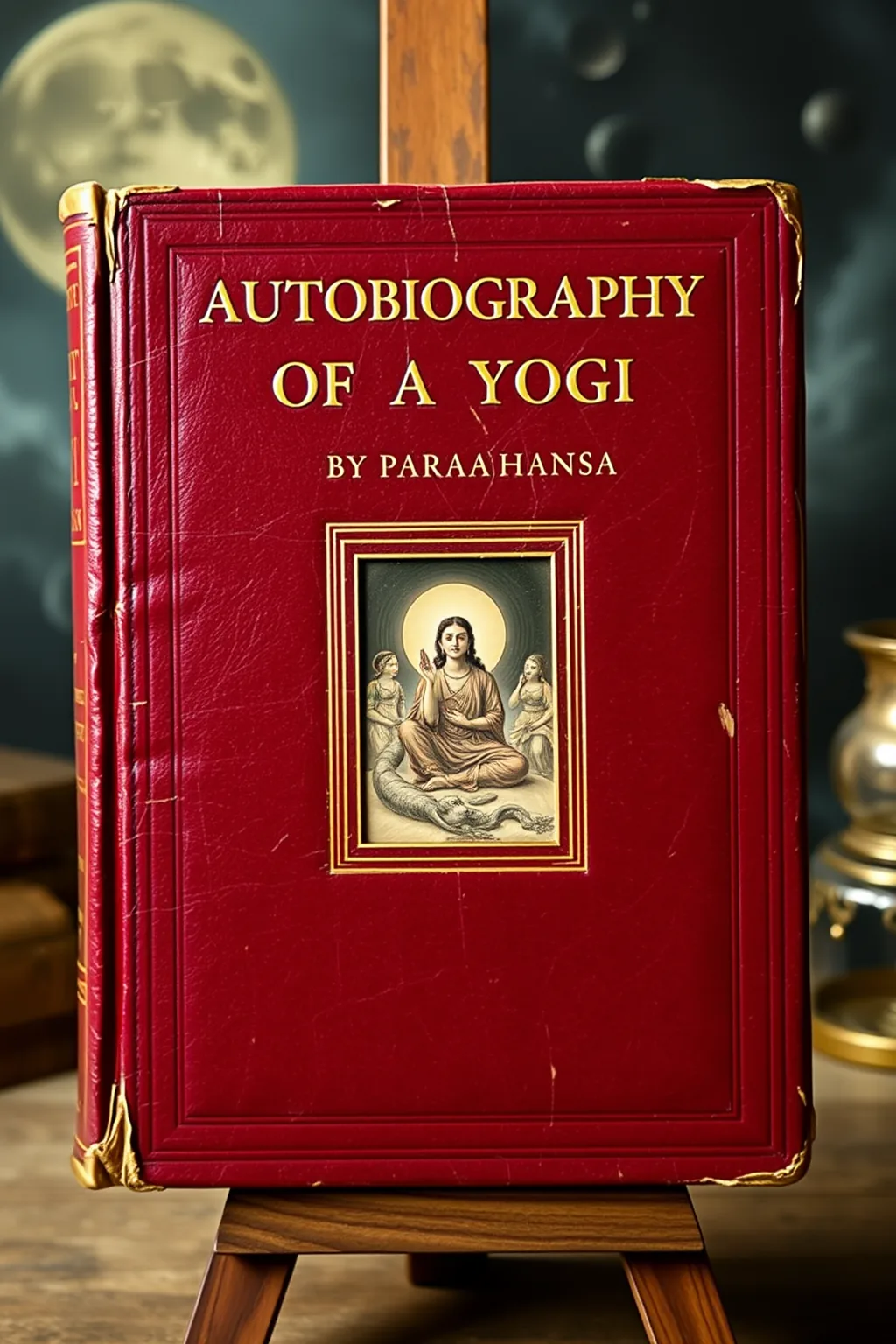
Autobiography of a Yogi
 95
95

Autobiography of a Yogi



Review by Cassian Rothmann (Senior Critic, Ancient Wisdom) — 'Autobiography of a Yogi' stands as a pillar of esoteric literature, offering unparalleled insights into the mystical traditions of yoga. Yogananda's narrative is rich with spiritual symbolism and hidden knowledge, providing a deep dive into the disciple-guru relationship that is central to Indian culture. The book's strength lies in its ability to bridge the gap between ancient wisdom and modern seekers, making it an invaluable resource for those interested in the occult and hermetic traditions. The intended audience includes both novice and advanced practitioners, as well as scholars of mysticism.
📝 Description
95
Paramahansa Yogananda's 1946 autobiography details his life and teachings on Kriya Yoga.
This book recounts Paramahansa Yogananda's early life in India, his spiritual training under Swami Sri Yukteswar Giri, and his eventual journey to the West to spread the teachings of Kriya Yoga. Yogananda describes encounters with various saints, yogis, and mystics, including his direct experiences with Mahavatar Babaji and Lahiri Mahasaya. The narrative details the principles of Raja Yoga and the scientific aspects of yoga meditation, presenting them as accessible to Western understanding. He discusses concepts like karma, reincarnation, and the nature of God, all framed within his personal spiritual development. The work aims to show that the ancient yogic sciences offer a path to self-realization and divine consciousness.
Published in 1946, 'Autobiography of a Yogi' is a key text within the modern dissemination of Hindu yogic philosophy and practice in the West. It situates itself within the lineage of Mahavatar Babaji, Lahiri Mahasaya, and Sri Yukteswar Giri, presenting their teachings on Kriya Yoga. The book links these practices to the broader goal of spiritual liberation and union with the divine, drawing parallels between yogic attainment and Christian concepts, reflecting Yogananda's interfaith approach. It presents esoteric concepts as verifiable through direct experience and scientific inquiry, characteristic of the spiritual movements of the early to mid-20th century.
💡 Why Read This Book?
Read 'Autobiography of a Yogi' to gain a deeper understanding of yogic practices and their spiritual significance. Ideal for seekers of hidden knowledge, scholars of mysticism, and practitioners of yoga, this book offers a unique blend of personal narrative and esoteric wisdom. It is a must-read for anyone interested in the mystical traditions of India and the transformative power of spiritual practices.
⭐ Reader Reviews
Honest opinions from readers who have explored this book.
❓ Frequently Asked Questions
What is the main theme of 'Autobiography of a Yogi'?
The main theme revolves around the spiritual journey and the search for ultimate verities, emphasizing the disciple-guru relationship and yogic practices.
Who is the intended audience for this book?
The book is intended for spiritual seekers, scholars of mysticism, and practitioners of yoga who are interested in esoteric and hermetic traditions.
What makes this book unique?
The uniqueness lies in its blend of personal narrative and deep spiritual insights, providing a rare glimpse into the mystical dimensions of yoga.
How does this book contribute to the understanding of yoga?
It offers a profound exploration of yogic practices and their philosophical significance, making it a valuable resource for both beginners and advanced practitioners.
Is this book suitable for beginners in yoga?
Yes, it is suitable for beginners as well as advanced practitioners, offering insights that can be appreciated at various levels of spiritual understanding.
🔮 Key Themes & Symbolism
Spiritual Journey
The book studies the transformative spiritual journey of Paramahansa Yogananda, highlighting the mystical experiences and hidden knowledge he encountered along the way. This theme emphasizes the importance of personal spiritual quests and the seeker's inner awakening.
Yogic Practices
Yogananda's narrative provides a deep exploration of yogic practices and their esoteric dimensions. This theme offers insights into the symbolism and philosophical significance of yoga, making it a valuable resource for practitioners and scholars alike.
Disciple-Guru Relationship
Central to Indian culture, the disciple-guru relationship is a key theme in the book. Yogananda's interactions with his guru, Sri Yukteswar, and other spiritual masters illustrate the importance of this relationship in the path to spiritual enlightenment.
💬 Memorable Quotes
Direct passages from the work, attributed to the author.
“The divine is a reflection of the self.”
— This insight suggests that the divine can be found within, emphasizing the importance of self-discovery and inner awakening.
“The path to enlightenment is a journey of the soul.”
— This insight highlights the spiritual nature of the journey to enlightenment, emphasizing the soul's role in this transformative process.
💡 Key Ideas
Editorial paraphrase of the work's core concepts — not direct quotes.
The physical and the spiritual are one.
This quote underscores the unity of all existence, highlighting the interconnectedness of the physical and spiritual realms.
The true seeker finds the truth within.
This quote emphasizes the inner journey of spiritual seekers, encouraging them to look within for ultimate verities.
The guru is a strong example of light on the spiritual path.
This quote underscores the importance of the guru in guiding seekers on their spiritual journey, providing wisdom and guidance.
🌙 Esoteric Significance
Tradition
This book belongs to the Hermetic tradition, emphasizing the search for ultimate verities and the transformative power of spiritual practices. It studies the esoteric dimensions of yoga, offering insights into hidden knowledge and mystical experiences.
Symbolism
Key symbols include the guru-disciple relationship, the spiritual journey, and the unity of the physical and spiritual realms. These symbols represent the deeper meanings and philosophical significance of yogic practices.
Modern Relevance
The book remains relevant today, inspiring modern practitioners and seekers to explore the mystical traditions of yoga. Its insights into hidden knowledge and spiritual symbolism continue to resonate with those interested in esoteric and hermetic traditions.
👥 Who Should Read This Book
Beginners in yoga will find this book to be an enlightening introduction to the mystical dimensions of yogic practices. Scholars of mysticism will appreciate the useful insights into the esoteric traditions of India. Spiritual seekers will be inspired by Yogananda's journey and the transformative power of spiritual practices. Practitioners of yoga will benefit from the philosophical significance and hidden knowledge revealed in the narrative.
📜 Historical Context
Written in the early 20th century, 'Autobiography of a Yogi' captures the essence of Indian spiritual traditions during a time of cultural and spiritual awakening. The book's influence has been profound, inspiring countless seekers and practitioners to explore the mystical dimensions of yoga. It stands as a proof of the enduring relevance of spiritual wisdom in an ever-changing world.
📔 Journal Prompts
Reflect on a time when you experienced a spiritual awakening. What insights did you gain?
How does the disciple-guru relationship influence your spiritual journey?
What are some key symbols in yogic practices and what do they represent?
How can you integrate the teachings of 'Autobiography of a Yogi' into your daily life?
What role does hidden knowledge play in your understanding of spiritual traditions?
🗂️ Glossary
Guru
A spiritual teacher or guide who provides wisdom and direction on the path to enlightenment.
Yoga
A spiritual practice that aims to unite the body, mind, and spirit through physical postures, breathing exercises, and meditation.
Disciple
A follower or student of a spiritual teacher, seeking guidance and enlightenment.
Esoteric
Relating to knowledge that is known only to a small group of people, often involving hidden or mystical insights.
Hermetic
Relating to the ancient philosophical and spiritual tradition that seeks to understand the mysteries of the universe and the nature of reality.
This book appears in 3 collections
🔮 Readers Also Liked
Browse all →









More by Yogananda Paramahansa
All books →





From the “Hermeticism” Collection
View all →








More Free Alchemy & Hermeticism Books
View all →