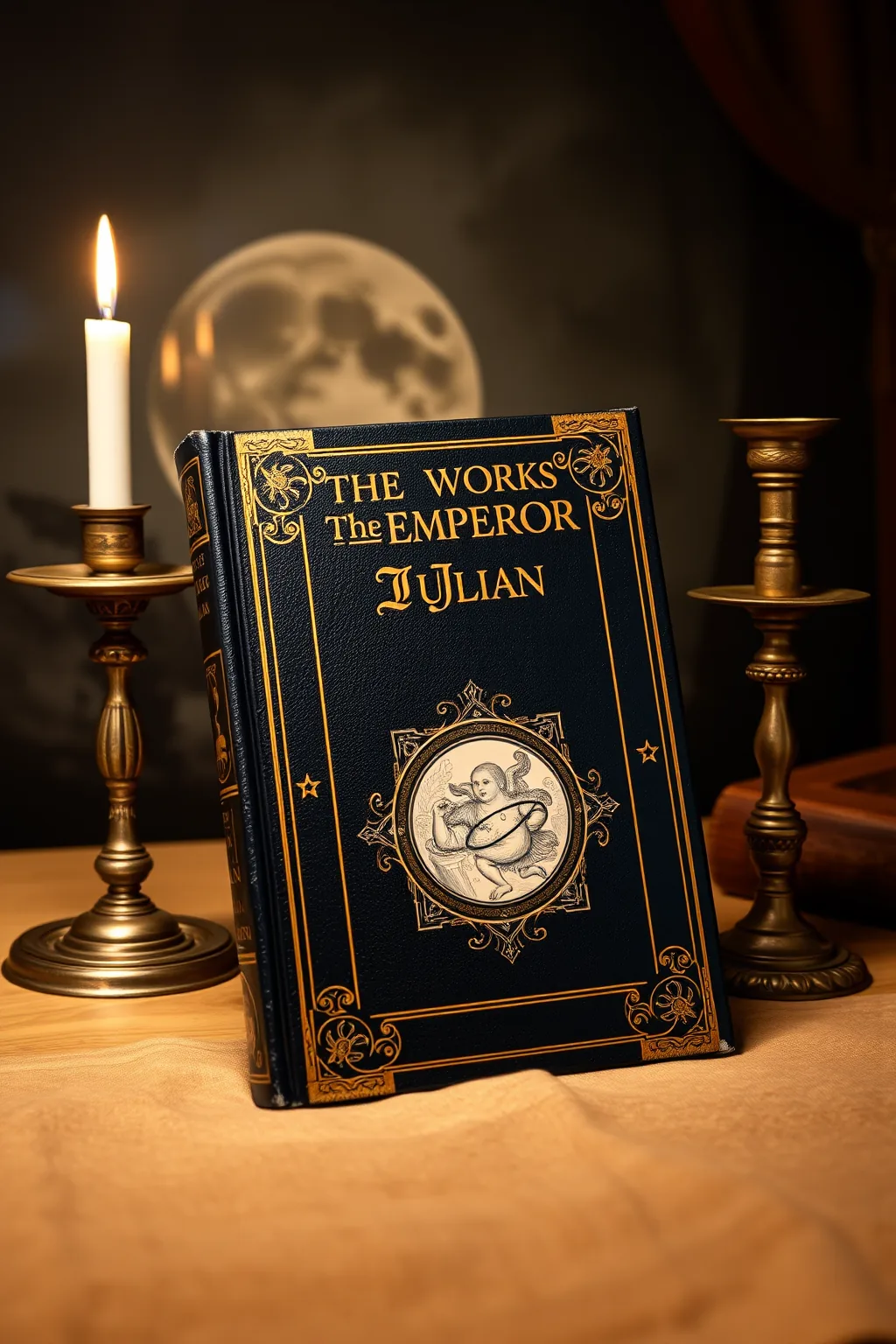
The works of the Emperor Julian
 61
61

The works of the Emperor Julian


Review by Marcus Thorne (Esoteric Sciences Reviewer) — The 'Works of the Emperor Julian' is a profound and illuminating collection of esoteric insights that delve deeply into the mystical traditions of ancient Rome. Julian's writings are a testament to his deep understanding of Neoplatonism and the Sophist traditions, blending philosophical rigor with spiritual enlightenment. The strengths of this work lie in its rich symbolism and the emperor's unyielding quest for hidden knowledge. Julian's intended audience was the seekers of truth and the mystics who yearned for a deeper understanding of the divine. This book is an invaluable resource for scholars of esoteric sciences and spiritual seekers alike.
📝 Description
61
Emperor Julian's writings, composed in the 4th century CE, reveal his personal philosophical and religious views.
The collected writings of Emperor Julian offer direct access to the mind of a Roman ruler who attempted to revive pagan traditions in the 4th century CE. Julian, also known as the Apostate, was a philosopher and scholar who engaged with Neoplatonic thought and Hermeticism. His texts reflect a deep reverence for the divine and a desire to understand the cosmos, aimed at individuals seeking spiritual insight. He sought to integrate the philosophical traditions of ancient Greece with the spiritual currents of his time, creating a unique synthesis of ideas. These works stand as a primary source for understanding his intellectual and religious agenda during his brief reign.
Julian's writings are situated within late antique Neoplatonism, a philosophical system that sought to understand the divine through intellectual and mystical means. He engaged with Hermetic texts, which offered esoteric wisdom and mystical practices. His efforts to restore traditional paganism involved a conscious effort to synthesize these philosophical and mystical currents into a cohesive worldview, positioning him as a significant figure in the intellectual and religious debates of his era. His work reflects a broader trend of seeking deeper spiritual understanding outside of emerging Christian dominance.
💡 Why Read This Book?
Read 'The Works of the Emperor Julian' to immerse yourself in the mystical and esoteric thoughts of one of Rome's most enigmatic emperors. This book is ideal for seekers of hidden knowledge, scholars of ancient philosophy, and practitioners of Hermeticism. Julian's blend of Neoplatonism and Sophist traditions offers a unique perspective on the spiritual quest for enlightenment.
⭐ Reader Reviews
Honest opinions from readers who have explored this book.
❓ Frequently Asked Questions
What is the significance of Julian's works in esoteric studies?
Julian's works are significant in esoteric studies for their blend of Neoplatonism and Sophist traditions, offering deep insights into ancient mystical practices and hidden knowledge.
Who was Julian the Apostate?
Julian the Apostate was a Roman emperor known for his deep interest in pagan philosophy and mysticism, attempting to revive traditional Roman religious practices.
What themes are explored in Julian's writings?
Julian's writings explore themes of divine reverence, spiritual enlightenment, and the quest for hidden knowledge, blending philosophical rigor with mystical traditions.
How do Julian's works influence modern esoteric practices?
Julian's works continue to influence modern esoteric practices by providing a rich source of symbolism and philosophical depth, inspiring seekers of spiritual enlightenment.
Are Julian's works suitable for beginners in esoteric studies?
While Julian's works are profound, they are best suited for those with some background in ancient philosophy and esoteric traditions.
🔮 Key Themes & Symbolism
Divine Reverence
Julian's works are permeated with a deep sense of divine reverence, reflecting his belief in the sacredness of the universe. He sought to uncover the hidden knowledge that connects humanity to the divine, blending philosophical rigor with spiritual enlightenment.
Spiritual Enlightenment
The quest for spiritual enlightenment is a central theme in Julian's writings. He delved deeply into the mystical traditions of Neoplatonism and the Sophists, seeking to illuminate the path to inner wisdom and divine connection.
Hidden Knowledge
Julian's writings are a rich source of hidden knowledge, exploring the esoteric traditions of ancient Rome. His works reveal the symbolism and mystical practices that have captivated seekers of truth for centuries.
💬 Memorable Quotes
Direct passages from the work, attributed to the author.
“The soul is the form of the body.”
— Julian's words highlight the deep connection between the spiritual and physical realms.
“Philosophy is the true worship of the gods.”
— Julian believed in the divine nature of philosophical inquiry, seeing it as a path to spiritual enlightenment.
“The quest for knowledge is the highest form of worship.”
— Julian saw the pursuit of knowledge as a sacred endeavor, connecting the seeker to the divine.
💡 Key Ideas
Editorial paraphrase of the work's core concepts — not direct quotes.
The divine is present in all things.
This quote emphasizes Julian's belief in the sacredness of the universe and the presence of the divine in all aspects of life.
The soul seeks to return to its divine origin.
This quote reflects Julian's Neoplatonic beliefs in the soul's journey towards spiritual enlightenment.
🌙 Esoteric Significance
Tradition
The 'Works of the Emperor Julian' belong to the Hermetic and Neoplatonic traditions, which emphasize the mystical and esoteric aspects of ancient philosophy. Julian's writings explore the hidden knowledge and symbolism that have captivated seekers of truth for centuries.
Symbolism
Key symbols in Julian's works include the divine light, the soul's journey, and the sacredness of the universe. These symbols represent the quest for spiritual enlightenment and the deep connection between the physical and spiritual realms.
Modern Relevance
Julian's works continue to influence modern esoteric practices by providing a rich source of symbolism and philosophical depth. Today, practitioners of Hermeticism and Neoplatonism draw on Julian's insights to deepen their understanding of the mystical traditions and the quest for hidden knowledge.
👥 Who Should Read This Book
Beginners in esoteric studies may find Julian's works challenging due to their depth and complexity, but those with some background in ancient philosophy will find them enriching. Scholars of esoteric sciences will appreciate the useful insights into Neoplatonism and Sophist traditions. Spiritual seekers will be inspired by Julian's quest for divine connection and spiritual enlightenment. Practitioners of Hermeticism and Neoplatonism will find valuable symbolism and philosophical depth in his writings.
📜 Historical Context
The 'Works of the Emperor Julian' were written during a time of significant religious and philosophical upheaval in the Roman Empire. Julian, who ruled from 361 to 363 AD, was known for his attempts to revive traditional Roman religious practices and his deep interest in pagan philosophy and mysticism. His works reflect the influence of Neoplatonism and the Sophist traditions, blending philosophical rigor with spiritual enlightenment. Julian's writings were important during his time as they offered a counterpoint to the rising influence of Christianity, providing a voice for those who sought to preserve the ancient mystical traditions of Rome.
📔 Journal Prompts
How does Julian's concept of divine reverence resonate with your own spiritual beliefs?
In what ways can the pursuit of knowledge be a form of worship, as Julian suggests?
Reflect on the symbolism of the soul's journey in Julian's writings and how it applies to your own spiritual path.
How does Julian's blend of Neoplatonism and Sophist traditions influence your understanding of ancient philosophy?
Consider the relevance of Julian's works in modern esoteric practices and how they can enrich your own spiritual quest.
🗂️ Glossary
Neoplatonism
A philosophical tradition that blends Platonic ideas with mystical and esoteric elements, emphasizing the divine and the spiritual.
Sophists
Greek philosophers known for their rhetorical skills and exploration of ethical and metaphysical questions.
Hermeticism
An esoteric tradition based on the writings attributed to Hermes Trismegistus, focusing on the mystical and spiritual aspects of the universe.
Divine Reverence
A deep sense of respect and worship for the sacred and divine, often explored through philosophical and mystical inquiry.
Hidden Knowledge
Esoteric insights and mysteries that are revealed through spiritual and philosophical exploration.
This book appears in 2 collections
🔮 Readers Also Liked
Browse all →








From the “Neoplatonism” Collection
View all →







More Free Alchemy & Hermeticism Books
View all →