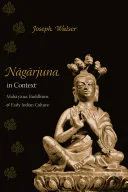
Nagarjuna in Context
 80
80

Nagarjuna in Context
Joseph Walser’s "Nagarjuna in Context" commendably breaks from simplistic portrayals of the Madhyamaka founder. Instead of presenting Nagarjuna as an isolated sage, Walser convincingly argues for his active engagement within the complex religious ecosystem of 2nd-century India. The book’s strength lies in its detailed textual exegesis, demonstrating how Nagarjuna’s philosophical innovations were intertwined with institutional and rhetorical strategies. Walser’s examination of Nagarjuna’s use of dialectic to secure Mahayana’s canonical authority is particularly illuminating. A limitation, however, might be the dense academic prose, which, while precise, could present a barrier for readers less accustomed to scholarly Buddhist studies. The section exploring Nagarjuna's response to contemporary Brahmanical arguments, for example, reveals the sophisticated intellectual climate of the era. Overall, Walser offers a vital corrective, grounding Nagarjuna's profound philosophy in its historical and polemical reality.
📝 Description
80
Joseph Walser's 2019 study analyzes Nagarjuna's philosophical impact in 2nd-century India.
Joseph Walser's "Nagarjuna in Context" examines the philosophy of the Mahayana Buddhist thinker Nagarjuna, placing his ideas within 2nd-century CE India's intellectual and monastic environment. The book details how Nagarjuna used rigorous arguments and rhetoric to establish Mahayana doctrine and secure its canonical status. Walser moves beyond simple biography to show Nagarjuna's engagement with other religious thinkers of his time and his methods for ensuring his teachings lasted.
The study situates Nagarjuna's work in a period of active philosophical debate among various schools, including Brahmanical and Jain traditions. It shows how Nagarjuna's critique of essentialism and his concept of emptiness responded to these discussions. Walser uses Nagarjuna's writing techniques to demonstrate the connection between philosophy, monastic organization, and the creation of authoritative Buddhist texts during this crucial time.
This book delves into the philosophical underpinnings of Mahayana Buddhism, a tradition that emphasizes the path to enlightenment for all beings. Nagarjuna is a central figure whose Madhyamaka philosophy critically examined the nature of reality and the self. Walser's work places these profound ideas within their historical and intellectual milieu, showing how they emerged from and influenced a dynamic period of Indian religious thought. Understanding Nagarjuna's context is key to grasping the evolution of Buddhist contemplative and philosophical practices.
💡 Why Read This Book?
• Gain a concrete understanding of how Nagarjuna, active around the 2nd century CE, strategically employed rhetoric to establish Mahayana teachings, moving beyond abstract philosophical concepts to explore practical methods of doctrinal transmission. • Comprehend the specific intellectual environment of 2nd-century India, including the competing schools of thought Walser mentions, and how Nagarjuna's articulation of *sunyata* (emptiness) was a direct intervention in these debates. • Appreciate the methods by which early Buddhist monks ensured the preservation of complex philosophical texts, as detailed in Walser's analysis of Nagarjuna's engagement with monastic communities.
⭐ Reader Reviews
Honest opinions from readers who have explored this book.
❓ Frequently Asked Questions
What historical period does Joseph Walser focus on for Nagarjuna's life and work?
Joseph Walser centers his examination on the 2nd century CE, a pivotal era for the development and institutionalization of Mahayana Buddhism in India, during which Nagarjuna is believed to have been most active.
How did Nagarjuna secure the authority of Mahayana teachings according to Walser?
Walser details how Nagarjuna utilized sophisticated rhetorical strategies and rigorous philosophical arguments, particularly concerning the concept of *sunyata*, to establish the canonical validity and intellectual precedence of Mahayana doctrines.
What is the significance of *sunyata* as explored in this book?
The book examines *sunyata* (emptiness) not just as a philosophical concept, but as a tool Nagarjuna employed to deconstruct essentialist views prevalent in other contemporary schools, thereby asserting Mahayana's unique philosophical stance.
Does the book discuss Nagarjuna's interactions with other religious or philosophical traditions?
Yes, Walser explicitly situates Nagarjuna within the context of religious and monastic debates of his time, exploring his engagement with non-Buddhist sources and competing schools of thought to solidify Mahayana's position.
What is the primary contribution of 'Nagarjuna in Context' to Buddhist studies?
It provides the first detailed examination of Nagarjuna's life and writings within their specific historical, religious, and monastic context, offering new insights into his methods for establishing Mahayana's canonical authority.
What kind of textual analysis does Walser perform?
Walser undertakes close textual analysis of Nagarjuna's own writings, alongside other Buddhist and non-Buddhist sources from the period, to reconstruct the intellectual milieu and Nagarjuna's strategic philosophical interventions.
🔮 Key Themes & Symbolism
Rhetoric and Canonical Authority
Walser's analysis highlights how Nagarjuna's philosophical acumen was intrinsically linked to his mastery of rhetoric. The book argues that Nagarjuna did not merely present abstract doctrines but strategically employed persuasive language and logical argumentation to secure the canonical status of Mahayana teachings. This involved not only refuting opposing views but also constructing a compelling narrative and intellectual framework that resonated with monastic communities, ensuring the long-term viability and transmission of the Mahayana tradition.
The Concept of Sunyata
Central to Nagarjuna's philosophy, *sunyata* (emptiness) is explored not as nihilism but as a radical deconstruction of inherent existence. Walser examines how Nagarjuna used this concept to dismantle reified notions of self, phenomena, and ultimate reality, thereby clearing the ground for Mahayana's unique soteriological and philosophical insights. The work situates this complex doctrine within the specific dialectical exchanges of the 2nd century CE, demonstrating its function as a critical tool against prevailing metaphysical assumptions.
Monastic Transmission and Intellectual Exchange
Beyond pure philosophy, 'Nagarjuna in Context' emphasizes the practicalities of intellectual life in ancient India. Walser investigates the role of monastic institutions in the preservation and dissemination of Nagarjuna's writings. He explores the methods by which Buddhist monks were trained to understand and transmit these intricate philosophical texts, underscoring the symbiotic relationship between rigorous scholarship and the institutional structures that safeguarded the transmission of knowledge across generations.
Engagement with Competing Traditions
The book meticulously reconstructs the intellectual landscape in which Nagarjuna operated, detailing his engagement with various Brahmanical and other Buddhist schools. Walser demonstrates that Nagarjuna's philosophical project was not conducted in isolation but was a dynamic response to, and critique of, the dominant philosophical and religious currents of his time. This contextualization reveals the polemical nature of Nagarjuna's work and its significance in shaping the trajectory of Indian philosophical discourse.
💬 Memorable Quotes
Direct passages from the work, attributed to the author.
“Nagarjuna secured the canonical authority of Mahayana teachings.”
— This statement captures Walser's central thesis: Nagarjuna's philosophical project was as much about institutional establishment as it was about abstract doctrine, achieved through strategic argumentation.
“His use of rhetoric to ensure the transmission of his writings by Buddhist monks.”
— This highlights the practical dimension of Nagarjuna's work, emphasizing that his philosophical innovations were designed not just for intellectual merit but for effective communication and preservation within the monastic system.
“Examination of Nagarjuna's life and writings in the context of the religious and monastic debates of the second century CE.”
— This phrase points to the book's methodological core: grounding Nagarjuna's thought in its specific historical and intellectual milieu, moving beyond timeless philosophical pronouncements to a historically situated analysis.
“Drawing on close textual analysis of Nagarjuna's writings and other Buddhist and non-Buddhist sources.”
— This signifies the scholarly rigor of the work, indicating a methodology based on direct engagement with primary texts and a broad consideration of the intellectual environment from which Nagarjuna emerged.
“An original contribution to the understanding of Nagarjuna's role.”
— This asserts the book's scholarly significance, suggesting that it offers novel perspectives and fills gaps in previous scholarship regarding Nagarjuna's historical and philosophical impact.
🌙 Esoteric Significance
Tradition
While Nagarjuna is a foundational figure in Mahayana Buddhism, his philosophical system, particularly the concept of *sunyata*, has profoundly influenced esoteric interpretations across various traditions. Esoteric Buddhism, often characterized by its emphasis on direct experience and subtle states of consciousness, finds in Nagarjuna's deconstruction of inherent existence a powerful tool for undermining conceptual fixation and ego-clinging, which are seen as primary obstacles to enlightenment.
Symbolism
The concept of *sunyata* itself can be viewed symbolically as the ultimate void or unmanifest source from which all phenomena arise and to which they return. Nagarjuna's emphasis on the interdependent origination (*pratītyasamutpāda*) of all things symbolizes the interconnectedness of all existence, a theme echoed in many esoteric cosmologies. The skillful use of rhetoric and logic symbolizes the transformative power of wisdom (prajna) to cut through illusion.
Modern Relevance
Contemporary Buddhist practitioners and scholars, including those exploring the intersection of Buddhism with Western psychology and philosophy, draw heavily on Nagarjuna's rigorous analysis. Thinkers and meditation teachers often reference his work to guide practitioners in dismantling fixed notions of self and reality, fostering a more fluid and non-dualistic understanding of experience, essential for advanced contemplative practices.
👥 Who Should Read This Book
• Scholars of Buddhist philosophy: To gain a nuanced understanding of Nagarjuna's historical context and his strategic engagement with contemporary intellectual debates of the 2nd century CE. • Advanced practitioners of Mahayana Buddhism: To deepen their comprehension of *sunyata* and the rhetorical methods employed to establish its philosophical significance and canonical authority. • Students of comparative religion and intellectual history: To analyze how philosophical ideas are shaped by, and in turn shape, religious institutions and their transmission within ancient India.
📜 Historical Context
Joseph Walser's "Nagarjuna in Context" situates the philosopher within the dynamic intellectual milieu of 2nd-century CE India. This era was characterized by intense philosophical ferment, with various Brahmanical traditions, Jainism, and emerging Mahayana and other Buddhist schools engaging in vigorous debate. Nagarjuna's work, particularly his articulation of *sunyata* (emptiness), emerged as a powerful response to prevailing essentialist philosophies, including those found in the Upanishads and other orthodox Indian systems. Walser examines how Nagarjuna’s sophisticated dialectic and rhetorical strategies were not merely academic exercises but crucial tools for establishing the distinct identity and canonical authority of Mahayana Buddhism. The book implicitly engages with the reception of Nagarjuna's ideas by showing how his writings were intended for transmission within monastic networks, influencing later Buddhist thinkers and shaping the development of Madhyamaka philosophy as a dominant force within the tradition.
📔 Journal Prompts
Nagarjuna's use of rhetoric in securing Mahayana authority: How might persuasive language be employed to establish doctrinal validity?
The context of 2nd-century CE religious and monastic debates: What parallels exist in contemporary intellectual discourse?
Nagarjuna's concept of *sunyata*: How does the idea of 'emptiness' challenge conventional understandings of reality?
The role of Buddhist monks in textual transmission: Reflect on the challenges and methods of preserving complex philosophical ideas.
Walser's analysis of non-Buddhist sources: Consider the importance of engaging with diverse perspectives in philosophical inquiry.
🗂️ Glossary
Mahayana Buddhism
A major branch of Buddhism emphasizing the ideal of the Bodhisattva, who seeks enlightenment for all sentient beings. It developed significantly from the 1st century CE onwards.
Sunyata
A central concept in Mahayana Buddhism, often translated as 'emptiness' or 'voidness,' referring to the lack of inherent existence or self-nature in all phenomena.
Canonical Authority
The recognized validity and acceptance of a set of texts or doctrines within a religious tradition, establishing them as foundational scriptures or authoritative teachings.
Rhetoric
The art of effective or persuasive speaking or writing, used here to describe Nagarjuna's skillful argumentation and use of language to establish his philosophical points.
Monastic Debates
Intellectual and philosophical discussions held within or between monastic communities, crucial for refining doctrines and establishing orthodoxies during ancient Indian religious history.
2nd Century CE
The period from 101 to 200 CE, a significant era for the development of Mahayana Buddhism and the flourishing of diverse Indian philosophical schools.
Madhyamaka
A major school of Mahayana Buddhist philosophy founded by Nagarjuna, known for its analysis of emptiness (sunyata) and its use of the middle way to avoid extremes.