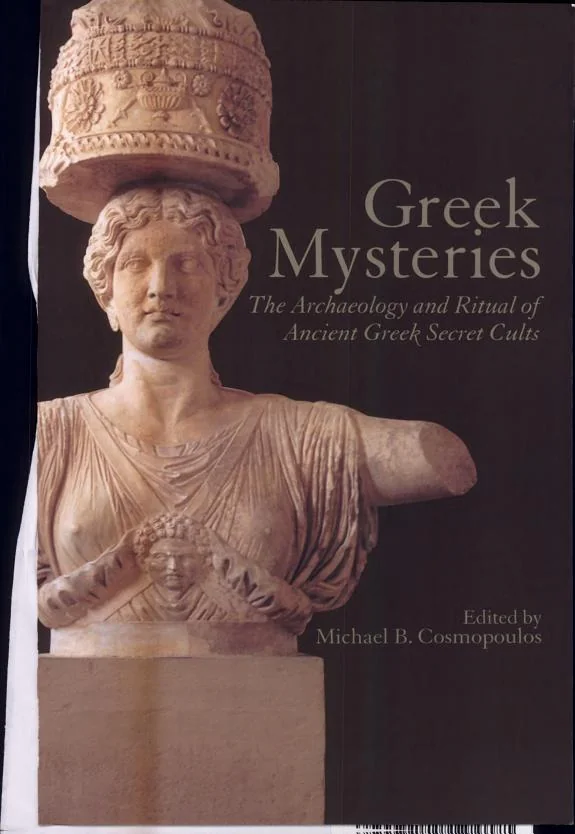
Greek Mysteries
 75
75

Greek Mysteries
Michael B. Cosmopoulos's *Greek Mysteries* offers a rigorous, archaeology-driven examination of a subject often shrouded in speculation. The strength of this collection lies in its commitment to empirical evidence, presenting new research from leading experts that grounds the study of these elusive cults. One particularly compelling aspect is the detailed analysis of artifacts from sites like Eleusis, which provide tangible links to the ritualistic practices and beliefs of initiates. However, the book's academic focus, while a strength, can also be a limitation for readers seeking a more narrative or speculative exploration; the emphasis on archaeological data sometimes results in dense, technical discussions. The exploration of the Eleusinian Mysteries' preparatory rites, for instance, is meticulously detailed but assumes a significant prior knowledge of archaeological terminology. Ultimately, *Greek Mysteries* serves as an indispensable, if challenging, resource for understanding the material and ritualistic dimensions of ancient Greek religious life.
📝 Description
75
Michael B. Cosmopoulos's 2005 collection examines Greek mystery cults through archaeology.
This volume gathers scholarly work on the Greek mystery cults, focusing on their societal and religious roles. It moves past simple interpretations to consider archaeological findings, ritual practices, and the historical development of these secretive traditions. Because direct written evidence for the mysteries is scarce, archaeological discoveries become crucial. The book uses this evidence to shed light on cults such as Eleusis and Dionysus. It connects fragmented historical accounts with the physical remains of ancient worship, offering a broad perspective on their influence on Greek civilization.
The collection is intended for academics, students of classical antiquity, and those seriously interested in esoteric studies. It assumes a basic knowledge of ancient Greek history and religion. Readers typically seek to understand the empirical basis of ancient beliefs, the growth of religious institutions, and the methods for piecing together lost spiritual practices. It is especially useful for researchers in comparative religion, ritual history, or the material culture of ancient Greece, as it presents new data and analytical approaches.
The Greek mystery cults represent a significant current within ancient Mediterranean spirituality, focusing on initiation and secret knowledge. While often studied by classical historians, their emphasis on personal transformation and hidden doctrines places them within esoteric traditions. This book, by concentrating on the archaeological evidence, offers a way to understand the material and ritualistic aspects of these initiatory paths. It grounds esoteric inquiry in tangible historical and archaeological data, moving beyond purely speculative interpretations and situating these practices within their original societal framework.
💡 Why Read This Book?
• Gain a factual understanding of the Eleusinian Mysteries, moving beyond myth to explore their archaeological evidence and ritualistic significance as presented in the collected essays. • Discover how archaeological findings from sites like Eleusis have reshaped scholarly understanding of initiation rites and the symbolic meaning of excavated objects. • Grasp the societal role of mystery cults in ancient Greece, informed by analyses of their historical context and their impact on Greek religion and culture, as detailed in the historical context sections.
⭐ Reader Reviews
Honest opinions from readers who have explored this book.
❓ Frequently Asked Questions
What are the primary archaeological sites discussed in Greek Mysteries concerning mystery cults?
The book prominently features discussions of Eleusis, the most famous site associated with the Eleusinian Mysteries. Archaeological evidence from this location is central to understanding the ritualistic practices and symbolic significance of these ancient cults.
Why is archaeology so important for studying Greek mystery cults, according to this book?
Because written evidence for the mysteries is scarce and often guarded, archaeology proves crucial. The book highlights how excavated artifacts, sanctuaries, and ritual spaces provide tangible insights into their significance, rituals, and role in Greek religion and society.
What is 'epopteia' and how is it discussed in the context of Greek Mysteries?
'Epopteia' refers to the highest level of initiation in the Eleusinian Mysteries. The work explores this concept through archaeological evidence and fragmented historical accounts, aiming to illuminate the experience of those who reached this ultimate stage of revelation.
Who are the acknowledged experts contributing to this volume on Greek Mysteries?
The book compiles contributions from an international team of scholars acknowledged for their expertise in classical archaeology, ancient Greek religion, and ritual studies. Specific contributors are detailed within the volume's preface and chapter attributions.
When was Michael B. Cosmopoulos's Greek Mysteries first published?
The first edition of *Greek Mysteries* was published on August 18, 2005. This date places its scholarship within a specific period of academic inquiry into ancient religious practices.
What is the central argument regarding the role of mystery cults in Greek society?
The central argument is that these cults were not peripheral but integral to Greek religion and society. The book uses archaeological and historical data to showcase their profound influence on the spiritual lives and social structures of ancient Greece.
🔮 Key Themes & Symbolism
Archaeology of the Sacred
The volume champions archaeology as the primary tool for understanding the Greek mysteries, given the paucity of textual sources. It details how excavated sanctuaries, votive offerings, and ritual implements from sites like Eleusis provide concrete evidence for practices and beliefs. The focus is on material culture as a direct window into the sacred experiences of initiates, allowing scholars to reconstruct the physical and symbolic dimensions of cultic activity.
Ritual and Initiation
Central to the book is the exploration of initiation rites, particularly the higher stages like *epopteia*. The essays analyze the symbolic actions, sacred dramas, and potential ecstatic states involved, using archaeological data to infer the structure and meaning of these transformative experiences. The emphasis is on the lived reality of ritual, moving beyond mere description to interpret the psychological and spiritual impact on participants.
Societal Integration of Cults
Beyond individual spiritual experience, the work examines the broader role of mystery cults within ancient Greek society. It argues for their significance in shaping religious landscapes and influencing social cohesion, despite their secretive nature. The book explores how these cults, while distinct from civic religion, were nonetheless crucial components of the ancient Greek worldview and community life.
Theological Underpinnings
The volume investigates the theological concepts that underpinned the mystery traditions. It moves to decipher the divine narratives, the nature of the deities honored (such as Demeter and Persephone), and the eschatological hopes fostered within these cults. The interpretation of theological ideas is tightly linked to the archaeological and ritual evidence presented.
💬 Memorable Quotes
Direct passages from the work, attributed to the author.
“Archaeology has proved central to explaining their significance.”
— This highlights the book's methodological approach, emphasizing that tangible remains are key to deciphering the meaning and impact of mystery cults, given the limited written records available.
“This volume is key to understanding a phenomenon central to Greek religion and society.”
— This statement positions the collection as an authoritative and essential resource for anyone seeking to comprehend the fundamental role these secretive cults played in the broader framework of ancient Greek life.
“With a lack of written evidence that exists for the mysteries...”
— This acknowledges a primary challenge in studying the cults: their inherently secretive nature resulted in few direct accounts. It underscores why the book relies heavily on indirect evidence, particularly from archaeology.
“Written by an international team of acknowledged experts...”
— This points to the collaborative and authoritative nature of the scholarship presented, assuring readers of the depth and breadth of knowledge drawn from specialists in the field.
“...showcases new research on the archaeology, ritual and history of Greek mystery cults.”
— This indicates that the book offers up-to-date findings and analyses, presenting novel perspectives and discoveries in the study of these ancient traditions.
🌙 Esoteric Significance
Tradition
While not strictly aligned with a single esoteric lineage like Gnosticism or Theosophy, this work is important for Western Esotericism by providing rigorous, evidence-based context for ancient mystery traditions. It grounds esoteric practitioners' interest in initiation, symbolism, and altered states of consciousness by detailing their historical and archaeological roots in Greek antiquity. It serves as a critical resource for understanding the lineage of Western mystery schools.
Symbolism
The book meticulously explores symbols crucial to esoteric thought, such as the *kykeon* (the ritualistic drink of the Eleusinian Mysteries) and the imagery of Persephone's descent and return. These symbols represent profound concepts of death, rebirth, and divine communion, themes central to many esoteric paths. Understanding their archaeological context enriches their esoteric interpretation.
Modern Relevance
Contemporary esoteric practitioners, particularly those involved in neo-paganism, Western Hermeticism, and initiatory orders, draw heavily on the reconstructed practices and symbolism of Greek mysteries. This volume provides essential scholarly grounding for understanding the historical antecedent of many modern rituals and beliefs concerning initiation and the sacred feminine.
👥 Who Should Read This Book
• Students of Classical Antiquity: Those studying ancient Greek history, religion, and archaeology will find this a vital source for understanding the empirical basis of mystery cults. • Esoteric Practitioners: Individuals engaged with Western mystery traditions or comparative religion seeking historical context for initiation rituals and ancient symbolism. • Academic Researchers: Scholars in religious studies, anthropology, and archaeology looking for up-to-date research and new interpretations grounded in archaeological findings.
📜 Historical Context
Published in 2005, *Greek Mysteries* emerged during a period of intensified academic focus on the empirical dimensions of ancient religion. The early 21st century saw scholars increasingly integrating archaeological data with textual analysis to reconstruct the lived experience of religious practices. Cosmopoulos's compilation arrived as a significant contribution to this trend, countering purely philosophical or literary interpretations of cultic life. This era was marked by ongoing scholarly dialogue, for instance, with scholars like Walter Burkert, whose work on Greek religion and ritual had already established a strong foundation for archaeological approaches. While not a direct response, this volume built upon such foundations, offering new research that provided a more grounded understanding of phenomena like the Eleusinian and Dionysian mysteries, emphasizing material evidence over purely speculative reconstruction.
📔 Journal Prompts
The archaeological evidence for the Eleusinian Mysteries: reflection on its limitations and revelations.
Reflect on the concept of *epopteia* as presented through material remains.
Consider the societal function of secretive cults in ancient Greece.
Analyze the symbolic weight of excavated ritual objects from mystery sites.
The transition from public to mystery religion: points of connection and divergence.
🗂️ Glossary
Mystery Cults
Ancient religious groups characterized by secret rites, initiation ceremonies, and promises of spiritual or afterlife benefits, distinct from public, civic religion.
Eleusis
The site of the most famous Greek mystery cult, dedicated to the goddesses Demeter and Persephone, promising initiates a better afterlife.
Epopteia
The highest level of initiation in the Eleusinian Mysteries, involving a sacred vision or revelation, the exact nature of which remains obscure.
Kykeon
A ritualistic drink, likely consisting of barley and herbs, consumed by initiates during the Eleusinian Mysteries. Its precise composition and significance are debated.
Votive Offerings
Gifts dedicated to a deity by worshippers, often found in archaeological contexts, providing clues about religious practices and beliefs.
Initiation
The process of being formally admitted into a group or society, often involving ritualistic steps and the imparting of secret knowledge or privileges.
Sanctuary
A sacred or holy place, typically dedicated to a deity or deities, often serving as a center for religious rituals and worship.
This book appears in 1 collection
🔮 Readers Also Liked
Browse all →







From the “Orphic Mysteries” Collection
View all →








More Free Esoteric History & Biography Books
View all →