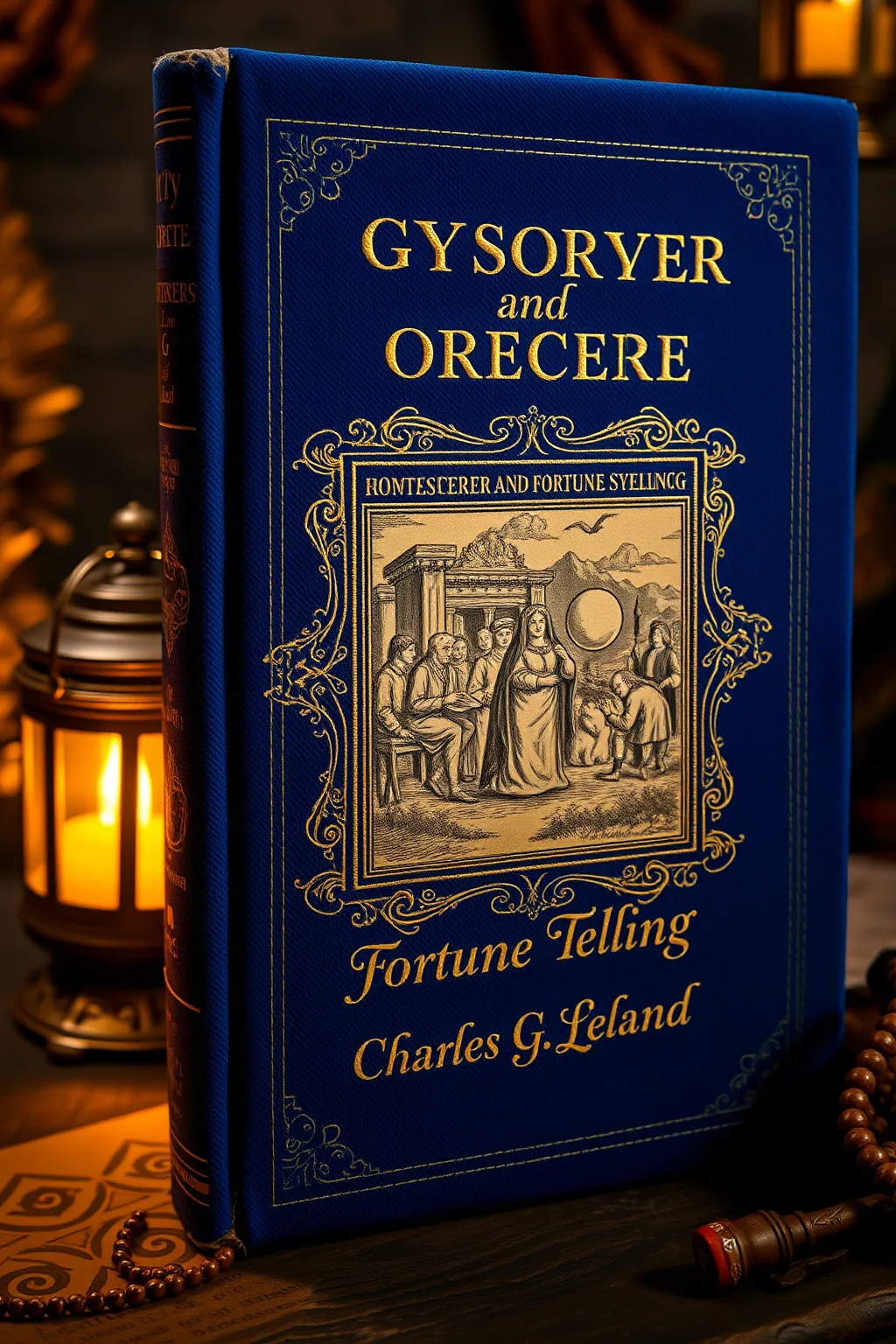
Gypsy Sorcery and Fortune Telling
 82
82

Gypsy Sorcery and Fortune Telling



Evander Ashcroft (Alchemy & Hermeticism Editor) — Charles G. Leland's "Gypsy Sorcery and Fortune Telling" remains an indispensable cornerstone for anyone serious about the esoteric history of the Romani people. Leland's meticulous collection of charms, divinatory methods, and folk remedies offers unparalleled access to a marginalized yet potent magical tradition. His ethnographic approach, blending firsthand accounts with scholarly analysis, provides a unique window into a worldview where the sacred is interwoven with the mundane. This work is not merely descriptive; it is an invitation to understand the underlying principles of sympathetic magic and animistic belief systems. Essential for scholars and practitioners alike who seek authentic, deeply rooted magical knowledge.
📝 Description
82
Charles G. Leland published "Gypsy Sorcery and Fortune Telling" in 1891, documenting Romani magical traditions.
This 1891 volume by Charles G. Leland collects Romani charms, incantations, remedies, and divination methods. Leland, an ethnographer and esoteric scholar, gathered this material directly from Romani communities. The book details practices like scrying, amulet creation, and healing rituals. It also touches upon the Romani worldview, connecting natural elements with fate and personal agency. Leland's work presents these traditions not as mere folklore, but as living systems of belief and practice.
Beyond simple descriptions, Leland includes personal anecdotes and commentary that contextualize the sorcery and fortune telling he recorded. He aims to show the underlying philosophy of these arts, suggesting a thin veil between the physical and spiritual worlds for practitioners. The book is intended for those interested in occult studies, comparative religion, or the history of magic.
Published in the late 19th century, this book arrived during a period of increased interest in folk magic and non-Western spiritual systems. Leland's work contributes to the study of comparative occultism, placing Romani practices alongside other recorded magical traditions. It reflects a scholarly attempt to document and understand esoteric beliefs before they were potentially lost or altered. The focus on direct observation and collection aligns with ethnographic methods of the era, applied here to the occult.
✍️ Author
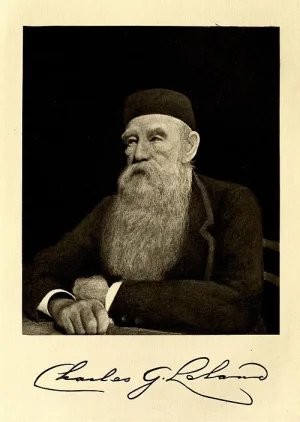
Charles G Leland
Charles Godfrey Leland (1824-1903) was an American humorist, folklorist, and writer on esoteric subjects.
Esoteric Writer
💡 Why Read This Book?
Uncover the authentic, often misunderstood, magical practices of the Romani people. Gain direct access to ancient charms, potent spells, and unique divination techniques. This book is essential for seekers of esoteric history, cultural anthropology enthusiasts, and practitioners looking to expand their understanding of folk magic and its deep spiritual roots.
⭐ Reader Reviews
Honest opinions from readers who have explored this book.
❓ Frequently Asked Questions
What is the historical significance of this book?
Published in 1891, "Gypsy Sorcery and Fortune Telling" offers a rare, contemporary glimpse into Romani magical traditions before widespread modernization. Leland's work is crucial for understanding 19th-century occultism and the historical documentation of folk magic.
Is this book suitable for beginners in occult studies?
While rich in detail, the book assumes a certain level of interest in esoteric subjects. Beginners will find it fascinating for its historical and cultural insights, but deeper practical application might require supplementary study.
What types of magic are covered?
The book comprehensively covers various aspects of Romani magic, including healing remedies, protective charms, love spells, curses, and diverse methods of fortune-telling such as palmistry and cartomancy.
Are the spells and charms presented as factual or folklore?
Leland presents them as authentic practices observed and collected from Romani individuals. While framed within folklore and cultural belief, the book treats these traditions with respect and scholarly rigor.
Can this book be used for practical magical work today?
Many practitioners find inspiration and value in the authentic rituals and beliefs documented. However, ethical considerations and cultural sensitivity are paramount when engaging with any magical system from another tradition.
🔮 Key Themes & Symbolism
The Art of Divination
This theme examines the profound Romani practices of foretelling the future, exploring methods ranging from the intricate language of palmistry to the symbolic interpretations of cards and other omens. Leland meticulously documents these techniques, revealing a worldview where destiny is not fixed but can be understood and, at times, influenced. It highlights the spiritual connection to unseen forces that underpins these divinatory arts, offering readers insight into how the Romani people perceived the flow of time and the threads of fate.
Sympathetic Magic and Folk Remedies
Central to Romani sorcery is the principle of sympathetic magic – the belief that like affects like and that connections exist between objects and individuals across distance. Leland illustrates this with a fascinating array of charms and remedies designed for protection, healing, and influencing events. These practices often involve natural elements, symbolic gestures, and spoken words, demonstrating a deep understanding of the interconnectedness of the physical and spiritual realms, and the power inherent in nature itself.
Oral Tradition and Hidden Knowledge
The book stands as a evidence of the power of oral tradition, preserving a wealth of knowledge passed down through generations within the Romani community. Leland's dedication to collecting these stories, spells, and beliefs from direct sources underscores the importance of preserving esoteric wisdom that might otherwise be lost. It emphasizes the value of lived experience and community memory as repositories of magical and spiritual insights, often veiled from mainstream academic scrutiny.
💬 Memorable Quotes
Direct passages from the work, attributed to the author.
“The Romani hold the secrets of the stars and the earth.”
— This emphasizes the deep, often ancient, connection the Romani people are believed to have with natural phenomena and celestial knowledge.
“A charm is a whisper to the spirits.”
— This poetic interpretation frames charms not as mere words, but as a form of spiritual communication and intercession.
“Wisdom is found not only in books but in the wind's song.”
— This underscores the importance of experiential knowledge, intuition, and the wisdom derived from observing the natural world.
💡 Key Ideas
Editorial paraphrase of the work's core concepts — not direct quotes.
Magic is the art of compelling nature to serve us.
This quote captures the active, agentic nature of magic as presented in the book, highlighting the belief in influencing natural forces for human purposes.
The future is written in the lines of the hand.
A direct reference to palmistry, this quote highlights the Romani belief in the body as a map of destiny and a source of divination.
🌙 Esoteric Significance
Tradition
This work is deeply rooted in animistic and nature-based magical traditions, specifically as practiced and preserved within the Romani culture. It draws heavily on folk magic, sympathetic principles, and a worldview that imbues the natural world with potent spiritual energies. The emphasis is on direct engagement with these forces through incantations, charms, and divinatory practices, rather than through formalized theological structures. It represents a significant contribution to the study of decentralized, experiential spiritual systems.
Symbolism
The symbolism within "Gypsy Sorcery and Fortune Telling" is rich and often tied to the natural world: the moon for intuition and cycles, the sun for power and vitality, specific herbs for healing or protection, and animals for their perceived spiritual attributes. Divinatory tools like cards and palms are seen as symbolic maps of cosmic influences and personal destiny. The very act of tying charms or preparing remedies involves symbolic gestures and materials intended to resonate with desired outcomes, reflecting a deep symbolic language connecting the microcosm to the macrocosm.
Modern Relevance
In contemporary esoteric circles, Leland's book remains a vital resource for understanding the resilience and ingenuity of folk magic. It offers a valuable counterpoint to more academic or Western-centric occult traditions, emphasizing direct experience and ancestral wisdom. For modern practitioners, it provides authentic methodologies and a profound connection to a living magical heritage, encouraging a more holistic and nature-attuned approach to spiritual practice and personal empowerment in a world often disconnected from its roots.
👥 Who Should Read This Book
This key work is indispensable for serious scholars of esoteric history, cultural anthropologists, and folklorists interested in the Romani people and their unique spiritual heritage. Occult practitioners seeking to deepen their understanding of authentic folk magic, sympathetic practices, and ancient divination techniques will find immense value. It is also highly recommended for anyone drawn to the mystical aspects of nature-based spirituality and the preservation of oral traditions, offering a wide range of arcane knowledge often overlooked by mainstream academia.
📜 Historical Context
Published in the late Victorian era, "Gypsy Sorcery and Fortune Telling" emerged during a period of burgeoning interest in folklore, comparative religion, and the occult. As industrialization rapidly reshaped society, many scholars and enthusiasts sought refuge in studying ancient traditions and marginalized cultures, believing them to hold a purer, more spiritual essence. Charles G. Leland, a prolific writer and folklorist, was deeply immersed in this intellectual climate. His work on Romani magic reflects a growing fascination with non-Western belief systems and the hidden corners of human experience, positioning the Romani people as keepers of ancient, potent wisdom in a rapidly modernizing world. This era saw a surge in publications dedicated to witchcraft, spiritualism, and esoteric practices, making Leland's book a significant contribution to the documented corpus of occult literature.
📔 Journal Prompts
Reflect on a personal experience where you felt a strong connection to nature's magic. How does Leland's description of Romani nature-based practices resonate with this experience?
Choose one charm or remedy from the book. Research its components and intended purpose. How might its symbolic elements be interpreted in a modern context?
Consider the concept of divination as presented by Leland. What are your thoughts on the Romani approach to understanding destiny and the future?
Leland highlights the importance of oral tradition. How does this contrast with the way knowledge is shared and preserved in your own culture or community?
Explore the ethical considerations of engaging with magical practices from another culture. What responsibilities do you believe a practitioner has when studying or utilizing such traditions?
🗂️ Glossary
Incantation
A series of words spoken or chanted for the purpose of producing a magical effect. In Romani sorcery, these are often deeply tied to specific intentions and spiritual forces.
Charm
An object or a set of words believed to possess magical properties, often used for protection, healing, or to bring good fortune. Charms in this context are deeply interwoven with natural elements and symbolic meaning.
Divination
The practice of seeking knowledge of the future or the unknown by supernatural means. The book details various Romani methods, including palmistry and cartomancy.
Sympathetic Magic
A belief in the interconnectedness of things, where actions performed on one object can affect another related object (e.g., 'like affects like'). This principle underpins many Romani spells and remedies.
Romani
An umbrella term for a group of people of Indian origin who migrated from the northern Indian subcontinent, known for their unique culture, language, and often, their traditional practices and beliefs.
This book appears in 2 collections
🔮 Readers Also Liked
Browse all →







More by Charles G Leland
All books →

From the “Transcendental Meditation” Collection
View all →




More Free Esoteric History & Biography Books
View all →