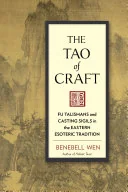
The Tao of Craft
 79
79

The Tao of Craft
Benebell Wen's "The Tao of Craft" presents a meticulous examination of Fu talismans, a subject rarely explored with such scholarly rigor and practical detail in English. The book succeeds admirably in demystifying a complex aspect of Taoist esotericism, providing clear instructions for modern practitioners. Wen's strength lies in her ability to connect the historical evolution of Fu with their functional application, grounding the magical in the mundane. For instance, her detailed breakdown of the "Eight Immortals" talisman and its specific applications offers a concrete entry point. A limitation, however, might be the sheer density of information; while comprehensive, it demands a dedicated reader willing to absorb intricate details of ritual and symbolism. Wen's accessible prose, though, does much to mitigate this. The work is a valuable resource for anyone serious about understanding and practicing this specific form of Taoist magic.
📝 Description
79
Published in 2020, The Tao of Craft explains the creation of Chinese Taoist talismans.
The Tao of Craft introduces the practice of creating Fu talismans within Chinese Taoism. These are not decorative items but functional symbols meant for magical use. The book covers the theories and history behind Fu creation. It details how talismans gain energy, or Qi, through specific rituals. This work connects older esoteric knowledge with people today interested in this art.
The book is for those seriously interested in Taoist magic, making talismans, and applying esoteric ideas practically. It suits practitioners ready to learn the basic ideas and ritual needs for Fu talismans. Students of comparative religion, Chinese folk customs, or sympathetic magic will also find its detailed explanations useful.
This book examines Fu talisman crafting as part of Chinese Taoist practices, tracing its history and development. It distinguishes this tradition from Western magical systems. The text highlights how lineage and proper knowledge transmission are vital for effective talismans, requiring disciplined study. Fu talismans function as channels for energetic intent, utilizing specific characters, brushstroke order, and ritual invocations.
💡 Why Read This Book?
• Learn the specific ritualistic steps for crafting your own Fu talismans, as detailed in chapters like "The Five Thunder Talisman," enabling a hands-on understanding of energetic manipulation. • Gain insight into the historical development of Fu talismans, understanding their place within Taoist traditions since at least the Han Dynasty, providing a deeper appreciation for their lineage. • Comprehend the fundamental principles of Qi and energetic transfer, crucial for activating talismans, allowing for a more profound and effective personal practice beyond mere rote memorization.
⭐ Reader Reviews
Honest opinions from readers who have explored this book.
❓ Frequently Asked Questions
What are Fu talismans and how do they differ from Western sigils?
Fu talismans are ideograms and writings from the Chinese Taoist tradition, rendered on paper and activated through specific rituals, invocations, and Qi transfer. Unlike many Western sigils, they often incorporate complex characters with established meanings and historical lineages, demanding a deep understanding of the script and its energetic properties.
Can anyone learn to craft Fu talismans from this book?
The book is designed for serious students and practitioners of esoteric arts. While it provides detailed instructions, effective Fu talisman crafting requires dedication, study of foundational Taoist principles, and disciplined practice, as outlined by Benebell Wen.
What is Qi and its role in Fu talisman creation?
Qi, or vital energy, is central to Fu talisman creation. The book explains that talismans are empowered by the practitioner's intentional transfer of Qi through ritual and visualization, animating the inscribed symbols and enabling them to manifest their intended purpose.
Are there specific ethical considerations when creating and using Fu talismans?
Yes, the work emphasizes the importance of intention and ethical application. Creating Fu talismans for harmful purposes is discouraged, reflecting a core tenet in many esoteric traditions that magical power should be wielded responsibly and with clear purpose.
What kind of purposes can Fu talismans serve?
Fu talismans are versatile and can be crafted for numerous aims, including protection from negative influences, attracting prosperity, promoting healing, enhancing relationships, and facilitating spiritual development, as explored throughout the book's practical sections.
When was 'The Tao of Craft' first published?
Benebell Wen's "The Tao of Craft" was first published on September 27, 2016. This date marks its introduction to the English-speaking esoteric community as a comprehensive guide to Taoist talisman magic.
🔮 Key Themes & Symbolism
Taoist Energetic Principles
The book grounds Fu talisman creation in the Taoist concept of Qi, or vital energy. It elucidates how practitioners can consciously channel and direct this energy through specific ritualistic actions and focused intention to imbue talismans with power. Understanding Qi is presented not just as a theoretical concept but as the fundamental mechanism by which these inscribed symbols become effective agents of change.
Symbolic Language of Fu
Central to the practice is the intricate symbolic language of the Fu. The work examines the meaning of specific Chinese characters, their stroke order, and their arrangement within a talisman. Each component is presented as carrying inherent energetic weight and significance, requiring careful study and precise execution to ensure the talisman's intended function is properly activated.
Ritualistic Empowerment
The creation of a Fu talisman is depicted as a sacred ritual. Benebell Wen details the necessary steps, including purification, invocation, visualization, and the energetic transfer of Qi. These rituals are not arbitrary but are deeply connected to the historical practices and lineages within Taoism, emphasizing the sacred nature of the craft.
Practical Application of Talismans
Beyond theory, the book offers practical guidance on how to create and utilize Fu talismans for various purposes. It covers applications ranging from protection and healing to attracting prosperity and fostering specific relationships. This focus on tangible results underscores the utilitarian aspect of Taoist magic as presented in the text.
💬 Memorable Quotes
Direct passages from the work, attributed to the author.
“Fu talismans are ideograms and writings typically rendered on paper and empowered by means of invocations, ritual, and transferences of energy, or Qi.”
— This foundational statement defines the essence of Fu talismans, highlighting their dual nature as written symbols and energetic conduits, activated through specific ritualistic processes.
“The history of Fu talismans spans centuries, deeply interwoven with Taoist philosophy and practice.”
— This interpretation emphasizes the long and continuous lineage of Fu talisman creation, positioning it not as a novel invention but as an ancient art form with deep roots in a specific philosophical and religious tradition.
“Precise execution of strokes and correct character order are crucial for the efficacy of a Fu.”
— This highlights the importance of meticulousness in the craft. It suggests that the physical act of inscribing the talisman is as significant as the intention behind it, with errors potentially compromising its power.
“Qi, or vital energy, is the lifeblood that animates the inscribed symbols.”
— This metaphor clearly illustrates the essential role of Qi in activating talismans, portraying it as the animating force that transforms inert symbols into potent magical tools.
“The purpose of a Fu is dictated by the intention and ritual employed during its creation.”
— This underscores the principle that the function of a talisman is not inherent in the symbol itself but is determined by the practitioner's focused will and the specific ritualistic framework used during its empowerment.
🌙 Esoteric Significance
Tradition
This work is firmly rooted in the Taoist tradition, specifically focusing on the practical application of its esoteric principles through talismanic magic. It departs from broader philosophical Taoism by emphasizing ritualistic action and the manipulation of Qi for specific worldly outcomes, aligning it with the lineage of Taoist magical practices often found in folk religion and certain monastic traditions.
Symbolism
Key symbols include specific Chinese ideograms, each carrying layers of meaning and energetic resonance within Taoist cosmology. The Five Elements (Wu Xing) and the Yin-Yang symbol are often implicitly or explicitly referenced, underpinning the balance and interplay of forces the talismans aim to harness or influence. The precise brushstrokes and their order are also symbolic, representing the flow and direction of Qi.
Modern Relevance
Contemporary practitioners of energy work, sympathetic magic, and those interested in authentic Taoist practices draw heavily on Wen's work. It serves as a foundational text for modern schools exploring practical applications of Eastern esoteric arts, influencing individuals seeking structured, historically-grounded methods for personal empowerment and spiritual development beyond Western magical paradigms.
👥 Who Should Read This Book
• Dedicated students of Taoist magic seeking to understand the theory and practice of Fu talisman creation beyond introductory overviews. • Practitioners of Western esoteric traditions interested in comparative magical systems and exploring Eastern methodologies for energetic work. • Scholars of religion and cultural anthropology focusing on Chinese folk traditions and the application of symbolic systems in ritualistic contexts.
📜 Historical Context
Published in 2016, "The Tao of Craft" emerged in an era where interest in Eastern esoteric traditions was growing, yet detailed, practical guides to Taoist talisman magic remained scarce in English. Benebell Wen's work addressed this gap, offering a scholarly yet accessible exploration of Fu talismans. This practice is deeply rooted in Chinese folk religion and Taoism, with historical precedents tracing back to at least the Han Dynasty (206 BCE – 220 CE). Wen's research situates Fu within this lineage, differentiating it from Western magical systems like ceremonial magic or Hermeticism, which were more prevalent in Western esoteric literature at the time. The book's meticulous approach to ritual and symbolism provided a counterpoint to more generalized or syncretic approaches to magic gaining traction, emphasizing lineage and specific cultural context. Its reception within the esoteric community was notable for its depth and practicality, validating its contribution to the field.
📔 Journal Prompts
The symbolic meaning of the character 'Fu' (符) itself, and its connection to the empowerment process.
Reflecting on the concept of Qi transfer as described in the text, and its potential personal applications.
Analyzing the historical lineage of Fu talismans and their place within Taoist cosmology.
Contemplating the ethical responsibilities associated with wielding the power of activated talismans.
Exploring the difference between intention and execution in the crafting of a specific Fu.
🗂️ Glossary
Fu (符)
A Taoist talisman, typically an ideogram or inscription rendered on paper, empowered through ritual and the transfer of Qi for specific magical purposes.
Qi (氣)
Vital energy or life force that permeates all things in the universe, considered the fundamental substance and animating principle in Taoist philosophy and practice.
Ideogram
A graphic symbol that represents a concept or idea, rather than a specific word or phrase, often found in Chinese calligraphy.
Invocation
The act of calling upon a deity, spirit, or power through prayer, chant, or ritual, often as part of empowering a magical object or working.
Sigil
A symbol created for the purpose of magical invocation or intent, often derived from words or concepts, but can also be abstract designs.
Taoism
An ancient Chinese philosophy and religion emphasizing living in harmony with the Tao (the Way), characterized by principles of balance, nature, and spiritual cultivation.
Empowerment
The process of imbuing an object, symbol, or ritual with magical energy or spiritual power, often through focused intention and specific rites.
This book appears in 1 collection
🔮 Readers Also Liked
Browse all →






From the “Talismans” Collection
View all →





More Free Sacred Texts & Gnosticism Books
View all →