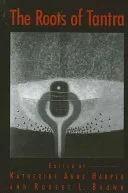
The Roots of Tantra
 82
82

The Roots of Tantra
Harper and Brown's "The Roots of Tantra" performs the vital, if arduous, task of academizing a subject often obscured by myth and misinterpretation. Its strength lies in its methodical approach to defining the undefinable, acknowledging the scholarly disagreements from its outset. The authors adeptly trace the lineage of Tantric thought across various Indian religious traditions, avoiding the trap of essentialism. A particularly illuminating section examines the early 20th-century Western reception of Tantra, contrasting scholarly efforts like those of Sir John Woodroffe with popular sensationalism. However, the book’s densely academic prose, while precise, can be a barrier for the uninitiated. The exploration of the 'controversial aspects' mentioned in the blurb could have been more thoroughly developed, offering clearer examples of the debates themselves. Despite this, "The Roots of Tantra" is an indispensable resource for anyone seeking a grounded, scholarly understanding of this complex spiritual current.
📝 Description
82
Katherine Anne Harper and Robert L. Brown's 2012 book untangles the complex history of Tantra.
Katherine Anne Harper and Robert L. Brown's "The Roots of Tantra" directly confronts the definitional difficulties surrounding the term Tantra. The authors acknowledge that almost every facet of Tantric traditions, including their origins and relationship to other belief systems, remains a subject of academic discussion. They highlight Tantra's adaptable nature, noting its presence across diverse traditions like Hinduism and Buddhism rather than its confinement to a single doctrine. The book aims to clarify these complexities, focusing on one of the most debated dimensions of this ancient practice. This work is intended for serious students of comparative religion, scholars of Indian spiritual traditions, and anyone curious about the philosophical basis of practices often misunderstood or sensationalized. It provides a critical examination for those seeking an understanding beyond popular interpretations. Readers interested in the historical development and varied expressions of spiritual disciplines will find this text valuable, particularly those who appreciate thorough academic research into esoteric subjects.
Published in 2012, "The Roots of Tantra" engages with a long history of scholarship on Indian esoteric traditions. It builds upon earlier works that sought to define and categorize Tantric practices, such as Sir John Woodroffe's "The Serpent Power" (1919). Harper and Brown situate their study within the academic discourse that followed, responding to interpretations by figures like Mircea Eliade and others who attempted to integrate Tantra into broader religious frameworks. The book addresses the ongoing academic conversations about Tantra's place and influence within various religious and philosophical systems.
💡 Why Read This Book?
• Gain a precise understanding of Tantra's elusive nature, learning why scholars debated its characteristics even before 2012, as detailed in the introduction. • Discover how Tantra functions as a trans-religious set of practices appearing in Hinduism and Buddhism, moving beyond singular religious definitions. • Appreciate the historical academic discourse surrounding Tantra, recognizing its place within scholarly traditions that predate the book's 2012 publication.
⭐ Reader Reviews
Honest opinions from readers who have explored this book.
❓ Frequently Asked Questions
What is the primary challenge in defining Tantra according to "The Roots of Tantra"?
The primary challenge is that nearly every aspect of Tantra—its characteristics, origins, and relationship to other religions—is debated among scholars, making it difficult to establish a singular, universally accepted definition.
Does "The Roots of Tantra" focus on a specific religion?
No, the book emphasizes that Tantra is not confined to any single religion. It explores its presence and manifestations within various traditions, notably Hinduism and Buddhism.
When was "The Roots of Tantra" first published?
The book was first published on February 1, 2012, by Katherine Anne Harper and Robert L. Brown.
What makes Tantra a controversial subject?
Tantra is considered controversial due to its diverse and sometimes misunderstood practices, which can appear in various religious contexts and are subject to significant scholarly debate regarding their nature and origins.
Who are the authors of "The Roots of Tantra"?
The authors are Katherine Anne Harper and Robert L. Brown, who co-authored this exploration of Tantric traditions.
What is the main goal of "The Roots of Tantra"?
The book aims to explore one of the most controversial and difficult-to-define aspects of Tantra, untangling its complexities and diverse manifestations across different religious traditions.
🔮 Key Themes & Symbolism
Tantra as Trans-Religious
This work critically examines the notion of Tantra not as a singular religion, but as a complex set of beliefs and practices that permeate various spiritual landscapes. It details how Tantric elements appear within both Hindu and Buddhist contexts, challenging monolithic interpretations. The authors highlight the fluidity of Tantric methodologies, which can be adapted and integrated into different devotional and philosophical frameworks, making its study a comparative rather than a sectarian endeavor.
Scholarly Contention
A central focus is the ongoing academic debate surrounding Tantra. The book acknowledges that its defining characteristics, historical sources, and relationships with other religious systems are subjects of continuous scholarly contention. By presenting these debates, Harper and Brown underscore the need for critical analysis and a nuanced understanding, moving beyond simplistic categorizations and engaging with the complexities of Tantric history and philosophy.
Diverse Practices
The text looks at the many-sided nature of Tantric practices, recognizing their wide variance and the difficulty in pinpointing a universal set of rituals or techniques. It explores how these practices can range from profound meditative states to complex ritualistic observances, often intertwined with specific cosmologies and philosophical systems. The book aims to illuminate this diversity rather than homogenize it, respecting the distinct expressions of Tantra.
Defining the Undefinable
The core challenge addressed is the inherent difficulty in defining Tantra. The book confronts this head-on, treating it not as a failure of scholarship but as a characteristic of the tradition itself. By dissecting the elements that make definition problematic—its syncretic nature, its varied historical development, and its presence across multiple traditions—the authors provide a framework for understanding its unique position in the world of spiritual disciplines.
💬 Memorable Quotes
Direct passages from the work, attributed to the author.
“Tantra has been the most difficult to define.”
— This foundational statement underscores the book's central thesis: the inherent ambiguity and many-sided nature of Tantra are not minor issues but defining characteristics that scholars continue to grapple with.
“Almost everything about it—its major characteristics, its sources, its relationships to other religions, even its practices—are debated among scholars.”
— This highlights the extent of scholarly disagreement surrounding Tantra, emphasizing that there is no single accepted narrative and that the work itself engages with these ongoing academic discussions.
“Tantrism is not confined to any particular religion, but is a set of beliefs and practices that appears in a variety of religions, including Hinduism and Buddhism.”
— This crucial insight positions Tantra as a cross-religious phenomenon, moving it beyond the confines of a single doctrine and emphasizing its adaptive and pervasive nature across different spiritual traditions.
“This book explores one of the most controversial aspects of [Tantra].”
— This indicates the book's intention to tackle the more debated and potentially misunderstood elements of Tantra, promising a critical and in-depth examination of these contentious areas.
“The work explores one of the most controversial aspects of Tantra.”
— This signifies the book's commitment to investigating the aspects of Tantra that have historically generated the most debate and require careful, scholarly scrutiny.
🌙 Esoteric Significance
Tradition
While not strictly belonging to a single Western esoteric lineage like Hermeticism or Kabbalah, "The Roots of Tantra" engages with traditions that heavily influence modern esoteric thought. It dissects elements that have been absorbed into Neo-Tantra and Western adaptations of Eastern practices. The work provides a crucial scholarly counterpoint to popular esoteric interpretations, grounding the study in the historical and religious contexts from which these practices emerged, thus serving as a vital corrective for those in esoteric circles.
Symbolism
The book explores the symbolic language inherent in Tantric traditions, though specific symbols are debated within its scholarly framework. Concepts like the union of Shiva and Shakti, representing cosmic consciousness and creative energy, are central. The use of mandalas as cosmic diagrams and the significance of specific mantras as sonic embodiments of divine power are also touched upon, serving as vehicles for spiritual transformation and understanding within the diverse Tantric milieu.
Modern Relevance
Contemporary practitioners and scholars of comparative spirituality, including those interested in Neo-Tantra, yoga studies, and Buddhist philosophy, find "The Roots of Tantra" essential. Thinkers who seek to understand the historical roots of practices often found in modern wellness or spiritual industries can use this book to critically assess their origins. It remains relevant for anyone aiming to differentiate between scholarly understanding and popular, often diluted, interpretations of these profound traditions.
👥 Who Should Read This Book
• Students of comparative religion and Indian philosophies: Gain a nuanced understanding of Tantra's complex and often debated position across Hinduism and Buddhism. • Scholars of religious studies: Access a critical examination of the definitional challenges and scholarly discourse surrounding Tantric traditions. • Esoteric practitioners seeking historical context: Understand the origins and scholarly interpretations of practices that have influenced modern esoteric movements, moving beyond popular misconceptions.
📜 Historical Context
Published in 2012, "The Roots of Tantra" by Katherine Anne Harper and Robert L. Brown entered a scholarly landscape already rich with debate on Indian spiritual traditions. The study of Tantra in the West had seen significant developments since the early 20th century, notably through the work of figures like Sir John Woodroffe, whose "The Serpent Power" (1919) was foundational. Harper and Brown's work builds upon and engages with subsequent scholarship that sought to contextualize Tantra, often in relation to or in contrast with more established schools of thought like Advaita Vedanta or various Buddhist philosophical systems. The book addresses the intellectual currents of the late 20th and early 21st centuries, which increasingly emphasized comparative religion and the deconstruction of essentialist views of spiritual traditions. Its publication occurred in an era where critical studies of religion were common, and the reception of such works often involved nuanced academic reviews rather than broad public engagement.
📔 Journal Prompts
The difficulty in defining Tantra across religions.
The diverse manifestations of Tantric practices.
Scholarly debates on Tantra's origins.
Tantra's role within Hinduism and Buddhism.
The concept of Tantra as a trans-religious phenomenon.
🗂️ Glossary
Tantra
A complex set of beliefs and practices originating in India, appearing across various religious traditions like Hinduism and Buddhism, characterized by a fluid definition and often debated origins and characteristics.
Hinduism
A major religious tradition originating in the Indian subcontinent, within which various Tantric traditions and practices have developed and are studied.
Buddhism
A religion and philosophy originating in ancient India, which also incorporates Tantric elements and practices in certain of its branches and historical developments.
Trans-religious
Pertaining to phenomena, beliefs, or practices that are not confined to a single religion but appear across multiple religious traditions or systems.
Scholarly Debate
The ongoing discussion and disagreement among academic researchers regarding the interpretation, characteristics, history, and classification of specific subjects, such as Tantra.
Esoteric
Relating to or accessible only by a select group of people initiated into special knowledge; often pertaining to mystical or occult subjects.
Comparative Religion
The academic study of different religions, examining their similarities, differences, historical development, and societal impact.