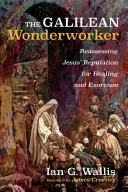
The Galilean Wonderworker
 72
72

The Galilean Wonderworker
Ian G. Wallis's *The Galilean Wonderworker* offers a sober, academically rigorous approach to a topic often obscured by devotional fervor. Instead of accepting miraculous claims at face value, Wallis interrogates the historical and cultural forces that shaped Jesus' reputation for healing and exorcism in first-century Galilee. He adeptly demonstrates how communal well-being was intrinsically linked to spiritual health within Israelite faith, providing a compelling framework for understanding these narratives. The work is strongest when it unpacks the socio-religious dynamics, illustrating how the perception of Jesus' power was embedded in the expectations and beliefs of his contemporaries. A limitation, perhaps inherent to the subject, is the reliance on interpretation of texts that are themselves products of faith traditions. While Wallis maintains a critical distance, the sheer weight of the miraculous narratives can sometimes feel overwhelming. The discussion of how sickness was understood within the broader context of divine favor or displeasure is particularly illuminating, offering a window into a worldview vastly different from our own. This is essential reading for anyone seeking to understand the historical Jesus beyond the hagiography.
📝 Description
72
Ian G. Wallis's 2023 book examines Jesus' reputation as a healer in first-century Galilee.
The Galilean Wonderworker analyzes the historical context of Jesus' reputation as a healer and exorcist. Wallis moves beyond faith-based accounts to consider the socio-cultural and religious environment of first-century Galilee. The book investigates how concepts of illness, well-being, and spiritual power were understood within Israelite traditions and how these shaped perceptions of Jesus' actions.
This study is situated within the intellectual currents of first-century Judea and Galilee, a time of diverse Jewish sects and Roman rule. Wallis engages with current scholarship on Jesus, healing, and ancient Mediterranean religions. The work acknowledges the deep understanding of communal and personal well-being within Israelite faith, a concept central to the period's religious discourse. It addresses scholarly debates surrounding Jesus' alleged miraculous abilities.
Wallis explores the connection between individual and collective health within ancient Israelite faith. The book looks at how sickness and healing were conceptualized, avoiding anachronistic interpretations. It considers the social uses of healing narratives and the role of spiritual authority in addressing affliction. The analysis uses interdisciplinary methods, drawing from sociology, anthropology, and comparative religious studies.
This book engages with the historical Jesus, a figure often interpreted through various lenses beyond conventional religious dogma. It situates his reported acts of healing and exorcism within the specific socio-religious milieu of ancient Israel. By examining these phenomena through the framework of communal health and spiritual authority, it touches upon traditions that explore the intersection of the material and the spiritual in human experience. The work thus contributes to a broader understanding of how figures perceived as possessing extraordinary abilities were understood in antiquity, a topic relevant to esoteric traditions that investigate altered states of consciousness and spiritual power.
💡 Why Read This Book?
• Gain a nuanced understanding of how first-century Galileans perceived illness and healing, moving beyond simplistic supernatural explanations, as explored through the reciprocal relationship between personal and communal well-being. • Understand the specific socio-religious context of first-century Galilee that influenced the narratives of Jesus' wonderworking, challenging modern assumptions about miracles and divine power. • Appreciate the interdisciplinary methodology Wallis employs, integrating historical, sociological, and anthropological insights to reconstruct the complex beliefs surrounding spiritual authority and affliction.
⭐ Reader Reviews
Honest opinions from readers who have explored this book.
❓ Frequently Asked Questions
What is the primary scholarly debate addressed in The Galilean Wonderworker?
The book tackles the long-standing scholarly debate concerning the historical origins and authenticity of Jesus' reputation for performing healings and exorcisms in first-century Galilee.
What does Ian G. Wallis mean by the 'reciprocal relationship between personal and communal well-being'?
Wallis uses this phrase to describe how, in ancient Israelite faith, an individual's health and spiritual state were seen as interconnected with the health and prosperity of the entire community.
What kind of approach does The Galilean Wonderworker take to its subject matter?
The book employs an interdisciplinary approach, drawing on historical, sociological, and anthropological methods to analyze the complex factors surrounding Jesus' reputation as a wonderworker.
When was The Galilean Wonderworker first published?
The Galilean Wonderworker by Ian G. Wallis was first published on June 19, 2020.
How does the book discuss sickness and healing in ancient Judaism?
It explores how sickness and healing were understood within the specific religious and cultural frameworks of first-century Israelite faith, often linked to concepts of divine favor or displeasure.
Who is the author of The Galilean Wonderworker?
The author is Ian G. Wallis, a scholar who offers a critical examination of Jesus' reported miraculous activities.
🔮 Key Themes & Symbolism
The Social Construction of Miracles
The work argues that Jesus' reputation as a wonderworker was not merely a matter of divine intervention but was shaped by the social, cultural, and religious expectations of first-century Galilee. Wallis examines how beliefs about spiritual power, affliction, and communal well-being influenced the perception and reporting of Jesus' actions. This perspective shifts the focus from proving or disproving miracles to understanding their function and meaning within their original context.
Israelite Concepts of Health and Affliction
Central to the book is an exploration of how sickness and healing were understood within the complex theological range of ancient Israelite faith. Wallis highlights the understanding that personal well-being was intrinsically tied to communal health and adherence to religious principles. This framework provides crucial context for interpreting Jesus' interactions with the sick and afflicted, moving beyond modern medical or purely theological interpretations.
Interdisciplinary Scholarly Method
Ian G. Wallis employs a rigorous interdisciplinary methodology, engaging with insights from history, sociology, and anthropology alongside biblical scholarship. This approach allows for a more comprehensive analysis of the factors contributing to Jesus' reputation. By dialogue with recent scholarly literature, the book offers fresh perspectives on a hotly contested area of Jesus studies, prioritizing critical inquiry over traditional devotional readings.
The Historical Jesus and His Ministry
The book seeks to reconstruct a more historically grounded understanding of Jesus' ministry, particularly concerning his reported activities as a healer and exorcist. It probes the origins of these narratives, considering how they might have arisen from the socio-political and religious environment of Roman Judea. The aim is to provide a compelling account that acknowledges the complexities and diverse scholarly responses to these questions.
💬 Memorable Quotes
Direct passages from the work, attributed to the author.
“Few questions in Jesus studies are more hotly contested or elicit more diverse responses.”
— This statement accurately frames the central challenge Wallis addresses: the highly debated nature of Jesus' healing and exorcism claims within academic circles.
“Recognizing the reciprocal relationship between personal and communal well-being within Israelite faith...”
— This highlights a core interpretive lens Wallis uses, emphasizing how ancient Jewish society viewed individual health as inseparable from the collective spiritual and physical state of the community.
“Adopting an interdisciplinary approach and in dialogue with recent scholarly literature...”
— This indicates the book's methodology, signaling a commitment to engaging with contemporary academic discourse and utilizing diverse academic fields to analyze the subject.
“...this study offers new insights into how sickness and healing were understood in first-century [Galilee].”
— This points to the book's contribution: providing novel perspectives on the ancient conceptualization of health and illness, moving beyond anachronistic interpretations.
“What are the origins of Jesus’ reputation for healings and exorcisms?”
— This question, posed at the outset, expresses the primary research inquiry driving the entire work, setting the stage for a critical historical investigation.
🌙 Esoteric Significance
Tradition
While not explicitly aligning with a specific esoteric tradition like Hermeticism or Gnosticism, *The Galilean Wonderworker* engages with the historical Jesus, a figure central to many esoteric interpretations. It provides a critical, scholarly foundation that esotericists can use to contextualize their own understandings of Jesus' spiritual power and teachings, separating historical inquiry from devotional or purely mystical readings.
Symbolism
The primary 'symbolism' explored is not overt esoteric imagery but the symbolic weight carried by the acts of healing and exorcism themselves within first-century Jewish belief. These acts represented restoration, divine favor, and the re-establishment of order against spiritual and physical chaos. Jesus' power over sickness and demons symbolized his authority and unique relationship with the divine.
Modern Relevance
Contemporary esoteric thinkers and practitioners interested in the historical Jesus, Christian mysticism, or the nature of spiritual healing can find value in Wallis's work. By grounding the discussion in historical context and socio-cultural analysis, it offers a counterpoint to purely allegorical or occult interpretations, allowing for a more informed synthesis of historical scholarship with esoteric traditions.
👥 Who Should Read This Book
["• Students of New Testament scholarship seeking a critical examination of Jesus' reported healings and exorcisms, benefiting from an interdisciplinary approach.", '• Comparative religion scholars interested in the socio-cultural dynamics of religious belief and practice in the ancient Mediterranean world.', '• Individuals exploring the historical Jesus and the origins of Christian narratives who desire a nuanced perspective beyond traditional interpretations.']
📜 Historical Context
Published in 2020, *The Galilean Wonderworker* emerged within a vibrant field of Jesus studies that has long grappled with the historicity of the Gospels. Ian G. Wallis's work engages directly with contemporary scholarship, building upon decades of critical analysis. The era of first-century Galilee was a fertile ground for diverse religious and social movements under Roman occupation, a context Wallis carefully reconstructs. He addresses the scholarly debates that have persisted since the Enlightenment concerning the 'historical Jesus' versus the 'Christ of faith'. The work implicitly contrasts with more traditional, harmonizing approaches to the Gospels, favoring a critical, socio-historical lens. Wallis dialogues with scholars who emphasize the cultural milieu, situating Jesus' reported actions within the broader spectrum of ancient Mediterranean healing practices and Jewish expectations of messianic figures.
📔 Journal Prompts
The reciprocal relationship between personal and communal well-being in first-century Galilee.
Jesus' reputation for healings and exorcisms: historical origins versus later interpretations.
How did Israelite faith conceptualize sickness and healing, and how does this differ from modern views?
The function of wonderworking narratives within their original socio-religious context.
Evaluating the impact of an interdisciplinary approach on understanding a religious figure.
🗂️ Glossary
Wonderworker
A term used to describe individuals in antiquity, including Jesus, who were reputed to perform extraordinary feats or miracles, often attributed to divine power.
Exorcism
The practice of evicting or expelling an alleged evil spirit or entity from a person or place, a common motif in ancient religious and magical traditions.
Israelite Faith
Refers to the religious beliefs and practices of the ancient Israelites, encompassing their understanding of God, covenant, law, and their relationship with the divine.
Communal Well-being
In the context of ancient societies, this refers to the collective health, prosperity, and spiritual state of a community or group, often seen as interconnected with individual welfare.
Interdisciplinary Approach
A method of research that integrates information and methodologies from multiple academic disciplines, such as history, sociology, and anthropology, to provide a comprehensive analysis.
Socio-religious Landscape
The complex interplay of social structures, religious beliefs, and practices that characterize a particular historical period or geographical region.
Affliction
A state of pain, distress, or suffering, often interpreted in ancient contexts as a sign of divine displeasure or the work of malevolent spiritual forces.