The Gnostics and Their Remains
 75
75

The Gnostics and Their Remains



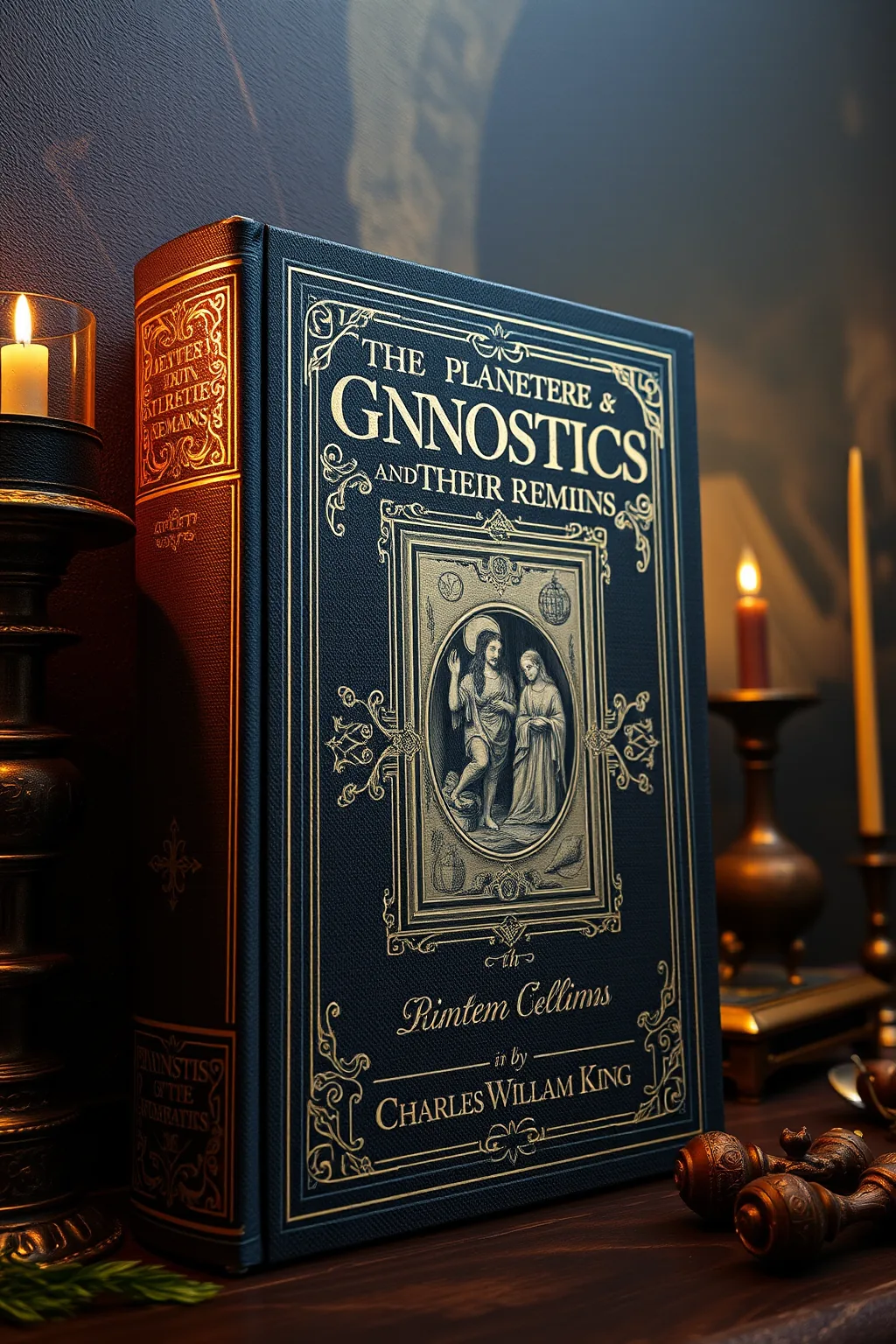
Charles William King's 'The Gnostics and Their Remains' is an indispensable cornerstone for any serious student of esoteric thought. Long before the modern Gnostic revival, King painstakingly assembled a coherent picture from scattered fragments – the polemical attacks of Church Fathers, the enigmatic Pistis Sophia, and crucially, the rich iconography of Gnostic gems. His meticulous scholarship illuminates the complex cosmology, the intricate symbolism, and the radical spiritual aspirations of these early mystics. This work remains a vital resource, offering profound insights into a wisdom tradition that prioritized direct gnosis over dogma. Essential for scholars, practitioners, and anyone fascinated by the deeper currents of ancient spirituality.
📝 Description
75
Charles William King published 'The Gnostics and Their Remains' in 1887, predating the Nag Hammadi discoveries.
Published in 1887, Charles William King's work attempts to reconstruct Gnostic thought from material evidence. Before the Nag Hammadi library was found, King analyzed ancient gems and amulets to understand Gnostic symbolism and philosophy. He focused on a movement that pursued direct divine knowledge, often facing persecution.
King's book details Gnostic cosmology, including concepts like the Demiurge and the Pleroma. It addresses the soul's path toward liberation from the material world. The text examines the dualistic worldview prevalent in many Gnostic sects. It serves as an early scholarly effort to make Gnostic ideas accessible to a wider audience interested in early Christianity and mystical traditions.
This book engages with early Christian heresies and their unique spiritual systems. Gnosticism, a complex set of movements, sought a personal, experiential relationship with the divine. King's research places these ideas within the context of late antiquity, a period rich with philosophical and religious ferment. His work highlights the Gnostic challenge to established religious doctrines and their pursuit of esoteric knowledge.
💡 Why Read This Book?
Uncover the hidden spiritual landscape of early Gnosticism before its full rediscovery. King's meticulous analysis of ancient gems and texts offers a unique window into a philosophy that challenged conventional religious thought. Ideal for seekers of lost wisdom, scholars of ancient religions, and practitioners interested in the roots of esoteric traditions. Explore the origins of concepts like the Demiurge and the Pleroma, and understand a path focused on inner knowledge and liberation.
⭐ Reader Reviews
Honest opinions from readers who have explored this book.
❓ Frequently Asked Questions
What makes this book significant for understanding Gnosticism?
King's work predates major Gnostic manuscript discoveries, making it a crucial early synthesis based on limited, yet vital, sources like polemical texts and engraved gems.
Who were the Gnostics?
A diverse group of ancient spiritual thinkers who emphasized direct, experiential knowledge (gnosis) of the divine, often viewing the material world as flawed or created by an inferior deity.
What kind of information can I expect to find?
Detailed analysis of Gnostic cosmology, mythology, symbolism found on ancient gems and amulets, and the philosophical debates surrounding their beliefs.
Is this book suitable for beginners?
While scholarly, King's accessible prose and clear explanations make it approachable for dedicated beginners interested in diving deep into Gnostic thought.
How does this book relate to modern Gnostic studies?
It provides essential historical context and foundational research, offering a vital counterpoint and historical perspective to contemporary Gnostic scholarship.
🔮 Key Themes & Symbolism
The Esoteric Gnostic Cosmos
This theme explores the intricate and often dualistic cosmology described by the Gnostics, exploring concepts such as the ineffable Godhead, the Aeons, the Pleroma, and the creation of the material world by a lesser, often malevolent, Demiurge. King meticulously reconstructs these complex mythologies from fragmented sources, revealing a worldview that sought to understand the presence of evil and suffering in the world through a lens of divine emanations and spiritual descent. It highlights the Gnostic attempt to reconcile the transcendence of the ultimate God with the immanence of the creator of the imperfect material realm.
Symbolism of the Gnostic Gems
A significant portion of King's research focuses on the rich and cryptic symbolism adorning ancient Gnostic gems and amulets. These artifacts served as potent talismans and visual representations of Gnostic beliefs, featuring figures like the serpent, the lamb, the Abraxas, and various divine and demonic entities. King's detailed analysis deciphers the many-sided meanings embedded within these miniature works of art, revealing their role in conveying complex theological ideas, facilitating spiritual protection, and acting as mnemonic devices for Gnostic practitioners seeking to remember and embody their esoteric knowledge.
The Pursuit of Gnosis
At the heart of Gnosticism lies the concept of 'gnosis' – a direct, intuitive, and experiential knowledge of the divine, distinct from faith or dogma. King emphasizes this central theme, showcasing how Gnostics believed salvation and liberation from the material world were achieved through this inner awakening. The book explores the Gnostic understanding of the divine spark within humanity and the arduous spiritual journey required to reclaim it, highlighting the individual's role in their own salvation through intellectual and spiritual enlightenment, rather than through external mediation.
💬 Memorable Quotes
Direct passages from the work, attributed to the author.
“The Demiurge, creator of this world, is often depicted as ignorant or malevolent.”
— This highlights the Gnostic concept of a flawed creator of the material universe, distinct from the true, supreme God, and a key element in their cosmological dualism.
“Gnostic gems bear a language of symbols.”
— Emphasizes the visual and symbolic nature of Gnostic expression, where intricate imagery on artifacts conveyed complex theological and philosophical ideas to the initiated.
“Salvation lies in the awakening of the inner divine spark.”
— This succinctly captures the Gnostic belief in the inherent divinity within individuals and the process of spiritual enlightenment as the means to achieve freedom.
“The Pleroma, the fullness of divine being.”
— Introduces a fundamental concept in Gnostic cosmology, representing the perfect, spiritual area of divine emanations from the ultimate God.
💡 Key Ideas
Editorial paraphrase of the work's core concepts — not direct quotes.
The name Gnosis signifies knowledge.
This quote directly defines the core tenet of Gnosticism – the pursuit and attainment of profound, experiential knowledge as the path to spiritual liberation and understanding.
🌙 Esoteric Significance
Tradition
This work is foundational to the study of Gnosticism, an ancient esoteric tradition that offered a radical alternative to mainstream religious doctrines. It explores the Gnostic quest for immediate, intuitive knowledge (gnosis) of the divine, emphasizing direct spiritual experience over dogma and ritual. The tradition's dualistic cosmology, its understanding of the material world as an illusion or a flawed creation, and its focus on the soul's journey of liberation are central to its esoteric appeal.
Symbolism
King meticulously deciphers the complex visual language of Gnosticism, particularly as found on ancient gems and amulets. These artifacts are rich with symbols such as the Ouroboros, the serpent, the lamb, the fish, and the enigmatic figure of Abraxas. Each symbol carries layers of meaning, representing cosmic principles, divine emanations, the Demiurge, the forces of salvation, and the spiritual journey of the initiate. Understanding this symbolism is key to unlocking the Gnostic worldview and its esoteric teachings.
Modern Relevance
The Gnostic emphasis on personal spiritual experience, the questioning of established authority, and the search for liberation from perceived limitations resonate deeply with modern spiritual seekers. Concepts like the flawed nature of the material world, the presence of a divine spark within, and the importance of awakening consciousness offer potent frameworks for navigating contemporary existential questions. King's work provides an essential historical and intellectual bridge to these enduring themes, making Gnostic thought relevant for those seeking alternative spiritual paths and deeper self-understanding.
👥 Who Should Read This Book
This book is indispensable for scholars of ancient religions, comparative mythology, and the history of philosophy. Esoteric practitioners and seekers of hidden wisdom will find it a rich source of inspiration and a guide to understanding a central mystical tradition. Beginners to Gnosticism will benefit from King's meticulous approach, which, while scholarly, lays a clear foundation for this complex subject. Anyone fascinated by the interplay of religion, philosophy, and art in the ancient world, and those curious about the origins of alternative spiritual movements, will find 'The Gnostics and Their Remains' a profoundly rewarding read.
📜 Historical Context
Published in the mid-19th century, Charles William King's 'The Gnostics and Their Remains' emerged during a period of burgeoning interest in antiquarian studies and the re-examination of early religious and philosophical movements. Decades before the monumental discoveries of Gnostic texts in Egypt, the understanding of Gnosticism was largely confined to hostile accounts from early Church Fathers and the enigmatic Pistis Sophia. King's groundbreaking work was thus a pioneering effort to synthesize the available, albeit limited, evidence. He meticulously analyzed the iconography found on Roman-era gems and amulets, an often-overlooked source that provided tangible, albeit cryptic, insights into Gnostic beliefs and practices. This era was characterized by a thirst for hidden knowledge and a desire to understand the diverse spiritual currents that shaped Western civilization, making King's contribution particularly significant in informative a complex and often misunderstood aspect of ancient thought.
📔 Journal Prompts
Reflect on the Gnostic concept of the Demiurge. How might this idea be interpreted in relation to societal structures or personal limitations?
Examine the symbolism of a specific Gnostic gem described by King. What personal resonance do these symbols hold for you?
Consider the Gnostic pursuit of 'gnosis.' In what ways do you currently seek or experience direct knowledge or spiritual insight in your life?
How does the Gnostic view of the material world as potentially illusory or flawed compare to your own perceptions or experiences?
Imagine you were an early Gnostic practitioner. What aspects of their philosophy would have most appealed to you, and why?
🗂️ Glossary
Gnosis
Greek for 'knowledge.' In Gnosticism, it refers to direct, intuitive, and experiential knowledge of the divine, considered the key to salvation and spiritual liberation.
Demiurge
A figure in Gnostic cosmology, often identified with the God of the Old Testament, who created the material world. Generally depicted as ignorant, flawed, or even malevolent, distinct from the supreme, transcendent God.
Pleroma
The spiritual realm or fullness of the supreme, transcendent God, from which divine emanations (Aeons) originate. It represents the perfect, uncreated divine totality.
Aeons
Divine beings or emanations that originate from the supreme God within the Pleroma. They represent various aspects of the divine and participate in the cosmic order.
Abraxas
A mystical word and a powerful deity or demon in some Gnostic systems, often depicted on amulets and gems with a composite form (e.g., head of a rooster, body of a man, legs of a serpent).
This book appears in 5 collections
🔮 Readers Also Liked
Browse all →





From the “Transcendental Meditation” Collection
View all →






More Free Sacred Texts & Gnosticism Books
View all →