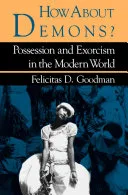
How About Demons?
 80
80

How About Demons?
Felicitas D. Goodman's "How About Demons?" is an ambitious survey that attempts to place the phenomenon of demonic encounters within an anthropological framework. Goodman adeptly analyzes diverse historical accounts, drawing parallels between disparate cultures and periods. Her discussion of "ecstatic behavior" as a potential lens for interpreting possession is particularly compelling, moving beyond simplistic explanations. However, the sheer breadth of material occasionally leads to a somewhat fragmented presentation, making it challenging to follow a singular, cohesive argument throughout. The original blurb's commendation from the Journal of Folklore Research accurately notes its "stimulating and wide-reaching treatment." While not a definitive answer, the book offers a valuable perspective for understanding how societies have historically grappled with perceived demonic influence, situating it within observable human behavior and cultural frameworks. It serves as a rigorous, if sometimes dense, academic exploration.
📝 Description
80
Felicitas D. Goodman's 1988 book examines demonic possession through an anthropological lens.
In "How About Demons?", Felicitas D. Goodman approaches the topic of demonic possession and encounters from an anthropological and folkloric perspective. Instead of relying solely on theological interpretations, Goodman analyzes reported cases by looking at the behavioral patterns and societal contexts surrounding them. The book treats demonology not just as a religious concept, but as a subject with a significant history of documentation and cultural expression across different societies. Goodman scrutinizes the beliefs and practices that have influenced how malevolent spiritual entities are perceived, using a wide range of documented accounts as her evidence. This work is aimed at scholars and students in fields such as folklore, anthropology, religious studies, and comparative mythology. It will also interest those who study the psychology of belief, altered states of consciousness, and how cultures construct supernatural phenomena. Readers looking for an academic, non-sensational approach to subjects often sensationalized will find Goodman's analysis thorough. Individuals familiar with Goodman's previous works, like "The Exorcism of Anneliese Michel," will find this book a valuable extension of her research into spiritual phenomena.
Published in 1988, "How About Demons?" fits within a scholarly tradition that sought to understand spiritual and psychological phenomena through empirical and cross-cultural study, moving beyond purely dogmatic explanations. Goodman's work contributes to a broader academic interest in folk belief and the diverse ways cultures interpret experiences of the spiritual or supernatural. This approach offers an alternative to traditional theological or purely psychological frameworks, grounding its interpretations in comparative observations and historical records of alleged possessions.
💡 Why Read This Book?
• Gain an understanding of "ecstatic behavior" as a cross-cultural concept that may illuminate interpretations of possession, as explored in the book's analysis of trance states. • Discover how societal expectations and cultural narratives shape the manifestation and perception of alleged demonic encounters, a key theme examined through historical case studies. • Learn about the anthropological approach to demonology, which contrasts with purely theological views, offering a new framework for analyzing spiritual phenomena documented since 1988.
⭐ Reader Reviews
Honest opinions from readers who have explored this book.
❓ Frequently Asked Questions
What is Felicitas D. Goodman's background relevant to "How About Demons?"
Felicitas D. Goodman was an anthropologist and ethnographer. Her previous work, "The Exorcism of Anneliese Michel" (1981), detailed a specific case of alleged demonic possession, providing a foundation for her broader anthropological inquiry into such phenomena in "How About Demons?".
Does "How About Demons?" offer proof of demons?
No, the book does not aim to prove or disprove the existence of demons. Instead, it analyzes the cultural and anthropological aspects of beliefs and reported experiences related to demonic encounters across different societies and eras.
What historical periods does "How About Demons?" cover?
The book draws from a wide range of historical periods, examining accounts of demonic encounters and possession from antiquity through to the 20th century, demonstrating the enduring nature of these beliefs.
What is the "Journal of Folklore Research" review mentioned in the blurb?
The Journal of Folklore Research commended the book for its "stimulating and wide-reaching treatment of a compelling and much-debated subject," highlighting its comprehensive scope and engagement with a controversial topic.
How does "How About Demons?" relate to the study of altered states of consciousness?
The book explores how altered states of consciousness, often interpreted as demonic influence, can be understood through anthropological and psychological lenses, examining trance states and ecstatic behavior.
What is the significance of the 1988 publication date for this book?
Published in 1988, the book emerged during a period of growing academic interest in folk belief and ethnographic studies. It offered a novel, non-dogmatic approach to demonology, contributing to the scholarly discourse on religious and supernatural phenomena.
🔮 Key Themes & Symbolism
Anthropological Interpretation of Possession
Goodman approaches demonic possession not as a supernatural event but as a culturally interpreted phenomenon. The work analyzes numerous historical and cross-cultural accounts, seeking common patterns in behavior and societal response. It examines how belief systems frame experiences of affliction, suggesting that what is labeled 'possession' might often manifest as extreme psychological or physiological states interpretable within a given cultural context. The book posits that understanding these states through an anthropological lens offers a different perspective than theological dogma.
Ecstatic Behavior and Altered States
A central concept in "How About Demons?" is the role of ecstatic behavior and altered states of consciousness. Goodman investigates how ritual, stress, or other factors can induce states that deviate from normative consciousness. These states, she argues, are frequently interpreted as spiritual encounters, including possession by malevolent entities. The book provides examples from various traditions where trance, visions, and extreme emotional displays are integral to spiritual experiences, suggesting a common underlying human capacity for such states.
Cultural Construction of Spiritual Entities
The book explores how societies construct and conceptualize spiritual entities, particularly demons. Goodman examines the evolution of demonological beliefs and the archetypal characteristics attributed to these beings. She suggests that these constructions are influenced by social anxieties, moral frameworks, and the need to explain misfortune or aberrant behavior. The work highlights how the specific attributes and actions of demons vary significantly across cultures, reflecting diverse cultural understandings of the world and the forces within it.
Folklore and Demonology
Goodman situates the study of demons within the broader field of folklore. She argues that folkloric accounts, myths, and legends offer valuable data for understanding human engagement with the concept of demonic influence. By analyzing these narratives, the book sheds light on the transmission of beliefs, the social functions of demon stories, and the ways in which communities have historically dealt with perceived evil. This folkloric approach allows for a comparative study that transcends specific religious doctrines.
💬 Memorable Quotes
Direct passages from the work, attributed to the author.
“The work strives to introduce new or previously unrecognized folkloric phenomena—as well as new approaches and theories that result from discovery and investigation.”
— This statement highlights the book's methodological intent: to present novel aspects of folklore and to develop innovative analytical theories based on empirical research and investigation into these phenomena.
“How About Demons? provides an overview of a topic that has for many years captured the imagination of people from all walks of life.”
— This emphasizes the enduring and widespread fascination with the subject of demons, suggesting that Goodman's work addresses a topic of universal human curiosity that spans across different backgrounds and beliefs.
“The book scrutinizes beliefs and practices that have shaped perceptions of malevolent spiritual entities.”
— This highlights Goodman's critical examination of how cultural beliefs and established practices have influenced the historical understanding and portrayal of demons and evil spirits.
💡 Key Ideas
Editorial paraphrase of the work's core concepts — not direct quotes.
The author is to be commended for a stimulating and wide-reaching treatment of a compelling and much-debated subject.
This quote, from the Journal of Folklore Research, praises Goodman's comprehensive and engaging exploration of demonology, acknowledging its controversial nature and the book's significant contribution to the field.
The author examines the behavioral patterns and societal contexts associated with alleged demonic possessions.
This paraphrased concept underscores Goodman's focus on observable actions and the social environments surrounding reported possession cases, positioning her analysis within anthropology and sociology rather than theology.
🌙 Esoteric Significance
Tradition
While not strictly adhering to a single esoteric lineage, Goodman's work engages with themes common in Western esotericism, particularly those concerning spiritual hierarchies and the nature of malevolent entities. It intersects with demonology as explored in grimoires and occult traditions but approaches it from an anthropological viewpoint rather than a practitioner's. The departure lies in its analytical, rather than operational, focus, seeking to understand the phenomenon universally rather than within specific ritualistic systems.
Symbolism
The primary symbolic motif is the 'demon' itself, representing not just a literal entity but a cultural construct for embodying evil, misfortune, or societal transgression. Other symbolic elements include the ecstatic state, which can symbolize a connection to the divine or the infernal depending on interpretation, and the ritual of exorcism, symbolizing the community's attempt to reassert order and purity against perceived chaotic or corrupting forces.
Modern Relevance
Contemporary researchers in comparative religion, folklore studies, and the anthropology of religion continue to draw upon Goodman's cross-cultural methodology. Thinkers exploring the psychology of altered states, the sociology of belief, and the cultural construction of the supernatural find her work valuable. It informs modern discussions on why certain narratives of spiritual affliction persist and how societies manage concepts of evil and the uncanny.
👥 Who Should Read This Book
['• Scholars of folklore and religious studies seeking to understand the anthropological underpinnings of demonological beliefs and practices.', '• Anthropologists interested in cultural interpretations of psychological distress and altered states of consciousness across diverse societies.', '• Students of Western esotericism looking for an academic, non-practitioner perspective on historical and cultural views of demonic entities.']
📜 Historical Context
Published in 1988, Felicitas D. Goodman's "How About Demons?" emerged within a burgeoning academic landscape that increasingly favored empirical and anthropological approaches to religious and supernatural phenomena. This era saw scholars like Carlo Ginzburg and Keith Thomas publishing influential works that re-examined folklore, witchcraft, and popular belief through historical and anthropological lenses. Goodman's work distinguished itself by applying an ethnographic perspective to demonology, a subject often confined to theological discourse or sensationalized accounts. The book offered a counterpoint to purely psychological explanations prevalent in some academic circles, proposing instead a framework grounded in cross-cultural behavioral analysis. Its reception was informed by this intellectual climate, where rigorous folkloric and anthropological studies gained academic traction, challenging older, more dogmatic interpretations of spiritual phenomena.
📔 Journal Prompts
Analyze the concept of 'ecstatic behavior' as presented by Goodman and its potential cross-cultural interpretations.
Compare the societal functions of demon narratives in two different historical periods discussed in the book.
Reflect on how cultural expectations might influence the manifestation of reported demonic encounters.
Examine the role of folklore in shaping perceptions of malevolent spiritual entities.
Consider the differences between Goodman's anthropological approach and purely theological explanations of possession.
🗂️ Glossary
Ecstatic Behavior
Refers to altered states of consciousness characterized by intense emotion, trance-like experiences, or disassociation from ordinary reality, often interpreted within religious or spiritual contexts.
Demonic Possession
The alleged control or inhabitation of a person by a demon or evil spirit, resulting in changes in behavior, personality, or physical state, interpreted within specific cultural and religious frameworks.
Folklore
The traditional beliefs, customs, and stories of a community, passed through the generations by word of mouth, often including myths, legends, and superstitions.
Anthropological Lens
An analytical perspective used in anthropology that focuses on understanding human societies and cultures, their development, and their diversity through comparative study.
Altered States of Consciousness (ASC)
Any mental state significantly different from a normal waking consciousness, achieved through various means such as meditation, trance, psychoactive drugs, or extreme psychological conditions.
Exorcism
A religious or spiritual practice aimed at expelling or evicting demons or evil spirits from a person or place that is believed to be possessed.
Societal Context
The social, cultural, and historical circumstances surrounding an event or phenomenon, influencing its meaning, interpretation, and manifestation.