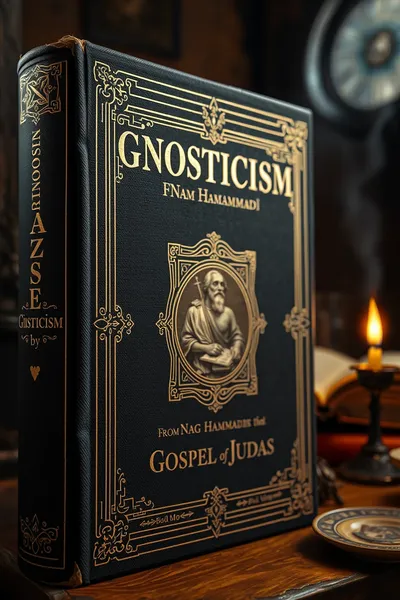
The Gnostic Gospels

 73
73

The Gnostic Gospels
Thomas Whitford's compilation, The Gnostic Gospels, arrives not with a whisper but with the thunderclap of revelation that followed the 1945 Nag Hammadi discovery. This collection bypasses the apologetics and dogmatic pronouncements that often cloud early Christian studies, presenting instead the raw, often bewildering, yet undeniably compelling voice of Gnosticism. The sheer audacity of texts like the Gospel of Thomas, with its enigmatic sayings attributed directly to Jesus, forces a re-evaluation of what early followers understood as central to his message. Its strength lies in its unvarnished presentation of these heterodox traditions, allowing their unique worldview to confront the reader directly. A limitation, however, is the inherent challenge in contextualizing these fragmented and often allegorical narratives without falling into speculative overreach. The passage describing the descent of Sophia and her subsequent fall, leading to the flawed creation, exemplifies the intricate, mythopoeic thinking that defines Gnosticism and demands careful, critical engagement.
This collection serves as a vital counter-narrative to the established Christian story.
📝 Description
73
Discovered in 1945 near Nag Hammadi, these Gospels present an early Christian alternative to established doctrine.
This volume collects early Christian writings that propose a cosmology and soteriology separate from what became orthodox doctrine. These texts, largely hidden for centuries, became known after their discovery near Nag Hammadi in Egypt. They emphasize direct personal revelation and the divine spark within each person, offering a different view of Christ's teachings.
These Gospels are valuable for students of early Christianity, comparative religion, and esoteric traditions. They are for readers who question accepted narratives and want to understand the varied spiritual ideas of the ancient world. The collection provides alternative interpretations of Christ's message and the development of religious thought during a formative period.
These texts originate from a period of intense theological debate in early Christianity, roughly the 2nd to 4th centuries CE. They represent a body of thought that diverged from the traditions that eventually formed the Nicene Creed and the mainstream Christian canon. The emphasis on *gnosis*, or experiential knowledge, and the critique of the material world position these writings within a broader spectrum of mystical and dualistic thought found in the ancient Mediterranean.
💡 Why Read This Book?
• Understand the concept of *gnosis* as a path to salvation, a form of direct spiritual knowledge distinct from faith-based adherence, as detailed in the Gospel of Thomas. • Explore the Gnostic cosmology, including the role of the Demiurge and Sophia, offering a critique of material creation absent in canonical texts. • Engage with alternative interpretations of Jesus's teachings, particularly through the collection of sayings presented in the Gospel of Thomas, challenging traditional Christology.
⭐ Reader Reviews
Honest opinions from readers who have explored this book.
❓ Frequently Asked Questions
When were the Gnostic Gospels discovered and where?
The Gnostic Gospels were discovered in 1945 in a collection of papyri near the town of Nag Hammadi in Upper Egypt. This cache, known as the Nag Hammadi library, contained numerous early Christian and Gnostic texts.
What is 'gnosis' in the context of these Gospels?
Gnosis refers to a special, intuitive, and experiential knowledge of the divine. It is considered a salvific force in Gnosticism, enabling individuals to recognize their divine origin and escape the material world.
How do the Gnostic Gospels differ from the canonical Gospels?
They differ significantly in their theology, cosmology, and emphasis. Gnostic Gospels often present a dualistic worldview, view the creator God of the Old Testament as a lesser being (the Demiurge), and prioritize personal spiritual insight (gnosis) over faith and works.
Who is Sophia in Gnostic mythology?
Sophia (Wisdom) is a central figure in many Gnostic myths. She is often depicted as a divine emanation whose desire to understand the ultimate God without her consort led to a cosmic imbalance and the flawed creation of the material universe.
Are these texts considered part of the New Testament?
No, the Gnostic Gospels are apocryphal texts, meaning they were written in the early Christian era but were not accepted into the canon of the New Testament by mainstream churches.
What is the significance of the Nag Hammadi discovery for religious studies?
The Nag Hammadi discovery provided direct access to Gnostic writings, previously known primarily through the condemnations of Church Fathers. It revolutionized the study of early Christianity and Gnosticism, revealing a much broader spectrum of beliefs than previously understood.
🔮 Key Themes & Symbolism
The Divine Spark Within
These texts posit that divinity resides not just in a transcendent God but as an inherent spark within each human soul. This concept challenges hierarchical religious structures, suggesting that salvation is an internal awakening to one's true, divine nature, accessible through personal revelation and understanding.
The Flawed Creator
A recurring theme is the idea that the material world and its creator, the Demiurge, are fundamentally flawed or even malevolent. This perspective contrasts sharply with the orthodox view of a benevolent creator God, offering a dualistic framework where the material realm is seen as an imprisonment for the divine spirit.
Christ as Revealer
Jesus is often portrayed not primarily as a sacrificial savior in the orthodox sense, but as a revealer of hidden truths and a guide to *gnosis*. His teachings, particularly the sayings attributed to him in texts like the Gospel of Thomas, are seen as keys to unlocking spiritual understanding and liberating the soul.
The Role of Sophia
The figure of Sophia, or Wisdom, is crucial in Gnostic cosmogony. Her transgression, often an act of unauthorized desire or contemplation, leads to the creation of the material universe and the entrapment of divine light within it. Her story explains the origin of suffering and the need for redemption through gnosis.
💬 Memorable Quotes
Direct passages from the work, attributed to the author.
“Jesus said, 'He who will seek shall find, and he who will knock, it shall be opened to him.'”
— This saying, found in the Gospel of Thomas, emphasizes the active role of the seeker in spiritual attainment. It suggests divine grace is responsive to individual effort and sincere inquiry.
“The world is a corpse, and the mind is the man who will bury it.”
— This potent metaphor from the Gospel of Truth illustrates the Gnostic worldview of the material world as dead or illusory, and the mind, when awakened, as the agent of liberation from this perceived death.
“The kingdom of God is within you.”
— While also present in canonical texts, its Gnostic interpretation emphasizes an immanent divinity, accessible directly through inner realization rather than solely through external mediators or institutions.
“The Archons are rulers who seek to keep humanity in ignorance.”
— This points to the Gnostic concept of malevolent or ignorant spiritual powers (Archons) that maintain the illusion of the material world, hindering humanity's realization of its divine origin.
💡 Key Ideas
Editorial paraphrase of the work's core concepts — not direct quotes.
Let not the seeker be dismayed, for he who is truly seeking will find the truth.
This paraphrased sentiment reflects the Gnostic belief that the path to salvation is open to those who earnestly pursue spiritual knowledge, assuring them of eventual discovery.
🌙 Esoteric Significance
Tradition
The Gnostic Gospels are foundational to the Gnostic tradition, a complex and diverse set of early Christian and Hellenistic philosophies. They represent a distinct branch of Western esotericism, emphasizing inner illumination and a dualistic cosmology that critiques the material world. While often categorized under 'Christianity,' their theological and cosmological framework diverges significantly from Nicene orthodoxy, aligning more with Hermetic and Neoplatonic thought in their search for a transcendent, unknowable God beyond the creator of the physical realm.
Symbolism
Key symbols include the Pleroma, representing the fullness of the divine realm, and the Archons, often depicted as malevolent rulers who maintain the illusion of the material world. The serpent, frequently misunderstood, can symbolize wisdom or a revealer of hidden knowledge, challenging orthodox interpretations. Light is a pervasive symbol for divine essence, trapped within the material darkness and seeking liberation through gnosis.
Modern Relevance
Contemporary esoteric thinkers and movements continue to draw inspiration from the Gnostic Gospels. Concepts like the inner divine spark, the critique of societal control mechanisms (echoing the Archons), and the pursuit of personal gnosis resonate with modern spiritual seekers. Various forms of contemporary Gnosticism, as well as elements within Hermeticism, Theosophy, and even certain psychological schools of thought, find in these ancient texts a powerful articulation of liberation from material constraints and the awakening of latent spiritual potential.
👥 Who Should Read This Book
• Students of comparative religion and early Christian history seeking to understand non-canonical texts and diverse theological viewpoints. • Esoteric practitioners interested in Gnostic cosmology, the concept of gnosis, and alternative paths to spiritual enlightenment. • Critical thinkers and philosophers of religion who wish to explore texts that challenge conventional doctrines and offer a radical reinterpretation of spiritual concepts.
📜 Historical Context
The Gnostic Gospels emerged from a turbulent period in early religious history, roughly between the 2nd and 4th centuries CE. This era saw intense competition among various interpretations of Jesus's teachings and the nature of the divine. The Gnostic traditions, characterized by their emphasis on *gnosis* (spiritual knowledge), offered a stark contrast to the developing orthodox Christianity, which was solidifying around the teachings of figures like Paul and the emerging Nicene Creed. The discovery of the Nag Hammadi library in 1945 by local farmers was monumental, providing direct access to texts previously known only through the hostile accounts of Church Fathers like Irenaeus. These writings challenged the monolithic narrative of early Christianity, revealing a vibrant, diverse spiritual landscape where alternative cosmologies and paths to salvation were actively explored and debated.
📔 Journal Prompts
The concept of *gnosis* as presented in the Gospel of Thomas.
The role of Sophia in the creation myth.
The distinction between the creator God and the ultimate divine.
The nature of the Archons and their influence.
Personal reflections on the divine spark within.
🗂️ Glossary
Gnosis
A Greek term meaning 'knowledge,' specifically referring to intuitive, experiential, and salvific knowledge of the divine, central to Gnostic belief.
Demiurge
In Gnosticism, the lesser creator deity responsible for the flawed material world, often identified with the God of the Old Testament.
Pleroma
The divine fullness or totality of the Godhead in Gnostic cosmology, from which emanations descend.
Archons
Spiritual rulers or powers in Gnostic cosmology, often seen as agents of the Demiurge, who maintain the material world and impede humanity's spiritual ascent.
Sophia
A key Gnostic figure, often translated as 'Wisdom,' whose actions initiate the creation of the material realm and the subsequent entrapment of divine light.
Apocrypha
Texts, typically religious, that are not part of an officially recognized canon, such as the New Testament.
Dualism
A philosophical or theological system positing two fundamental, often opposing, principles (e.g., spirit and matter, good and evil).
This book appears in 1 collection
🔮 Readers Also Liked
Browse all →








From the “Gnostic Gospels” Collection
View all →







More Free Sacred Texts & Gnosticism Books
View all →