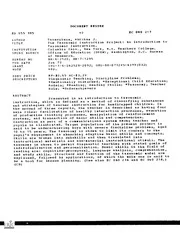
The Prophetic Literature
 81
81

The Prophetic Literature
Marvin Alan Sweeney's "The Prophetic Literature" offers a much-needed corrective to superficial readings of biblical prophecy. Sweeney’s insistence on treating these texts as literature, each with its own distinct voice and structure, is a refreshing and vital approach. He compellingly demonstrates how understanding the literary framework—such as the differing textual witnesses for Jeremiah, the Hebrew and the Septuagint—is paramount to grasping the prophet's message. A particular strength is the detailed attention paid to the unique theological perspectives that arise from these varied literary presentations. However, the book occasionally leans towards an academic dryness that might deter readers seeking a more accessible introduction. While the analysis of textual variants is crucial, it sometimes overshadows the broader theological implications for a general audience. Sweeney's focus on Jeremiah's dual textual forms serves as an excellent, concrete example of his methodology, underscoring the critical importance of textual history. Ultimately, this work serves as an indispensable, albeit demanding, resource for serious students of prophetic texts.
📝 Description
81
Marvin Alan Sweeney's 2005 book analyzes biblical prophecy as distinct literary works, not just theological documents.
Marvin Alan Sweeney's "The Prophetic Literature," published in 2005, offers a critical analysis of the biblical books attributed to prophets. Sweeney argues that these texts should be understood primarily as unique literary creations, each with its own structure, style, and theological outlook. He stresses the need for careful examination to fully grasp the prophet's message as it appears in the text. For instance, understanding Jeremiah requires attention to textual variations between the Hebrew Bible and the Greek Septuagint.
This work is intended for serious students of biblical studies, comparative religion, and esoteric traditions seeking a more textually informed perspective on prophetic literature. It appeals to scholars and advanced readers interested in the historical and literary backgrounds of these ancient texts. Those who value rigorous analysis and are prepared to engage with the complexities of textual criticism will find "The Prophetic Literature" particularly rewarding. The book encourages readers to move beyond simple interpretations and appreciate the literary artistry and theological variety within the prophetic corpus.
While Sweeney's work is primarily academic, it engages with texts often considered foundational within various esoteric traditions. These prophetic writings, when studied for their literary and historical contexts, can offer insights into ancient Israelite thought that resonate with Gnostic and other mystical interpretations of scripture. The focus on textual variations and the distinct voices within the prophetic corpus allows for a deeper appreciation of the layers of meaning that esoteric readers often seek in sacred texts. Understanding the historical development and literary construction of these prophecies provides a different lens through which to view their potential symbolic or mystical significance.
💡 Why Read This Book?
• Learn to analyze prophetic texts as distinct literary creations, understanding that each book, like Jeremiah, possesses unique structures and theological viewpoints, moving beyond monolithic interpretations. • Gain a concrete appreciation for textual criticism by examining how variations between manuscript traditions, such as the Hebrew Bible and the Septuagint, significantly shape the presentation and interpretation of prophetic messages. • Discover how to engage with ancient prophetic literature through a rigorous literary lens, enabling a more nuanced understanding of the historical and cultural contexts that informed these provocative individuals' careers and writings.
⭐ Reader Reviews
Honest opinions from readers who have explored this book.
❓ Frequently Asked Questions
What is the primary argument of Marvin Alan Sweeney's "The Prophetic Literature"?
Sweeney's central argument is that biblical prophetic books must first be understood as literature, each with its own unique organization, literary style, and theological outlook, rather than solely as theological pronouncements.
Why does Sweeney use Jeremiah as an example in "The Prophetic Literature"?
Jeremiah is used to illustrate the critical importance of textual variations. Sweeney highlights how interpreters must consider the distinct forms of the book found in the Hebrew Bible and the Greek Septuagint to fully grasp its presentation.
Is "The Prophetic Literature" suitable for beginners?
The book is best suited for serious students of biblical studies and literature. Its rigorous analytical approach and focus on textual criticism may present a challenge for absolute beginners seeking a simple overview.
What does Sweeney mean by 'literary characteristics' of prophetic books?
He refers to the unique structural arrangements, stylistic devices, genre conventions, and rhetorical strategies employed within each prophetic book, which collectively shape its message and impact.
How does the 2005 publication date of "The Prophetic Literature" position it within biblical scholarship?
Published in 2005, the book engages with contemporary critical methods in biblical studies, building on earlier scholarly traditions while emphasizing a distinct literary-critical approach to understanding prophetic texts.
Does Sweeney discuss the theological outlook of each prophet?
Yes, Sweeney emphasizes that each prophetic book displays its own unique theological outlook. Understanding these distinct perspectives is a key part of his literary-critical approach to the texts.
🔮 Key Themes & Symbolism
Prophetic Texts as Literature
The core of Sweeney's argument is the reclassification of biblical prophetic books from purely theological documents to complex literary works. He urges readers to recognize the distinct narrative structures, poetic devices, and rhetorical strategies employed by each prophet. This perspective shifts focus from abstract dogma to the concrete artistic and intellectual achievements of individuals like Isaiah and Jeremiah, demanding an engagement with their writings as crafted compositions designed to persuade and provoke in specific historical contexts. The emphasis is on form, style, and authorial intent as conveyed through literary means.
Textual Variance and Interpretation
Sweeney highlights how variations in ancient texts significantly impact our understanding. Using the example of Jeremiah, he details the critical differences between the Hebrew Masoretic Text and the Greek Septuagint. These variations are not mere scribal errors but often represent distinct literary and theological formulations of the prophetic message. This theme underscores the esoteric importance of textual fidelity and the scholarly detective work required to reconstruct or understand the layered history of these foundational texts.
Individual Theological Outlooks
Rather than presenting a unified prophetic theology, Sweeney emphasizes the diversity of theological perspectives within the prophetic literature. Each prophet, and indeed each book, articulates a unique understanding of God, covenant, justice, and eschatology. This diversity is presented as a result of their individual literary choices and historical circumstances. Recognizing these distinct outlooks is crucial for avoiding anachronistic or homogenized interpretations and for appreciating the intellectual richness of the prophetic tradition.
The Prophet's Career and Experience
The book acknowledges that the prophetic texts are rooted in the lived careers and provocative experiences of their authors. While focusing on the literary presentation, Sweeney does not dismiss the historical reality of these individuals. He suggests that the literary forms chosen were intimately connected to how these prophets communicated their messages, engaged with their audiences, and navigated the complex socio-political landscapes of their times, particularly during periods like the Babylonian exile.
💬 Memorable Quotes
Direct passages from the work, attributed to the author.
“Each book displays its own unique organization, literary characteristics, and theological outlook.”
— This statement captures Sweeney's fundamental thesis: the prophetic writings are not uniform but possess individual identities shaped by literary artistry and specific theological aims, demanding distinct analytical approaches.
“Interpreters must even consider two distinctive forms of the book in the Hebrew Bible and the Greek Septuagint.”
— This highlights the practical necessity of textual criticism, demonstrating how significant textual differences, like those in Jeremiah, directly influence the interpretation of a prophet's message and theological stance.
“The books must be read first as literature.”
— This directive prioritizes literary analysis as the foundational step for understanding prophetic texts, arguing that appreciating their form and style is essential before looking at theological or historical exegesis.
“The careers and experiences of some of the most talented and provocative individuals of their time.”
— This phrase acknowledges the human element behind the texts, recognizing that the prophetic literature originates from dynamic historical figures whose lives and actions were integral to their message.
“Presenting the prophets.”
— This simple phrase points to the active role of the literary form itself in shaping how the prophets and their messages are conveyed to the reader, emphasizing the intentionality behind the textual construction.
🌙 Esoteric Significance
Tradition
While "The Prophetic Literature" is primarily an academic work grounded in biblical studies, its rigorous textual and literary analysis offers significant value to esoteric traditions that draw upon biblical sources. It aligns with Hermetic and Kabbalistic approaches that emphasize the symbolic and layered meanings within scripture, suggesting that a deeper understanding of textual form and variant readings can unlock hidden layers of meaning. The work departs from purely mystical or allegorical interpretations by insisting on a literary and historical foundation, providing a critical lens for esotericists to refine their engagement with prophetic texts.
Symbolism
The book's focus on textual variants, particularly the differing presentations of Jeremiah in the Hebrew Bible versus the Septuagint, can be seen as symbolic of the fluid and evolving nature of sacred texts. This highlights how the very act of transmission and translation introduces new symbolic dimensions and potential interpretations. The 'provocative individuals' themselves, the prophets, become symbols of divine communication mediated through human artistry and historical circumstance. The differing literary characteristics of each book symbolize the complex ways divine revelation can manifest.
Modern Relevance
Contemporary scholars and practitioners interested in the historical Jesus, early Christian writings, and the evolution of Abrahamic religions find Sweeney's approach invaluable. It informs comparative religious studies by providing a critical framework for analyzing foundational texts. Esoteric practitioners who engage in textual divination or seek deeper scriptural understanding can utilize Sweeney's emphasis on literary nuance and textual history to enrich their interpretations, moving beyond literal readings to appreciate the artistry and complexity embedded within the prophetic corpus.
👥 Who Should Read This Book
• Students of comparative religion and biblical studies seeking to understand the literary construction of prophetic texts beyond theological dogma. • Advanced readers interested in textual criticism and the history of biblical interpretation, particularly concerning the differences between Hebrew and Greek manuscripts. • Scholars and practitioners of esoteric traditions looking for a critical, text-based foundation for understanding biblical prophecy and its varied literary presentations.
📜 Historical Context
Published in 2005, Marvin Alan Sweeney's "The Prophetic Literature" entered a field rich with ongoing critical scholarship on the Hebrew Bible. The work engages with the legacy of form criticism and source criticism, methodologies prominent since the late 19th and early 20th centuries, which sought to dissect the biblical texts into their constituent parts and historical origins. Sweeney's specific focus on the literary distinctiveness of prophetic books builds upon the work of scholars who, in the latter half of the 20th century, increasingly turned towards literary and rhetorical analysis. While not directly engaging with specific contemporaries in this excerpt, his approach implicitly contrasts with more traditional theological interpretations and certain strands of historical-critical scholarship that might prioritize source reconstruction over intrinsic literary study. The book's emphasis on textual variants, particularly the Hebrew and Septuagint versions of Jeremiah, reflects a long-standing scholarly conversation dating back to antiquity and revived by modern textual criticism.
📔 Journal Prompts
The unique organization of Jeremiah: how does its dual textual form influence its message?
Literary characteristics of a specific prophetic book: what stylistic choices shape its theological outlook?
The provocative individuals: how did their careers inform their literary presentation?
Analyzing theological outlooks: contrast the perspectives presented in different prophetic texts.
The Septuagint versus the Hebrew Bible: what are the implications of these distinct forms for prophetic interpretation?
🗂️ Glossary
Prophetic Literature
Refers to the collection of biblical books attributed to individuals considered prophets, such as Isaiah, Jeremiah, and Ezekiel, which contain divine messages, pronouncements, and visions.
Literary Characteristics
The distinctive stylistic, structural, and rhetorical features that define a particular text or genre, influencing how its message is conveyed and understood.
Theological Outlook
The specific perspective or framework through which a text or author understands and articulates religious concepts, doctrines, and the nature of the divine.
Hebrew Bible
The collection of Jewish religious scriptures, also known as the Tanakh, which forms the Old Testament in the Christian Bible. It includes the Torah, Nevi'im (Prophets), and Ketuvim (Writings).
Greek Septuagint
An ancient Greek translation of the Hebrew scriptures, widely used in the Second Temple period and by early Christians. It often contains textual differences from the later Masoretic Text.
Textual Criticism
The scholarly discipline focused on identifying and correcting errors in manuscripts and establishing the most authentic or original text of a document.
Jeremiah
A major prophetic book in the Hebrew Bible, attributed to the prophet Jeremiah, known for its lengthy prophecies and laments concerning Judah's impending destruction by Babylon.
This book appears in 1 collection
🔮 Readers Also Liked
Browse all →








From the “Prophecy” Collection
View all →






More Free Sacred Texts & Gnosticism Books
View all →