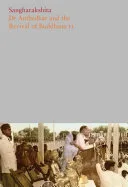
Dr Ambedkar and the Revival of Buddhism II
 81
81

Dr Ambedkar and the Revival of Buddhism II
Sangharakshita’s "Dr Ambedkar and the Revival of Buddhism II" offers a focused continuation of his examination of a pivotal figure in modern Indian religious history. The strength of this volume lies in its detailed engagement with specific anniversaries and texts, such as the celebration of the fiftieth anniversary of Ambedkar's conversion and commentary on his 'Buddha and the Future of His Religion.' This allows for a granular understanding of the revivalist movement. A limitation, however, is the text's deep immersion in Sangharakshita's personal accounts and interpretations, which can sometimes overshadow a more objective historical narrative. The inclusion of Sangharakshita’s visit to Nagpur at the time of Ambedkar’s death provides a poignant, albeit subjective, moment. Overall, the book provides valuable, specialized insights for dedicated students of Ambedkarism and Buddhist modernism.
📝 Description
81
Sangharakshita's 1991 text examines Dr. B.R. Ambedkar's 1956 revival of Buddhism in India.
This book continues Sangharakshita's examination of Dr. B.R. Ambedkar's role in the 20th-century resurgence of Buddhism in India. It focuses on the specific events and intellectual currents that shaped this revival. The work places Ambedkar's conversion and the subsequent revival of Buddhism within the context of post-independence India, noting the significance of 1956 as a year for mass conversion. It also considers the intellectual climate surrounding religious reform and identity.
Central themes include how Buddhist doctrine was reinterpreted for a modern setting, the socio-political consequences of large-scale religious conversions, and Dr. Ambedkar's personal search for a spiritual and ethical framework for the Dalit community. The book also includes Sangharakshita's own reflections and experiences during this period. It is a valuable resource for students of Indian history, religious studies, and modern Buddhist movements, particularly those interested in Dr. Ambedkar's life and the social and political aspects of religious change.
This work situates the Buddhist revival initiated by Dr. Ambedkar within a broader context of spiritual renewal and intellectual reevaluation common in esoteric traditions. It moves beyond a purely historical account to consider the underlying philosophical and psychological currents driving mass religious change. Sangharakshita, himself a figure with deep roots in Buddhist practice and comparative religion, approaches the subject with an eye for the transformative potential of rediscovered spiritual paths. The book engages with how ancient traditions are adapted and revitalized to meet contemporary social and personal needs, a recurring theme in esoteric thought.
💡 Why Read This Book?
• Gain specific insights into the 1956 mass conversion event, understanding its immediate context and significance beyond general historical accounts. • Analyze Dr. Ambedkar's critical essay 'Buddha and the Future of His Religion,' exploring his intellectual arguments for Buddhism's relevance in the modern era. • Comprehend Sangharakshita's personal engagement with the revival movement, including his experiences during Ambedkar's final days in Nagpur, offering a unique, first-hand perspective.
⭐ Reader Reviews
Honest opinions from readers who have explored this book.
❓ Frequently Asked Questions
What is the primary focus of "Dr Ambedkar and the Revival of Buddhism II"?
This book continues the narrative of Dr. B.R. Ambedkar's influence on the revival of Buddhism in India, focusing on specific events, anniversaries, and his writings on Buddhist philosophy.
When was Dr. Ambedkar converted to Buddhism?
Dr. B.R. Ambedkar converted to Buddhism on October 14, 1956, an event that is a significant focus within the context of Buddhist revival in India.
What is the significance of the year 1956 in relation to Dr. Ambedkar and Buddhism?
1956 marks the year of Dr. Ambedkar's mass conversion to Buddhism, alongside hundreds of thousands of his followers, a pivotal moment in modern Buddhist history and the subject of detailed discussion in the book.
Does the book discuss Dr. Ambedkar's writings?
Yes, it includes a commentary on Dr. Ambedkar's important article, 'Buddha and the Future of His Religion,' examining his views on Buddhism's place in the modern world.
Who is the author, Sangharakshita, in relation to this subject?
Sangharakshita was a prominent Buddhist writer and teacher who was deeply involved with the revival of Buddhism in India and had personal connections to the events and figures discussed.
What kind of content can I expect regarding Sangharakshita's personal experience?
The book includes Sangharakshita's account of his visit to Nagpur during the time of Dr. Ambedkar's death, offering a personal reflection on the period.
🔮 Key Themes & Symbolism
Ambedkar's Buddhist Reformation
This theme centers on Dr. B.R. Ambedkar's conscious effort to reform Buddhism for the modern Indian context, particularly for the Dalit community. It examines his reinterpretation of Dhamma, moving beyond traditional ritualism to emphasize its ethical and social dimensions. The book details his analysis of Buddhist scriptures and philosophy, aiming to present Buddhism as a rational and progressive path suitable for the 20th century, distinct from its historical entrenchments.
Mass Conversion of 1956
A significant focus is placed on the historic mass conversion ceremony in Nagpur in 1956, where Ambedkar and hundreds of thousands of followers embraced Buddhism. The book explores the socio-political motivations behind this event, its immediate impact, and its symbolic importance in challenging the caste system and reclaiming a pre-Hindu religious identity for the oppressed.
Sangharakshita's Engagement
This theme highlights the author Sangharakshita's direct involvement and personal reflections on the Buddhist revival. It includes his commentary on Ambedkar's writings, his observations of the movement's development, and his presence during critical moments like Ambedkar's passing. Sangharakshita's perspective offers an insider's view of the intellectual and spiritual currents driving the revival.
Buddhism and Modernity
The work looks at Ambedkar's vision for 'Buddha and the Future of His Religion,' addressing how Buddhist principles could be adapted to contemporary challenges. This involves exploring Buddhism not just as a historical religion but as a dynamic philosophy capable of providing ethical guidance and social transformation in the modern world, free from perceived limitations of other faiths.
💬 Memorable Quotes
Direct passages from the work, attributed to the author.
“celebration of the fiftieth anniversary of Dr Ambedkar’s conversion to Buddhism”
— This highlights the book's focus on marking significant historical milestones, underscoring the enduring legacy and continued relevance of Ambedkar's conversion to Buddhism. It points to an analysis of the event's impact over half a century.
“commentary on Dr Ambedkar’s article ‘Buddha and the Future of His Religion’”
— This signifies a deep dive into Ambedkar's intellectual contributions, specifically his forward-looking perspective on how Buddhism could serve as a guiding force for future societies, emphasizing its rational and ethical appeal.
“articles on the mass conversion in 1956”
— This indicates detailed exploration of the central 1956 event, likely examining its planning, execution, and immediate aftermath as a crucial moment in the modern resurgence of Buddhism in India.
“account of Sangharakshita’s visit to Nagpur at the time of Dr Ambedkar’s death”
— This suggests a personal and poignant narrative element, offering a first-hand perspective on a moment of profound transition and grief within the Buddhist revival movement.
“notes from some of the hundreds of talks Sangharakshita gave in India”
— This points to the inclusion of practical, perhaps impromptu, reflections and teachings from Sangharakshita, demonstrating his extensive engagement with and dissemination of Buddhist principles during his time in India.
🌙 Esoteric Significance
Tradition
While Dr. Ambedkar's revival of Buddhism is primarily understood through socio-political and historical lenses, its engagement with core Buddhist principles can be viewed through an esoteric framework. This work touches upon the 'Dhamma' as a path to liberation and ethical transformation, resonating with esoteric traditions that seek inner awakening and spiritual evolution. It departs from sectarian interpretations by emphasizing Buddhism's rational and philosophical aspects, aligning with modern esoteric movements that prioritize personal understanding and experience over dogma.
Symbolism
The primary symbol is the act of conversion itself, representing a radical shedding of old identities tied to caste oppression and an embrace of a new path. Buddhism, as revived by Ambedkar, symbolizes a return to indigenous spiritual roots perceived as untainted by the rigid hierarchy of Hinduism. The Dhamma, in this context, functions as a guiding principle for social justice and individual enlightenment, a universal law applicable to overcoming suffering and inequality.
Modern Relevance
Contemporary thinkers and activists involved in social justice movements, particularly those addressing caste discrimination and minority rights in India, draw upon Ambedkar's legacy. His reinterpretation of Buddhism as a tool for empowerment and ethical living continues to inspire scholars of religious studies and those exploring the intersection of spirituality and political liberation. The emphasis on reason and social ethics within Buddhism, as championed by Ambedkar, finds echoes in contemporary secular and humanistic circles.
👥 Who Should Read This Book
• Students of Dr. B.R. Ambedkar and his socio-political activism, seeking to understand the religious dimension of his fight against caste discrimination. • Researchers in Buddhist studies, particularly those interested in modern Buddhist movements and the reinterpretation of Buddhist doctrine in a post-colonial context. • Individuals exploring comparative religion and the dynamics of religious conversion, especially concerning mass movements and their impact on societal structures.
📜 Historical Context
This book emerges from the mid-to-late 20th century, a period of significant social and religious upheaval in India. Following independence in 1947, Dr. B.R. Ambedkar, a leading figure in the anti-caste movement, spearheaded a mass conversion to Buddhism for himself and millions of his followers, primarily Dalits, in 1956. This act was a radical assertion of identity and a rejection of the Hindu caste hierarchy. The intellectual currents of the time included debates on religious modernism, secularism, and national identity. Ambedkar's move was not merely spiritual but profoundly political, aiming to liberate his community from centuries of oppression. While figures like Mahatma Gandhi sought reform within Hinduism, Ambedkar opted for a complete break, re-engaging with Buddhism as a historical alternative to caste. The reception of Ambedkar's conversion was varied, met with both admiration for its bold stance and criticism from various quarters, making this period crucial for understanding modern Indian religious and social history.
📔 Journal Prompts
Dr. Ambedkar's article ‘Buddha and the Future of His Religion’ provides a lens for examining Buddhist relevance.
The 1956 mass conversion event signifies a profound shift in religious identity.
Sangharakshita's accounts of visiting Nagpur during Ambedkar’s final days offer personal reflections.
The concept of Dhamma as a path to liberation and ethical transformation.
Consider the socio-political implications of reclaiming a religious heritage.
🗂️ Glossary
Dr. B.R. Ambedkar
A prominent 20th-century Indian jurist, economist, politician, and social reformer, best known for his efforts to eradicate the Indian caste system and for leading the mass conversion of Dalits to Buddhism.
Sangharakshita
A British Buddhist who spent many years in India, becoming a significant writer and teacher. He was instrumental in the revival of Buddhism and had direct engagement with the followers of Dr. Ambedkar.
Dhamma
In Buddhism, the teachings of the Buddha, the cosmic law and order, or the truth. In Ambedkar's context, it also represented a path for social justice and ethical living.
Mass Conversion
A phenomenon where a large group of people collectively change their religious affiliation. The 1956 conversion led by Ambedkar is a prime example in modern history.
Dalit
A term used for communities traditionally considered 'untouchable' or outside the caste hierarchy in India. Ambedkar himself belonged to this group and championed their rights.
Caste System
The traditional hierarchical social structure in India, characterized by endogamy, occupational specialization, and social stratification, which Dr. Ambedkar sought to dismantle.
Buddha and the Future of His Religion
A significant essay by Dr. B.R. Ambedkar where he analyzes Buddhism's potential and relevance for the modern world, emphasizing its rational and ethical dimensions.