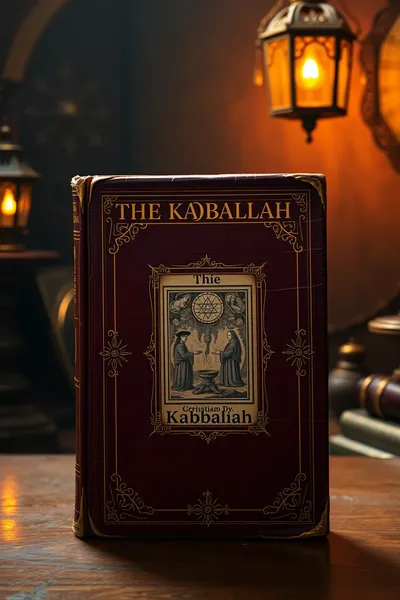
The Qabalah A.d.

 71
71

The Qabalah A.d.
Daniel E. Loeb’s "The Qabalah A.d." attempts a bold synthesis, mapping biblical divine attributes onto the Kabbalistic Sephiroth and then linking these to the Tarot’s Major Arcana. This ambitious project, first published in 2015, offers a uniquely Christian-inflected lens on Kabbalistic structures. The strength of the work lies in its methodical approach, particularly the detailed exegesis of biblical passages related to God's names, providing concrete scriptural grounding for each Sephirah. Loeb’s direct correlation of the 22 paths with the 22 Tarot cards offers a specific interpretive framework that can be illuminating for those seeking such connections. However, the integration, while systematic, occasionally feels imposed, particularly in the assertion of specific Tarot card meanings without extensive prior justification within the text itself. A notable passage is the discussion linking the Sephirah Malkuth to the World card, attempting to bridge the earthly realm with divine manifestation through scriptural prophecy. The book serves as a useful, albeit specialized, resource for those specifically interested in a Christian Kabbalistic interpretation.
📝 Description
71
Daniel E. Loeb's "The Qabalah A.d.", published in 2015, maps divine names to the Kabbalistic Tree of Life.
This book structures an understanding of the Kabbalistic Tree of Life not as an abstract system, but as a guide derived from biblical exegesis. Loeb focuses on the ten divine names or attributes of God mentioned in scripture, aligning them with the ten Sephiroth. He then connects these Sephiroth through the paths, which are associated with the 22 Hebrew letters. In this interpretation, these paths also correspond to the 22 Major Arcana of the Tarot. The author's stated aim is to make these concepts accessible to the reader.
Loeb designed this text for those seeking a more direct, biblically oriented grasp of Kabbalistic principles. It should interest students of comparative religion, especially those examining the connections between Jewish mysticism and Christian theology. Readers who find traditional Kabbalistic writings difficult may find Loeb's method, which uses biblical studies and Tarot connections, an easier way into these spiritual ideas. The book offers specific guidance for individuals on a path of spiritual growth who wish to comprehend the divine nature and salvation.
Published in 2015, "The Qabalah A.d." appears during a period of revived interest in esoteric traditions, including Kabbalah, which has gained both popular and academic attention. Loeb's work synthesizes biblical divine attributes with the Sephiroth and Tarot archetypes. This approach differs from earlier Christian Kabbalistic interpretations or solely academic studies. It reflects a contemporary tendency to combine various mystical symbols for personal spiritual development.
💡 Why Read This Book?
• Understand the 10 Sephiroth as distinct biblical names/attributes of God, a core concept introduced in the initial chapters, offering a unique theological perspective not found in purely Kabbalistic texts. • Explore the symbolic connections between the 22 paths of the Tree of Life and the 22 Major Arcana of the Tarot, a specific interpretive method detailed throughout the book that aids in visualizing spiritual progression. • Gain practical guidance on the path to salvation and spiritual growth through the lens of biblical study, as Loeb applies his Qabalistic framework to scriptural narratives and theological concepts.
⭐ Reader Reviews
Honest opinions from readers who have explored this book.
❓ Frequently Asked Questions
What is the primary focus of 'The Qabalah A.d.'?
The book's primary focus is on interpreting the Kabbalistic Tree of Life through the lens of biblical studies, specifically examining the 10 divine names/attributes of God and linking them to the Sephiroth and the 22 Tarot cards.
Who is Daniel E. Loeb and when was this book first published?
Daniel E. Loeb is the author of 'The Qabalah A.d.', which was first published on February 4, 2015. The book is part of the Esoteric Library's collection.
How does 'The Qabalah A.d.' relate the Bible and the Tarot?
It systematically connects the 10 Sephiroth (divine attributes) to specific biblical passages and then maps the 22 paths between the Sephiroth onto the 22 Major Arcana of the Tarot, using this as a framework for understanding divine mysteries.
What does the term 'Qabalah' mean according to the book?
According to the book's original blurb, 'Qabalah' means 'to receive.' It signifies a system for studying God's attributes and understanding divine mysteries through symbolic representation.
Is this book suitable for beginners in Kabbalah?
Yes, the book is intended to assist readers in understanding the mysteries of God and the Bible, potentially making Kabbalistic concepts more accessible through its use of biblical studies and Tarot associations.
What is the main goal of the interpretive system presented in 'The Qabalah A.d.'?
The main goal is to serve as a graphical and conceptual aid for readers to understand the mysteries of God, the Bible, and the path to salvation and spiritual growth.
🔮 Key Themes & Symbolism
Divine Attributes as Sephiroth
The central theme is the identification of the ten Sephiroth with ten distinct names or attributes of God found within the Bible. This approach grounds the Kabbalistic framework in scriptural authority, presenting each Sephirah not just as an abstract emanation but as a specific facet of the divine revealed through scripture. The work explores how these attributes function as a means to receive and understand God's nature, providing a theological interpretation that bridges Jewish mysticism with Christian understanding.
Tarot as Paths of Revelation
A significant theme is the explicit correlation of the 22 paths connecting the Sephiroth on the Tree of Life with the 22 Major Arcana of the Tarot. This symbolic mapping is employed as a pedagogical tool to visualize the journey of spiritual development and the process of receiving divine understanding. Each Tarot card is interpreted in relation to the specific path it represents, offering a visual and archetypal guide to the mysteries of the Bible and the path to salvation.
Biblical Exegesis for Mystical Insight
The book emphasizes biblical exegesis as the primary method for unlocking mystical knowledge. Rather than relying solely on traditional Kabbalistic texts, Loeb uses biblical studies to illuminate the nature of God and the structure of the spiritual cosmos. This approach aims to make the esoteric concepts of Kabbalah accessible and understandable within a framework familiar to those with a Christian background, focusing on scripture as the ultimate source of divine truth.
The Path to Salvation and Growth
Underpinning the entire work is the theme of spiritual growth and salvation. By understanding the divine attributes (Sephiroth) and the pathways connecting them (Tarot cards), the reader is guided towards a deeper comprehension of God's plan and their own spiritual journey. The book frames the study of Qabalah as a means to achieve spiritual maturity, offering a structured method for reading through the complexities of divine revelation and personal transformation.
💬 Memorable Quotes
Direct passages from the work, attributed to the author.
“The word, 'Qabalah' means, 'to receive.'”
— This foundational statement defines the core concept of Kabbalah as an act of reception, emphasizing that divine knowledge and understanding are not solely intellectual pursuits but are received through specific spiritual channels and practices.
“It is a system of studying 10 different names/attributes of God, and serves as a graphical aid to assist the reader in understanding the mysteries of God.”
— This highlights the book's pedagogical intent: to explain complex theological and mystical concepts by presenting them in a structured, visual format (the Tree of Life) linked to divine attributes.
“It is intended to assist the reader in understanding the nature of God, the mysteries of the Bible, and the path to salvation and spiritual growth.”
— This clearly states the ultimate purpose of the work: to provide a comprehensive guide for spiritual development, rooted in biblical understanding and Kabbalistic symbolism.
“The Qabalah A.d. builds on the...”
— This sentence fragment suggests that the book is part of a larger progression of thought or study, implying it is not a standalone treatise but an installment or development of prior concepts, though the specific antecedent is not provided here.
💡 Key Ideas
Editorial paraphrase of the work's core concepts — not direct quotes.
This book is a collection of Bible studies on the 10 names/attributes of God, and the 22 Tarot Cards associated with the connecting paths.
This summarizes the book's methodology, indicating a blend of scriptural analysis and symbolic interpretation using the Tarot as a key to understanding the relationships between divine aspects.
🌙 Esoteric Significance
Tradition
This work situates itself within the broad spectrum of Western Esotericism, specifically drawing from Kabbalistic concepts. However, it adapts and reinterprets these primarily through a Christian theological lens. Unlike traditional Jewish Kabbalah, which focuses on the Zohar and Talmudic interpretations, or Hermetic Kabbalah, which often emphasizes Neoplatonic and Hermetic philosophy, Loeb's 'A.d.' (Anno Domini) signifies a deliberate Christian orientation, integrating biblical names of God and Christian soteriology.
Symbolism
The primary symbols explored are the ten Sephiroth, representing divine names and attributes of God as found in scripture, and the 22 paths connecting them, which are mapped onto the 22 Major Arcana of the Tarot. The Sephiroth, traditionally understood as emanations, are here presented as distinct divine appellations. The Tarot cards, often viewed as archetypal forces, are used here as symbolic keys to understand the dynamic relationships and spiritual progression between these divine attributes on the Tree of Life.
Modern Relevance
While specific academic citations are scarce, "The Qabalah A.d." appeals to contemporary practitioners of Western Esotericism who seek integrative spiritual systems. Its approach appeals to those interested in comparative mysticism, blending biblical studies with Kabbalistic diagrams and Tarot archetypes. Modern spiritual seekers, particularly those coming from a Christian background but interested in deeper mystical exploration, may find this synthesis a useful tool for personal growth and understanding divine nature.
👥 Who Should Read This Book
• Students of comparative religion interested in the intersection of biblical theology, Jewish mysticism, and Western esoteric traditions, seeking a text that bridges these areas. • Individuals on a spiritual path who find traditional Kabbalistic texts challenging, as this book offers a methodologically distinct entry point using scriptural exegesis and Tarot associations. • Practitioners of esoteric arts who utilize Tarot and seek to deepen their understanding of its archetypes by correlating them with divine attributes and biblical concepts.
📜 Historical Context
Published in 2015, Daniel E. Loeb's "The Qabalah A.d." entered a contemporary spiritual landscape marked by a resurgence of interest in esoteric traditions, including Kabbalah, following its popularization in the late 20th century. Loeb's specific approach—synthesizing biblical theology with Kabbalistic structures and Tarot symbolism—distinguishes it from earlier Christian Kabbalistic endeavors and purely academic scholarship. It can be seen as participating in the broader New Age and alternative spirituality movements that sought to integrate diverse mystical systems for personal enlightenment. While not directly engaging with a specific contemporary scholar in a polemical way, the work implicitly responds to a desire for accessible, systematic interpretations of mystical traditions. Its reception is likely within circles seeking a harmonized view of scripture, Jewish mysticism, and archetypal psychology, distinct from more traditional Orthodox Jewish Kabbalah or purely Gnostic interpretations.
📔 Journal Prompts
Reflect on the ten divine names/attributes of God presented as Sephiroth in the text.
Consider the correlation between a specific Tarot card and the path it represents on the Tree of Life as described by Loeb.
How does the concept of 'receiving' (Qabalah) manifest in your spiritual practice?
Analyze the biblical passages used to define a particular Sephirah in the book.
Map your understanding of spiritual growth onto the structure of the Tree of Life and its associated paths.
🗂️ Glossary
Qabalah
A Hebrew word meaning 'to receive.' It refers to a system of Jewish mysticism and esoteric interpretation, often focused on understanding the divine and the structure of the cosmos through symbolic representation.
Sephirah (plural: Sephiroth)
In Kabbalistic tradition, these are the ten emanations or divine attributes through which God is said to manifest and interact with the created universe. In this book, they are specifically linked to divine names found in the Bible.
Tree of Life
A central symbolic diagram in Kabbalah, consisting of ten interconnected spheres (Sephiroth) and 22 paths. It represents the structure of the universe and the divine emanations.
Paths
The connections or channels between the ten Sephiroth on the Tree of Life. In 'The Qabalah A.d.', these paths are explicitly associated with the 22 Major Arcana of the Tarot.
Tarot Cards
A deck of 78 cards, typically divided into the Major Arcana (22 cards) and Minor Arcana. The Major Arcana are used in this text to represent the paths on the Tree of Life.
Bible Studies
An approach to interpreting religious texts, in this case focusing on scriptural passages that illuminate the names and attributes of God, serving as the basis for understanding the Sephiroth.
Salvation
In a religious context, the act of being delivered from sin, suffering, or death; spiritual redemption. This book connects the understanding of divine mysteries to the path towards salvation.
This book appears in 1 collection
🔮 Readers Also Liked
Browse all →








From the “Qabalah” Collection
View all →







More Free Kabbalah & Jewish Mysticism Books
View all →