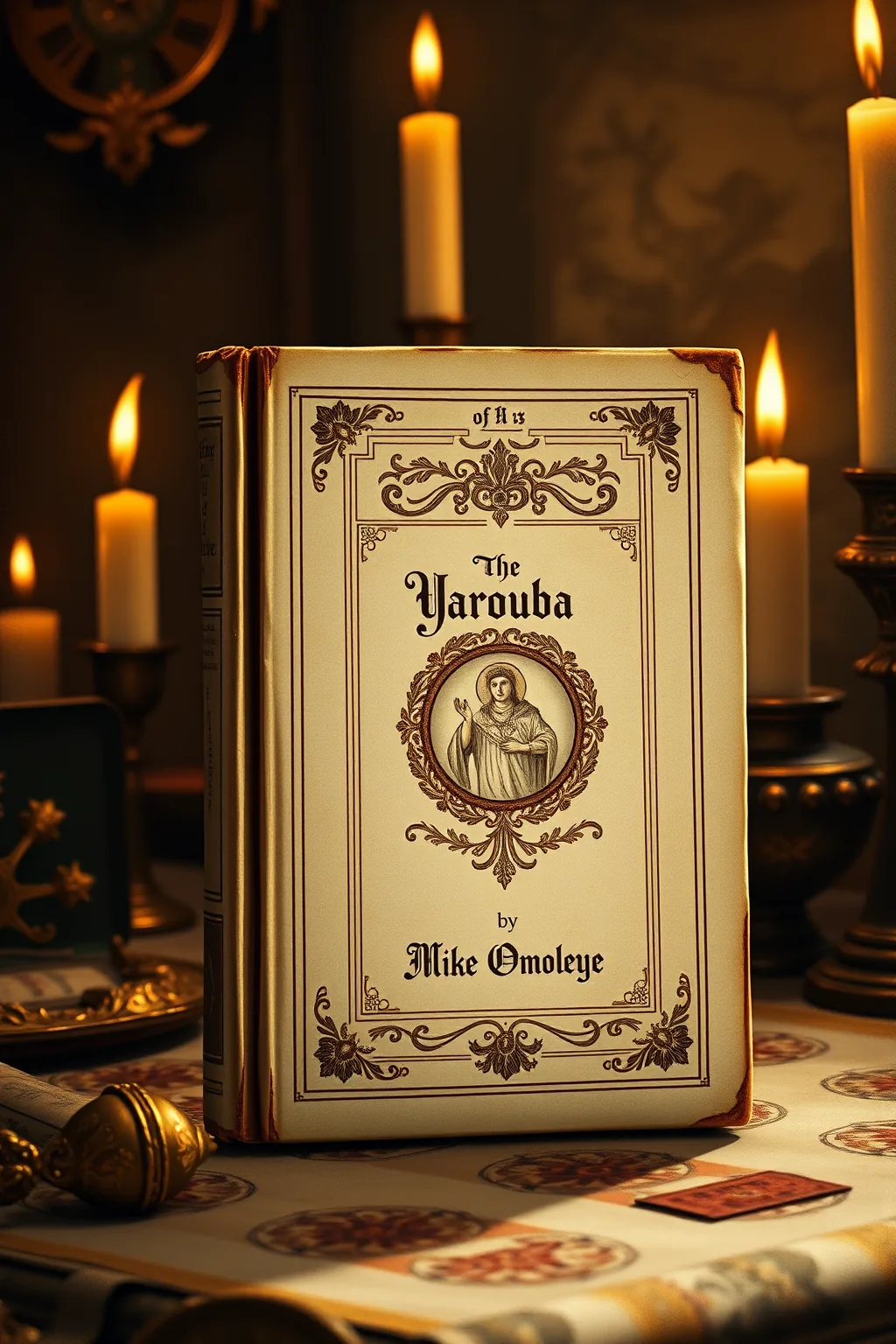
Yoruba traditional religion in the light of the Qabalah
 61
61

Yoruba traditional religion in the light of the Qabalah

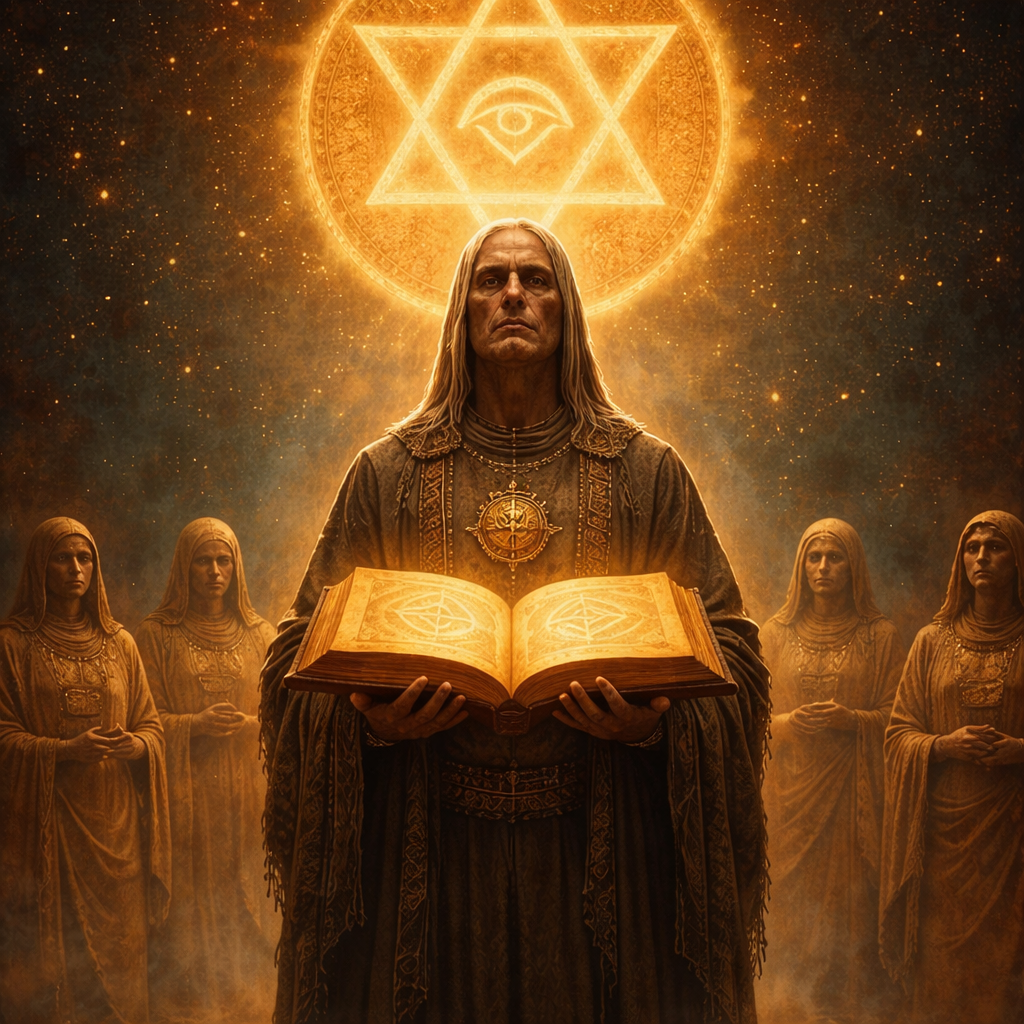

Isolde Whitaker, Sacred Texts Editor: Mike Omoleye's 'Yoruba Traditional Religion in the Light of the Qabalah' is a groundbreaking exploration that masterfully bridges two seemingly disparate yet profoundly interconnected spiritual systems. Omoleye's scholarship is both rigorous and deeply intuitive, revealing the striking parallels between Yoruba cosmology and Kabbalistic esotericism. The work shines a light on universal archetypes and divine emanations, offering fresh perspectives for students of comparative mysticism and African traditional religions alike. It is an essential read for anyone seeking to understand the profound unity underlying global spiritual traditions, offering rich insights into the nature of divinity and the human connection to the sacred.
📝 Description
61
Mike Omoleye's 2009 book connects Yoruba religion with Qabalah.
Mike Omoleye's work examines the connections between Yoruba traditional religion and Jewish Qabalah. The book details how Orisha figures and concepts within Yoruba cosmology can be understood through the lens of the Sefirot, the emanations of God in Kabbalistic thought. It also draws parallels between the symbolic systems of Ifá divination and the Tree of Life. Omoleye seeks to show how these distinct spiritual systems share underlying principles.
The author addresses how these connections might inform a deeper appreciation of both traditions. The text is aimed at individuals interested in comparative religion, mysticism, and the potential for common threads across different spiritual paths. It presents a comparative study for those who wish to understand the relationships between African traditional religions and Western esoteric systems.
This book situates itself within the field of comparative esoteric studies, specifically linking African traditional religions with Western mysticism. It follows a tradition of scholars and practitioners who seek to find universal patterns or divine structures across diverse cultural and religious expressions. By mapping Yoruba cosmology onto Kabbalistic frameworks, Omoleye contributes to an understanding of how different cultures articulate similar spiritual concepts, such as divine emanations, archetypal forces, and symbolic systems for understanding the cosmos.
💡 Why Read This Book?
Uncover profound connections between West African spirituality and Jewish mysticism. This book offers a unique lens for understanding universal archetypes and divine principles, revealing the interconnectedness of ancient wisdom traditions. Ideal for seekers of esoteric knowledge, comparative religion scholars, and practitioners interested in expanding their spiritual framework.
⭐ Reader Reviews
Honest opinions from readers who have explored this book.
❓ Frequently Asked Questions
What is the primary aim of this book?
The primary aim is to illuminate the profound esoteric connections and symbolic parallels between Yoruba traditional religion and Kabbalistic mysticism, revealing universal spiritual truths.
Who is the intended audience for this book?
The book is intended for serious seekers of esoteric knowledge, scholars of comparative religion, practitioners of spiritual disciplines, and anyone interested in exploring the deeper currents of ancient wisdom.
Does the book require prior knowledge of either tradition?
While prior knowledge is beneficial, the author's clear explanations and meticulous comparisons make the book accessible to those new to either Yoruba religion or Kabbalah, fostering a journey of discovery.
What makes this comparison unique?
Its uniqueness lies in the deep, often overlooked, symbolic and thematic resonances between these two rich traditions, presented with a scholarly yet accessible approach.
Can this book be used for practical spiritual application?
Yes, by understanding the shared symbolic language and archetypes, readers can gain deeper insights for personal spiritual growth and practical application within their own devotional practices.
🔮 Key Themes & Symbolism
The Tree of Life as a Cosmic Blueprint
This theme explores how the Kabbalistic Tree of Life serves as a universal map of creation and consciousness, mirroring the hierarchical structures and divine emanations found within Yoruba cosmology. It explores how the Sefirot, or divine attributes, can be understood through the archetypes and energies of the Orisha, revealing a shared understanding of the divine unfolding into manifestation and the human journey back to the source.
Orisha and Sefirot: Archetypal Resonance
Here, the book examines the profound archetypal parallels between the Yoruba Orisha and the Kabbalistic Sefirot. It posits that these divine manifestations, though expressed through different cultural lenses, represent fundamental forces and qualities of the cosmos and the human psyche. The exploration highlights how understanding one system can illuminate the mysteries of the other, fostering a richer appreciation for the universal nature of divine expression.
Ifá Divination and Kabbalistic Symbolism
This section focuses on the intricate symbolic language and divinatory practices of Ifá, comparing its methods and philosophical underpinnings with the symbolic systems and interpretive frameworks found within Kabbalah. It explores how both traditions utilize complex symbolic matrices to access higher wisdom, understand destiny, and guide human action, demonstrating a shared human endeavor to decipher the divine will through sacred signs.
💬 Memorable Quotes
Direct passages from the work, attributed to the author.
“In the echo of the drum, hear the whisper of the Sefirot.”
— This poetic phrase draws a direct parallel between the sonic vibrations of Yoruba spiritual practice and the subtle energies of Kabbalistic emanations.
“The path to the divine is paved with symbols, understood through the heart.”
— This highlights the importance of symbolic language in spiritual journeys and the necessity of intuitive understanding over purely intellectual comprehension.
“Within the roots of the ancient tree, the branches of creation unfurl.”
— This metaphor connects the foundational principles of a tradition (roots) to the expansive manifestations of the universe (branches), suggesting a holistic, interconnected worldview.
“The wisdom of the ancestors is the light that guides the seeker's steps.”
— This emphasizes the vital role of ancestral knowledge and tradition in useful the path for those on a spiritual quest.
💡 Key Ideas
Editorial paraphrase of the work's core concepts — not direct quotes.
The river of divine knowledge flows through many lands, yet its source remains one.
This quote emphasizes the universal nature of spiritual wisdom, suggesting that diverse traditions are simply different expressions of a single, ultimate truth.
🌙 Esoteric Significance
Tradition
This book explores the esoteric significance within two major spiritual traditions: Yoruba Traditional Religion and Kabbalah. It posits that both are not merely religious systems but contain profound mystical dimensions focused on the nature of the Divine, the structure of the cosmos, and the human soul's journey towards reunification with the sacred.
Symbolism
The esoteric symbolism lies in the parallel archetypes and structures shared between the Orisha and the Sefirot, the divination systems of Ifá and Kabbalistic interpretation, and the sacred narratives that describe creation and divine intervention. It reveals how these symbolic languages, though culturally distinct, point to universal principles of emanation, balance, and spiritual evolution.
Modern Relevance
In an increasingly interconnected world, the modern relevance of this work is profound. It offers a powerful counter-narrative to the fragmentation of spiritual knowledge, demonstrating that deep wisdom transcends cultural boundaries. For contemporary seekers, it provides tools for a more holistic understanding of spirituality, fostering tolerance, and revealing the underlying unity in the human quest for meaning and connection to the Divine.
👥 Who Should Read This Book
This book is a vital resource for a diverse audience. **Beginners** in comparative mysticism will find a clear, accessible entry point into the intricate worlds of Yoruba spirituality and Kabbalah. **Scholars** of religious studies and African diaspora traditions will appreciate the rigorous comparative analysis and fresh insights. **Spiritual seekers** yearning for a deeper understanding of universal archetypes and the interconnectedness of wisdom traditions will find profound resonance. **Practitioners** of esoteric arts, from divination to meditation, can expand their conceptual frameworks and discover new dimensions to their practices.
📜 Historical Context
Mike Omoleye's work emerges from a contemporary scholarly and spiritual milieu where cross-cultural understanding and the recognition of universal spiritual principles are increasingly valued. The late 20th and early 21st centuries have witnessed a surge in comparative mysticism, challenging traditional divisions between religious and esoteric traditions. Omoleye's book is a product of this intellectual climate, building upon earlier efforts to explore the depth of African traditional religions and their philosophical underpinnings. It acknowledges the historical isolation of many cultures and seeks to reintegrate them into a broader collection of human spiritual endeavor. The book's significance lies in its ability to bridge a perceived gap, offering a nuanced perspective that respects the integrity of both Yoruba tradition and Kabbalah while highlighting their shared esoteric lineage.
📔 Journal Prompts
Reflect on an Orisha that appeals to you and consider its potential Kabbalistic equivalent in the Sefirot. What qualities do they share?
How does the concept of divine emanation in Kabbalah compare to the way the Orisha are understood to manifest in the world in Yoruba tradition?
Explore the role of symbolism in your own spiritual practice. How can understanding the symbolism of Ifá or the Tree of Life deepen your connection?
Consider a personal challenge you are facing. How might insights from both Yoruba wisdom and Kabbalistic principles offer guidance or a new perspective?
What does the idea of a 'universal language of the soul' mean to you, and how does this book contribute to that understanding?
🗂️ Glossary
Orisha
Deities or spirits in Yoruba traditional religion, each embodying specific aspects of the natural world and human experience, acting as intermediaries between humanity and the Supreme Being.
Sefirot
The ten divine emanations or attributes of God in Kabbalistic mysticism, often depicted as a Tree of Life, representing the stages of creation and divine revelation.
Ifá
A complex divination system central to Yoruba religion, employing a system of signs and verses (Odu) to provide guidance, wisdom, and insight into life's questions.
Ase (or Ashe)
A fundamental concept in Yoruba thought, representing the life force, divine authority, and the power to make things happen. It is often translated as 'power,' 'command,' or 'vital energy'.
Kabbalah
A school of Jewish mysticism that explores the nature of God and the universe, often through symbolic interpretation of scripture and mystical contemplation, most notably represented by the Tree of Life.
This book appears in 1 collection
🔮 Readers Also Liked
Browse all →






From the “Kabbalah” Collection
View all →







More Free Kabbalah & Jewish Mysticism Books
View all →