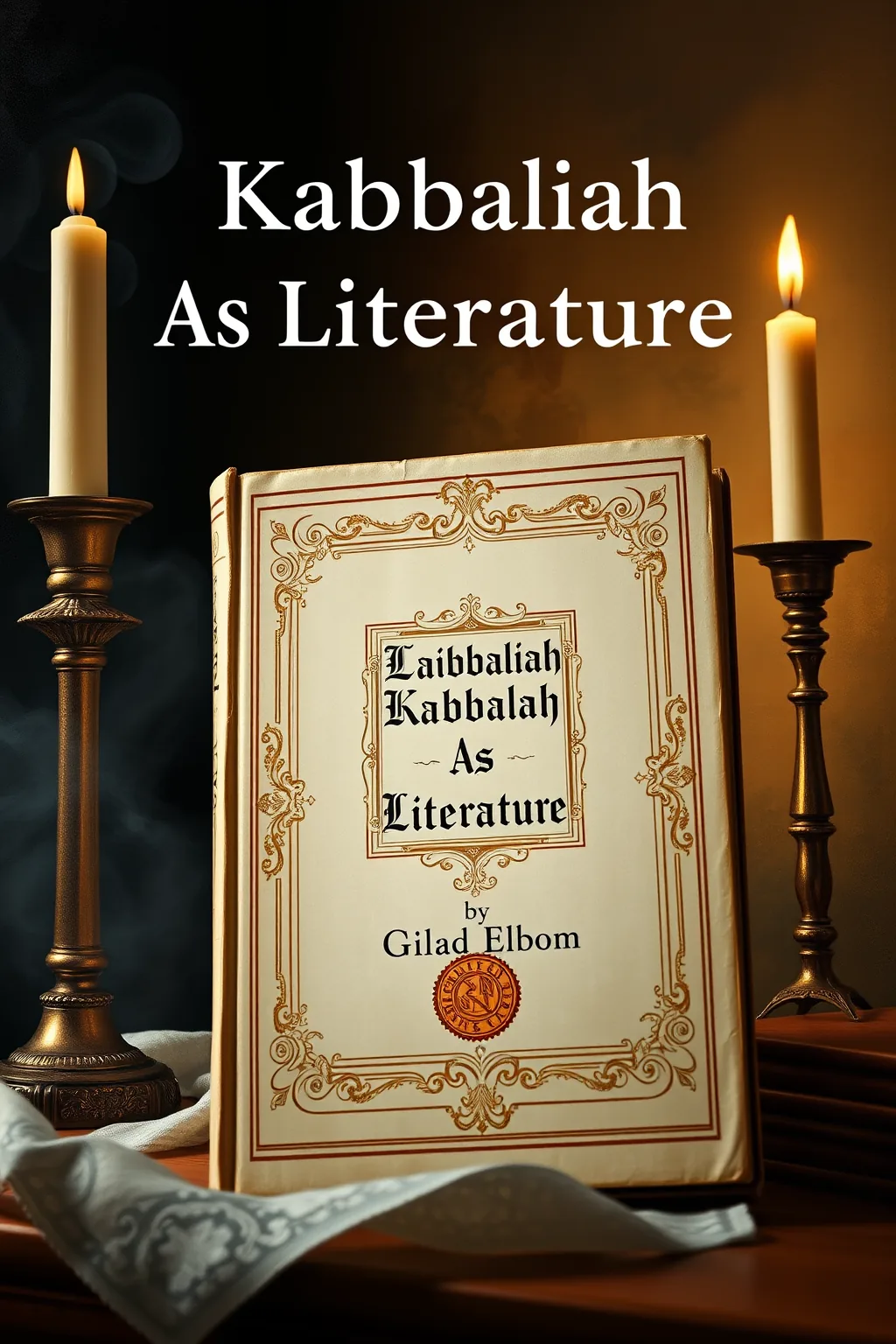
Kabbalah As Literature
 61
61

Kabbalah As Literature

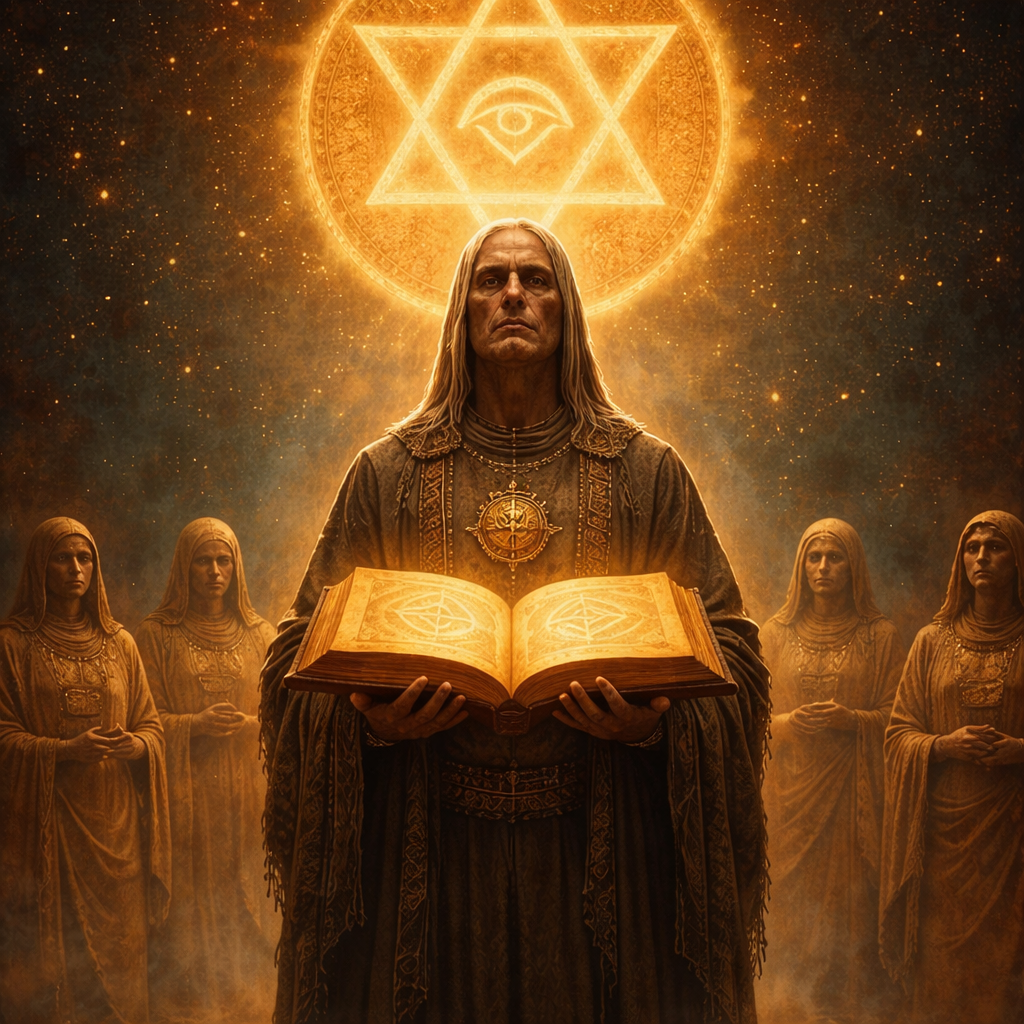

Silas Hawthorne (Hermetic Studies Editor) — Gilad Elbom's 'Kabbalah As Literature' is a revelation. Eschewing dry academic exposition, Elbom masterfully renders the esoteric heart of Kabbalistic texts, treating them not merely as historical artifacts but as dynamic conduits of mystical wisdom. His scholarly rigor is matched by an evocative prose style that captures the profound symbolism and hidden gnosis at the core of this tradition. This book is an indispensable guide for anyone seeking to move beyond superficial understanding into the living currents of Jewish mysticism. It illuminates the transformative power inherent in these ancient narratives, making them accessible and deeply relevant for the modern esoteric practitioner.
📝 Description
61
Gilad Elbom's 2016 book argues Kabbalah is best understood as literature, not just theology.
In 'Kabbalah As Literature,' Gilad Elbom reinterprets Jewish mysticism by focusing on its textual and narrative qualities. He moves away from viewing Kabbalah solely as abstract theology, instead showing how its core ideas are conveyed through stories, symbolic language, and literary structures. Elbom examines the philosophical foundations that have influenced mystical thought over centuries, demonstrating how these concepts are woven into the fabric of Kabbalistic writings.
The book aims to connect readers with the historical roots of Kabbalah and its ongoing spiritual significance. It reveals the underlying spiritual framework within these sacred texts, offering a fresh view on the divine presence in the world and the pursuit of ultimate truth. Elbom brings to life older stories, building a link between Kabbalah's origins and its lasting mystical appeal. Readers will find an examination of consciousness, creation, and the divine element present in all things.
This work places Kabbalah within the broader field of esoteric studies by emphasizing its literary dimension. Esotericism often involves hidden meanings, symbolic language, and the transmission of specialized knowledge, all of which are central to literary analysis. Elbom's approach suggests that the structure, style, and narrative of Kabbalistic texts are not mere vessels for theological ideas but are integral to the mystical experience itself. This perspective aligns with scholarly trends that treat religious traditions as complex cultural and intellectual phenomena, requiring examination beyond purely dogmatic or historical accounts.
💡 Why Read This Book?
Uncover the hidden literary architecture of Kabbalah and its profound esoteric wisdom. 'Kabbalah As Literature' reveals the symbolic language and philosophical depth that underpins Jewish mysticism, offering a transformative reading experience. Ideal for seekers of hidden knowledge, scholars of religion, and practitioners of contemplative traditions who wish to engage with the soul of Kabbalah through its most sacred texts.
⭐ Reader Reviews
Honest opinions from readers who have explored this book.
❓ Frequently Asked Questions
What makes this book unique in its approach to Kabbalah?
This book uniquely frames Kabbalah not just as a system of thought, but as a rich literary tradition, revealing the narrative, poetic, and symbolic dimensions that unlock its deeper esoteric meanings and spiritual insights.
Is prior knowledge of Kabbalah required to read this book?
While prior familiarity with basic Kabbalistic concepts can enhance the experience, Elbom's accessible yet profound prose makes 'Kabbalah As Literature' a valuable entry point for those new to the subject, as well as a profound resource for advanced students.
What kind of symbolism is explored in the book?
The book delves into core Kabbalistic symbols such as the Sefirot, the Tree of Life, divine names, and the interplay of light and darkness, interpreting them through their literary and mystical contexts.
Who is the intended audience for 'Kabbalah As Literature'?
This book is intended for students of mysticism, scholars of religion and Jewish studies, spiritual seekers, and practitioners of contemplative arts interested in the esoteric and philosophical dimensions of Kabbalah.
Does the book offer practical applications of Kabbalistic teachings?
While primarily focused on literary and philosophical explication, the insights gained from understanding Kabbalah as literature can profoundly inform one's personal spiritual practice and contemplative journey.
🔮 Key Themes & Symbolism
The Literary Genesis of Mysticism
Elbom posits that Kabbalah's profound theological and cosmological insights are deeply embedded within its literary structure. This theme explores how the very form and language of Kabbalistic texts, from ancient Hebrew poetry to philosophical treatises, serve as conduits for esoteric knowledge. It highlights the intentional use of narrative, metaphor, and symbolic language to convey concepts that transcend ordinary comprehension, revealing the texts as living embodiments of mystical experience and divine revelation.
Symbolism as a Divine Language
This theme looks at the intricate web of symbolism that forms the backbone of Kabbalistic expression. Elbom illuminates how specific symbols, such as the Sefirot, the Tree of Life, and the divine names, are not mere abstract representations but dynamic keys to unlocking hidden areas of consciousness and understanding the divine architecture of existence. The focus is on how these symbols function as a universal language, bridging the gap between the mundane and the sacred, and guiding the practitioner towards higher states of awareness.
The Experiential Dimension of Kabbalistic Texts
Beyond intellectual understanding, 'Kabbalah As Literature' emphasizes the experiential nature of these sacred writings. Elbom reveals how the texts are designed to evoke a visceral, transformative encounter with the divine. This theme explores the active role of the reader or practitioner in 'living' the text, engaging with its layers of meaning to achieve spiritual ascent and inner illumination. It underscores the idea that Kabbalah is not just to be read, but to be embodied and experienced through contemplation and practice.
💬 Memorable Quotes
Direct passages from the work, attributed to the author.
“Wisdom whispers not from silence, but from the spaces between the words.”
— This highlights the esoteric nature of Kabbalistic knowledge, implying that true understanding often lies not in explicit statements but in the subtle nuances, implied meanings, and the contemplative gaps that the reader must bridge.
“To read Kabbalah is to start an inner ascent.”
— This expresses the transformative power of engaging with Kabbalistic literature, suggesting that the process of studying and contemplating these texts leads to a profound spiritual journey and elevation of consciousness.
“The Tree of Life is not drawn, but woven into the fabric of being.”
— This profound statement emphasizes that the central Kabbalistic symbol is not a mere diagram but an intrinsic part of reality itself, suggesting that understanding it leads to a comprehension of the fundamental structure of existence and the divine emanations.
“Each textual layer is a mirror reflecting a deeper truth.”
— This metaphor illustrates the multi-dimensional nature of Kabbalistic texts, where each level of interpretation or understanding serves to reveal progressively deeper and more profound aspects of the divine and the cosmos.
💡 Key Ideas
Editorial paraphrase of the work's core concepts — not direct quotes.
The letter is a vessel, the word a river, the text a cosmos.
This quote suggests that Kabbalistic texts are not static documents but dynamic, layered structures. Each element, from individual letters to entire narratives, holds profound meaning and contributes to the unfolding of a spiritual universe within the reader's consciousness.
🌙 Esoteric Significance
Tradition
This work is deeply rooted in the esoteric tradition of Kabbalah, a mystical interpretation of Judaism that emerged in the medieval period. It explores the hidden dimensions of the Torah and the nature of God, the creation of the universe, and the path of spiritual ascent through detailed symbolic systems and contemplative practices. The book emphasizes Kabbalah's role as a spiritual technology for direct experience of the divine.
Symbolism
The book meticulously unpacks the rich symbolic language of Kabbalah, focusing on key elements such as the Sefirot (divine emanations), the Tree of Life (a map of creation and consciousness), divine names, and gematria (numerical symbolism). These symbols are presented not as mere decorations but as potent keys that unlock profound metaphysical truths, guiding the practitioner towards understanding the divine structure of reality and their place within it.
Modern Relevance
In an age often characterized by materialism and spiritual seeking, 'Kabbalah As Literature' offers a profound and accessible pathway to ancient wisdom. Its emphasis on literary structure and symbolic interpretation makes complex Kabbalistic concepts understandable and applicable to modern life. The book provides tools for personal transformation, fostering deeper self-awareness, connection to the divine, and a more meaningful engagement with the mysteries of existence.
👥 Who Should Read This Book
This informative work is a must-read for anyone seeking to understand the soul of Kabbalah. Beginners will find an accessible yet profound introduction to its core concepts and literary beauty. Scholars of religion and Jewish studies will appreciate its rigorous analysis and fresh perspectives. Spiritual seekers and practitioners of contemplative arts will discover potent tools for inner growth and a deeper connection to the divine through the transformative power of these sacred texts.
📜 Historical Context
Written in the 20th or 21st century, 'Kabbalah As Literature' emerges from a period of renewed interest in mystical traditions and esoteric philosophies. It reflects a scholarly and spiritual environment seeking to bridge academic rigor with experiential understanding. The book's emergence can be situated within broader academic trends that re-evaluate religious texts through literary and symbolic lenses, moving beyond purely historical or theological analyses. It builds upon centuries of Kabbalistic scholarship while offering a fresh perspective that speaks to contemporary seekers grappling with meaning and transcendence. Its contribution lies in clarifying complex ideas and presenting Kabbalah as a vibrant, accessible literary tradition with enduring relevance for spiritual exploration.
📔 Journal Prompts
How does the concept of 'the letter as a vessel' resonate with your understanding of sacred texts?
Reflect on a time when the 'spaces between the words' revealed a deeper meaning to you.
In what ways can the 'inner ascent' described in Kabbalah be applied to your daily life?
Consider the 'Tree of Life' as a map of your own consciousness. What aspects are most prominent?
How does the idea of 'textual layers' influence your interpretation of the world around you?
🗂️ Glossary
Sefirot
The ten divine emanations or attributes of God, forming the structure of the Tree of Life and representing stages of creation and spiritual ascent.
Tree of Life
A central Kabbalistic diagram depicting the ten Sefirot and their interconnections, serving as a map of the cosmos, divine creation, and the human soul.
Gematria
A system of Jewish numerology that assigns numerical values to Hebrew letters, used to find hidden meanings and connections within sacred texts.
Ein Sof
The Kabbalistic concept of the 'Infinite' or 'Without End,' representing God in His absolute, unknowable, and transcendent essence before any emanation.
Tzimtzum
The concept of 'contraction' or 'withdrawal,' describing God's initial act of creating space for the universe by drawing back His infinite light.
This book appears in 1 collection
🔮 Readers Also Liked
Browse all →








From the “Kabbalah” Collection
View all →







More Free Kabbalah & Jewish Mysticism Books
View all →