Kabbalah

 61
61

Kabbalah

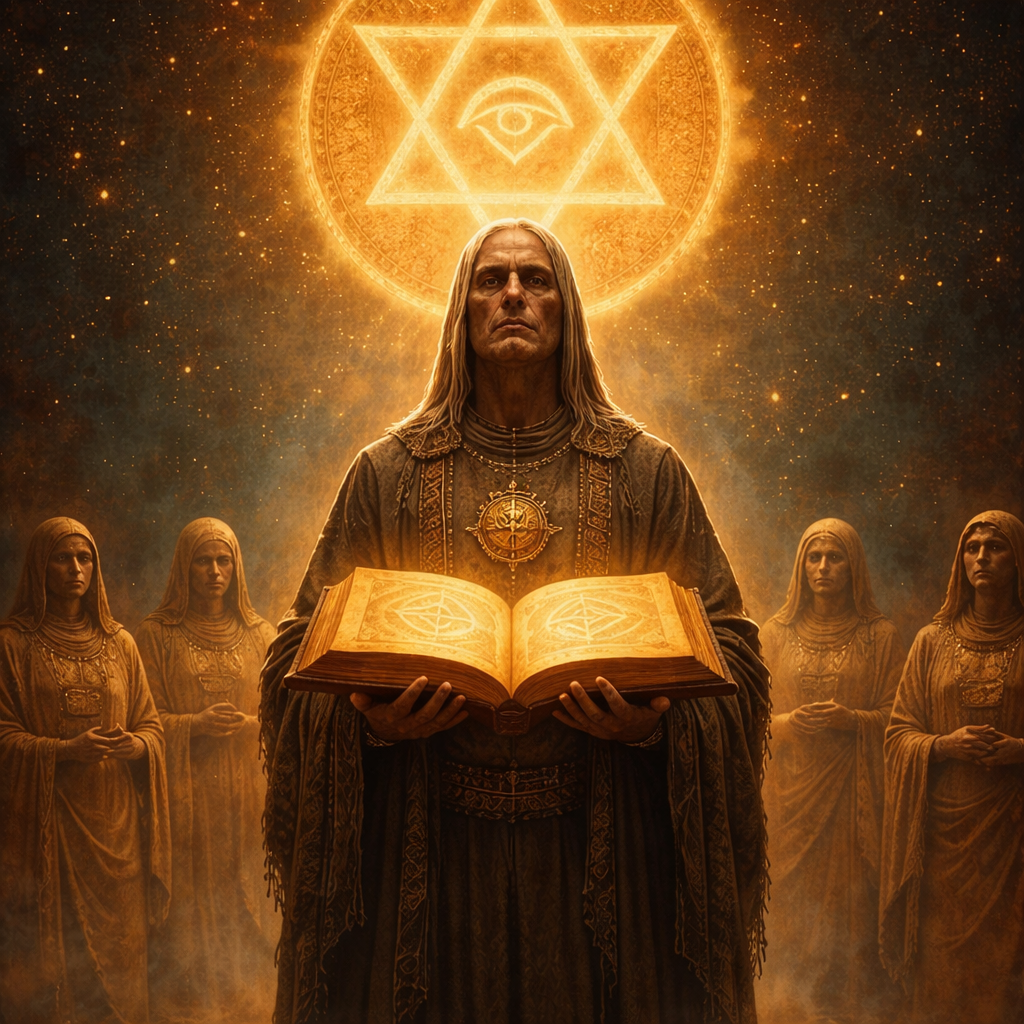

Byron L. Sherwin's 'Kabbalah' is a luminous beacon in the study of Jewish mysticism. Lorelei Sage, Contemplative Literature Editor, commends its scholarly rigor and spiritual depth. Sherwin navigates the labyrinthine concepts of Kabbalistic thought with remarkable clarity, offering profound insights into the Sephirot, the Tree of Life, and the mystical journey of the soul. This work is indispensable for those seeking an authoritative yet accessible introduction to this ancient, esoteric tradition. It illuminates the intricate symbolic language and philosophical underpinnings that continue to inspire contemplation and spiritual practice.
📝 Description
61
Byron L. Sherwin's 1985 book deciphers the complex symbolism of Jewish mysticism.
This volume examines the foundational texts and concepts of Kabbalah. Sherwin breaks down the Sefer Yetzirah and Zohar, explaining their significance within Jewish mystical thought. He discusses the divine emanations, known as Sefirot, and their role in creation and the structure of the cosmos. The book also addresses key Kabbalistic ideas such as the nature of God, the soul, and the path to spiritual ascent. Sherwin's approach aims to make these dense ideas accessible to a wider audience without sacrificing scholarly rigor.
The work details the historical development of Kabbalistic thought, tracing its roots and major schools. It covers the mystical interpretations of the Torah and the use of Hebrew letters and divine names in meditative practices. Sherwin also touches upon the practical applications and ethical dimensions sometimes associated with Kabbalistic study. This book serves as a comprehensive introduction for those interested in understanding the core tenets of this esoteric tradition.
Kabbalah is a specific tradition within Jewish mysticism that developed over centuries, particularly from the medieval period onward. It seeks to understand the divine nature and the creation of the universe through esoteric interpretations of scripture and meditative practices. Key elements include the concept of God as Ein Sof (the Infinite), the ten Sefirot as divine emanations, and the use of Hebrew letters and names as mystical tools. Kabbalah is distinct from mainstream Jewish theology and practice, focusing on hidden meanings and direct experience of the divine.
💡 Why Read This Book?
Unveil the profound esoteric wisdom of Jewish mysticism. This book is an essential read for spiritual seekers, scholars of religion, and practitioners of contemplative traditions eager to understand the symbolic language and philosophical depth of Kabbalah. It offers a pathway to exploring hidden knowledge and the mystical dimensions of existence, fostering deeper self-awareness and connection to the divine.
⭐ Reader Reviews
Honest opinions from readers who have explored this book.
❓ Frequently Asked Questions
What is Kabbalah?
Kabbalah is the esoteric tradition of Jewish mysticism, focusing on divine knowledge, cosmic creation, and the soul's journey. It seeks to understand the hidden nature of God and the universe through symbolic interpretation and contemplative practices.
Who was Byron L. Sherwin?
Byron L. Sherwin was a renowned scholar and author specializing in Jewish mysticism and Kabbalah. His works are celebrated for their accessibility and profound insights into these complex spiritual traditions.
Is this book suitable for beginners?
Yes, Sherwin's clear prose and structured approach make 'Kabbalah' an excellent starting point for those new to the subject, while still offering depth for more advanced readers.
What are the core concepts covered?
The book delves into key concepts such as the Ein Sof (the Infinite), the Sefirot (divine emanations), the Tree of Life, Gematria (numerology), and the mystical interpretation of the Torah.
What is the philosophical significance of Kabbalah?
Kabbalah offers a unique metaphysical framework, exploring the relationship between the divine and the material, the nature of reality, and the human potential for spiritual ascent and union with the divine.
🔮 Key Themes & Symbolism
The Divine Emanations (Sefirot)
At the heart of Kabbalistic cosmology lies the concept of the Sefirot, the ten divine emanations that bridge the infinite Godhead (Ein Sof) and the manifest universe. These luminous attributes, often depicted as a Tree of Life, represent the various aspects of God's presence and creative energy. Understanding the Sefirot is crucial for comprehending the Kabbalistic model of creation, divine immanence, and the pathways through which spiritual energy flows, offering practitioners a map for their own spiritual ascent and connection to the divine source.
Symbolic Interpretation and Gematria
Kabbalah places immense value on the symbolic language of scripture and the universe itself. This theme explores the intricate methods of interpretation, particularly Gematria, the practice of assigning numerical values to Hebrew letters to reveal hidden connections and deeper meanings within texts. It highlights how seemingly simple words or phrases can unlock profound theological and cosmological insights, demonstrating that the divine realm is embedded within the very structure of language and creation, inviting a more conscious engagement with sacred texts.
The Ascent of the Soul
A central tenet of Kabbalah is the journey of the human soul towards reunification with its divine origin. This theme looks at the mystical path of spiritual transformation, often described as an ascent through the areas of existence and the Sefirot. It examines the practices and states of consciousness that facilitate this journey, emphasizing purification, contemplation, and the yearning for divine knowledge. The goal is not merely intellectual understanding but a profound, experiential communion with the divine, leading to spiritual enlightenment and cosmic harmony.
💬 Memorable Quotes
Direct passages from the work, attributed to the author.
“Wisdom flows from the hidden springs.”
— It speaks to the esoteric nature of Kabbalistic knowledge, implying that true understanding arises from contemplative depths and not solely from external sources.
“Each letter is a universe.”
— This highlights the power of Hebrew letters in Kabbalah, where each symbol is imbued with immense cosmic and spiritual significance, forming the building blocks of reality.
“The Tree of Life is a divine map.”
— This metaphor illustrates the Sefirotic structure as a guide for understanding creation, divine attributes, and the path of spiritual development.
“To know God is to know oneself.”
— This profound statement underscores the introspective aspect of Kabbalistic practice, where self-discovery is intrinsically linked to divine realization.
💡 Key Ideas
Editorial paraphrase of the work's core concepts — not direct quotes.
The Infinite embraces the finite.
This quote expresses the Kabbalistic paradox of the transcendent God interacting with the immanent material world, suggesting a deep interconnectedness.
🌙 Esoteric Significance
Tradition
Kabbalah is the quintessential esoteric tradition within Judaism, offering a mystical interpretation of God, creation, and the human condition. It looks at the hidden dimensions of reality, seeking direct experience of the divine through contemplation, meditation, and the study of sacred texts. Its esoteric nature lies in its symbolic language, complex cosmology, and the emphasis on achieving a transcendent state of consciousness, aiming to reveal divine secrets and foster a profound spiritual connection.
Symbolism
The symbolism in Kabbalah is rich and complex, with the Tree of Life being its most iconic representation. The ten Sefirot symbolize divine attributes and stages of creation, while Hebrew letters, numbers (Gematria), and scriptural narratives are imbued with profound spiritual meanings. These symbols act as keys, unlocking higher levels of understanding about the divine, the cosmos, and the human soul's journey towards spiritual perfection and unity with the Infinite.
Modern Relevance
In the modern era, Kabbalah continues to resonate deeply, offering a framework for understanding existence, purpose, and the interconnectedness of all things. Its emphasis on personal transformation, ethical living, and the pursuit of higher consciousness appeals to contemporary seekers across various backgrounds. The symbolic language and philosophical depth provide tools for navigating complex existential questions, fostering spiritual growth, and cultivating a sense of awe and wonder in the face of the universe.
👥 Who Should Read This Book
This foundational text on Kabbalah is useful for spiritual seekers starting their mystical journey, offering a clear and engaging entry point into its profound concepts. Scholars of religion and comparative mysticism will find Sherwin's rigorous analysis and comprehensive overview indispensable for academic study. Practitioners of contemplative traditions, regardless of their religious background, can draw upon Kabbalah's strong symbolism and philosophical insights to deepen their meditation and expand their understanding of the divine. Anyone curious about the hidden wisdom traditions of humanity and the search for ultimate meaning will find this book a compelling and clear read.
📜 Historical Context
The development of Kabbalah emerged from the fertile intellectual and spiritual field of medieval Judaism, particularly flourishing in the 12th and 13th centuries in Provence and Spain, and later in Safed during the 16th century. This era was marked by significant philosophical inquiry, mystical fervor, and a desire to find deeper, more esoteric meanings within Jewish tradition, especially in response to historical upheavals and the perceived limitations of purely rationalistic interpretations of scripture. Early Kabbalistic texts like the Sefer Bahir and the Zohar synthesized earlier mystical currents, Gnostic ideas, Neoplatonic philosophy, and Jewish theological concepts into a complex and comprehensive system. This rich intellectual environment fostered the creation of a mystical language and cosmology that profoundly influenced subsequent Jewish thought and practice, as well as external esoteric traditions.
📔 Journal Prompts
Reflect on a time you felt a profound connection to something larger than yourself. How might the concept of the Ein Sof relate to this experience?
Consider the symbolism of a familiar object in your life. What deeper meanings or spiritual connections can you uncover through its form and function?
Meditate on the idea of divine emanations. If you were to describe your own spiritual journey as a series of 'flows,' what would they be?
Explore the concept of 'hidden knowledge.' What personal 'hidden knowledge' within yourself are you seeking to uncover or understand more deeply?
How can the Kabbalistic idea of interconnectedness inform your daily interactions and your perception of the world around you?
🗂️ Glossary
Ein Sof
The Kabbalistic term for the 'Infinite' or 'Limitless,' representing God in His absolute, unknowable essence beyond all manifestation and comprehension.
Sefirot
The ten divine emanations or attributes through which God reveals Himself and creates the universe, often visualized as the Tree of Life.
Tree of Life (Etz Chaim)
The central diagram in Kabbalah, illustrating the interconnectedness of the Sefirot and the pathways of divine energy and creation.
Gematria
A method of biblical interpretation in Kabbalah that assigns numerical values to Hebrew letters to find hidden meanings and connections between words and concepts.
Tzimtzum
The concept of divine 'contraction' or withdrawal, a necessary prelude to creation, making space for the existence of the universe and free will.
This book appears in 1 collection
🔮 Readers Also Liked
Browse all →









More by Byron L. Sherwin
All books →

From the “Kabbalah” Collection
View all →






More Free Kabbalah & Jewish Mysticism Books
View all →