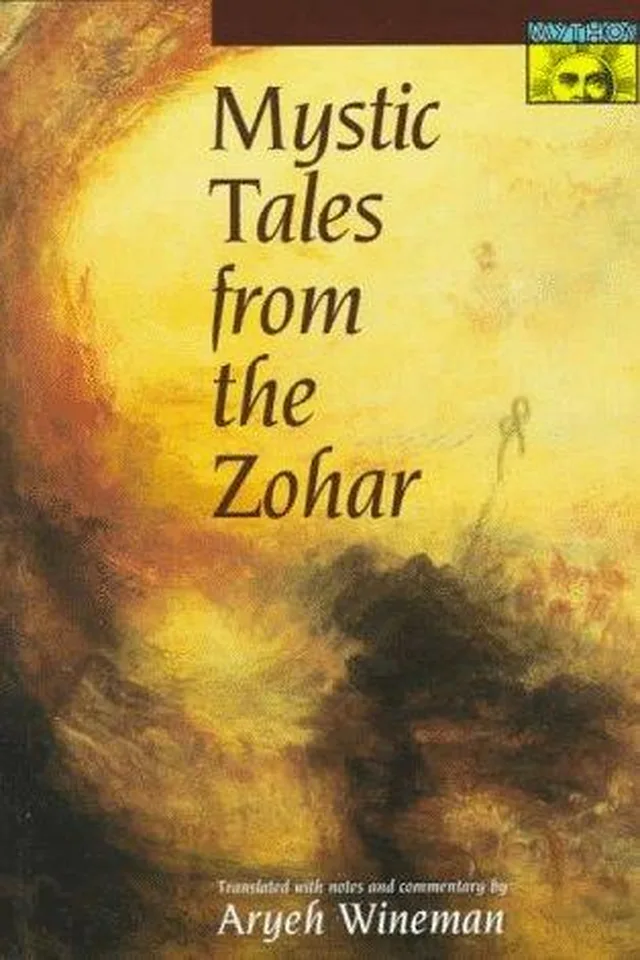
Mystic tales from the Zohar
 62
62

Mystic tales from the Zohar

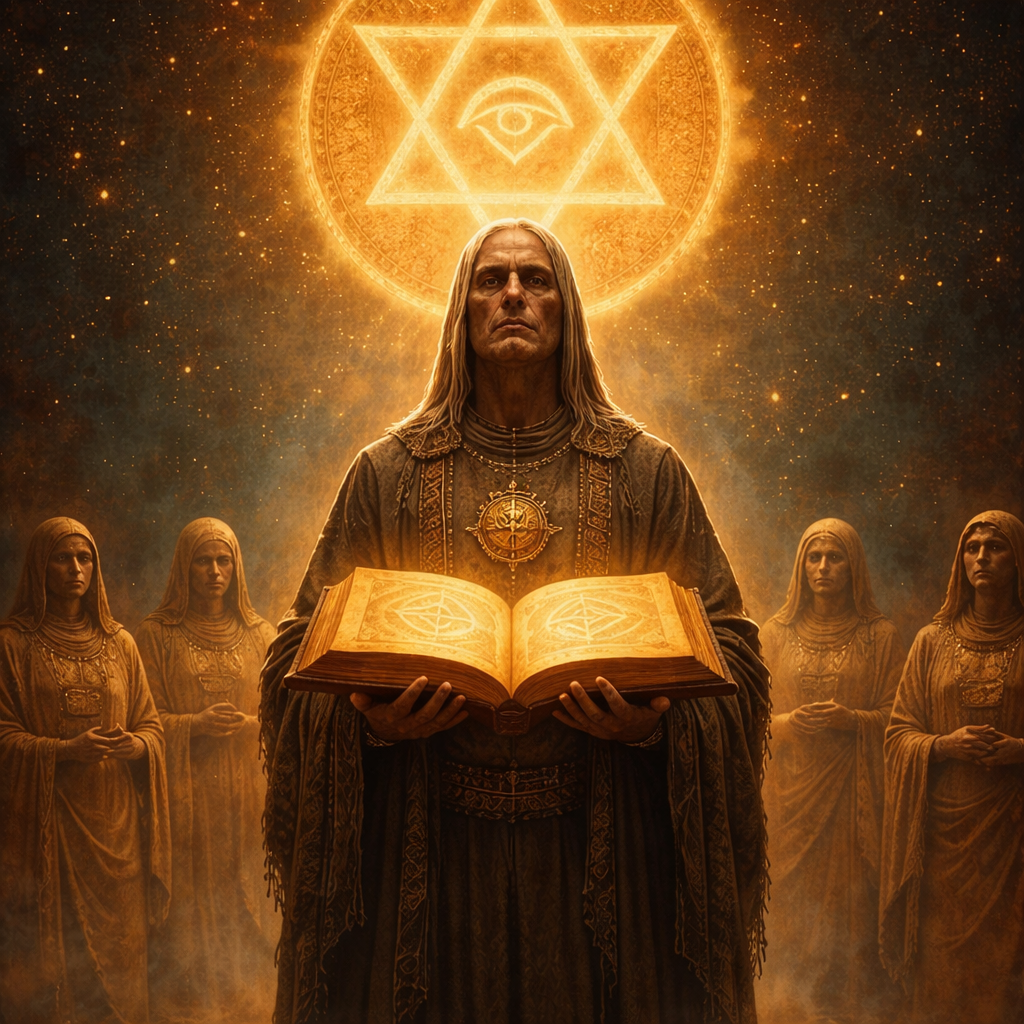

Isolde Whitaker, Sacred Texts Editor: Aryeh Wineman's 'Mystic Tales from the Zohar' is an illuminating guide to the profound depths of Kabbalistic wisdom. Wineman possesses a rare gift for translating the dense, symbolic language of the Zohar into narratives that resonate with both intellectual rigor and spiritual power. He skillfully navigates the intricate cosmology and mystical exegesis, offering readers a tangible connection to the esoteric insights of Jewish mysticism. This work is an invaluable resource for anyone seeking to understand the soul of Kabbalah, providing a clear and engaging pathway into its transformative teachings. Highly recommended for students of mysticism and spiritual explorers alike.
📝 Description
62
Aryeh Wineman's 1991 book decodes the hidden narratives within the Zohar.
This book examines the Zohar, the central text of Kabbalah, through a collection of interpretive tales. Wineman aims to make the complex symbolism and mystical concepts of the Zohar accessible to a wider audience. He focuses on illustrating ideas such as divine emanations, celestial structures, and the unity of creation. The narratives are presented as keys to understanding the Zohar's spiritual philosophy and its esoteric dimensions.
The author's approach seeks to bridge the gap between academic study and personal spiritual practice. By retelling and clarifying the Zohar's intricate teachings, Wineman invites readers to engage directly with its mystical content. The book covers themes of cosmic interconnectedness and the secret language of existence as expressed within Jewish mysticism.
The Zohar, originating in 13th-century Spain, is a foundational work of Kabbalah, a system of Jewish mysticism. It presents a symbolic interpretation of the Torah, revealing hidden meanings about God, creation, and the human soul. The Zohar's teachings explore concepts like the Sefirot (divine attributes), the nature of evil, and the pathways of spiritual ascent. Wineman's work engages with this tradition by unpacking its dense allegories and philosophical arguments, making them more comprehensible to those unfamiliar with its specific terminology and conceptual framework.
💡 Why Read This Book?
Unveil the hidden wisdom of Kabbalah through evocative storytelling. 'Mystic Tales from the Zohar' makes complex esoteric concepts accessible, offering profound insights into divine interconnectedness and cosmic symbolism. Ideal for spiritual seekers, scholars of mysticism, and practitioners desiring a deeper connection to Jewish esoteric traditions. Explore ancient legends that reveal timeless truths.
⭐ Reader Reviews
Honest opinions from readers who have explored this book.
❓ Frequently Asked Questions
What is the Zohar?
The Zohar is the foundational work of Kabbalah, a mystical commentary on the Torah. It is written in Aramaic and comprises a series of dialogues, narratives, and mystical interpretations, revealing hidden meanings within the sacred texts.
Who was Aryeh Wineman?
Aryeh Wineman was a distinguished scholar and author known for his insightful interpretations of Jewish mystical texts. His work bridges the gap between academic study and spiritual exploration, making complex Kabbalistic ideas accessible to a wider audience.
What are the main themes explored in this book?
The book delves into themes of divine emanations (Sefirot), the nature of God, the hidden meanings of the Torah, the soul's journey, and the interconnectedness of all creation through rich storytelling and symbolic interpretation.
Is this book suitable for beginners in Kabbalah?
Yes, while the Zohar itself is complex, Wineman's 'Mystic Tales' serves as an excellent introduction. He skillfully simplifies intricate concepts, making the core ideas of Kabbalah comprehensible and engaging for newcomers.
What is the historical significance of the Zohar?
The Zohar, believed to have been compiled in 13th-century Spain, revolutionized Jewish mysticism. It provided a comprehensive framework for understanding the divine, the universe, and the human role within them, profoundly influencing Jewish thought and practice.
🔮 Key Themes & Symbolism
The Sefirot: Divine Emanations
This theme explores the ten divine emanations, the Sefirot, as described in Kabbalistic thought, which serve as conduits for divine energy to flow into creation. Wineman illuminates their symbolic meanings and their role in the cosmic architecture, illustrating how they represent different attributes of God and influence human experience. Understanding the Sefirot is crucial for grasping the Zohar's intricate cosmology and the pathways of divine connection.
Symbolic Interpretation of Scripture
Central to Kabbalah is the belief that the Torah contains layers of hidden meaning beyond the literal text. This theme looks at how the Zohar, and subsequently Wineman's interpretations, uncover these deeper, mystical significances through allegorical readings, gematria (numerical values of Hebrew letters), and the symbolic interplay of narratives. It reveals how biblical stories are not just historical accounts but profound conduits of spiritual wisdom.
The Soul's Journey and Cosmic Unity
This theme examines the Kabbalistic concept of the soul's origin, its descent into the material world, and its ultimate ascent back to the divine. 'Mystic Tales' portrays the soul as an integral part of the cosmic fabric, emphasizing the interconnectedness of all beings and the universe. It explores practices and perspectives that foster spiritual growth, purification, and a profound sense of unity with the Creator and all existence.
💬 Memorable Quotes
Direct passages from the work, attributed to the author.
“Every letter, a universe; every word, a divine breath.”
— Highlights the Zohar's view of scripture as imbued with divine essence, where even the smallest components hold immense cosmic significance and spiritual power.
“The hidden light shines brightest in the darkest night.”
— A metaphor for finding spiritual illumination and divine presence even amidst challenges and obscurity, a common theme in mystical traditions.
“To know the Creator is to know oneself, and to know oneself is to know the Creator.”
— Illustrates the profound reciprocal relationship between self-knowledge and divine knowledge in Kabbalah, suggesting that true understanding of one leads to the other.
“The divine spark resides in all, waiting to be awakened.”
— Reflects the Kabbalistic belief in the immanent presence of the divine within every individual and all of creation, emphasizing the potential for spiritual awakening.
💡 Key Ideas
Editorial paraphrase of the work's core concepts — not direct quotes.
The Zohar whispers secrets to those who listen.
This quote emphasizes the subtle, intuitive nature of Kabbalistic wisdom, suggesting that understanding comes not from forceful intellect but from a receptive, spiritual attunement.
🌙 Esoteric Significance
Tradition
This book is deeply rooted in the Kabbalistic tradition, a mystical interpretation of Judaism that seeks to understand the divine nature and the hidden processes of creation. Kabbalah offers a complex symbolic language and esoteric cosmology aimed at revealing the interconnectedness of all existence and the pathways to spiritual ascent and union with the divine.
Symbolism
Key symbols include the Sefirot (divine emanations), the Tree of Life (a diagram representing the Sefirot and their interrelationships), the letters of the Hebrew alphabet (seen as building blocks of reality), and various allegorical figures and narratives that represent spiritual states and cosmic forces. These symbols are not merely decorative but are considered potent keys to unlocking deeper spiritual truths.
Modern Relevance
In an age of increasing secularism and existential questioning, the Zohar's mystical insights offer profound perspectives on meaning, purpose, and the interconnectedness of life. The book's exploration of divine presence, the soul's journey, and the search for spiritual unity appeals to contemporary seekers looking for deeper understanding and a sense of transcendence beyond the material world.
👥 Who Should Read This Book
This book is an invaluable resource for a diverse range of readers. For the **spiritual seeker**, it offers a gateway into profound mystical concepts and practices for personal growth. **Scholars of religion and philosophy** will find a rich source for understanding the historical development and theological intricacies of Jewish mysticism. **Practitioners of contemplative traditions** will discover ancient wisdom that can inform and deepen their spiritual disciplines. Even **curious newcomers** to esoteric thought will find Wineman's accessible style and evocative storytelling a compelling introduction to the mysteries of Kabbalah.
📜 Historical Context
The Zohar emerged in 13th-century Spain, a period of immense intellectual and spiritual ferment within Jewish communities, particularly in Castile. This era saw a flourishing of Kabbalistic thought, responding to both internal spiritual yearnings and external pressures faced by Jews. The Zohar, attributed to Rabbi Shimon bar Yochai in the second century but widely believed by scholars to have been compiled by Moses de León, synthesized earlier mystical traditions and introduced a rich, symbolic language to describe the divine nature, creation, and the human soul's relationship with God. Its influence was profound, gradually becoming the central text of Kabbalah, shaping Jewish mysticism for centuries and impacting subsequent spiritual and philosophical movements across various traditions.
📔 Journal Prompts
Reflect on a time you felt a profound sense of interconnectedness with nature or others. How might this relate to the Kabbalistic concept of unity?
Consider a symbolic object or image that holds deep personal meaning for you. What hidden messages or spiritual insights might it convey?
How can understanding the 'divine spark' within yourself and others foster greater compassion and empathy in your daily life?
Explore a challenging personal experience. How might the 'hidden light' metaphor offer a new perspective or source of strength?
If each letter of the Hebrew alphabet represents a cosmic building block, what 'words' or 'messages' do you believe are fundamental to the universe's design?
🗂️ Glossary
Kabbalah
A system of Jewish mysticism that seeks to understand the nature of God, creation, and the universe through esoteric interpretation of religious texts and symbolic practices. It aims to reveal hidden dimensions of reality and facilitate spiritual ascent.
Zohar
The foundational text of Kabbalah, a mystical commentary on the Torah. It is known for its strong symbolism, allegorical narratives, and useful insights into the divine nature and the structure of the cosmos.
Sefirot
The ten divine emanations or attributes of God, described in Kabbalah as the vessels through which God's infinite light flows into the created world. They form the 'Tree of Life' diagram.
Tikkun
A Hebrew term meaning 'rectification' or 'restoration.' In Kabbalah, it refers to the cosmic process of repairing the world and restoring divine harmony, often seen as a human responsibility.
Gematria
A Kabbalistic method of interpreting the Hebrew Bible by assigning numerical values to letters and words, seeking hidden meanings and connections between different texts based on shared numerical values.
This book appears in 1 collection
🔮 Readers Also Liked
Browse all →








More by Aryeh Wineman
All books →
From the “Kabbalah” Collection
View all →






More Free Kabbalah & Jewish Mysticism Books
View all →