Essential papers on kabbalah

 61
61

Essential papers on kabbalah

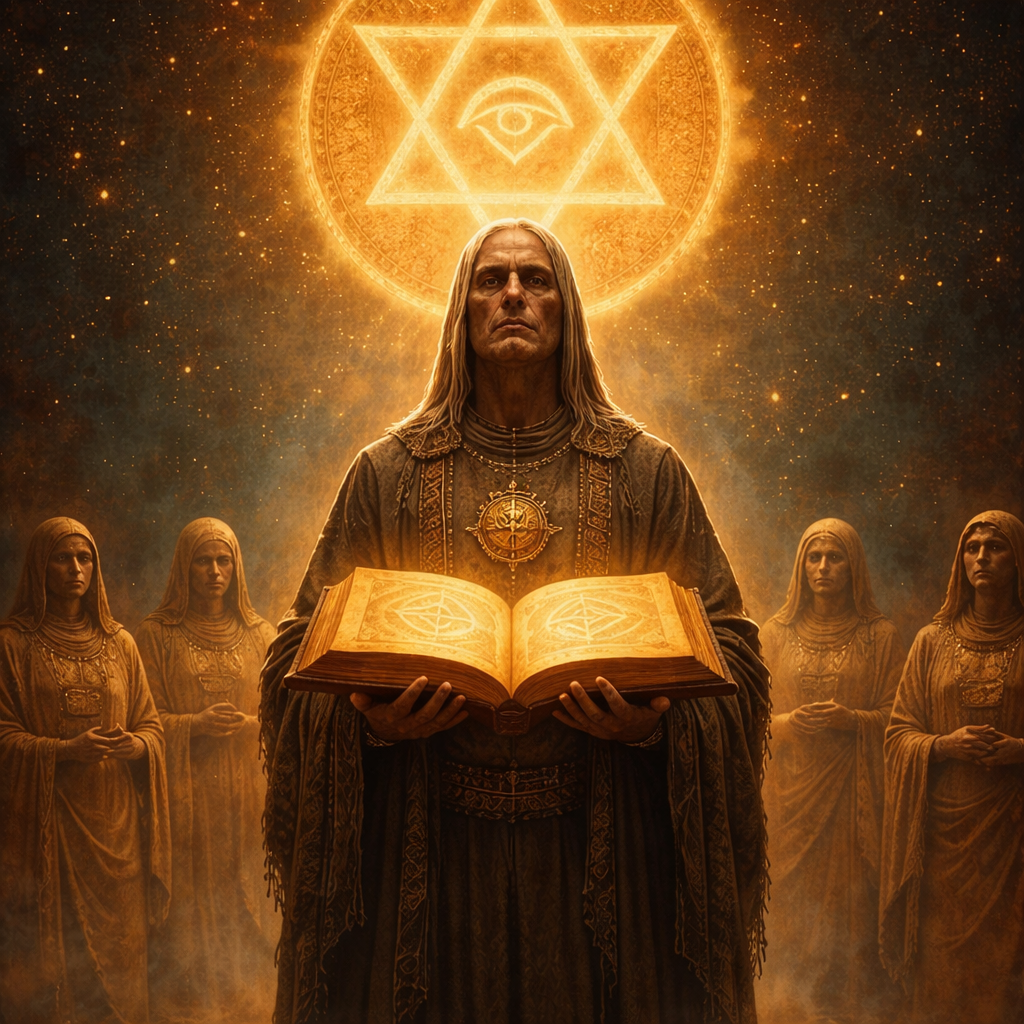

Lawrence Fine's "Essential Papers on Kabbalah" is a monumental achievement, offering an authoritative and accessible exploration of this complex mystical tradition. Fine masterfully navigates the labyrinthine concepts of Kabbalistic thought, from its historical roots to its profound spiritual implications. The collection illuminates esoteric insights into creation, divine consciousness, and the human soul's journey. Its strength lies in its clarity and scholarly depth, making dense material digestible for serious students. This book is an indispensable resource for scholars, practitioners, and seekers yearning to unlock the symbolic language and transformative power of the Kabbalah. A truly essential addition to any esoteric library.
📝 Description
61
Lawrence Fine's 1995 collection gathers key essays on Kabbalah, a major Jewish mystical tradition.
This 1995 compilation by Lawrence Fine brings together significant scholarly articles on Kabbalah. It examines the development and core concepts of this Jewish mystical tradition. The essays cover topics such as the origins of Kabbalistic thought, its symbolic language, and its philosophical dimensions. Fine's selection provides a comprehensive overview for those interested in the intellectual history and textual basis of Kabbalah.
The book addresses the structure of the divine realm as described in Kabbalistic texts, including the Sephirot. It also considers the soul's journey and the mystical interpretations of scripture central to the tradition. The collection aims to make these specialized studies accessible to a wider academic audience. Readers will find detailed analyses of key Kabbalistic ideas and their historical context.
Kabbalah represents a rich stream within Jewish mysticism, originating in medieval Provence and Spain. It is characterized by a symbolic cosmology that maps divine emanations, known as the Sephirot, and a contemplative practice focused on understanding God's hidden nature. Kabbalistic texts like the Zohar interpret biblical narratives allegorically, revealing deeper spiritual meanings. The tradition has profoundly influenced Jewish religious life and, in later centuries, Western esoteric thought, often focusing on the soul's ascent and the restoration of cosmic order.
💡 Why Read This Book?
Embark on a transformative journey into the heart of Jewish mysticism. "Essential Papers on Kabbalah" offers a rare opportunity to engage with foundational Kabbalistic texts and scholarly analysis. Ideal for seekers of hidden knowledge, students of esoteric traditions, and practitioners looking to deepen their understanding of divine symbolism and cosmic principles. This book is your essential key to unlocking the profound wisdom of the Kabbalah.
⭐ Reader Reviews
Honest opinions from readers who have explored this book.
❓ Frequently Asked Questions
What is the primary focus of this collection?
The primary focus is to provide a comprehensive and insightful introduction to the core concepts and historical development of Kabbalistic thought, emphasizing its mystical and esoteric dimensions.
Is this book suitable for beginners?
While challenging, the collection is designed to be accessible to serious beginners with a genuine interest in mysticism and Jewish thought, thanks to Fine's insightful introductions and careful selection of texts.
What makes this collection "essential"?
It is considered essential due to its scholarly rigor, the breadth of foundational Kabbalistic texts included, and the illuminating commentary that bridges historical context with contemporary understanding.
Does the book cover practical Kabbalistic techniques?
The collection primarily focuses on the theoretical, philosophical, and mystical dimensions of Kabbalah, rather than practical application or ritualistic elements.
Who is Lawrence Fine?
Lawrence Fine is a distinguished scholar of Jewish mysticism and has authored numerous influential works on Kabbalah, making him a leading authority in the field.
🔮 Key Themes & Symbolism
The Tree of Life and Divine Emanation
This core theme looks at the Sephirot, the ten divine emanations that form the archetypal blueprint of creation in Kabbalistic cosmology. Readers will explore how these interconnected spheres represent attributes of God and pathways for spiritual ascent, understanding their symbolic representation and their role in the unfolding of the cosmos and the human soul's relationship with the divine. The intricate interplay between the Sephirot offers a profound symbolic language for grasping the ineffable nature of God and the structure of reality.
Mystical Interpretation of Scripture
The collection illuminates the Kabbalistic method of interpreting sacred texts, moving beyond literal meaning to uncover hidden, esoteric layers of divine revelation. This involves exploring techniques like Gematria (numerical value of Hebrew letters), Notarikon (acronyms), and Temurah (letter permutation) to find deeper spiritual truths embedded within the Torah. It reveals how Kabbalah views scripture not merely as a historical document, but as a living, mystical map guiding the soul towards divine union.
The Ascent of the Soul and Divine Union
Central to Kabbalistic aspiration is the concept of the soul's journey towards God. This theme explores the various stages of mystical experience, the challenges and transformations involved in spiritual purification, and the ultimate goal of *devekut* (cleaving to God). Readers will encounter descriptions of ecstatic states, visionary experiences, and the profound understanding of the divine presence that characterizes the culmination of the Kabbalistic path.
💬 Memorable Quotes
Direct passages from the work, attributed to the author.
“Within the letters, worlds are born.”
— Emphasizes the Kabbalistic belief in the creative power of Hebrew letters and divine language, suggesting that the very fabric of reality is woven from these sacred symbols.
“The Sephirot are divine sparks within the soul.”
— Connects the cosmic order of the Sephirot to the individual human being, suggesting that divine attributes and potential reside within us, awaiting realization.
“Wisdom is found in the silent spaces between words.”
— Points to the esoteric nature of Kabbalistic knowledge, implying that true understanding often lies in intuitive perception and contemplation beyond the literal.
“To know the Creator is to know oneself.”
— Highlights the reciprocal relationship between understanding the divine and understanding the self, a fundamental tenet of mystical traditions.
💡 Key Ideas
Editorial paraphrase of the work's core concepts — not direct quotes.
The Kabbalah is a path to the heart of God.
This quote captures the spiritual aspiration inherent in Kabbalistic study, highlighting its ultimate aim: direct communion and intimate connection with the divine essence.
🌙 Esoteric Significance
Tradition
Kabbalah represents a central to Jewish esoteric and mystical tradition. It offers a profound cosmology, a detailed map of the divine realms, and a path for spiritual ascent and communion with God. Unlike purely philosophical or halachic (legal) approaches to Judaism, Kabbalah looks at the hidden, ineffable dimensions of divinity, exploring the nature of God's immanence and transcendence, the structure of the universe as emanated from the divine, and the soul's potential for union with the sacred.
Symbolism
The symbolic language of Kabbalah is rich and many-sided, with the Tree of Life (Etz Chaim) serving as its central diagrammatic representation. This diagram, composed of ten Sephirot (divine emanations) and twenty-two paths, symbolizes the entire process of creation and divine revelation. Other key symbols include Hebrew letters, which are imbued with cosmic power and serve as keys to unlocking divine secrets, and concepts like the *Ein Sof* (the Infinite, unmanifest God) and the divine sparks hidden within creation.
Modern Relevance
Despite its ancient origins, Kabbalah continues to hold profound relevance today. Its exploration of consciousness, the nature of reality, and the human soul's journey appeals to contemporary seekers interested in spirituality, personal growth, and the search for meaning. The intricate symbolic system offers a framework for understanding complex metaphysical ideas, and its emphasis on interconnectedness and divine immanence speaks to a universal longing for unity and purpose in an often fragmented world.
👥 Who Should Read This Book
This collection is essential for a diverse audience. **Beginners** with a serious curiosity about Jewish mysticism will find it an invaluable starting point, provided they approach it with dedication. **Scholars** of religious studies, comparative mysticism, and Jewish history will appreciate the scholarly depth and the inclusion of key texts. **Spiritual seekers** yearning for a deeper understanding of divine symbolism, cosmic architecture, and the soul's potential for transformation will find useful insights. **Practitioners** of contemplative or esoteric traditions may discover new perspectives and symbolic frameworks to enrich their practice, though it primarily focuses on theoretical foundations.
📜 Historical Context
The development of Kabbalah spans centuries, with its most formative period occurring in medieval Europe, particularly in Provence and Spain, from the 12th to the 15th centuries. This era was marked by intense intellectual and spiritual ferment within Jewish communities, often occurring alongside significant social and political pressures. Thinkers grappled with philosophical challenges, seeking to reconcile ancient scriptural traditions with emerging philosophical currents. The Kabbalistic movement arose as a response, offering a rich, symbolic, and mystical framework for understanding God, creation, and humanity's place in the cosmos. Influenced by Neoplatonism and Gnosticism, Kabbalah developed sophisticated cosmologies, mystical psychologies, and esoteric interpretations of Jewish law and scripture, profoundly shaping Jewish spirituality and influencing later esoteric movements in the West.
📔 Journal Prompts
Reflect on the concept of divine emanation. How might the Sephirot be understood as aspects of your own consciousness?
Consider the symbolic power of Hebrew letters. What are the 'hidden worlds' that might be revealed through deeper contemplation of language?
Explore the idea of the soul's ascent. What obstacles have you encountered in your personal spiritual journey, and how might Kabbalistic principles offer guidance?
How does the Kabbalistic view of creation as a process of unfolding differ from other cosmologies you are familiar with?
Contemplate the relationship between the hidden and the manifest. Where do you perceive divine 'sparks' in your everyday life?
🗂️ Glossary
Sephirot
The ten divine emanations or attributes through which God reveals Himself and creates the universe in Kabbalistic cosmology. They form the structure of the Tree of Life.
Ein Sof
The Hebrew term for 'Without End' or 'Infinite,' referring to God in His absolute, unmanifest, and unknowable essence, prior to any divine revelation or creation.
Tree of Life (Etz Chaim)
The central diagram in Kabbalah, consisting of ten Sephirot interconnected by 22 paths, representing the structure of the cosmos, divine emanations, and the path of spiritual development.
Gematria
A method of Kabbalistic interpretation where Hebrew letters are assigned numerical values, and words with the same numerical value are considered to have a mystical connection.
Devekut
A Hebrew term meaning 'cleaving' or 'attachment,' referring to the intense state of spiritual communion or union with God sought by Kabbalists.
This book appears in 1 collection
🔮 Readers Also Liked
Browse all →







More by Lawrence Fine
All books →

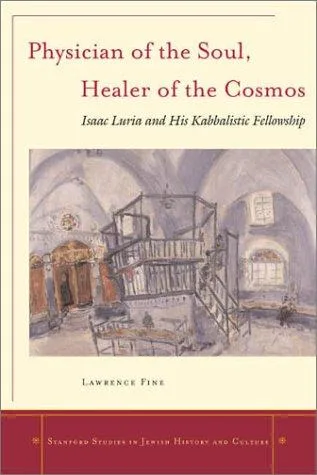


From the “Kabbalah” Collection
View all →







More Free Kabbalah & Jewish Mysticism Books
View all →