Kabbalah

 63
63

Kabbalah

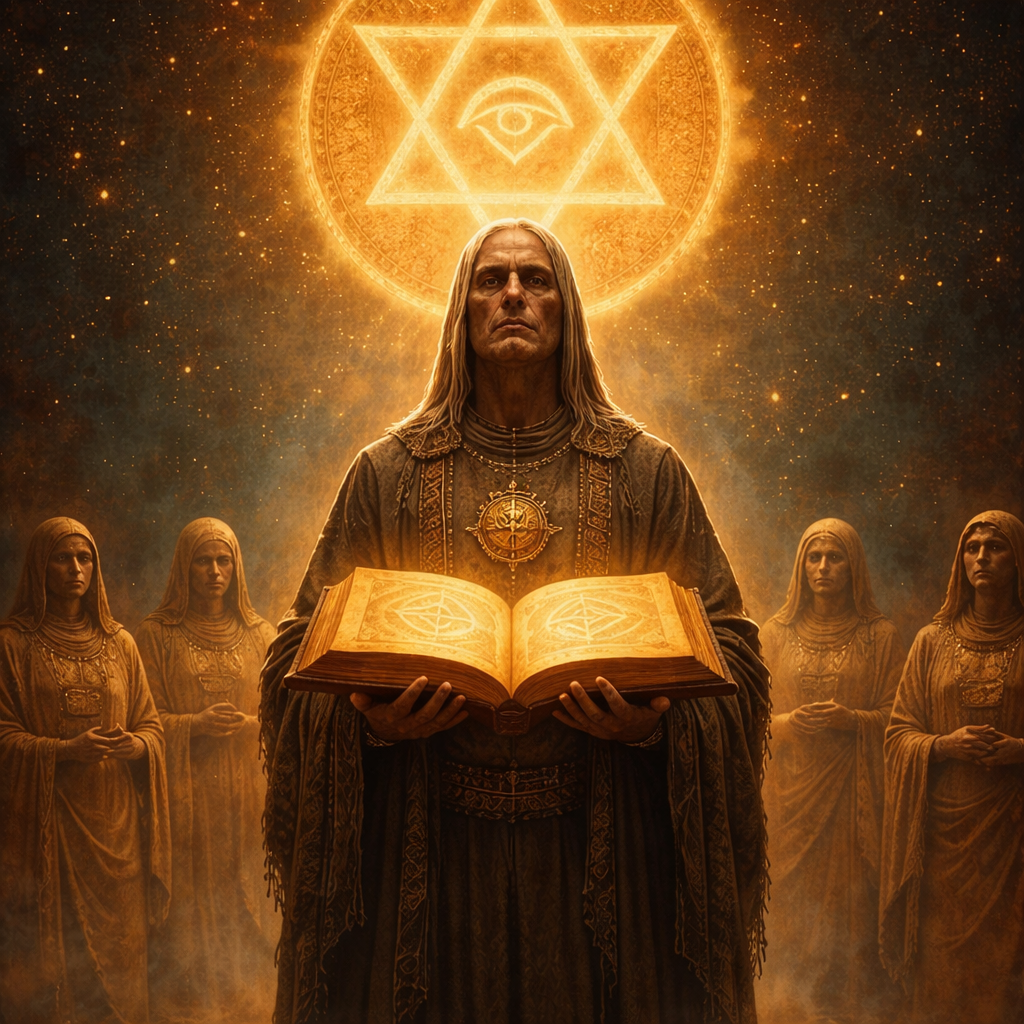

Anne Williams-Heller's 'Kabbalah' stands as a beacon for those navigating the labyrinthine paths of Jewish mysticism. With scholarly precision and an intuitive grasp of esoteric principles, she masterfully demystifies complex concepts, rendering them accessible without sacrificing their inherent depth. This is not a mere historical account, but a living exposition of a tradition that offers profound insights into the nature of God, creation, and the human soul's journey. Her ability to weave together ancient texts, philosophical underpinnings, and practical applications makes this work invaluable for both neophytes and seasoned students seeking to deepen their understanding of the Tree of Life and its manifold emanations. A truly illuminating and essential read.
📝 Description
63
Anne Williams-Heller's 2007 book offers a clear introduction to Kabbalah's core concepts.
This book examines Kabbalah, a form of Jewish mysticism. Williams-Heller breaks down its core symbols and cosmology. She also discusses Kabbalistic practices intended for spiritual growth. The text aims to provide understanding of the divine and the connections within existence. It moves beyond simple intellectual study to suggest a path for personal change. Readers can expect to find explanations of key Kabbalistic ideas. The author uses careful research to present the material. The writing style is meant to be accessible to those interested in mystical traditions. It covers themes of creation, the soul, and the philosophical bases of spiritual paths. The goal is to help readers grasp the deeper meanings within Kabbalah. It seeks to shed light on how these ideas can affect one's perception of reality. The author's approach is academic but aims for clarity.
Kabbalah, originating in medieval Jewish circles, is a mystical tradition concerned with the divine nature of reality. It employs a rich symbolic language, including diagrams like the Tree of Life, to map divine emanations and the structure of creation. Its practitioners often engage in contemplative practices and textual interpretation to achieve spiritual insight and a closer connection to God. While deeply rooted in Jewish scripture and philosophy, Kabbalistic ideas have also influenced broader esoteric thought across different cultures and historical periods. This book engages with these traditions, explaining their specific terminology and conceptual frameworks.
💡 Why Read This Book?
Embark on a transformative journey into the heart of Jewish mysticism. 'Kabbalah' by Anne Williams-Heller offers a clear yet profound exploration of ancient wisdom, revealing the symbolic language of the cosmos and the pathways to spiritual enlightenment. Ideal for seekers yearning for deeper meaning, scholars craving authoritative insight, and practitioners seeking to enrich their spiritual practice with timeless esoteric knowledge. Discover the hidden architecture of reality and your place within it.
⭐ Reader Reviews
Honest opinions from readers who have explored this book.
❓ Frequently Asked Questions
What is Kabbalah?
Kabbalah is a esoteric tradition within Judaism that explores the divine nature of God, the creation of the universe, and the soul's connection to the divine. It utilizes mystical interpretations of the Torah and employs complex symbolic systems.
Is this book suitable for beginners?
Yes, while rich in detail, the book is structured to guide newcomers through the foundational concepts of Kabbalah with clarity and depth.
What are the primary symbols discussed?
Key symbols include the Tree of Life (Etz Chayim), the ten Sefirot (divine emanations), and various Hebrew letters and their mystical significance.
Does the book cover practical Kabbalistic exercises?
The book focuses primarily on the theoretical and philosophical underpinnings, providing a strong foundation for understanding practical applications that may be explored elsewhere.
What is the philosophical significance of Kabbalah?
Kabbalah offers a profound cosmology and theology, exploring concepts like divine unity, the nature of evil, the purpose of existence, and the path to spiritual perfection.
🔮 Key Themes & Symbolism
The Tree of Life: A Cosmic Blueprint
The central metaphor of Kabbalah, the Tree of Life, is meticulously dissected. This sacred diagram, composed of ten Sefirot and 22 paths, serves as a cosmic map of divine emanation and a blueprint for the human soul's journey. Williams-Heller illuminates how each Sefirah represents a distinct divine attribute and a stage in the unfolding of creation, offering clear insights into the interconnectedness of all things and the structure of spiritual reality.
The Nature of the Divine and Creation
This theme looks at the Kabbalistic understanding of Ein Sof (the Infinite), the unknowable divine essence, and its manifestation through the Sefirot. The book explores the concept of Tzimtzum (divine contraction) and the subsequent creation of the cosmos, offering a mystical perspective on existence that challenges conventional notions of God and reality. It reveals the dynamic interplay between the transcendent and the immanent within the divine.
Symbolism and Mystical Interpretation
Williams-Heller masterfully unpacks the rich symbolic language of Kabbalah, from the mystical meanings of Hebrew letters and gematria to the allegorical narratives found in sacred texts. The book emphasizes how these symbols are not mere decorations but vital keys to unlocking deeper spiritual truths and understanding the hidden architecture of the universe. It guides the reader to perceive the divine immanent in every aspect of creation.
💬 Memorable Quotes
Direct passages from the work, attributed to the author.
“The path upward is the path inward.”
— This profound statement emphasizes the spiritual principle that true ascent and enlightenment are achieved through introspection and self-discovery, rather than external pursuits. Inner transformation is the key to spiritual growth.
“Within the finite lies the infinite.”
— This highlights the Kabbalistic paradox that the divine, though infinite, is intimately present within the limitations of the material world and the human experience, suggesting a path to encountering the eternal within the temporal.
“Every letter is a divine breath.”
— This refers to the sacredness and mystical power attributed to the Hebrew alphabet in Kabbalah, where each letter is seen as a conduit of divine energy and a building block of reality.
“To know the Self is to glimpse the Divine.”
— This emphasizes the profound connection between self-knowledge and divine apprehension, suggesting that by understanding the depths of one's own being, one can begin to comprehend the nature of the Creator.
💡 Key Ideas
Editorial paraphrase of the work's core concepts — not direct quotes.
The universe is a divine thought made manifest.
This quote captures the Kabbalistic belief that creation is not a random occurrence but a deliberate expression of divine consciousness, highlighting the inherent sacredness and intelligent design of all existence.
🌙 Esoteric Significance
Tradition
This work is a profound gateway into Jewish mysticism, specifically Kabbalah. It elucidates a tradition deeply rooted in the esoteric interpretation of Jewish scripture and theology, offering a unique cosmology and path to spiritual realization. Kabbalah presents a structured understanding of divine emanation, the nature of the soul, and the intricate relationships within the spiritual realms, aiming to reveal the hidden unity and purpose behind all existence.
Symbolism
At the heart of Kabbalah's esoteric significance lies its rich and complex symbolic language. The Tree of Life (Etz Chayim) serves as the central diagram, representing the ten Sefirot (divine attributes or emanations) and their interconnectedness. Hebrew letters, gematria (numerological interpretation), and allegorical narratives are employed as keys to unlock deeper spiritual truths, offering a multidimensional understanding of creation and the divine.
Modern Relevance
In the contemporary world, Kabbalah offers a profound framework for spiritual seeking, personal growth, and understanding the interconnectedness of all things. Its emphasis on divine immanence, the journey of the soul, and the inherent potential within each individual resonates deeply with those exploring mindfulness, consciousness, and a more holistic worldview. The wisdom of Kabbalah provides tools for introspection, ethical development, and a deeper appreciation of the sacred in everyday life.
👥 Who Should Read This Book
This useful text is a vital resource for a diverse range of seekers. Beginners starting their spiritual journey will find a clear and accessible introduction to the foundational concepts of Kabbalah. Scholars of religion and mysticism will appreciate the meticulous scholarship and authoritative presentation. Spiritual seekers yearning for a deeper understanding of the divine, the cosmos, and their own soul's purpose will find profound answers and guiding principles. Practitioners of various spiritual disciplines will discover how Kabbalistic wisdom can enrich their contemplative practices and deepen their connection to the sacred.
📜 Historical Context
Anne Williams-Heller's 'Kabbalah' emerges from a rich historical range woven by centuries of Jewish philosophical and mystical inquiry. Its roots trace back to ancient Hebrew texts and the oral traditions of the Talmudic era, but its most vibrant expression solidified in medieval Spain and Provence with seminal works like the Zohar. This period, marked by both intellectual flourishing and periods of persecution, spurred a deeper engagement with esoteric interpretations of scripture as a means of spiritual solace and divine connection. The Renaissance and subsequent intellectual movements saw Kabbalistic ideas spread and influence broader Western esoteric thought, including Hermeticism and Christian Kabbalah, demonstrating its enduring impact and adaptability across diverse cultural and intellectual landscapes.
📔 Journal Prompts
Reflect on the concept of Ein Sof and how the idea of an infinite, unknowable divine influences your perception of reality.
Meditate on one of the Sefirot from the Tree of Life. How does its attribute manifest in your life, and how can you cultivate it further?
Consider a passage from your own spiritual or religious tradition. How might Kabbalistic symbolism offer a new lens through which to interpret it?
Explore the idea of 'divine sparks' within creation. Where do you perceive these sparks in your daily life, and how can you honor them?
Write about your personal 'ascent' or journey towards greater spiritual understanding. What challenges have you faced, and what insights have you gained?
🗂️ Glossary
Sefirot
Ten divine emanations or attributes of God, forming the structure of the Kabbalistic Tree of Life. They represent different aspects of the divine outflow into creation and the pathways of spiritual ascent.
Tree of Life (Etz Chayim)
The central symbolic diagram in Kabbalah, depicting the ten Sefirot and the 22 paths connecting them, representing the divine emanation of the universe and the structure of spiritual reality.
Ein Sof
The Kabbalistic term for the 'Infinite' or 'Without End,' representing the ultimate, unknowable, and transcendent aspect of God beyond all comprehension or description.
Gematria
A system of Jewish numerology that assigns numerical values to Hebrew letters, used to interpret the mystical significance of words and phrases within sacred texts.
Tzimtzum
The Kabbalistic concept of divine contraction or self-limitation, believed to have occurred to create a 'vacant space' for the creation of the universe, allowing for free will and individuality.
This book appears in 1 collection
🔮 Readers Also Liked
Browse all →









From the “Kabbalah” Collection
View all →






More Free Kabbalah & Jewish Mysticism Books
View all →