What is Mindfulness?
Mindfulness involves paying attention to the present moment without judgment. It is a mental state achieved by focusing one's awareness on the present moment, while calmly acknowledging and accepting one's feelings, thoughts, and bodily sensations. This practice aims to reduce stress, improve focus, and foster emotional regulation, drawing from various philosophical and spiritual traditions.
Best Books for Complete Beginners
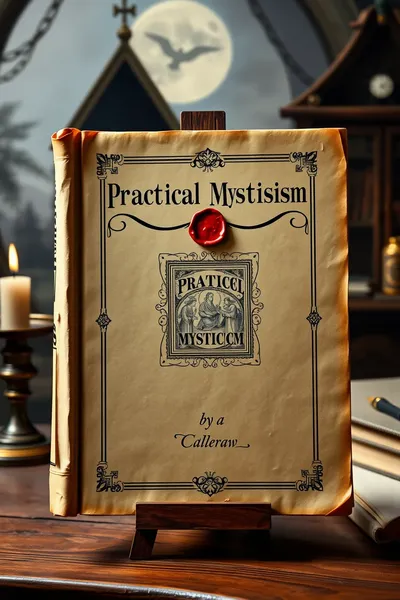
For those new to mindfulness, start with accessible guides that clarify the practice. Florence Scovel Shinn's 'The game of life and how to play it' offers practical advice on mental attitudes and their impact. Brother Lawrence's 'The Practice of the Presence of God' provides a simple yet profound method for maintaining spiritual awareness throughout daily life. Evelyn Underhill's 'Practical Mysticism: A Little Book for Normal People' presents a clear, non-dogmatic introduction to mystical experience and its connection to everyday living.
Intermediate Reading
Building on foundational concepts, intermediate texts explore the deeper psychological and spiritual dimensions of mindfulness. William Walker Atkinson's 'The Human Aura: Astral Colors and Thought Forms' examines the energetic aspects of consciousness. C. W. Leadbeater's 'Clairvoyance' explores heightened sensory perception. Alexander J. McIvor-Tyndall's 'Cosmic Consciousness: The Man-God Whom We Await' discusses expanded states of awareness. Felix Adler's 'The Essentials of Spirituality' offers a philosophical framework for ethical living rooted in inner awareness.
Classical / Advanced Texts
Serious students will find value in primary sources and more complex explorations of consciousness. Rudolf Steiner's 'The Way of Initiation; or, How to Attain Knowledge of the Higher Worlds' provides a rigorous path for spiritual development. Thomas H. Burgoyne's 'The Light of Egypt; Or, The Science of the Soul and the Stars — Volume 2' studies esoteric cosmology and soul science. Immanuel Kant's 'The Metaphysical Elements of Ethics' offers a philosophical examination of moral duty and reason, foundational to understanding self-governance.
Reading Order — Step by Step
Begin with foundational works like Brother Lawrence's 'The Practice of the Presence of God' and Evelyn Underhill's 'Practical Mysticism' during Weeks 1-4 to grasp core principles. In Month 2, explore Florence Shinn's 'The game of life and how to play it' and William Walker Atkinson's 'The Human Aura' to integrate practical application and energetic awareness. For Month 3 and beyond, advance to Rudolf Steiner's 'The Way of Initiation' and Thomas H. Burgoyne's 'The Light of Egypt' for deeper esoteric study and advanced practices.
Frequently Asked Questions
Which mindfulness book should I read first?
Start with Brother Lawrence's 'The Practice of the Presence of God' for its simplicity and directness, or Evelyn Underhill's 'Practical Mysticism' for a clear introduction to the concepts.
Is mindfulness related to meditation?
Mindfulness is a core component of many meditation practices, focusing on present-moment awareness. Meditation is often the method used to cultivate mindfulness.
Can mindfulness help with stress?
Yes, numerous studies indicate that mindfulness practices can significantly reduce stress by altering the brain's response to stressors and promoting emotional regulation.
Are these books suitable for secular practice?
Many texts, like those by Shinn and Underhill, offer practical applications of mindfulness principles that can be adapted for secular use, focusing on mental well-being and personal effectiveness.
What is the difference between mindfulness and concentration?
Mindfulness involves broad, non-judgmental awareness of the present. Concentration typically refers to focused attention on a single object or task.
How long does it take to see benefits from mindfulness?
Benefits vary per individual and practice consistency. Some notice changes in stress levels within weeks, while deeper shifts in perspective may take months or years of dedicated practice.
Are there specific techniques for mindfulness?
Yes, techniques include mindful breathing, body scans, mindful walking, and observing thoughts without engagement, as detailed in various introductory texts.
What is 'Practical Mysticism' about?
Evelyn Underhill's 'Practical Mysticism' explores how mystical experience and awareness can be integrated into ordinary daily life, making spiritual insight accessible to everyone.