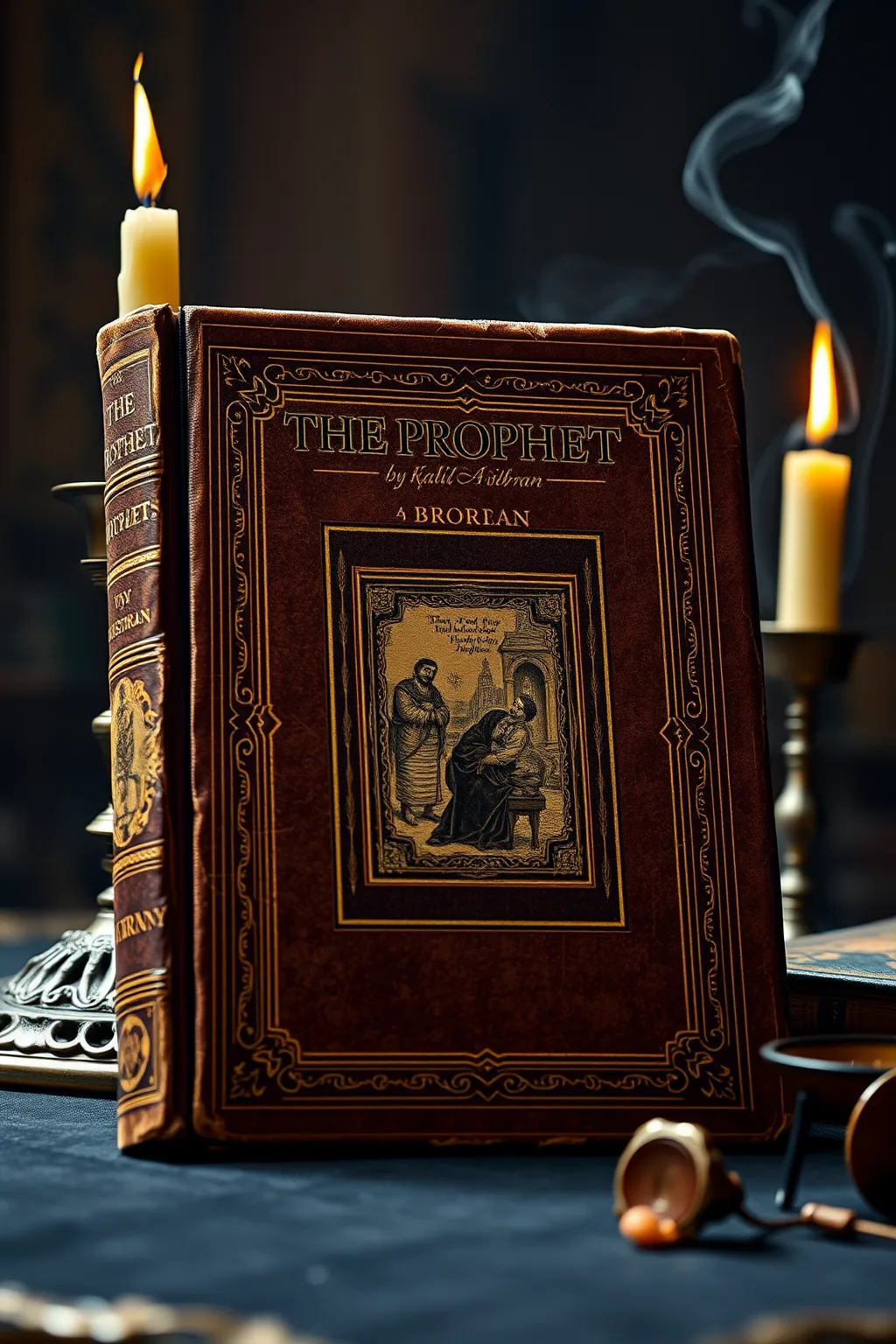
The Prophet
 76
76

The Prophet



Review by Alaric Kestrel (Metaphysical Studies Reviewer) — 'The Prophet' by Kahlil Gibran is a masterpiece of esoteric literature, rich with hermetic insights and mystical symbolism. Gibran's prose is both evocative and profound, making it a must-read for anyone interested in the occult and metaphysical studies. The book's strength lies in its ability to blend philosophical depth with accessible language, making it appealing to both scholars and spiritual seekers. The prophet Al-Mustafa's teachings on love, joy, sorrow, and self-knowledge are timeless and resonate deeply with readers across cultures. This book is a treasure trove of hidden knowledge, perfect for those who seek to understand the divine within the human experience.
📝 Description
76
Kahlil Gibran published 'The Prophet' in 1923, a collection of poetic essays on various aspects of life.
The book presents the teachings of Al-Mustafa, a prophet preparing to leave the city of Orfalîs after twelve years of exile. Before his departure, the city's inhabitants ask him to share his thoughts on fundamental human experiences. Al-Mustafa then speaks on love, marriage, children, giving, eating and drinking, work, joy and sorrow, houses, clothes, buying and selling, crime and punishment, laws, freedom, reason and passion, pain, and death. His discourse is delivered in a lyrical, allegorical style, blending spiritual insights with observations on daily life.
The narrative structure, with Al-Mustafa addressing the people of Orfalîs, frames his reflections as a form of spiritual guidance. Gibran uses vivid imagery and simple language to convey complex ideas about human existence and the connection between the material and the spiritual worlds. The work has resonated with a wide audience for its accessible yet thought-provoking examination of universal themes.
While not overtly a text of occult practices, 'The Prophet' draws from various spiritual traditions that inform esoteric thought. Gibran's work incorporates elements of Christian mysticism, Sufi poetry, and possibly New Thought philosophy. The emphasis on inner truth, the unity of existence, and the symbolic meaning of everyday life aligns with the broader hermetic principle of "as above, so below." The book speaks to a desire for spiritual understanding outside of conventional religious dogma, making it a touchstone for those interested in accessible spiritual philosophy.
💡 Why Read This Book?
Read 'The Prophet' to delve into the mystical teachings of Kahlil Gibran, a pioneer in American prose poetry with deep Lebanese roots. Ideal for seekers of spiritual enlightenment, scholars of classical literature, and practitioners of the occult, this book offers profound insights into the human condition. Gibran's exploration of alchemy and hermeticism provides a unique perspective on life, love, and the divine, making it a timeless piece of criticism and interpretation.
⭐ Reader Reviews
Honest opinions from readers who have explored this book.
❓ Frequently Asked Questions
What is the central theme of 'The Prophet'?
The central theme of 'The Prophet' is the exploration of life's profound questions through the teachings of Al-Mustafa, a prophet who shares his wisdom on love, joy, sorrow, and self-knowledge.
Who is the intended audience for this book?
The intended audience for 'The Prophet' includes seekers of spiritual enlightenment, scholars of classical literature, and practitioners of the occult. It appeals to anyone interested in mystical and esoteric themes.
What makes 'The Prophet' a classic piece of literature?
'The Prophet' is considered a classic due to its timeless themes, profound insights, and the blending of American and Lebanese literary influences. It offers a unique perspective on life and the divine, making it a valuable piece of criticism and interpretation.
How does 'The Prophet' relate to alchemy and hermeticism?
'The Prophet' explores alchemical and hermetic themes through its symbolism and hidden knowledge, providing a spiritual journey that resonates with those who seek to understand the deeper layers of existence.
Is 'The Prophet' suitable for beginners in esoteric studies?
Yes, 'The Prophet' is accessible to beginners due to its clear and evocative language, making it an excellent introduction to mystical and esoteric themes.
🔮 Key Themes & Symbolism
The Nature of Love
Gibran examines the profound nature of love, exploring its divine and earthly aspects. Through Al-Mustafa's teachings, readers gain insight into the spiritual significance of love, its connection to joy and sorrow, and its role in human relationships. This theme resonates deeply with those seeking to understand the mystical dimensions of love.
Self-Knowledge and Spiritual Growth
The Prophet emphasizes the importance of self-knowledge and spiritual growth. Al-Mustafa's wisdom guides readers on a journey of self-discovery, encouraging them to explore their inner selves and seek divine connection. This theme is crucial for practitioners of the occult and spiritual seekers.
The Divine Within
Gibran's exploration of the divine within the human experience is a central theme in 'The Prophet'. Through hermetic symbolism and esoteric insights, the book invites readers to recognize the divine presence within themselves and the world around them. This theme is particularly relevant to those interested in alchemy and hermeticism.
💬 Memorable Quotes
Direct passages from the work, attributed to the author.
“Yesterday is but today’s memory, and tomorrow is today’s dream.”
— Gibran's words remind us of the ephemeral nature of time and the importance of living in the present moment, a key theme in mystical literature.
💡 Key Ideas
Editorial paraphrase of the work's core concepts — not direct quotes.
Your children are not your children. They are the sons and daughters of Life’s longing for itself.
This quote underscores the divine nature of life and the interconnectedness of all beings, emphasizing the mystical essence of existence.
Work is love made visible.
This passage highlights the spiritual significance of labor and the transformative power of love, resonating deeply with those seeking hidden knowledge.
Faith is an oasis in the heart which will never be reached by the caravan of thinking.
This quote explores the mystical nature of faith and its role in the spiritual journey, providing insight into the esoteric dimensions of belief.
The self is made of layers, like an onion. Peel back one layer and you find another.
This passage examines the complex nature of self-knowledge and the layers of the human psyche, inviting readers to explore their inner selves.
🌙 Esoteric Significance
Tradition
The Prophet belongs to the hermetic tradition, focusing on the divine within the human experience and the interconnectedness of all beings. Gibran's exploration of alchemy and symbolism provides a spiritual journey that appeals to practitioners of the occult and seekers of hidden knowledge.
Symbolism
Key symbols in 'The Prophet' include the journey of Al-Mustafa, representing the spiritual quest, and the city of Orfalîs, symbolizing the human condition. These symbols, along with others, are rich with esoteric meanings, inviting readers to look at the mystical dimensions of the text.
Modern Relevance
The themes and insights in 'The Prophet' remain relevant today, particularly for modern practitioners of the occult and spiritual seekers. The book's exploration of self-knowledge, divine connection, and the nature of love continues to inspire and guide those on a spiritual journey.
👥 Who Should Read This Book
Beginners in esoteric studies will find 'The Prophet' accessible and enriching, with its clear language and useful insights. Scholars of classical literature will appreciate its blending of American and Lebanese influences, making it a valuable piece of criticism and interpretation. Spiritual seekers and practitioners of the occult will benefit from its exploration of alchemy and hermeticism, providing a deep dive into the mystical dimensions of existence.
📜 Historical Context
Published in 1923, 'The Prophet' emerged during a time of cultural and spiritual awakening in the United States. Gibran, a Lebanese-American, blended Eastern and Western philosophies, creating a unique perspective on life and the divine. The book's influence can be seen in various fields, from literature and philosophy to spiritual and esoteric studies. Its timeless themes and useful insights have made it a classic piece of criticism and interpretation, resonating with readers across generations.
📔 Journal Prompts
Reflect on the nature of love as presented in 'The Prophet'. How does Al-Mustafa's wisdom influence your understanding of love?
Explore the concept of self-knowledge and spiritual growth in the book. What insights have you gained about your own journey?
Consider the divine within the human experience. How does 'The Prophet' encourage you to recognize the divine presence in your life?
Analyze the symbolism in 'The Prophet'. What esoteric meanings do you find in the journey of Al-Mustafa and the city of Orfalîs?
Reflect on the timeless themes in 'The Prophet'. How do these themes resonate with your own experiences and beliefs?
🗂️ Glossary
Hermeticism
A philosophical and spiritual tradition based on the writings attributed to Hermes Trismegistus, emphasizing the divine within and the interconnectedness of all beings.
Alchemy
An ancient practice combining elements of chemistry, physics, and metaphysics, aimed at transforming base materials into gold, symbolizing spiritual growth.
Esoteric
Relating to knowledge that is hidden or mysterious, often involving mystical or occult themes.
Prophet
A person regarded as an inspired teacher or proclaimer of the will of God.
Symbolism
The use of symbols to represent ideas or qualities, often involving hidden meanings and esoteric insights.
This book appears in 3 collections
🔮 Readers Also Liked
Browse all →








More by Kahlil Gibran
All books →





From the “Hermeticism” Collection
View all →








More Free Alchemy & Hermeticism Books
View all →