Some Philosophy of the Hermetics

 61
61

Some Philosophy of the Hermetics

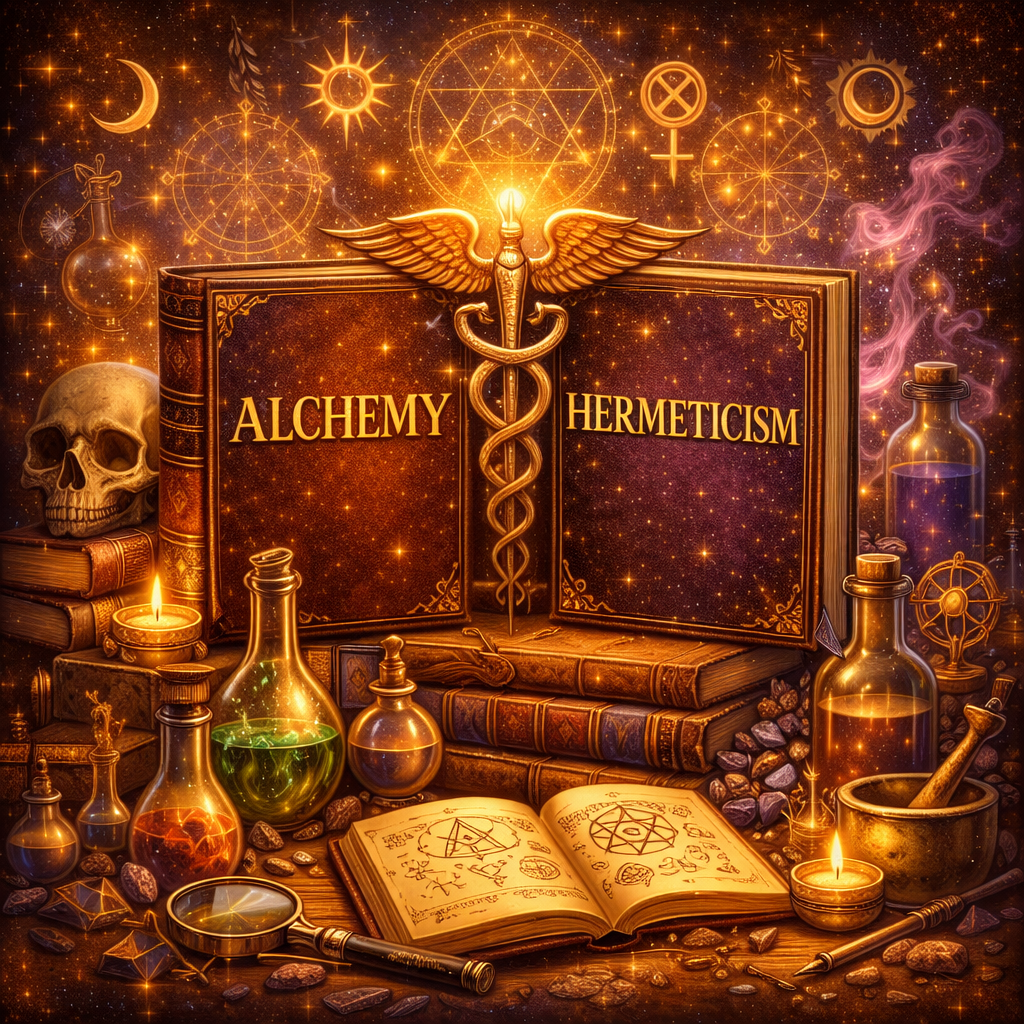

Review by Aurelia Blackwood (Occult Philosophy Critic) — 'Some Philosophy of the Hermetics' is a profound exploration of the Hermetic tradition, offering esoteric insights that are both enlightening and thought-provoking. The anonymous author delves deep into the symbolic language of the Hermetics, revealing hidden truths that resonate with seekers of spiritual knowledge. The book's strengths lie in its ability to bridge ancient wisdom with modern understanding, making it accessible to both scholars and practitioners. For those interested in the mystical and the occult, this text is an invaluable resource that should not be missed.
📝 Description
61
'Some Philosophy of the Hermetics' was written by an anonymous author seeking to explain Hermetic principles.
This anonymous text details core tenets of the Hermetic tradition. It discusses the relationship between the microcosm and the macrocosm, suggesting a correspondence between the human being and the universe. The author focuses on the idea that understanding oneself is key to understanding universal laws. This work elaborates on concepts such as the divine mind and the process of spiritual ascent. The language used is symbolic, drawing parallels between alchemical processes and spiritual transformation. It aims to guide the reader toward a deeper comprehension of reality through the Hermetic lens.
The book addresses the nature of the divine, the creation of the cosmos, and humanity's place within it. It posits that through rigorous study and contemplation, individuals can achieve a form of gnosis or direct knowledge of the divine. The text touches upon the importance of virtue and self discipline as necessary steps in this pursuit. It serves as an introduction to a worldview where the material and spiritual realms are interconnected and governed by immutable laws.
This work emerges from the Hermetic tradition, a philosophical and religious current that claims descent from the legendary figure Hermes Trismegistus. Hermeticism synthesizes Greek philosophical thought, Egyptian religious ideas, and possibly Jewish mysticism. It centers on the belief that divine knowledge can be attained through intuition and contemplation, often expressed through allegorical and symbolic language. Key concepts include the divine unity of all things, the principle of 'as above, so below,' and the potential for human spiritual perfection.
💡 Why Read This Book?
Why read this book? 'Some Philosophy of the Hermetics' is a must-read for seekers of hidden knowledge, scholars of the occult, and practitioners of Hermetic philosophy. It offers a unique perspective on the mystical traditions that have shaped Western esotericism, providing insights that are both timeless and relevant. Whether you are looking to deepen your understanding of Hermetic principles or explore the symbolism of the ancient world, this book is an essential addition to your library.
⭐ Reader Reviews
Honest opinions from readers who have explored this book.
❓ Frequently Asked Questions
Who wrote 'Some Philosophy of the Hermetics'?
The authorship of 'Some Philosophy of the Hermetics' is unknown, adding to its mystique and allure.
What is the Hermetic tradition?
The Hermetic tradition is an ancient mystical and philosophical movement based on the teachings of Hermes Trismegistus, combining elements of alchemy, astrology, and spiritual practices.
Is this book suitable for beginners?
While 'Some Philosophy of the Hermetics' is accessible to beginners, it is also rich with esoteric knowledge that will appeal to more experienced readers.
What are some key themes in this book?
Key themes include the nature of reality, the pursuit of hidden knowledge, and the symbolism of the Hermetic tradition.
How does this book contribute to modern esoteric studies?
This book provides a foundational understanding of Hermetic principles, making it a valuable resource for modern practitioners and scholars of the occult.
🔮 Key Themes & Symbolism
The Nature of Reality
This book examines the Hermetic view of reality, exploring the idea that the physical world is a manifestation of deeper, spiritual truths. It invites readers to question their perceptions and seek a more profound understanding of existence.
The Pursuit of Hidden Knowledge
The Hermetic tradition is centered around the pursuit of hidden knowledge, often symbolized through alchemy and other esoteric practices. This theme encourages readers to start a path of reading of self-discovery and spiritual enlightenment.
Symbolism and Mysticism
Symbolism is a core part of Hermetic philosophy, with each symbol holding layers of meaning. This book unpacks these symbols, revealing their mystical significance and inviting readers to interpret them for themselves.
💬 Memorable Quotes
Direct passages from the work, attributed to the author.
“As above, so below.”
— This Hermetic maxim underscores the interconnectedness of all things, from the microcosm to the macrocosm.
“The Master of the Temple is the Master of himself.”
— Self-mastery is a central theme in Hermetic teachings, encouraging individuals to control their minds and emotions.
“The secret of the universe lies within the heart of man.”
— This profound statement suggests that the ultimate truth can be found through introspection and self-knowledge.
💡 Key Ideas
Editorial paraphrase of the work's core concepts — not direct quotes.
The All is Mind; The Universe is Mental.
This quote emphasizes the mental and spiritual nature of reality, a core belief in Hermetic philosophy.
The Universe is change; life is what you make it.
This quote highlights the dynamic nature of the universe and the power of personal creation.
🌙 Esoteric Significance
Tradition
This book belongs to the Hermetic tradition, which combines elements of alchemy, astrology, and spiritual practices. It is rooted in the teachings of Hermes Trismegistus, a mythical figure believed to have possessed the knowledge of the ancient gods.
Symbolism
Key symbols in this book include the ouroboros, representing the eternal cycle of life and death, and the caduceus, symbolizing the union of opposites. These symbols are rich with mystical meanings, inviting readers to explore their deeper significance.
Modern Relevance
The teachings of 'Some Philosophy of the Hermetics' remain relevant today, influencing modern practitioners of Hermeticism, alchemy, and other esoteric disciplines. Contemporary scholars and seekers continue to draw upon these ancient principles to deepen their understanding of the mystical and the occult.
👥 Who Should Read This Book
Beginners interested in the Hermetic tradition will find this book an accessible introduction to its core principles. Scholars of the occult will appreciate the depth of esoteric knowledge it offers. Spiritual seekers looking to explore the symbolism of the ancient world will find it enlightening, while practitioners of Hermetic philosophy will benefit from its insights into self-mastery and the pursuit of hidden knowledge.
📜 Historical Context
Written in an era when esoteric knowledge was often concealed from the masses, 'Some Philosophy of the Hermetics' reflects the mystical and philosophical currents of its time. The Hermetic tradition, attributed to the legendary figure Hermes Trismegistus, gained prominence during the Renaissance, influencing figures like Marsilio Ficino and Giovanni Pico della Mirandola. This book's importance lies in its preservation of ancient wisdom, which continues to inspire modern seekers and scholars of the occult.
📔 Journal Prompts
Reflect on the concept of 'as above, so below.' How does this principle manifest in your own life?
What symbols from the Hermetic tradition resonate with you the most, and why?
How does the pursuit of hidden knowledge influence your spiritual journey?
Consider the idea of self-mastery. What steps can you take to achieve greater control over your mind and emotions?
How does the dynamic nature of the universe, as described in this book, influence your perception of reality?
🗂️ Glossary
Hermetic Tradition
A mystical and philosophical movement based on the teachings of Hermes Trismegistus, combining alchemy, astrology, and spiritual practices.
Ouroboros
A symbol of the eternal cycle of life and death, often depicted as a serpent swallowing its own tail.
Caduceus
A symbol of the union of opposites, featuring two serpents entwined around a staff with wings.
Alchemy
An ancient practice combining elements of chemistry, physics, and spirituality, aimed at transforming base metals into gold.
Self-Mastery
The Hermetic principle of controlling one's mind and emotions to achieve spiritual enlightenment and personal growth.
This book appears in 3 collections
🔮 Readers Also Liked
Browse all →









More by Anonymous
All books →

![The secrets of black arts!: A key note to witchcraft, devination [sic], omens, forwarnings, apparitions, sorcery, dæmonology, dreams, predictions, visions, and the Devil's legacy to earth mortals, compacts with the Devil! With the most authentic history of Salem witchcraft](/img/thumb/the-secrets-of-black-arts-b-a-key-note-to-witchcraft-devination-sic-omens-forwarnings-apparitions-sorcery-d-monology-dreams-predictions-visions-and-the-devil-s-legacy-to-earth-mortals-compacts-with-th.webp)
From the “Hermeticism” Collection
View all →







More Free Alchemy & Hermeticism Books
View all →