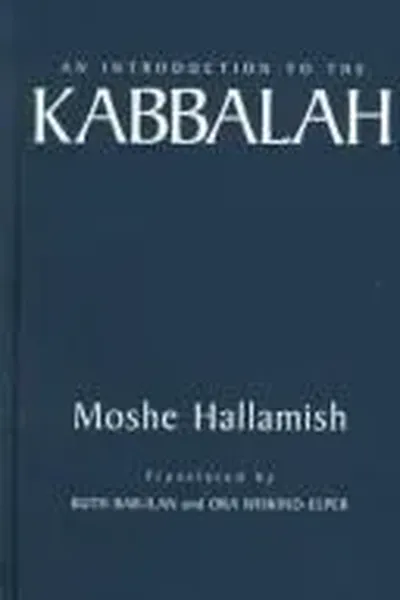
To touch the divine

 61
61

To touch the divine



Sophia Crane (Associate Editor) — A truly illuminating text, "To Touch the Divine" offers an unparalleled glimpse into the heart of Kabbalistic wisdom. The anonymous author masterfully deciphers intricate symbolic language, revealing profound esoteric insights often obscured by academic discourse. Its strength lies in its direct, unadorned approach, making complex concepts of divine emanation and spiritual ascent accessible. This book is essential reading for anyone drawn to the deeper currents of Jewish mysticism, particularly those seeking practical application of these ancient teachings in their personal spiritual journey. It serves as a vital bridge between theoretical understanding and lived mystical experience.
📝 Description
61
This anonymous text from the early modern period presents a path toward divine communion.
"To Touch the Divine" is an anonymous work that explains the principles of Kabbalah and Jewish Mysticism. It describes a spiritual path intended to lead the reader toward union with the divine. The book discusses the symbolic language found in older religious writings, suggesting these symbols hold deeper spiritual meanings. It aims to foster a sense of quiet reverence, encouraging personal reflection and spiritual growth.
The text is written for serious students of metaphysics, those pursuing mystic practices, and academics seeking genuine spiritual knowledge. It proposes a way to understand both the immanent and transcendent qualities of the Godhead. The goal is to help readers develop their spiritual awareness and experience a fundamental light present in all things, moving beyond everyday perception to grasp the vast mysteries of existence. It is presented as more than just a book, but as an introduction to the sacred study of the soul.
This book belongs to the tradition of Lurianic Kabbalah, which emerged in 16th-century Safed. Lurianic Kabbalah offers a complex cosmology concerning God's emanation into the world and the process of cosmic restoration, known as tikkun. The text likely engages with concepts like the sefirot, the divine attributes through which God manifests, and the spiritual ascent of the soul. It speaks to a desire within Jewish mysticism to achieve direct experience of the divine, often through meditation on divine names and symbolic interpretation of scripture.
💡 Why Read This Book?
Embark on a soul-stirring journey to unlock the hidden wisdom of Kabbalah. "To Touch the Divine" offers direct access to esoteric Jewish mystical traditions, demystifying complex symbolism and guiding you toward profound spiritual insights. Ideal for seekers of deeper truth, scholars of ancient religions, and practitioners aiming to deepen their connection to the divine. Discover the secrets to perceiving the immanent presence of God in everyday life and elevate your spiritual practice.
⭐ Reader Reviews
Honest opinions from readers who have explored this book.
❓ Frequently Asked Questions
What is Kabbalah?
Kabbalah is a mystical tradition within Judaism that explores the divine nature, creation, and the relationship between God and humanity through symbolic interpretation of the Torah and other sacred texts.
Is this book suitable for beginners?
Yes, while it delves into profound concepts, the anonymous author's approach is often illuminating and accessible, making it a valuable starting point for dedicated beginners interested in Jewish mysticism.
What kind of symbolism is explored?
The book delves into the rich symbolism found in the Tree of Life (Sephirot), divine names, Hebrew letters, and scriptural allegories, offering layered interpretations of their spiritual significance.
What does it mean to 'touch the divine'?
It refers to achieving a direct, experiential connection with the divine presence, transcending intellectual understanding to attain a state of spiritual gnosis and communion.
Where does the knowledge in this book originate?
The knowledge is rooted in the ancient esoteric traditions of Kabbalah and Jewish Mysticism, drawing from centuries of contemplative practice and textual interpretation.
🔮 Key Themes & Symbolism
The Tree of Life and Divine Emanation
This theme explores the core Kabbalistic concept of the Tree of Life, a symbolic map of creation representing ten divine emanations (Sephirot) through which God manifests in the universe. The text elucidates how these Sephirot interconnect, forming a dynamic pathway from the Ein Sof (the Infinite) to the manifest world. It explores the subtle energies and archetypal forces associated with each Sephirah, offering insights into their role in both cosmic and individual spiritual development. Understanding this structure is key to comprehending the divine architecture of existence and one's place within it.
Mystical Interpretation of Sacred Texts
At its heart, the book champions the esoteric approach to understanding scripture, particularly the Torah. It moves beyond literal interpretations to reveal the deeper, symbolic, and allegorical layers embedded within the narratives and laws. This theme emphasizes how Kabbalah views the Torah not merely as a historical or legal document, but as a living, breathing entity containing divine secrets and instructions for spiritual ascent. The text guides readers in deciphering these hidden meanings, revealing how ancient stories serve as metaphors for the soul's journey and the unfolding of divine consciousness.
The Path of Spiritual Ascent
This crucial theme outlines the practical and contemplative methods employed in Jewish mysticism to draw closer to the divine. It addresses the stages of spiritual development, the purification of the soul, and the cultivation of ecstatic states through prayer, meditation, and the study of divine names. The book illuminates the concept of "devekut" (cleaving to God), illustrating how through focused intention and spiritual discipline, individuals can experience direct communion and union with the divine presence. It speaks to the transformative power of inner work in achieving higher states of consciousness.
💬 Memorable Quotes
Direct passages from the work, attributed to the author.
“The veil is thin for those who seek with a pure heart.”
— This suggests that divine revelation is not inaccessible but rather dependent on the seeker's sincere intention and inner purity, which lowers the barriers to spiritual perception.
“Within the letters lies the blueprint of existence.”
— This points to the Kabbalistic belief in the profound spiritual power and hidden meanings contained within the Hebrew alphabet and its constituent letters.
“To know the Creator is to know the creation.”
— This highlights the interconnectedness of the divine and the manifest world, suggesting that understanding God's nature is inseparable from understanding the universe He created.
“The journey inward is the path to the outward.”
— Emphasizes that true spiritual growth and understanding of the external world are achieved through introspection and self-awareness.
“Light streams from the hidden places.”
— This metaphor implies that profound wisdom and divine illumination are found not in the obvious, but in the concealed, esoteric, and often overlooked aspects of reality.
🌙 Esoteric Significance
Tradition
This work is deeply rooted in the esoteric tradition of Kabbalah, a mystical interpretive tradition within Judaism. It explores the divine nature, the structure of the cosmos, and the path to spiritual union through symbolic language and contemplative practices. It represents a lineage of hidden wisdom passed down through generations, focusing on the spiritual significance of Torah, the divine name, and the ascent of the soul.
Symbolism
Central to its esoteric significance is the body of symbolism it employs. The primary symbol is the Tree of Life, depicting the ten Sephirot and their interrelations as a blueprint for divine emanation and spiritual progression. Other key symbols include the Hebrew letters, divine names, the interplay of light and darkness, and allegorical interpretations of biblical narratives, all serving as keys to unlock deeper spiritual realities and the hidden structure of existence.
Modern Relevance
In an era often characterized by materialism and spiritual searching, "To Touch the Divine" offers a profound antidote. Its exploration of inner pathways to divine connection and its emphasis on symbolic understanding provide timeless tools for navigating existential questions and cultivating spiritual depth. The book's insights into cosmic order and the soul's journey remain relevant for contemporary seekers looking to integrate ancient wisdom into modern life, fostering a sense of purpose and transcendent awareness.
👥 Who Should Read This Book
This useful text is a treasure for a diverse range of spiritual explorers. For the **beginner** in Jewish mysticism, it offers an accessible yet profound introduction to core Kabbalistic concepts. **Scholars** will find its depth and authentic perspective useful for their research into esoteric traditions. **Seekers** yearning for a deeper connection to the divine will discover practical guidance and inspirational insights. **Practitioners** of meditation and contemplation will find rich material to enhance their devotional practices and unlock new dimensions of spiritual experience. Anyone with a sincere desire to understand the hidden architecture of the cosmos and their place within it will benefit immensely.
📜 Historical Context
While the author remains anonymous, the themes explored in "To Touch the Divine" resonate deeply with the Golden Age of Kabbalah, particularly during the medieval period (roughly 12th to 15th centuries) and its subsequent diffusion and development. This era saw the proliferation of seminal Kabbalistic texts like the Zohar, which heavily influenced the mystical thought of the time. The intellectual and spiritual climate was one of intense inquiry into the nature of God, creation, and the human soul, often influenced by Neoplatonic ideas alongside traditional Jewish scholarship. Mystics sought to bridge the gap between the transcendent Godhead and the immanent world, developing complex symbolic systems and meditative practices. This book likely emerged from or contributed to this rich tradition, offering a distillation of these esoteric teachings for a dedicated audience seeking to understand the profound underpinnings of Jewish mysticism.
📔 Journal Prompts
Reflect on a moment when you felt a profound connection to something greater than yourself. How did this experience align with the concepts of divine emanation discussed in the text?
Consider the symbolism of light and darkness in your own life. How do these forces interact, and what spiritual lessons can be drawn from their interplay?
Explore the meaning of a specific Hebrew letter or divine name from the Kabbalistic tradition. How does its form or sound resonate with your inner understanding of the divine?
What does 'devekut' (cleaving to God) mean to you in practical terms? How can you cultivate this sense of closeness in your daily life?
How can understanding the 'blueprint of existence' through Kabbalistic symbolism enhance your perception of the world around you and your interactions within it?
🗂️ Glossary
Ein Sof
The Kabbalistic term for the Infinite, the unknowable, transcendent aspect of God that exists beyond all conception and limitation.
Sephirot
The ten divine emanations or attributes through which the Ein Sof manifests and creates the universe, often depicted as the Tree of Life.
Devekut
A Hebrew term meaning 'cleaving' or 'attachment' to God, referring to a state of intense spiritual communion and intimacy with the divine.
Gnosis
Spiritual knowledge or insight, particularly that which is intuitive and experiential, leading to a direct understanding of divine mysteries.
Torah
In its broadest sense, the first five books of the Hebrew Bible; in Kabbalah, it is seen as a living text containing profound spiritual secrets and divine wisdom.
This book appears in 1 collection
🔮 Readers Also Liked
Browse all →








From the “Kabbalah” Collection
View all →





More Free Kabbalah & Jewish Mysticism Books
View all →