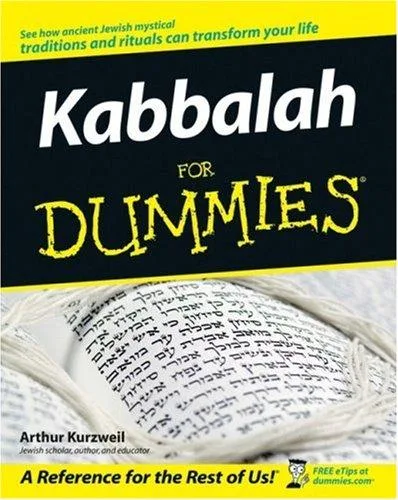
Kabbalah For Dummies
 64
64

Kabbalah For Dummies

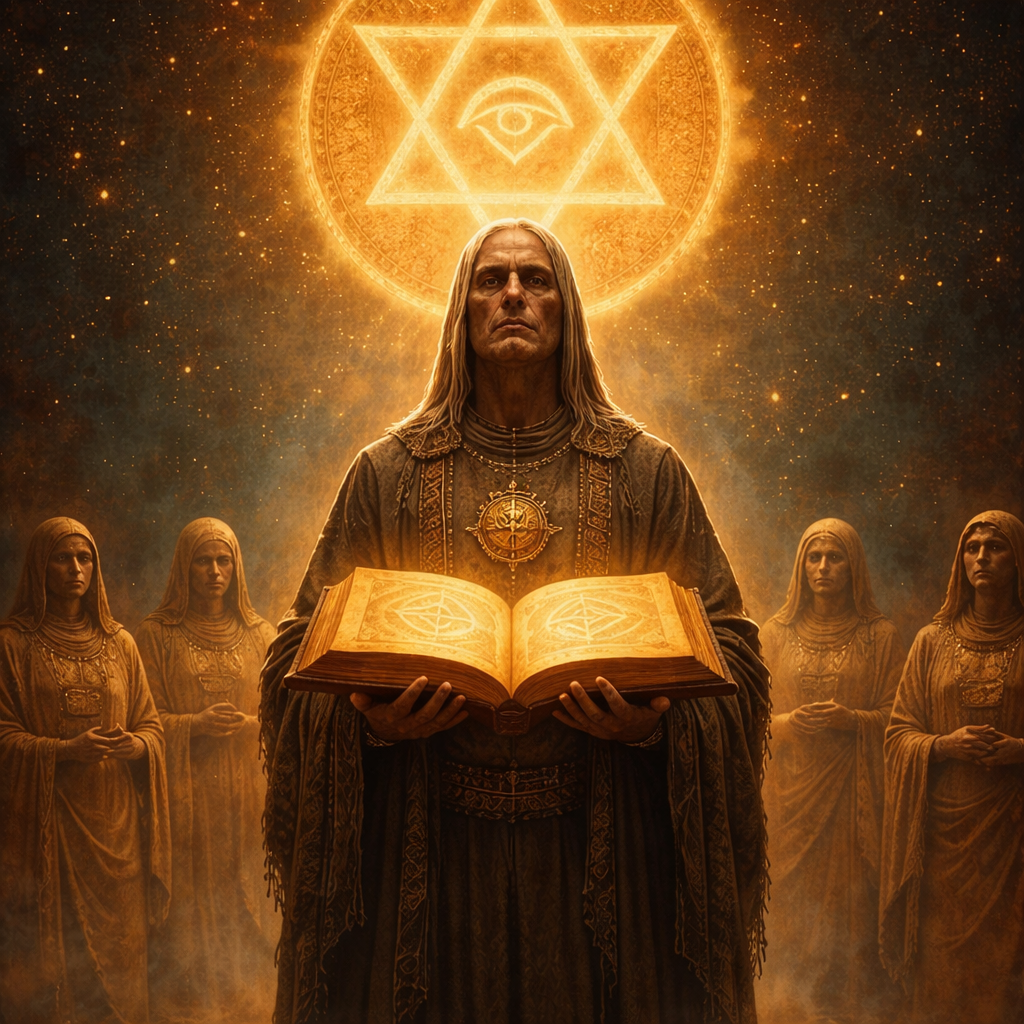

By Alaric Kestrel (Metaphysical Studies Reviewer) — Arthur Kurzweil's "Kabbalah For Dummies" stands as a beacon for those seeking to navigate the labyrinthine depths of Jewish mysticism. Kurzweil's approach is both scholarly and accessible, stripping away esoteric jargon to reveal the core principles of Kabbalah. He offers profound insights into the interconnectedness of all things, the nature of divine emanation, and the practical application of these ancient teachings. This volume is an indispensable resource for beginners yearning for clarity and for practitioners seeking to deepen their understanding of this potent spiritual path. It’s a wellspring of esoteric wisdom.
📝 Description
64
Arthur Kurzweil's 1998 "Kabbalah For Dummies" makes Jewish mysticism accessible.
Arthur Kurzweil's "Kabbalah For Dummies," first published in 1998, aims to explain the core ideas of Jewish mysticism for a general audience. The book breaks down complex Kabbalistic concepts, such as the Tree of Life and the Hebrew alphabet's symbolic meanings, into understandable terms. Kurzweil's approach is designed to be clear, allowing individuals new to the subject to grasp its fundamental principles.
The text covers the philosophical aspects of Kabbalah and suggests ways these ideas can be applied to personal understanding and awareness. It seeks to provide readers with a clear introduction to a tradition that has interested spiritual seekers for a long time. The book attempts to bridge the gap between the esoteric nature of Kabbalah and the everyday reader.
Kabbalah is a form of Jewish mysticism that originated in the Middle Ages, seeking to understand the divine nature and the relationship between God and the created world. Its teachings often involve complex symbolic systems, including the Sefirot (divine emanations) represented in the Tree of Life, and the mystical properties of Hebrew letters. Historically, Kabbalistic texts like the Zohar have been studied by initiates seeking deeper spiritual insights. "Kabbalah For Dummies" aims to present these historical and symbolic elements to a wider audience, translating specialized terminology and concepts into more common language.
💡 Why Read This Book?
Unravel the profound mysteries of Kabbalah without intimidation. This book offers clear explanations of complex mystical concepts, illuminating the Tree of Life, divine emanations, and spiritual ascent. Ideal for seekers of hidden knowledge, students of comparative mysticism, and anyone interested in the philosophical underpinnings of Jewish tradition seeking a grounded yet deeply spiritual understanding.
⭐ Reader Reviews
Honest opinions from readers who have explored this book.
❓ Frequently Asked Questions
What is Kabbalah?
Kabbalah is the esoteric tradition of Jewish mysticism, seeking to understand the divine nature and the creation of the universe through symbolic interpretation and contemplation of sacred texts.
Is Kabbalah only for Jewish people?
While originating within Judaism, the philosophical and spiritual insights of Kabbalah resonate universally, offering profound wisdom applicable to anyone on a spiritual quest.
What is the Tree of Life?
The Tree of Life is a central symbol in Kabbalah, representing the structure of the universe and the paths of divine emanation, with ten Sephirot (divine attributes) interconnected by mystical pathways.
What are the Sephirot?
The Sephirot are ten divine emanations or attributes through which God is said to have created the universe and through which divine energy flows into creation.
How can I practice Kabbalah?
Practicing Kabbalah often involves meditation, study of sacred texts, contemplation of symbols like the Tree of Life, and applying its ethical and spiritual principles to daily life.
🔮 Key Themes & Symbolism
The Tree of Life: A Cosmic Blueprint
The Tree of Life is the supreme symbolic map within Kabbalah, illustrating the emanations of the Divine and the pathways of spiritual consciousness. It serves as a visual representation of the universe's structure, from the highest spiritual realms to the material world. Understanding its ten Sephirot and their interconnections provides a framework for comprehending creation, divine attributes, and the human soul's journey towards unification with the Infinite.
Gematria and Hebrew Mysticism
Explore the profound power of Hebrew letters and Gematria, the ancient practice of assigning numerical values to words. This theme explores how Kabbalists use these sacred symbols and their numerical correspondences to uncover hidden layers of meaning within biblical texts and understand the fundamental building blocks of reality. It reveals a universe woven from divine language, where each letter holds a cosmic secret.
The Journey of the Soul and Spiritual Ascent
Explore the Kabbalistic understanding of the soul's journey, its descent into physicality, and its potential for spiritual ascent. This theme illuminates the concepts of reincarnation, the rectification of the soul (Tikkun Olam), and the various stages of spiritual development. It offers a roadmap for self-discovery and for aligning one's actions with divine will, ultimately leading to a state of profound spiritual awareness and connection.
💬 Memorable Quotes
Direct passages from the work, attributed to the author.
“The universe is not a static creation, but a dynamic process of divine emanation.”
— This highlights Kabbalah's view of an ever-present, active Divine force shaping existence, rather than a God who created and withdrew.
“Every letter in the Torah is a key to unlock the mysteries of existence.”
— Emphasizes the sacredness and profound symbolic weight attributed to the Hebrew alphabet and biblical texts in Kabbalistic study.
“The Tree of Life is a map of both the cosmos and the human soul.”
— Illustrates the dual nature of the Tree of Life, representing both the external structure of reality and the internal range of human consciousness.
“Through contemplation, we can ascend the paths of the Tree of Life.”
— Suggests that spiritual growth and deeper understanding are achieved through focused meditation and inner reflection.
💡 Key Ideas
Editorial paraphrase of the work's core concepts — not direct quotes.
To know God is to know oneself.
A central to mystical traditions, this quote points to the interconnectedness of the divine and the human, suggesting self-discovery as a path to spiritual realization.
🌙 Esoteric Significance
Tradition
Kabbalah is the principal esoteric tradition within Judaism, offering a mystical interpretation of the Torah and the nature of God. It examines the hidden dimensions of reality, exploring divine emanations, the structure of the cosmos, and the soul's journey. Its practices and teachings aim to foster direct experience of the divine and a profound understanding of the interconnectedness of all existence.
Symbolism
Central to Kabbalah's esoteric power is its detailed symbolism, most notably the Tree of Life. This diagram, composed of ten Sephirot and connecting paths, represents the divine blueprint of creation and the stages of spiritual ascent. Other potent symbols include the Hebrew letters, the Tetragrammaton (divine name), and various cosmic diagrams, all serving as keys to unlock deeper spiritual truths and divine mysteries.
Modern Relevance
In contemporary times, Kabbalah continues to captivate seekers worldwide, offering useful insights into consciousness, spirituality, and the human condition. Its emphasis on interconnectedness, personal transformation, and the search for meaning resonates deeply in an often fragmented modern world. The ancient wisdom of Kabbalah provides a framework for navigating life's complexities and fostering a deeper, more spiritual understanding of oneself and the universe.
👥 Who Should Read This Book
This guide is a treasure for the curious beginner eager to explore the profound depths of Jewish mysticism without trepidation. Scholars of comparative religion and philosophy will find a clear and concise overview of core Kabbalistic concepts. Spiritual seekers yearning for a deeper understanding of the universe and their place within it will discover practical insights and a roadmap for personal growth. Practitioners of other esoteric traditions may also find valuable philosophical parallels and symbolic frameworks within these pages.
📜 Historical Context
Emerging from the fertile intellectual soil of medieval Spain and Germany, Kabbalah flourished between the 12th and 16th centuries, profoundly influencing Jewish thought and practice. The Zohar, its foundational text, synthesized earlier mystical traditions, offering a complex and allegorical interpretation of the Torah. This period saw a surge in esoteric inquiry, driven by philosophical currents and a desire to find deeper meaning amidst societal upheavals. Kabbalah’s influence extended beyond Jewish communities, subtly impacting Christian Kabbalah and later esoteric movements, leaving an indelible mark on Western mysticism and occult philosophy.
📔 Journal Prompts
Reflect on a moment when you felt a deep connection to something larger than yourself. How might the concept of divine emanation explain this feeling?
Meditate on the symbol of the Tree of Life. Which Sephirah or path resonates most strongly with you today, and why?
Consider the Hebrew alphabet. If each letter held a cosmic secret, what might the letter 'Aleph' (representing unity) teach us about existence?
How can the Kabbalistic concept of 'Tikkun Olam' (rectification of the world) be applied to your personal actions and interactions?
Explore the idea that 'To know God is to know oneself.' What personal qualities or experiences do you believe are reflected in the divine?
🗂️ Glossary
Sephirah (plural: Sephirot)
In Kabbalah, the ten divine emanations or attributes through which God manifests and creates the universe. They represent stages of divine energy and consciousness.
Tree of Life
A fundamental symbolic diagram in Kabbalah, depicting the structure of the universe and the pathways of divine emanation, consisting of ten Sephirot.
Gematria
A system of Jewish numerology that assigns numerical values to Hebrew letters, used to find hidden meanings and connections within sacred texts and concepts.
Ein Sof
The Kabbalistic concept of the Infinite, the unknowable, primordial aspect of God beyond all comprehension or description.
Tikkun Olam
A Hebrew phrase meaning 'repair of the world.' In Kabbalah, it refers to the cosmic task of restoring harmony and wholeness to creation through human actions and spiritual effort.
This book appears in 1 collection
🔮 Readers Also Liked
Browse all →








More by Arthur Kurzweil
All books →
From the “Kabbalah” Collection
View all →






More Free Kabbalah & Jewish Mysticism Books
View all →