The Beliefnet guide to the Kabbalah

 61
61

The Beliefnet guide to the Kabbalah

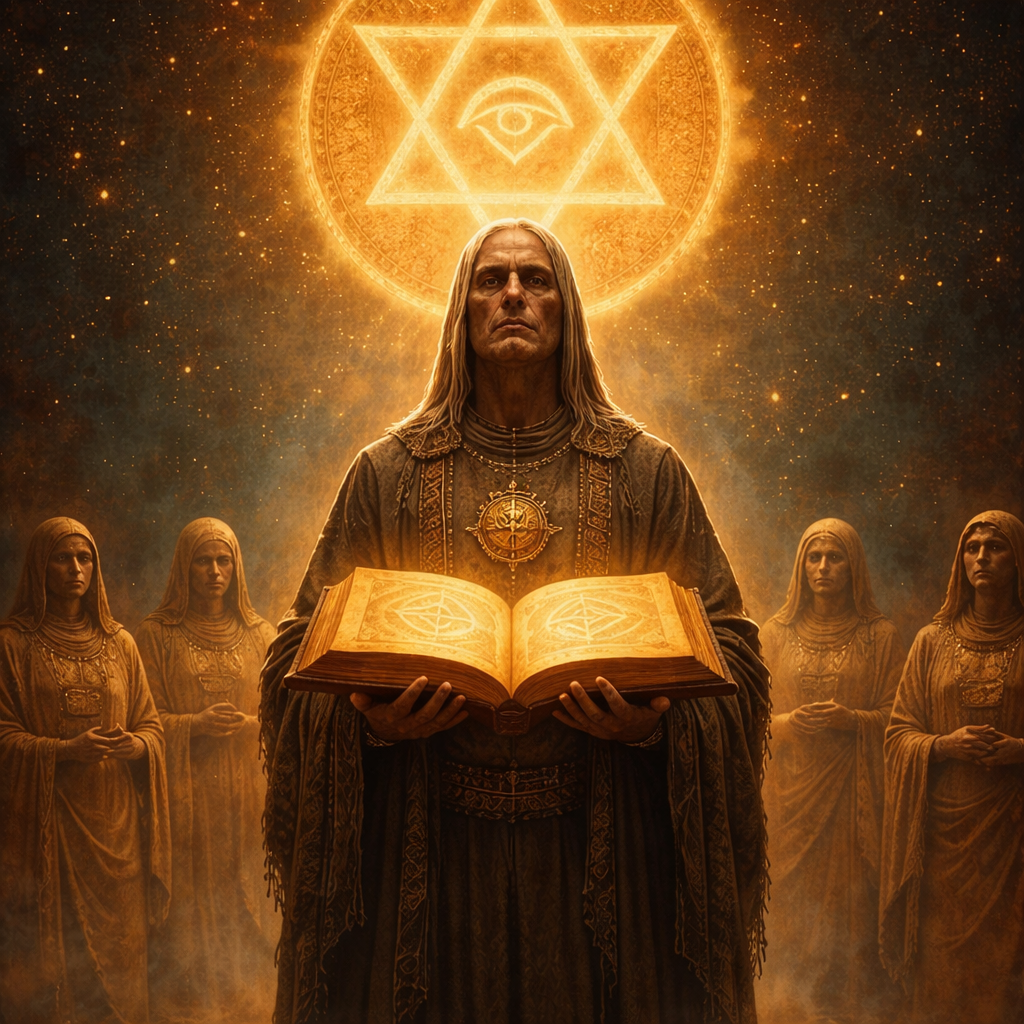

Arthur Goldwag's 'The Beliefnet Guide to the Kabbalah' is a remarkably accessible yet deeply insightful introduction to a complex mystical tradition. Eschewing overly academic jargon, Goldwag elegantly navigates the historical currents and philosophical depths of Kabbalistic thought. He masterfully deciphers key concepts like the sefirot and the Tree of Life, offering practical guidance for contemplative and devotional practices. This work is an invaluable resource for neophytes eager to explore Jewish mysticism and for seasoned practitioners seeking a fresh perspective. It stands as a testament to the enduring power of Kabbalah to illuminate the path toward self-knowledge and divine connection, making esoteric wisdom attainable.
📝 Description
61
Arthur Goldwag's 2005 guide breaks down Kabbalah's complex ideas for modern readers.
Arthur Goldwag's 'The Beliefnet Guide to the Kabbalah' (2005) introduces readers to Jewish mysticism. The book explains core Kabbalistic concepts such as the Tree of Life and the ten sefirot. Goldwag connects historical study with practical application, discussing meditative techniques and devotional practices. He aims to make the tradition accessible to those seeking spiritual understanding.
The guide covers the symbolism within Kabbalah's teachings and their philosophical underpinnings. It addresses how these esoteric ideas relate to the wider universe and the individual's place within it. The author bridges academic inquiry with personal experience, encouraging readers to engage with the material on multiple levels. This work is intended for individuals interested in exploring the hidden dimensions of existence and a spiritual lineage with a long history.
Kabbalah, a system of Jewish mysticism, developed primarily in medieval Europe. It seeks to understand the divine nature and the creation of the universe through esoteric interpretation of the Torah. Key elements include the Tree of Life, a symbolic diagram of divine emanations, and the sefirot, ten attributes or vessels through which God interacts with creation. Kabbalah often involves contemplative practices, meditation, and a focus on hidden meanings within scripture. This tradition has influenced various Western esoteric movements.
💡 Why Read This Book?
This book is essential for anyone seeking to unravel the mysteries of Jewish mysticism. It offers a clear, engaging entry point into the Kabbalah's rich symbolism and profound teachings. Ideal for spiritual seekers, students of comparative religion, and those drawn to contemplative practices, it provides both historical context and practical guidance for exploring this ancient, transformative wisdom tradition. Discover hidden knowledge and unlock deeper spiritual insights.
⭐ Reader Reviews
Honest opinions from readers who have explored this book.
❓ Frequently Asked Questions
What is the Kabbalah?
The Kabbalah is an esoteric tradition within Judaism that explores the mystical aspects of God, creation, and the human soul. It uses symbolic language and concepts to reveal hidden meanings in the Torah and the universe.
Is this book suitable for beginners?
Absolutely. Arthur Goldwag's guide is specifically designed to introduce beginners to the core concepts of Kabbalah in an accessible and engaging manner, making complex ideas understandable.
What are the 'sefirot'?
The sefirot are ten divine emanations or attributes through which God is understood to interact with creation. They form a symbolic structure known as the Tree of Life, central to Kabbalistic cosmology.
Does the book offer practical exercises?
Yes, the guide provides instruction and insights into meditative, mystical, magical, and devotional practices derived from Kabbalistic teachings, encouraging active engagement with the material.
What is the historical significance of the Kabbalah?
The Kabbalah has profoundly influenced Jewish thought and practice for centuries, shaping mystical interpretations of scripture, theology, and spiritual development, with significant impact on subsequent esoteric traditions.
🔮 Key Themes & Symbolism
The Tree of Life and Divine Emanation
At the core of Kabbalistic thought lies the Tree of Life, a dynamic diagram representing the ten sefirot—divine attributes or emanations—through which the infinite Ein Sof (God) manifests in the finite cosmos. This intricate map guides the practitioner through the stages of creation, spiritual ascent, and the interconnectedness of all existence. Understanding the sefirot is crucial for grasping the Kabbalistic worldview, revealing divine processes and the pathways for human spiritual development and connection.
Gematria and Numerical Symbolism
Kabbalah places significant emphasis on the numerical and alphabetical values of Hebrew letters, a practice known as Gematria. This method suggests that words with the same numerical value share a deeper, hidden connection, revealing useful insights into the divine text and the underlying structure of reality. It transforms the study of scripture into a vibrant, multi-layered exploration of cosmic secrets and divine intent, inviting a contemplation of the universe as a divine language.
The Journey of the Soul and Spiritual Ascent
Kabbalah offers a profound framework for understanding the soul's journey, its origins in the divine, and its eventual return. It outlines stages of spiritual development and purification, emphasizing the role of study, prayer, meditation, and ethical conduct in achieving higher states of consciousness. The goal is often described as 'devekut' (cleaving to God), a state of profound union and intimate communion, achieved through a rigorous and transformative inner work.
💬 Memorable Quotes
Direct passages from the work, attributed to the author.
“Within each soul lies a spark of the divine.”
— This highlights the core Kabbalistic tenet of immanence – that the divine is not distant but present within every individual, offering a path to spiritual realization through self-discovery.
“The Tree of Life is a map of the cosmos and the human psyche.”
— This emphasizes the dual nature of the Tree of Life, serving as both a cosmological model for understanding universal forces and a psychological map for working through the inner field of the self.
“Mysticism is the art of seeing the invisible.”
— This succinctly defines the essence of mystical pursuit, suggesting that Kabbalah provides tools and perspectives to perceive realities beyond ordinary sensory experience.
“True knowledge is found not only in books but in the heart.”
— This underscores the experiential and devotional aspect of Kabbalah, positing that genuine understanding arises from both intellectual study and a deep, heartfelt connection to the divine.
💡 Key Ideas
Editorial paraphrase of the work's core concepts — not direct quotes.
The universe is a divine language waiting to be deciphered.
This quote captures the Kabbalistic belief that creation itself is imbued with divine meaning, accessible through careful study and contemplative practice, particularly through symbolic systems like Gematria.
🌙 Esoteric Significance
Tradition
The Kabbalah is a core part of Jewish mysticism, representing a sophisticated esoteric tradition deeply embedded within Jewish religious and philosophical thought. It seeks to understand the divine nature, the creation of the universe, the relationship between God and humanity, and the hidden meanings within the Torah. It offers a complex cosmology and a practical path for spiritual growth and communion, distinguishing itself through its unique symbolism and interpretive methods.
Symbolism
Central to Kabbalistic esotericism is its wide range of symbolism. The Tree of Life, composed of ten sefirot, is the most prominent diagram, illustrating divine attributes and the pathways of creation and spiritual ascent. Other key symbols include Hebrew letters (especially their numerical values in Gematria), divine names, and various allegorical narratives that veil deeper metaphysical truths. These symbols are not mere decorations but are seen as keys to unlocking cosmic secrets and understanding the divine architecture of reality.
Modern Relevance
In contemporary times, the Kabbalah continues to fascinate seekers worldwide, transcending its Jewish origins. Its emphasis on cosmic interconnectedness, the power of consciousness, and the potential for spiritual transformation resonates deeply with modern spiritual movements. The Kabbalistic exploration of the self, the divine, and the nature of reality offers useful insights applicable to personal growth, psychological well-being, and a more meaningful engagement with the world, proving its enduring relevance as a path to wisdom.
👥 Who Should Read This Book
This guide is perfectly suited for a diverse audience. Beginners curious about the mystical dimensions of Judaism will find an accessible and clear introduction. Scholars of religion and philosophy will appreciate its concise yet thorough overview of key concepts and historical development. Spiritual seekers drawn to contemplative practices, symbolism, and the exploration of hidden knowledge will discover invaluable insights and practical guidance. Those interested in comparative mysticism and the esoteric traditions of the world will find this book a compelling and clear read, offering a gateway to a profound and ancient wisdom.
📜 Historical Context
The Kabbalah emerged and flourished primarily in medieval Europe, particularly in Provence and Spain, from the 12th century onwards, building upon earlier Jewish mystical traditions. Its development coincided with periods of intense intellectual and spiritual ferment, often occurring within communities facing significant social and political pressures. This era saw a profound engagement with Neoplatonic philosophy, which influenced Kabbalistic concepts of emanation and divine unity. Key texts like the Zohar, compiled in the late 13th century, synthesized a vast array of mystical ideas, solidifying Kabbalah's structure and symbolism. The tradition continued to evolve, with figures like Isaac Luria in 16th-century Safed introducing new interpretations, such as the concept of Tikkun (rectification). Kabbalah's influence extended beyond Judaism, impacting Christian Kabbalah and later esoteric movements, demonstrating its enduring appeal as a profound system of spiritual inquiry.
📔 Journal Prompts
Reflect on a time you felt a profound sense of connection to something larger than yourself. How does this relate to Kabbalistic concepts of divine emanation?
Consider the Hebrew alphabet. If letters hold symbolic power, what might be the deeper meaning of a word or name that appeals to you?
Visualize the Tree of Life. Which sefira stands out to you most today, and why? What does it represent in your current life experience?
How can the Kabbalistic idea of 'Tikkun' (rectification) be applied to your personal challenges or to broader societal issues?
Explore the concept of 'devekut' (cleaving to God). What does this state of union mean to you, and what practices might help you move closer to it?
🗂️ Glossary
Ein Sof
The Kabbalistic term for the infinite, unknowable, and transcendent aspect of God, beyond all conception or description, from which all existence emanates.
Sefirot
Ten divine emanations or attributes (plural of Sefirah) that represent the stages of divine self-disclosure and the structure of the cosmos, often visualized as the Tree of Life.
Tree of Life (Etz Chaim)
A central diagram in Kabbalah, depicting the ten sefirot and the pathways connecting them, symbolizing the process of creation, divine order, and the journey of the soul.
Gematria
A system of Jewish numerology that assigns numerical values to Hebrew letters, used to find hidden meanings and connections between words and concepts in religious texts.
Tikkun
Literally 'rectification' or 'repair.' In Kabbalah, it refers to the process of healing and restoring cosmic harmony, often achieved through human actions, study, and spiritual practice.
This book appears in 1 collection
🔮 Readers Also Liked
Browse all →









More by Arthur Goldwag
All books →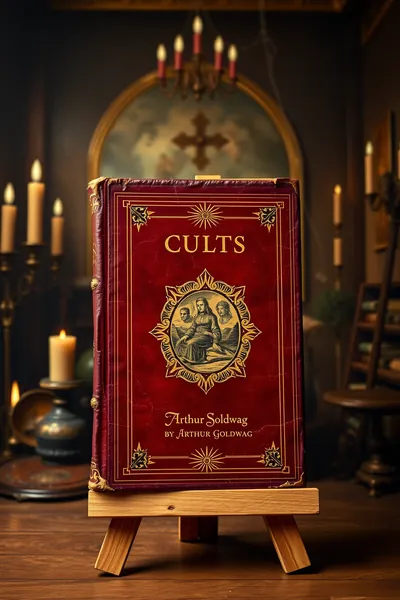

From the “Kabbalah” Collection
View all →







More Free Kabbalah & Jewish Mysticism Books
View all →